
Quick Take
- Ducks stand on ice all winter without freezing. A hidden trick in their legs explains how.
- Ducks have a cold-weather move that Stu never got to use. Its absence cost him dearly.
- Stu's first steps in his new feet ended in a surprising problem. His own strength is the culprit.
- Before the prosthetics, Stu invented his own way to get around. It left a mark.
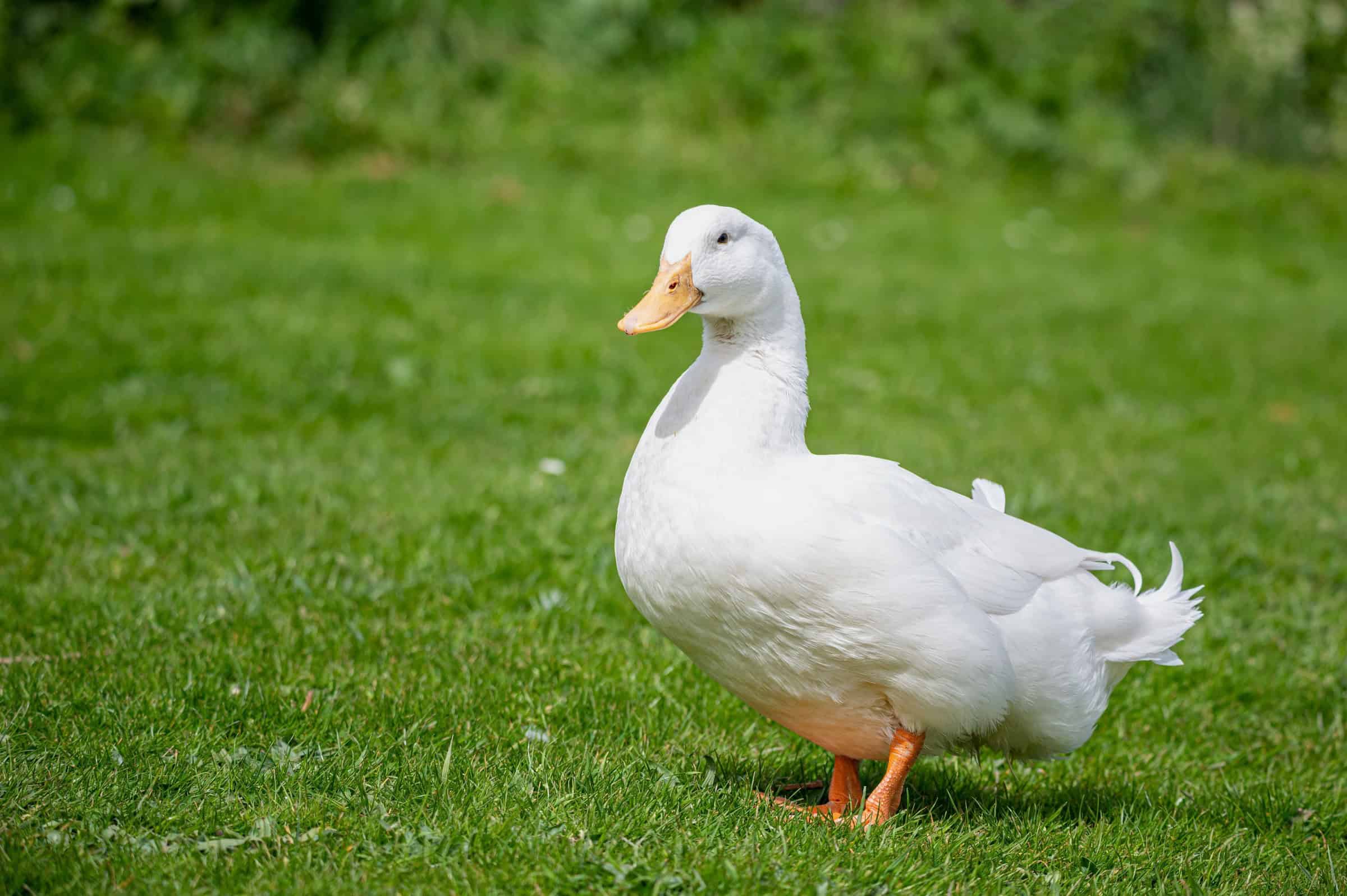
Stu the duck is standing up. The footless duck at J and J Farms Animal Sanctuary in Saxonburg, Pennsylvania, got a pair of prosthetic feet in late October 2026, CBS Pittsburgh reported on Oct. 27. The sanctuary announced it with a photo and three words: “STU HAS FEET!!!”
As of late October, walking was taking longer. “So far he’s figured out how to stand up in them, but he’s only been able to take a few steps before pitching forward,” the sanctuary wrote in an update days later.
Stu arrived at the sanctuary in May with no feet at all. The sanctuary was told he was born missing one leg and got by on the other until winter hit. Then frostbite took his remaining foot.
One foot can’t take turns
Ducks can stand on ice without freezing their feet because of a system in their legs called countercurrent heat exchange. David Howerter, identified in the article as Ducks Unlimited Canada’s director of national conservation operations, explained it in the group’s “Getting Cold Feet?” article. Warm blood heading down to the feet runs alongside cold blood coming back up, and the two trade heat. Blood reaches the foot already cooled, so the foot gives up heat to the ice more slowly. In mallards, just 5 percent of total body heat escapes through the feet.
On the coldest days, ducks add a second move. “If a bird is especially cold, it may lift one foot and tuck it into its feathers to help conserve heat,” Howerter said in the article.
A duck with two feet can warm one, then switch. Stu didn’t have that option, and the sanctuary said that’s how frostbite cost him his remaining foot.
The foot itself has little protection. Birds’ feet and legs “don’t have much insulating fat, no feathers, and few nerves,” according to an NIEHS kids’ science explainer. The heat exchange network between the arteries and veins in the leg is what protects them.
He scooted on his wings until they callused
With no feet, Stu found another way to get around. “Poor Stu has now resorted to scooting along, using his wings for added stability and forward motion,” the sanctuary wrote on Facebook in May. “He’s developed calluses on the sides of his wings. Our hearts are breaking for him.”
His new feet were built by Infinitely Able Pets Orthotics and Prosthetics. The company says it custom-builds each device from guided measurements, casting or scanning, and draws on more than 20 years of clinical expertise through Infinite Technologies.
A body built for scooting has to relearn balance
The sanctuary’s update explained the tipping. Stu’s pectoral muscles are “unbelievably strong” from propelling himself with his wings, his main way of getting around.
“It’s going to take some time for him to adjust his center of gravity and learn to rely on his legs again instead of his wings,” the sanctuary wrote.
He’ll do that relearning in a crowd. J and J Farms is a registered nonprofit caring for more than 175 farm animals, “from tiny bantam chickens to giant draft horses,” according to its website. It has no paid staff.
In its late October update, the sanctuary called Stu “super excited” about his feet and promised more news: “We’ll absolutely keep you posted on his progress.”