
Quick Take
- A five-foot lizard vanished for three days. What brought him back isn't what you'd guess.
- His escape route reveals how much power is packed into this reptile.
- The weather forecast turned a lizard's escape into a race against the clock, and biology explains why.
- The woman who rescued him has a blunt opinion about animals like Phantom living in backyards.
On Thursday, a reptile foster care provider in San Clemente found a five-foot lizard trying to get into the shed in her backyard. This was good news. It was his shed, and he was supposed to be inside it.
Phantom, a five-year-old black dragon water monitor, had broken out of that shed on Monday, November 16, 2026. He was loose somewhere in Orange County for three days before turning up again on November 19. KTLA in Los Angeles, which had covered his disappearance the evening before, reported that he’d come home on his own and wasn’t hurt.
“His foster momma found him trying to get back into his shed. He is unharmed,” wrote Kayla Seal, who runs the reptile rescue and medical care nonprofit Reptile Savior. Seal had rescued Phantom and placed him with the San Clemente foster family about a year ago. In California these lizards are legal to keep, as long as no local rule bans them.

What Got Out
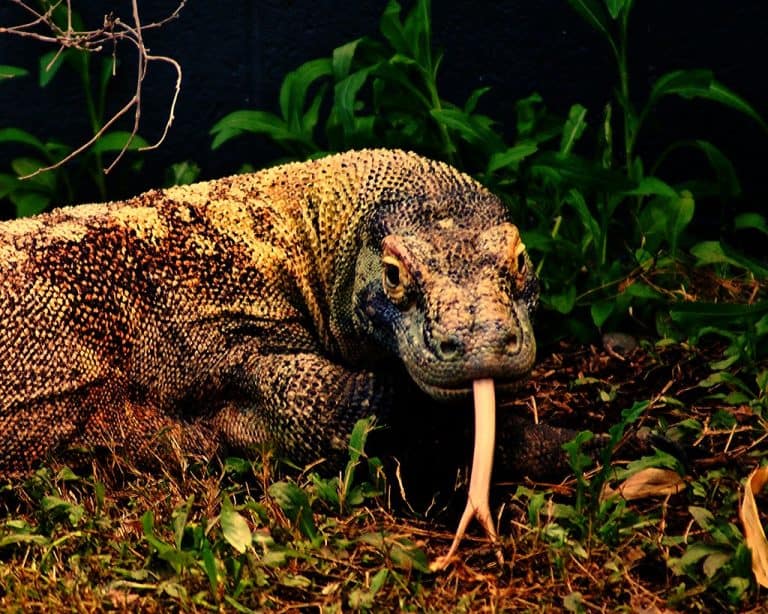
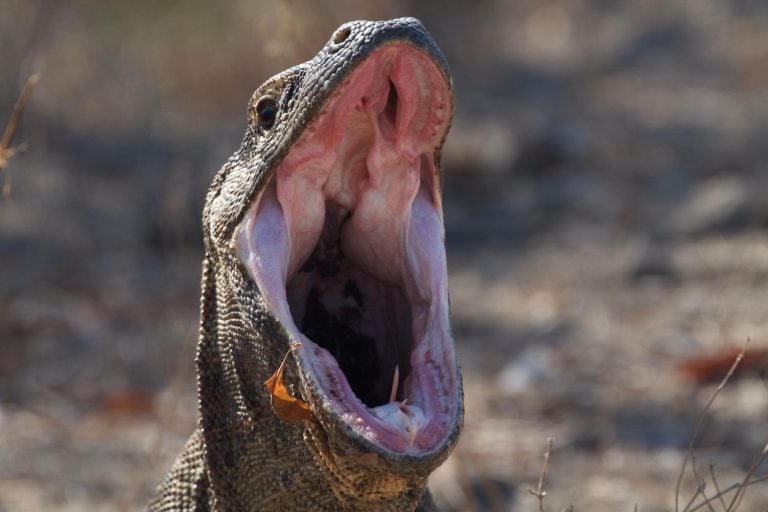
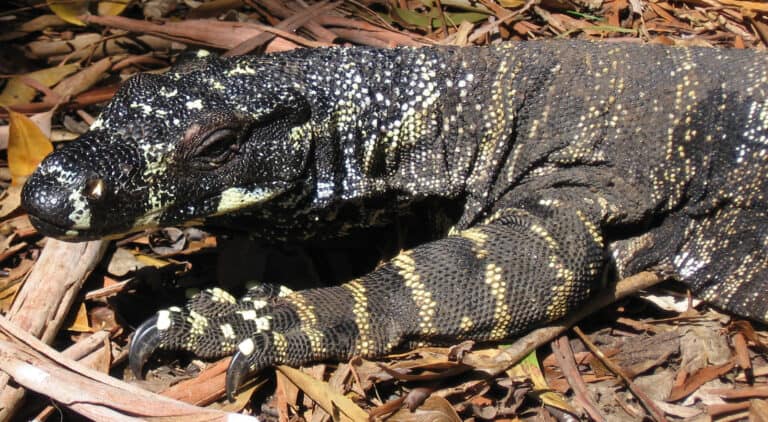
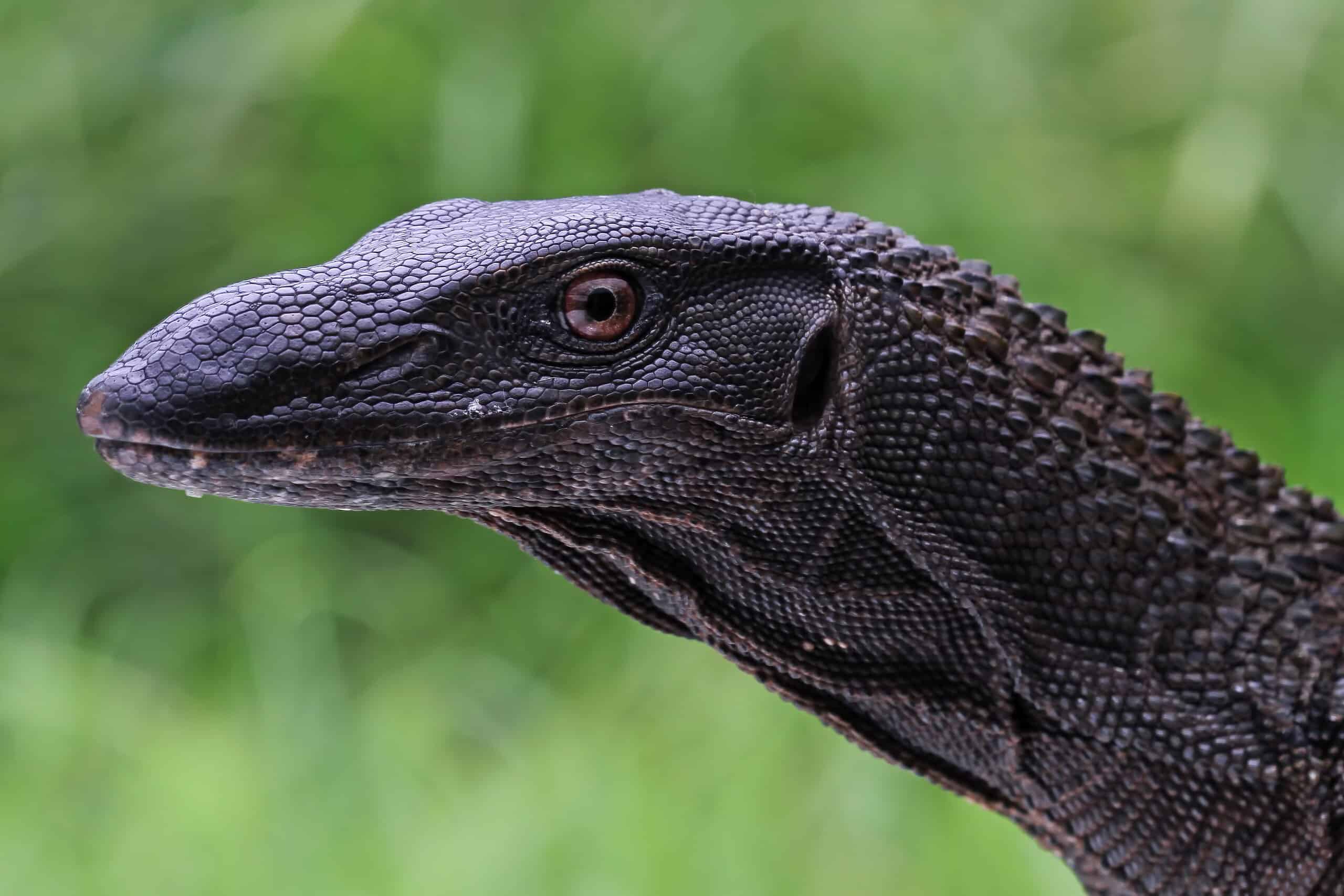
A black dragon is a water monitor, a big lizard native to Indonesia, with a genetic change that turns the whole animal black. Most water monitors are dark on top and pale yellow underneath, so a black dragon looks like albinism in reverse. Only the Komodo dragon grows bigger, and the two look a lot alike. Adult water monitors usually weigh 35 to 44 pounds, and the largest reach around 110. They have sharp claws, strong jaws, sharp teeth and a powerful tail, and they climb trees to get away from danger.
Phantom put that strength to use. He broke part of the shed’s roof and scampered off.

A black dragon water monitor, an Indonesian species that can reach five feet long and weigh over a hundred pounds.
©reptiles4all/Shutterstock.com
Why He Came Back
He’d had a decent setup: the run of the backyard, and a shed with a heat lamp in it. A lizard can’t make enough of its own body heat. Like other reptiles, he has to get his warmth from his surroundings, whether that’s a sunny spot or a heat lamp. A reptile that gets too cold slows down and turns sluggish. In snakes, digestion slows so much that food can spoil in the stomach.
That’s why the weather mattered. Cold, wet weather was moving into Southern California while Phantom was out, and his foster family was worried. Black dragons in the wild live near water and dig burrows. Phantom’s shelter was a shed with a lamp in it. Nobody knows exactly where he went. He came back to the shed on his own after three nights, unharmed.
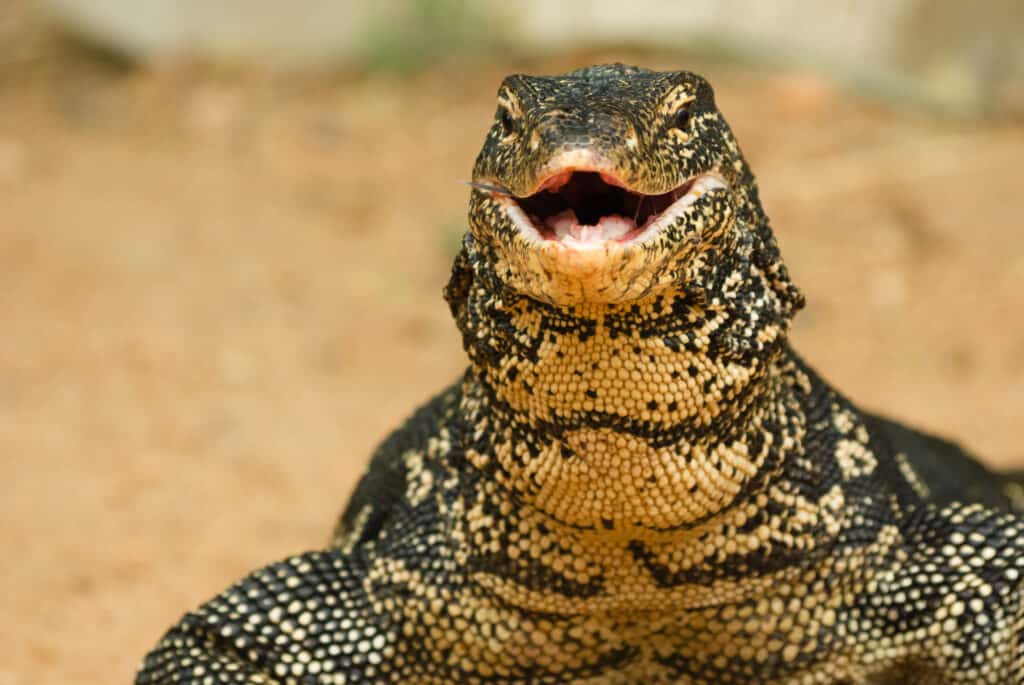
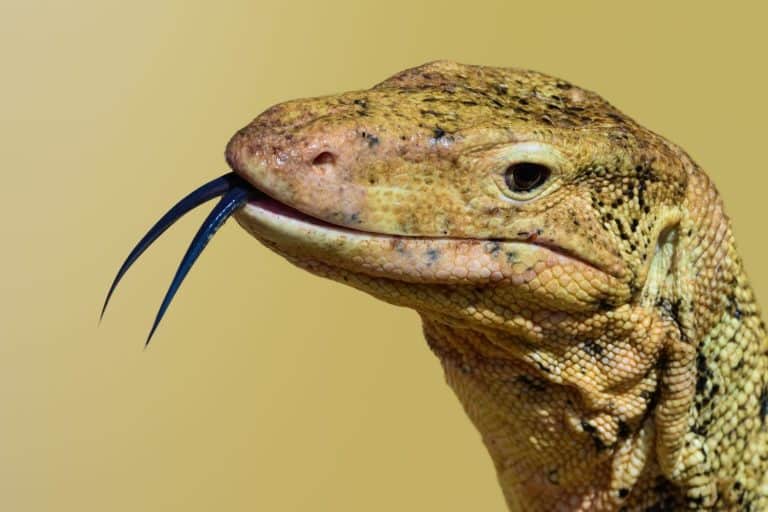
Asian water monitors have dark markings with yellow spots. Phantom, the escaped black dragon water monitor, is a type of water monitor.
©iStock.com/Vidu Gunaratna
What Happens to Him Now
Seal is working through a lot of inquiries from people hoping to give him a permanent home, many of them prompted by all the attention his escape got. She’s blunt about how a lizard like this ends up in a backyard shed at all. “I personally don’t think that these animals should have been brought into captivity in the first place,” she told KTLA’s Hailey Winslow. “They are so large. They need so much socialization. They need so much space.”
I personally don’t think that these animals should have been brought into captivity in the first place. They are so large. They need so much socialization. They need so much space.
“We are still looking for a proper forever home for Phantom,” she wrote. Until one turns up, he’s back where he started the week, in the shed he broke out of on Monday and tried to break back into on Thursday.