
Quick Take
- A single gene tied to taste switched on right when the ants' behavior changed. Could it explain their strange appetite?
- A harmful compound might be exactly what a sick colony craves, yet the same thing hurts healthy ants.
- The evidence that this behavior actually saves lives is shakier than you'd expect.
- A five-second dunk was all it took to set the whole experiment in motion. What happened next surprised the researchers.
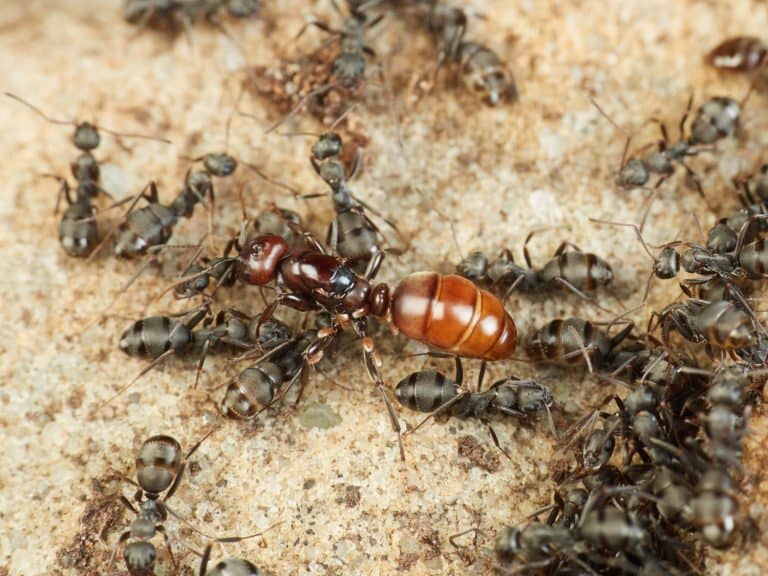
Ants soaked in spores of an insect-killing fungus kept foraging on a food laced with hydrogen peroxide, a bitter compound ants normally avoid, while healthy colonies barely interacted with it after the first few days. The gap was clear from day 4 to day 10 after infection, the acute phase of the disease.
The sick ants kept eating their regular food too. In a second round of the experiment, infected and healthy colonies alike preferred the standard food on every single day. Infection made the ants forage more on both dishes, and the change was more pronounced on the peroxide one.
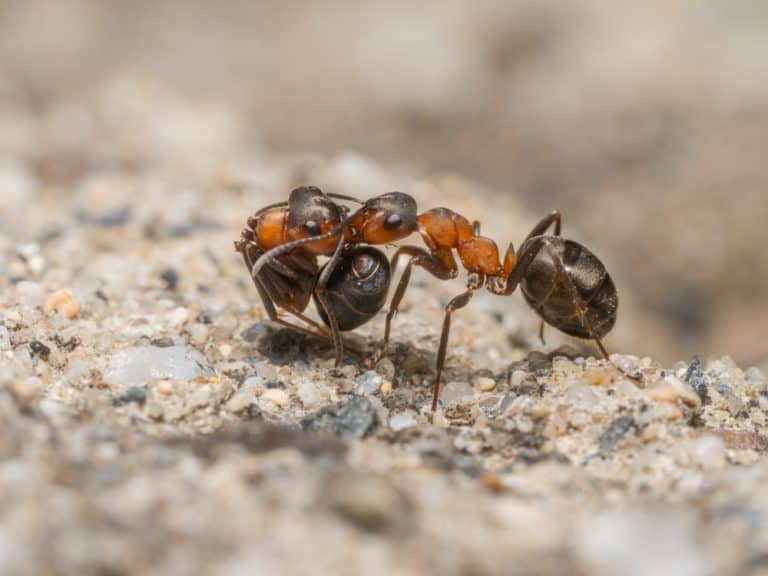
Jason Rissanen, Christoph Hahn, Heikki Helanterä and Dalial Freitak, of the University of Graz in Austria and the University of Helsinki’s Tvärminne Zoological Station in Finland, published the study in Proceedings of the Royal Society B in November 2026. It’s the first confirmation of self-medication in Lasius platythorax, a common woodland ant.
A five-second dunk in fungal spores
In May 2024, the team collected workers from 15 wild nests in a wood clearing in southern Finland. Each nest was split into six sub-colonies of 120 workers, housed in plastic boxes roughly 3 by 6 by 4 inches.
Half the sub-colonies were infected with the fungus Beauveria bassiana. The ants went into a hollow tube with a mesh bottom and a screw-top lid, which was submerged in spore solution for 5 seconds and moved around so every ant was exposed. They dried on tissue paper before going back to the nest, and control ants got the same dunk in clean solution.
Each box got two caps of fresh food daily: a standard honey, egg and agar diet, the same diet with 4% hydrogen peroxide, or one cap of each. The choice boxes were photographed four times a day for 9 days, and any ant touching food with a leg or antenna counted as a forager. Dead ants were removed each morning and kept on water-agar plates for 24 hours to confirm the fungus had killed them.
Sick colonies foraged more on both foods
The team repeated the choice test in May 2025 with 15 nests from the same area, this time in sub-colonies of 500 workers. Infected colonies foraged significantly more on the peroxide food on days 4 through 10, and more on the standard food on days 5 through 9.
In the first experiment, the one in 2024, the authors describe peroxide feeding as “associated with improved survival”. Infection significantly raised deaths in colonies given only standard food. In colonies with peroxide food, alone or as a choice, the rise in deaths wasn’t statistically significant. The evidence for a benefit is limited: diet had no significant overall effect on survival, and infected colonies on different diets didn’t differ significantly from one another.
Peroxide harms the fungus and the ant
Hydrogen peroxide plays a role in insects’ own immune signaling and can directly harm pathogens. It also harms healthy ants. Many compounds that animals use as medicine are toxic, and healthy individuals avoid them. Earlier studies found the same peroxide food is medicinal for another ant, Formica fusca. Freitak co-wrote a September 2015 paper in Evolution titled “Ants medicate to fight disease”.
Lasius platythorax colonies hold thousands to tens of thousands of workers and a single queen. Large colonies make ants more susceptible to catching and spreading disease, and foragers may have to rely on information from nestmates to adjust what the whole colony eats.
A taste gene rose on day 4
The team sequenced RNA from ant heads on day 2, when spores have penetrated the outer shell and begun growing inside, and on day 4, after which deaths typically begin. Infection had significantly changed the activity of 504 genes by day 2 and more than 900 by day 4.
Two forms of a gene called Malvolio were turned up within a group of genes labeled “sensory perception of sweet taste”. In fruit flies, Malvolio influences responsiveness to sugar, and in honeybees it influences whether a forager collects pollen or nectar. Sweet and bitter tastes are connected in insects, so a shift in one could change how a bitter food registers.
The authors think Malvolio may also have an immune job. It’s related to the NRAMP genes of vertebrates, which move metal ions and are thought to limit the ions pathogens need to grow.
In the 2025 experiment, Malvolio activity was significantly higher in infected ants on days 4 through 11 and again on day 13, overlapping the peroxide foraging on days 4 through 10. How the gene affects taste in ants is still unknown. The paper was accepted on Sept. 28, 2026, and the authors call Malvolio a candidate gene whose causal influence on self-medication should be studied next.