
Quick Take
- The federal agency created to protect bald eagles ordered one killed, and its justification is unknown. See the agency's reasoning →
- Phoenix's own vet cleared her for a permanent home, but the government overruled her without ever examining the bird. Phoenix's placement criteria →
- A mayor with no federal authority managed to reverse an official government euthanasia order, and what he did to make it happen is surprisingly simple. How the mayor intervened →
- Bald eagles have a separate set of rules from every other protected bird, and those rules are what nearly cost Phoenix her life. Eagle-specific federal rules →
For one injured female bald eagle, finding refuge in a Tennessee bird sanctuary should have been the path to recovery. However, the same federal agency that protects her species was quietly authorizing her euthanasia.
But one small-town mayor who also happens to be a wildlife rescuer had other ideas. Thanks to his efforts, Phoenix, the bald eagle with the drooping wing, escaped that fate. But why did officials want her dead? And how did one man convince them otherwise?
Here’s the full story of Phoenix, the eagle saved by one man’s advocacy.
Continue reading
The Injured Eagle
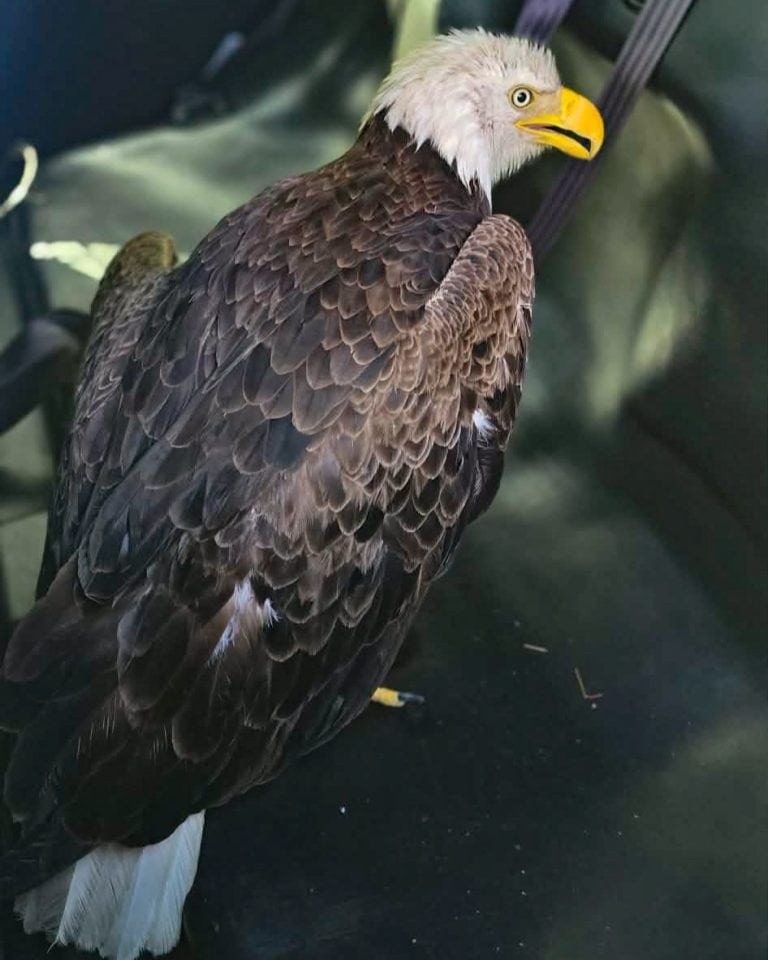
Phoenix is a five-year-old female bald eagle who suffered severe wing injuries. When she was found on April 7, 2026, by Larry Eaton, a wildlife rescuer and the mayor of Athens, Tennessee, she was immediately transported to the Owl Ridge Raptor Center. It turns out that Phoenix had a broken radius and ulna, the two bones in her lower wing.
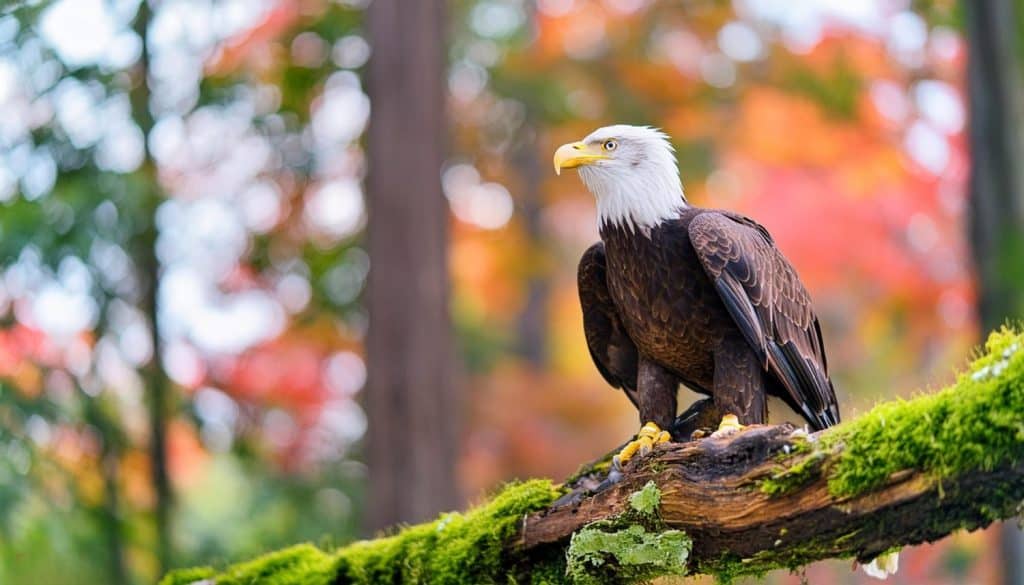
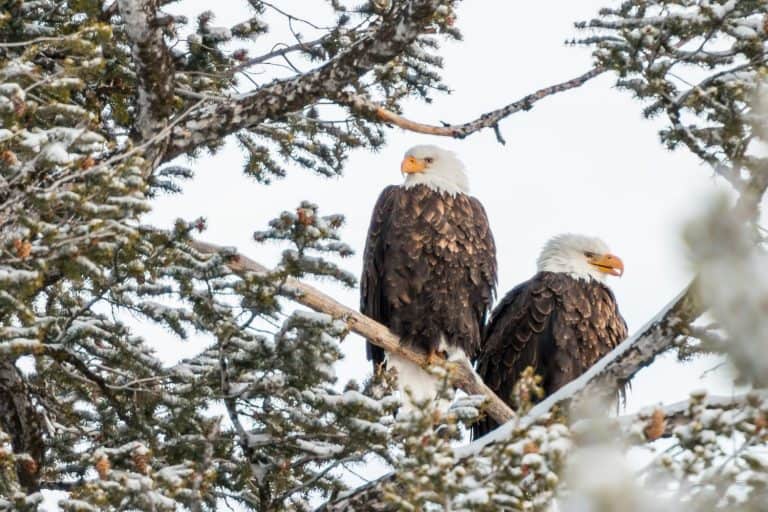
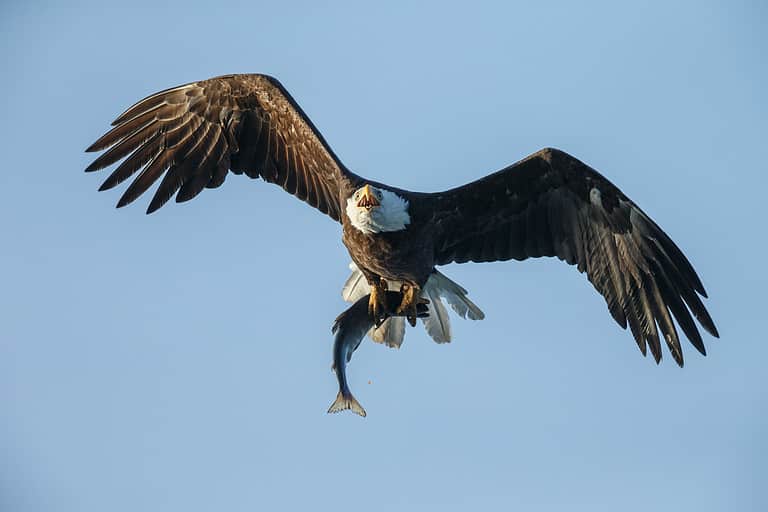
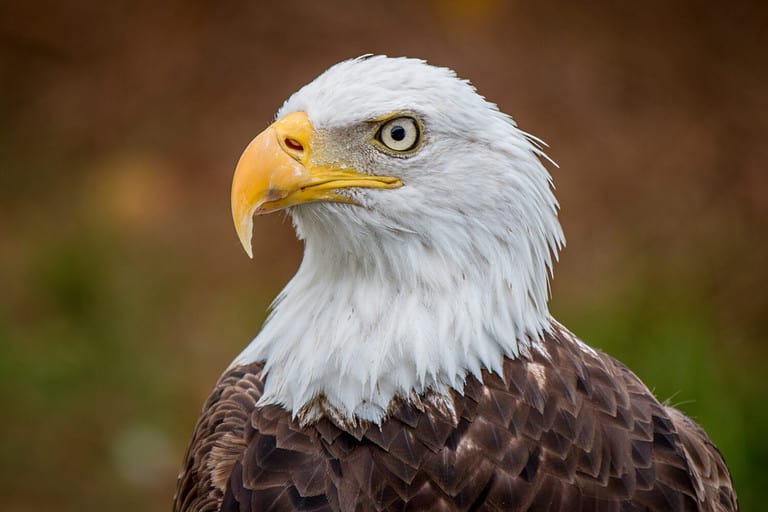
Bald eagles, like this one, are a protected species in the United States.
©Aikhan000042/Shutterstock.com
Once the severity of her injuries was known, she was transferred to the University of Tennessee on April 9th, where she underwent surgery to repair the bones. Following surgery, she returned to the center and spent months in physical therapy to rehabilitate her wing and allow her to fly again.
Why Federal Officials Wanted Her Euthanized
Although her wing was repaired, it did not heal one hundred percent. Her treating veterinarian, T. A. Haig, wrote in a June 16 letter that the wing still drooped and Phoenix could not fly well. As a result, she could not be released back into the wild. Haig also noted that Phoenix had adapted well to captivity and was a good candidate for private placement. The Raptor Center even lined up a prospective new home for the eagle.
However, U.S. Fish and Wildlife Service (USFWS) had different plans. Because eagles are a nationally protected species, private placement requires a permit, which the USFWS was not inclined to issue. Their initial response was to deny the requested permit and order the eagle to be euthanized within seven days.
The Mayor Who Wouldn’t Give Up
Eaton, the mayor and rescuer, did not agree and appealed the decision. Eaton believed that the United States national emblem deserved to be protected and requested USFWS to reconsider.
However, USFWS remained firm. Permit specialist Mariah Letowt reiterated the agency’s decision to deny the permit and order the eagle’s euthanasia, despite Eaton’s protests.
As quoted in The Chattanooga Times Free Press, Letowt responded to the request with “I know it is not the outcome you were hoping for, and I assure you we thoroughly reviewed the supplemental info you provided and did not make this decision lightly, but we maintain our previous decision that Phoenix is not a good candidate for captivity and that euthanasia is the most humane action for this eagle. Please humanely euthanize Phoenix within seven calendar days and send me an email confirmation. Please also take comfort in knowing the remains sent to the repository are greatly honored by recipients.”
However, the fight to save Phoenix’s life continued.
Eaton demanded full documentation about how the agency reached its decision and pointed out that no USFWS veterinarian had examined Phoenix before the agency made its decision and issued its order. Eventually, Eaton enlisted the help of U.S. Senator Bill Hagerty’s staff to press the case.
After Eaton enlisted Senator Hagerty’s staff, the agency reversed its original order.
“The U.S. Fish and Wildlife Service is working closely with wildlife rehabilitation professionals as we continue to evaluate the eagle’s health and determine the most appropriate course of care,” the agency wrote in a statement emailed to the newspaper. “At this time, the service is not recommending euthanasia and is actively exploring other options for the eagle’s continued care. We understand the concern for the eagle’s well-being and share the desire for the best possible outcome.”
With this change of heart, Phoenix’s future looks much brighter.
When Are Migratory Birds Euthanized?
Wildlife rehabilitation centers like Owl Ridge operate under the purview of the USFWS, which issues permits for centers to treat migratory, threatened, or protected species, including eagles.
Under federal rules, wildlife rehabilitation centers must euthanize a bird if it cannot feed itself, perch upright, or move around without further injuring itself. Additionally, the bird must be put down if it is completely blind or loses a leg or foot. If the bird doesn’t meet these conditions, it can be moved to a permanent sanctuary home instead of being euthanized. Generally, those decisions are left to the treating veterinary team.
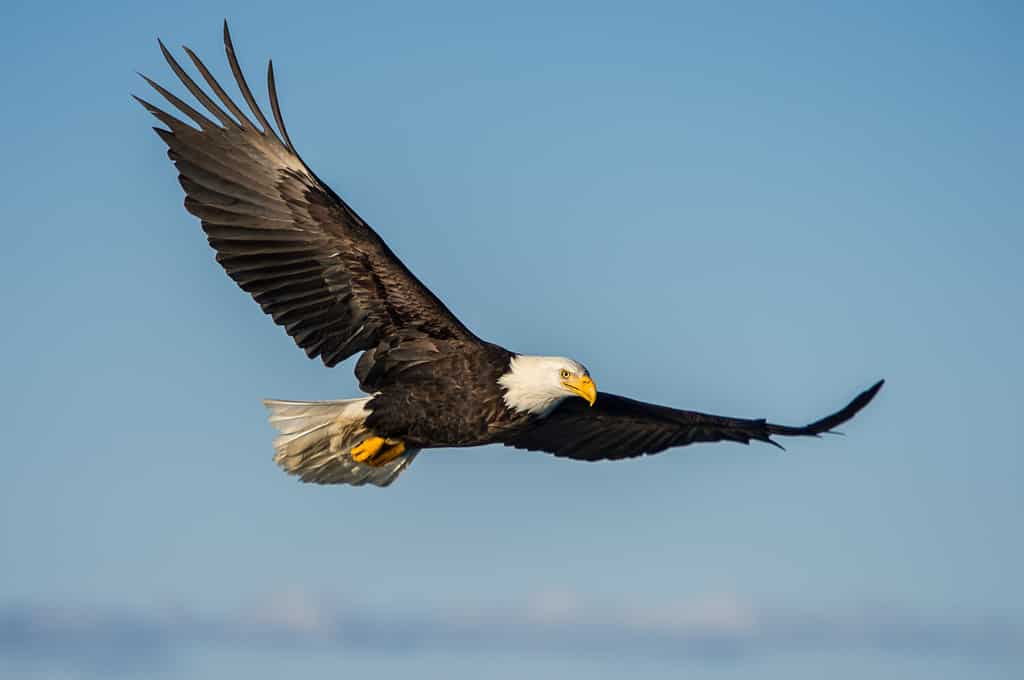
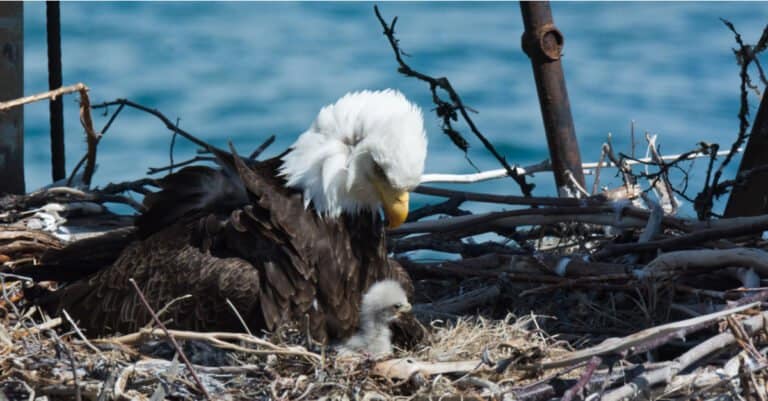
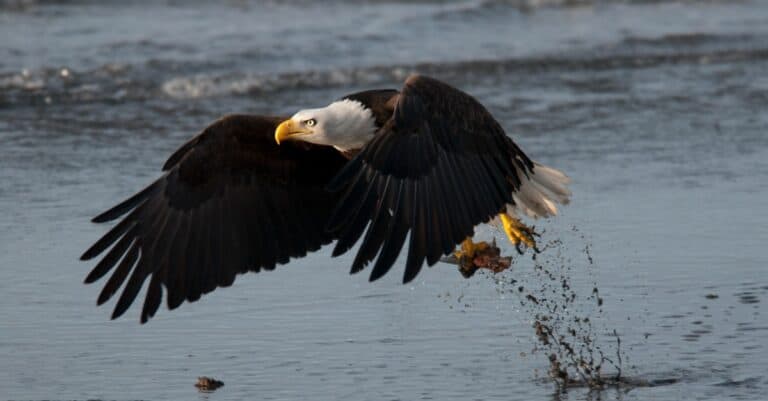
Wildlife rehabilitation centers are under strict rules when treating bald eagles.
©FloridaStock/Shutterstock.com
However, when it comes to bald eagles and golden eagles, the rules are slightly different. When those species are injured, USFWS must be involved whenever possible. Unless the injuries are so severe that immediate euthanasia is necessary, the agency must approve any decision to euthanize an eagle.
That’s what happened in Phoenix’s case.
When Is an Eagle a Good Candidate for Private Placement?
Injured birds who will survive but can’t be released back into the wild are often considered for placement in sanctuaries or educational facilities. Birds that are calm around people, get along with other birds, and can live comfortably in an enclosure are considered good candidates for such placement.
This was the case with Phoenix. Her treating veterinarian assessed her to be a great placement candidate, and Owl Ridge staff said that she got along well with her enclosure mates and was used to having her cage cleaned by humans.
It was this feedback that prompted Eaton to fight so hard to convince USFWS to reverse its original decision. Now that the agency has backtracked, Phoenix is on track to live a long life in captivity.
Once everything is finalized, the plan is to move her to Radnor Lake State Park in Nashville. The park is home to the Barbara J. Mapp Aviary Education Center, which already has three other bald eagles, plus a red-tailed hawk, a great horned owl, a black vulture, and a golden eagle as permanent residents.