
Backyard pools are a wonderful way to spend warm days outside. Not only do people take advantage of them, but wild animals also enjoy cooling off by taking a dip. Lucky for us, such adorable footage is captured from time to time.
On a warm August day this past summer, a dog and some unusual friends decided to take a swim, leading to a cute video online. Many who have seen the video proclaimed they want to be besties with these animal swimmers!
Dog Takes Chicken and Duck Friends for a Swim
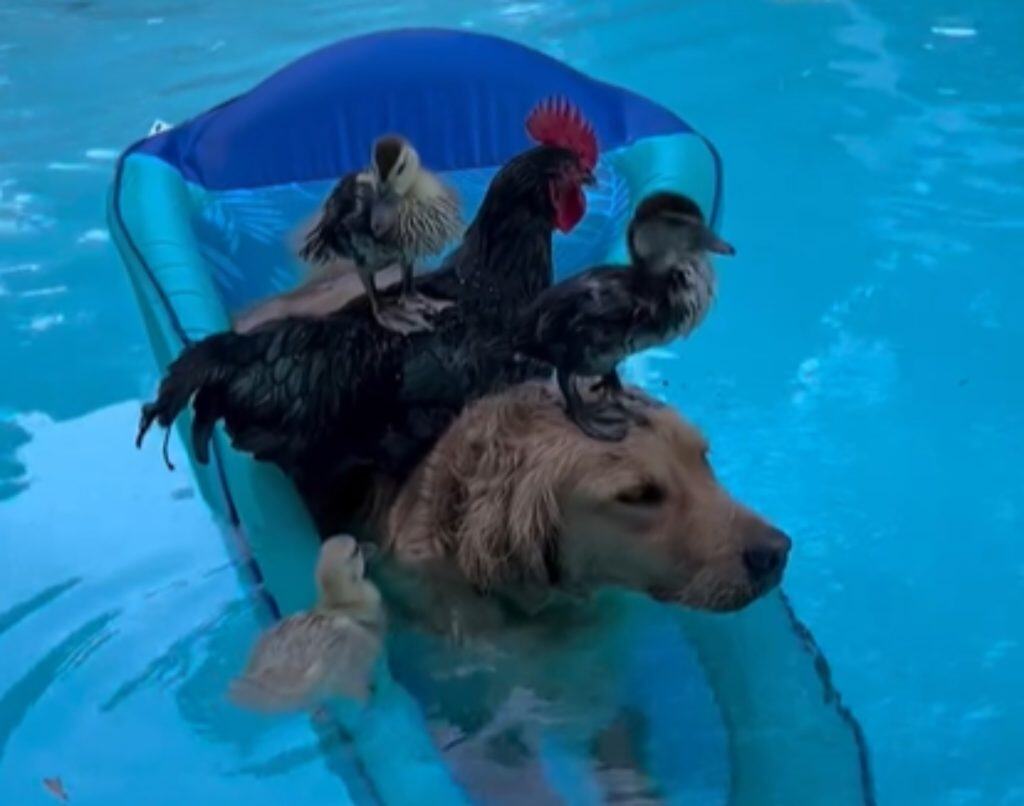
Junie takes a swim with a chicken and several ducks in tow.
© – Original
On hot summer days, people love to take a dip in the pool to cool off. Dogs are even known to join the family from time to time. But one family dog took things to the next level, by not only lounging and paddling around during her pool time but by doing so with some very unlikely friends.
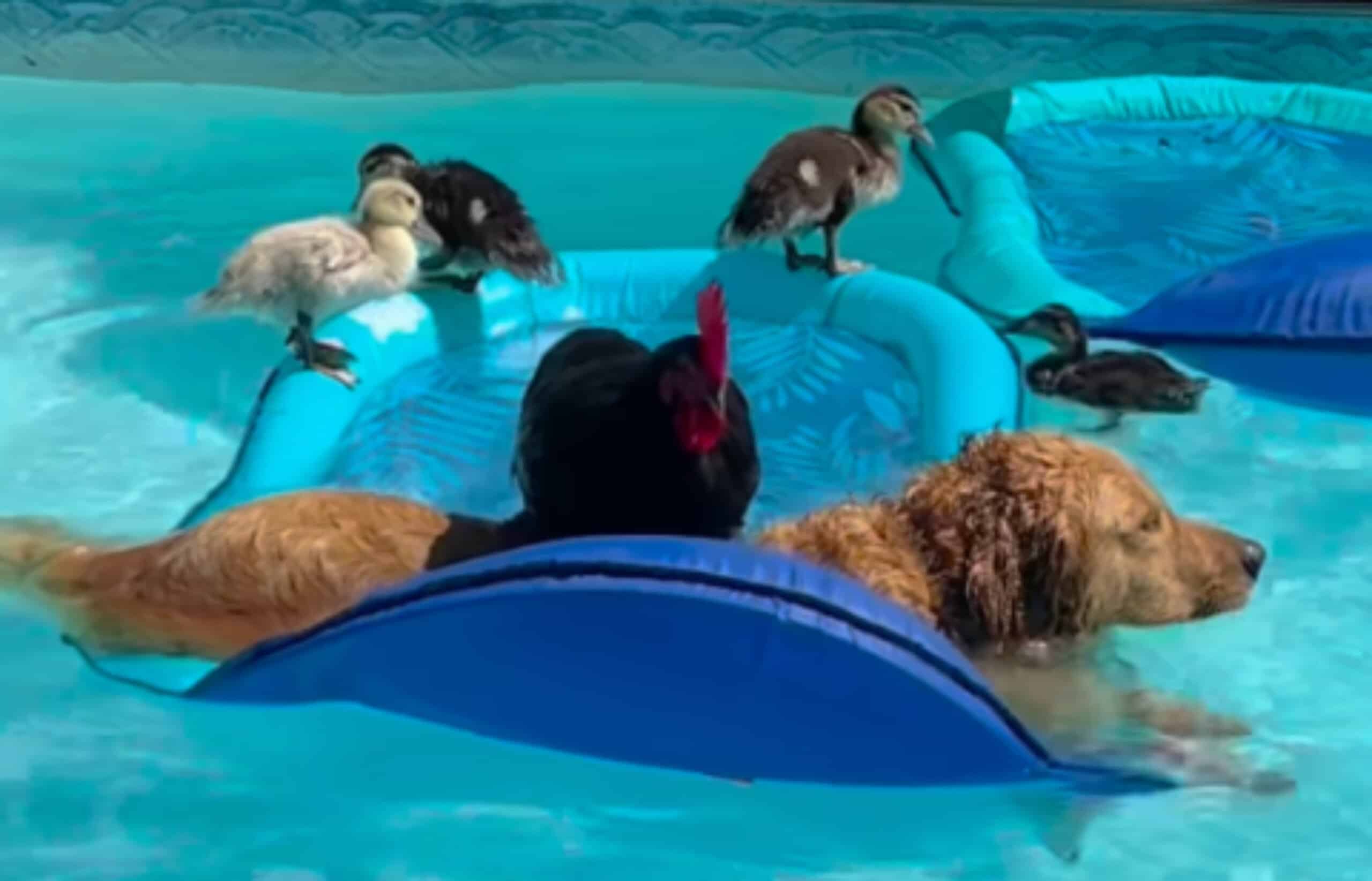
A golden retriever named Junie has become a sensation after a video of her summer pool antics garnered nearly 100,000 likes on Instagram. The footage shows Junie initially lounging in the pool on a hot August day in a floatie, looking quite relaxed. Junie is not alone in the floatie, which also occupies a chicken and four ducks.
Throughout the video, Junie’s flock of birds does not stray far from her. At one point, Junie leaves the floatie, sending the ducks swimming into the water. However, the chicken stands firmly on the dog’s back as Junie swims. Later in the video, one of the ducks is seen on the chicken’s back on a separate floatie.
Another adorable clip shows the four ducks on Junie’s back as she chases a ball in the water. All of the animals in the video look completely comfortable in their environment, and under no distress.
It should also be noted that at one point in the video, there is a quick glimpse of one of the animals’ owners in the pool. Therefore, it appears the animals were supervised at all times while they enjoyed their water play.
Chickens Are Poor Swimmers and Don’t Enjoy Swimming
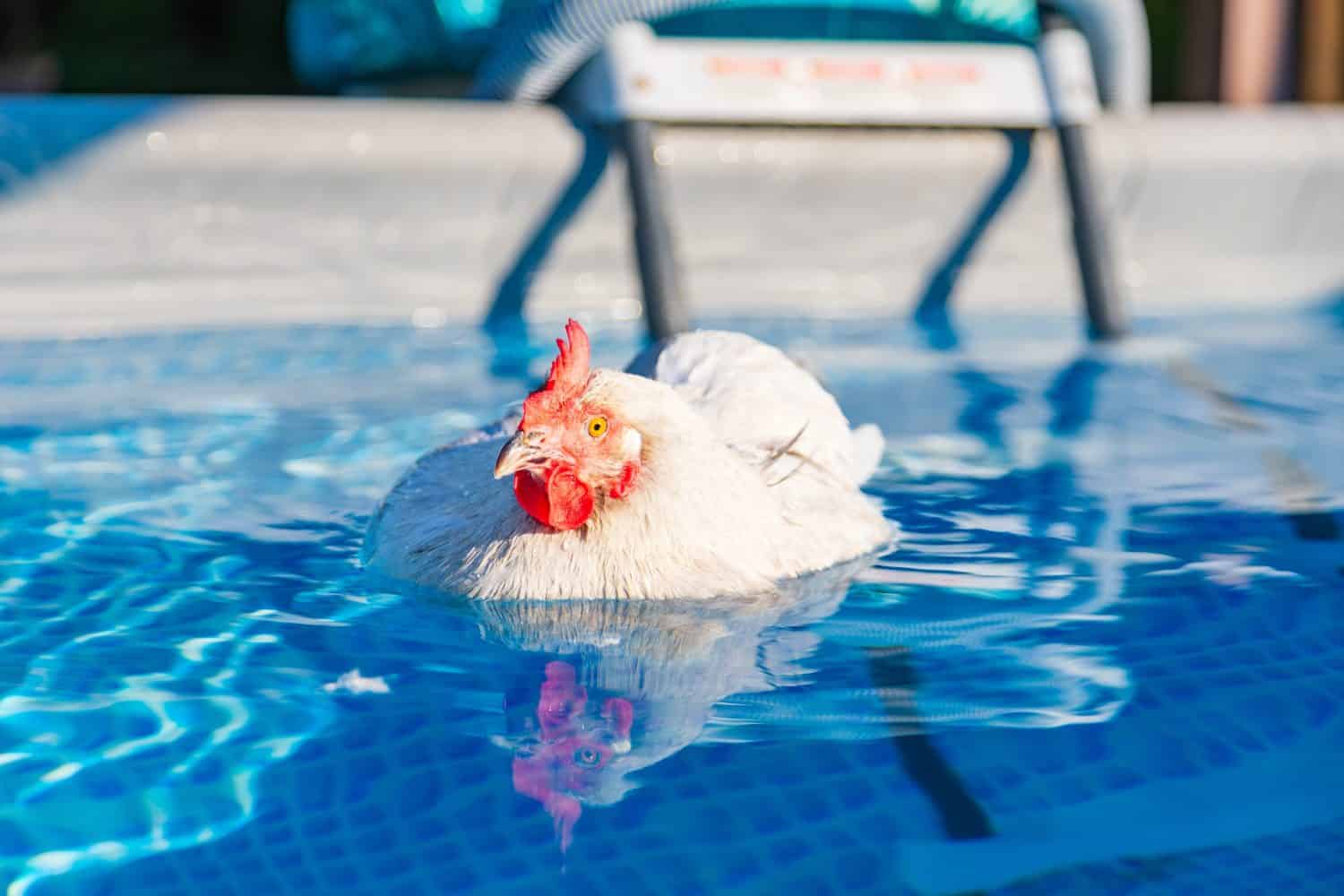
On a hot day, chickens may enjoy a quick dip of their feet in a shallow pool, but swimming is not an activity they enjoy.
©Chad Robertson Media/Shutterstock.com
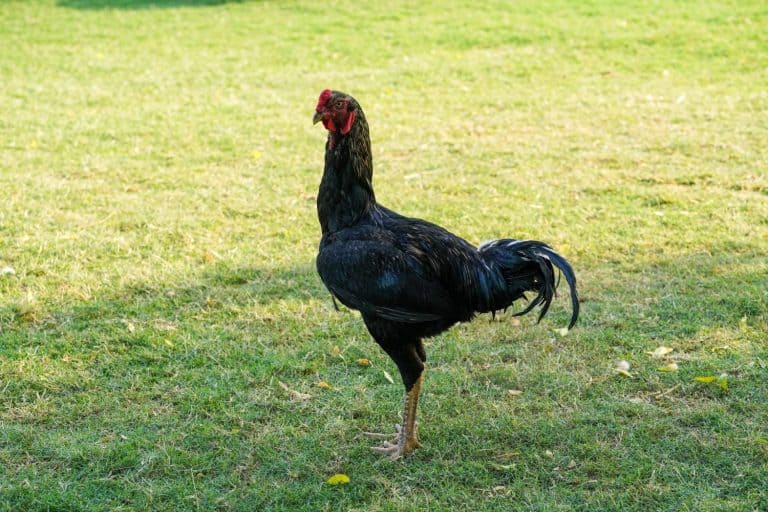
The chicken in the Instagram video never swims, as these birds are bad swimmers and they get anxious when they are forced into the water.
Unlike ducks and other waterfowl that are at home swimming and floating, chickens avoid large pools of water. Chickens’ bodies are not built for swimming. Specifically, chickens’ feathers are not waterproof, their feet are not webbed, and the birds have no way to right themselves if they lose their balance (which happens often).
With that said, chickens do tend to enjoy shallow pools of water where they can soak their feet. The cool water helps to cool their bodies. However, chickens do not sit directly in water, even to bring down their body temperature. Instead, chickens give themselves a dust bath to stay cool (and to clean their feathers).
Swimming Helps Ducks Stay Healthy
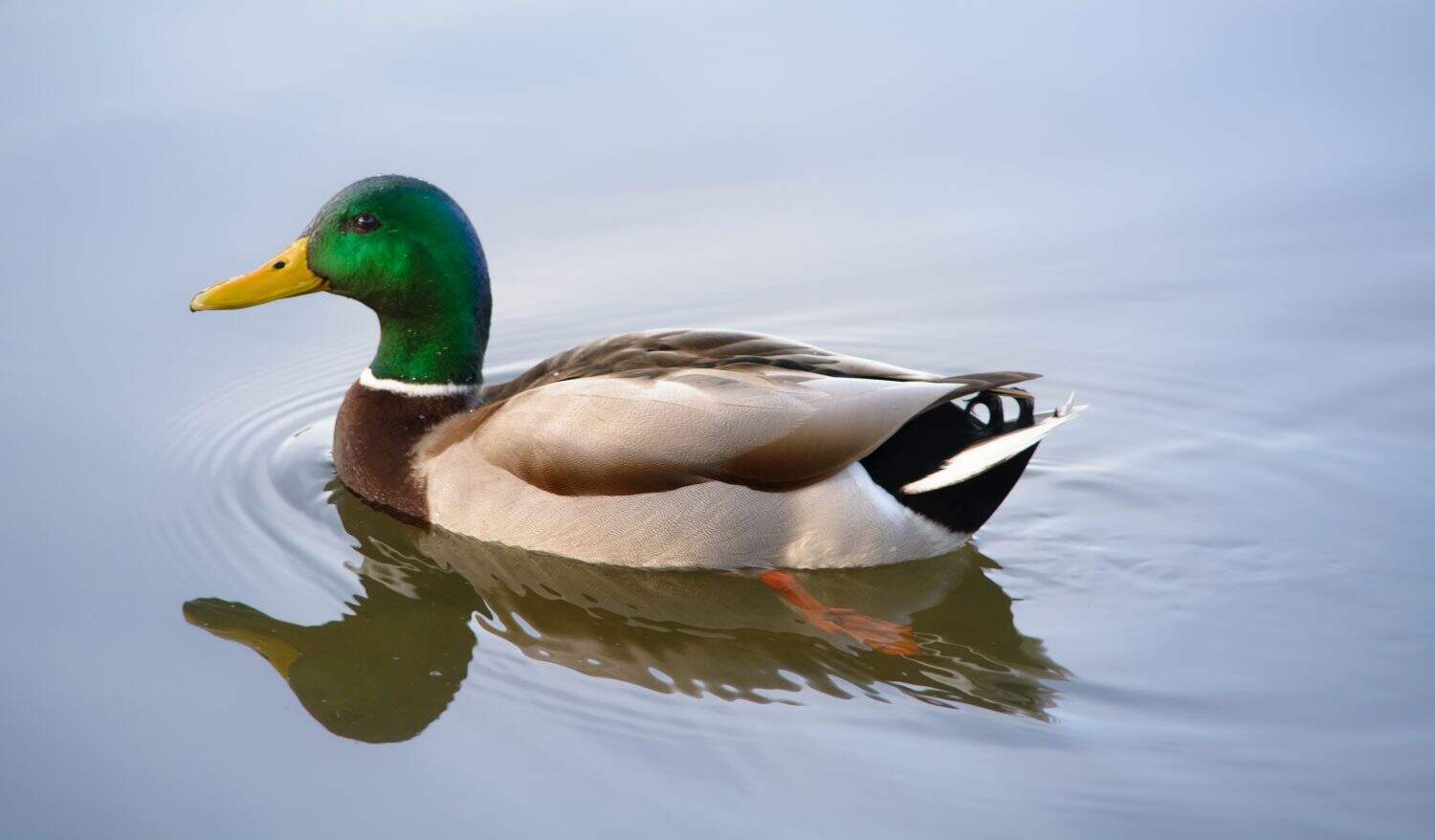
Ducks swim not only for fun but also to remain in optimal health.
©LandscapeWorld/Shutterstock.com
It should come as no surprise that ducks enjoy swimming. When they are on their migratory paths, they may swim for up to 10 hours per day, quite a significant portion of the day spent floating or actively moving on the water.
Swimming is a leisure activity for ducks at times. However, ducks must swim for the following health reasons:
- Exercise, which helps to promote circulation in the body and muscle strength
- Lubrication, which keeps feathers in good condition and clean
- Socialization, which promotes good mental health
- Utilization of natural instincts to hunt and forage
Ducks can swim in a variety of different types of water, from freshwater ponds to saltwater oceans. As can be seen in the video, this includes swimming pools.
Swimming pool water will not harm ducks as long as the pH of the water is no more than 7.8. However, it is not recommended to keep ducks in swimming pools because the pool can quickly become unsanitary from duck droppings. When this happens, according to Fowl Family, the water may become contaminated with the following diseases:
- E. coli
- Salmonella
- Campylobacter
- Cryptosporidium
It is best to help your ducks cool off by offering a pond or another water source other than a pool. This will not only prevent exposure to water that is too saturated with chlorine, but it will also keep pools clean and disease-free.
Not All Dogs Enjoy Swimming, Even Those Deemed “Water Dogs”
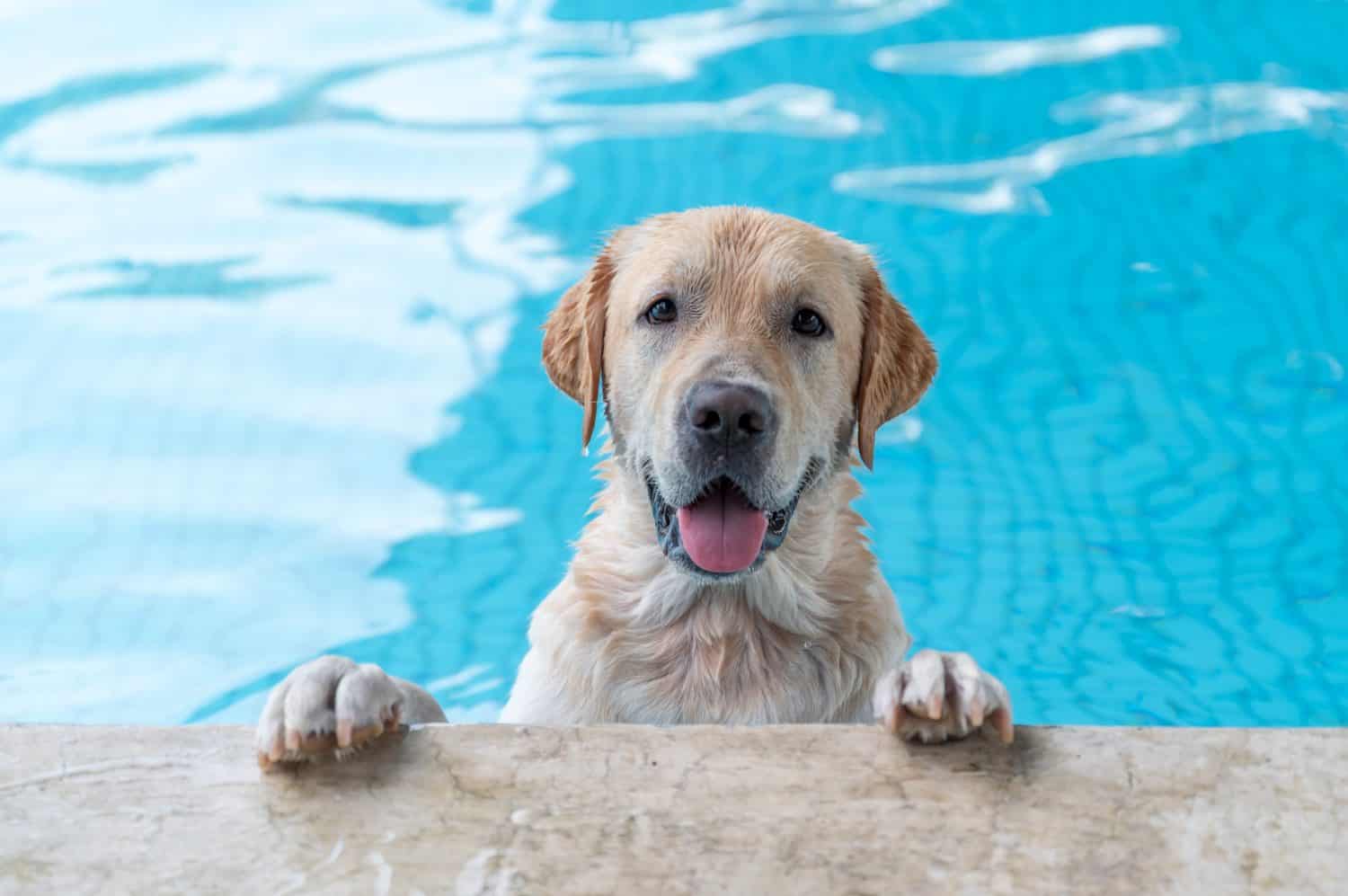
Many dogs enjoy a dip in the family pool, but some would prefer to remain out of the water.
©Chendongshan/Shutterstock.com
Several breeds of dog are physically better swimmers than others. These particular breeds have a water-repellent coat, webbed feet, and natural swimming ability. Consequently, more often than not, these dogs enjoy being in the water more than those that lack the physical traits of a water dog.
Some of the most common water dogs include:
- Portuguese Water Dog
- Irish Water Spaniel
- Golden Retriever
- Labrador Retriever
- Chesapeake Bay Retriever
- Standard Poodle
- English Setter
- Newfoundland
- Irish Setter
However, not every individual of these breeds enjoys being in the water.
While breed and physical characteristics may make specific dogs more adept at swimming, the pup in question may not naturally take to the water. If a dog’s personality is such that it does not like getting wet or is afraid of the water, it will not swim. This is why those who want a swimming dog should do their best to get their dog acclimated to water at the earliest possible age.
Teaching A Dog to Swim
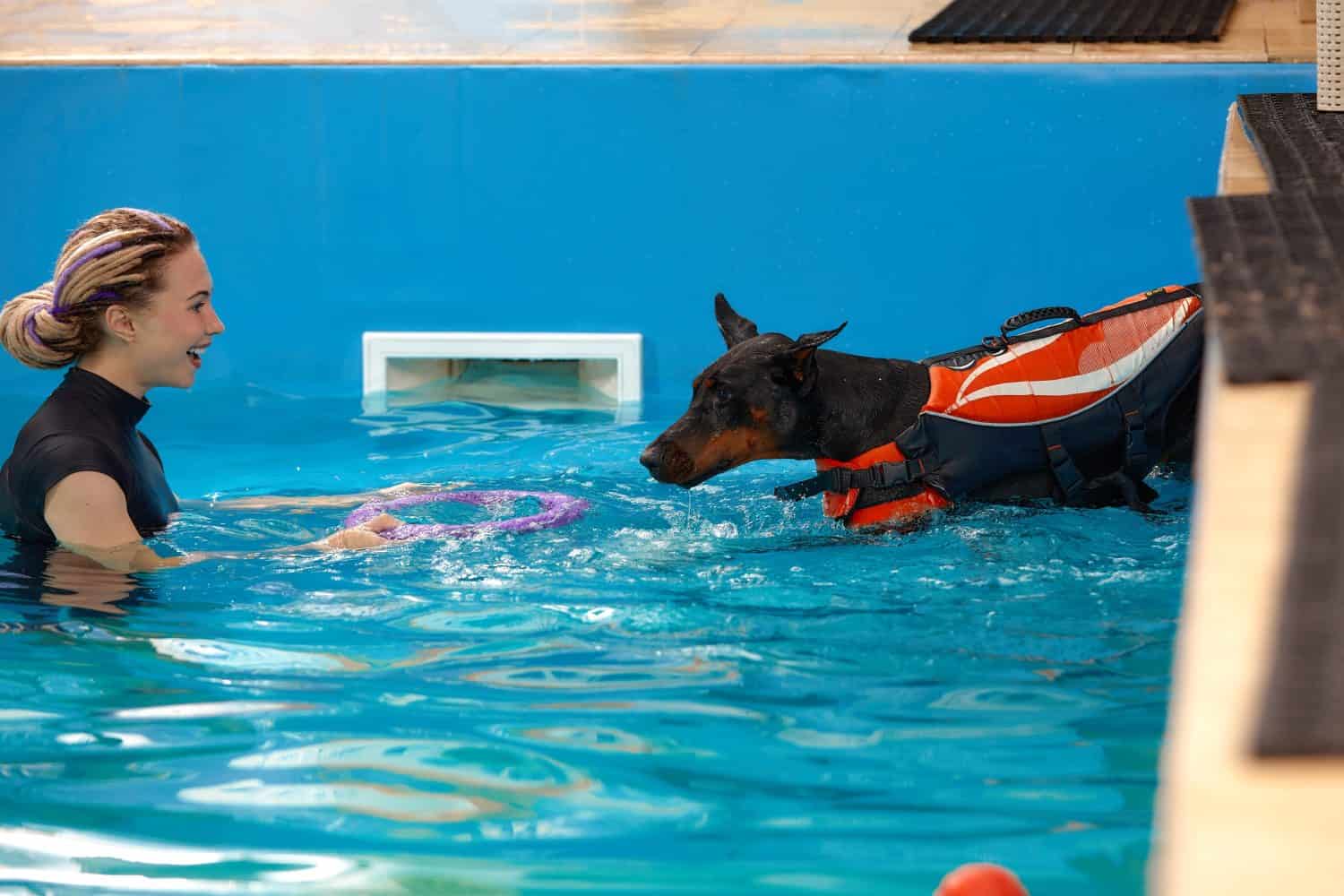
Dogs need to be taught to be safe around water.
©Gerain0812/Shutterstock.com
Even water dogs should be introduced to water in a way that is calming and doesn’t elicit fear. Unfortunately, some dog owners assume that canines instinctively know how to swim. While some pups are built for paddling in the water, all dogs need help swimming before being allowed to go it alone with only supervision from the edge of the pool or shoreline.
Some simple ways to teach dogs to swim include:
- Choose a quiet environment with calm water.
- Put dogs in life vests until it is clear they can remain buoyant.
- Never push dogs into the water. Allow dogs to explore water on their own before encouraging them to come in.
- Slowly walk dogs into the water, using shallow water as an introduction to swimming.
- Support a dog’s weight by holding them under their chest and belly.
- Reward dogs with treats for a job well done.
- Take dogs out of the water if they show signs of being scared or having anxiety.
- Consistency is key when getting dogs used to the water and swimming.
Following these guidelines will help dogs become comfortable with the water. Even if a dog decides it does not want to be a regular swimmer, owners can find relief in the fact that the dog can swim, which could be lifesaving if the dog accidentally falls into a pool.