
Quick Take
- Bettongs, small marsupials in Australia that weigh under 6 pounds, can crack Santalum seeds with over 220 pounds of bite.
- Bettongs crack hard seeds with different skulls: burrowing bettongs use a short snout for power; brush-tailed bettongs keep a long snout with a reinforced skull.
- Bettongs are ecological engineers that turn soil, aid seed dispersal, and spread fungal spores. Many bettong species face declines from predators and habitat loss.
If the word “bettong” doesn’t ring a bell, don’t worry — you’re among the vast majority. These rabbit-sized, truffle-sniffing, soil-churning, nut-cracking marsupials are some of Australia’s most overlooked oddballs. Recent findings reveal that these Australian natives can crush hard nuts that would break the jaws of much larger animals. And the way they do it reveals not only how they survive, but how evolution tinkers, compromises, and occasionally gets downright creative. Welcome to the secret life of the bettong — one of the animal kingdom’s tiniest heavyweights.
Meet the Bettong
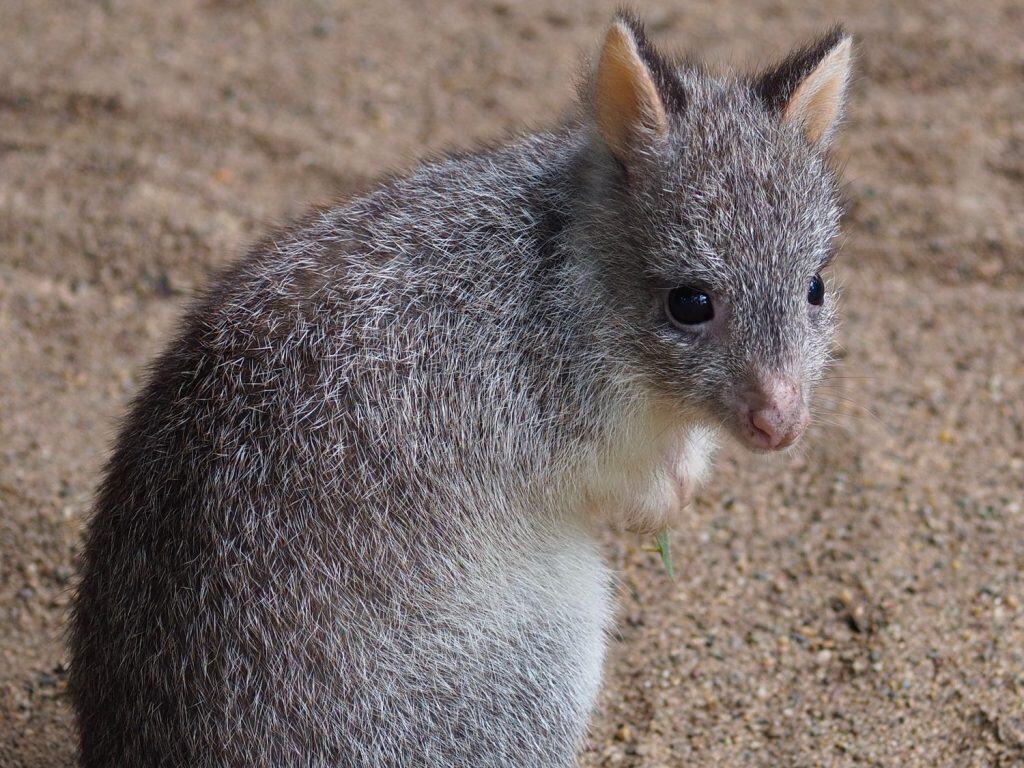
Male bettongs are typically larger than females.
©Andreas Ruhz/Shutterstock.com
Bettongs, sometimes called “rat kangaroos,” belong to the genera Bettongia and Aepyprymnus, making them relatives of potoroos and the now-extinct desert rat-kangaroo. Found only in Australia, these unique marsupials were once widespread across the continent before facing steep declines.
A bettong is roughly the size of a rabbit — 11.5 to 15 inches long — with a tail around the same length. The smallest species, the northern bettong, weighs around 2.5 pounds. The largest, the rufous bettong, weighs just over 6 pounds. Their gray and brown fur coats provide excellent camouflage in the shrublands and woodlands they call home.
Life Under the Radar
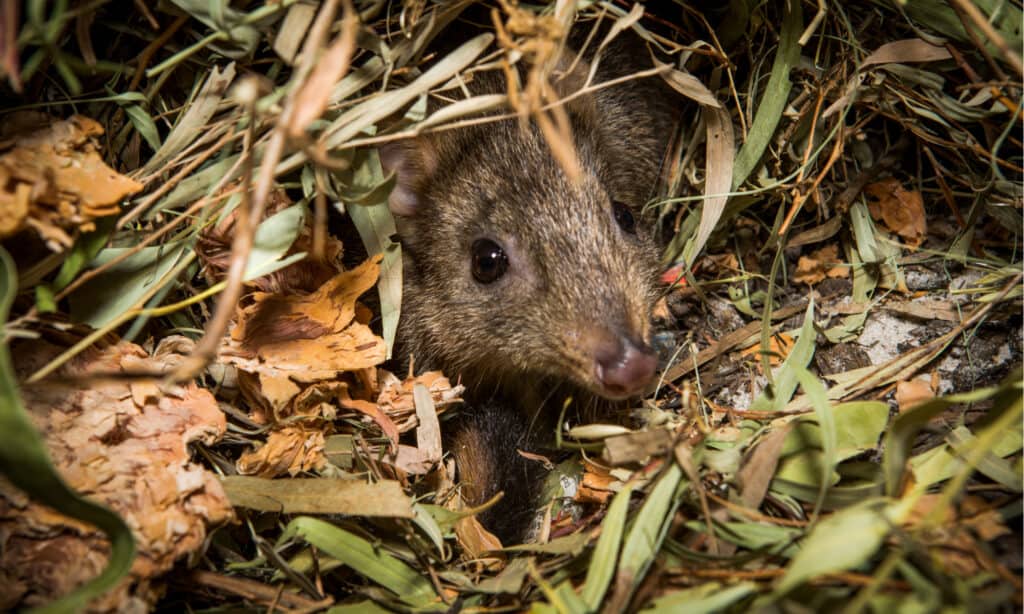
Brush-tailed bettongs are Critically Endangered.
©GPT Photography/Shutterstock.com
Bettongs are active at night and sleep during the day. They build simple nests in shallow, hidden spots on the ground and line them with leaves. They use their prehensile tails to grasp and carry leaves and other materials back to their nests for bedding.
At night, bettongs tirelessly search for food. Many species are specialist truffle hunters that dig up underground fungi, while others eat a wide variety of foods, including seeds, grubs, insects, fruits, tubers, roots, and leaves.
Bettongs are ecological engineers and play an essential role in maintaining the health of the forest. As they dig for food, bettongs help reshape the landscape and soil structure. They turn over the soil, improving water absorption and helping seeds sprout. When they forage, they unintentionally plant seeds and spread fungal spores. Their digging also helps break down leaf litter, reducing the amount of flammable material in the area and lowering the risk of wildfires. Not bad for an animal most people have never heard of!
Australia’s Five Bettongs
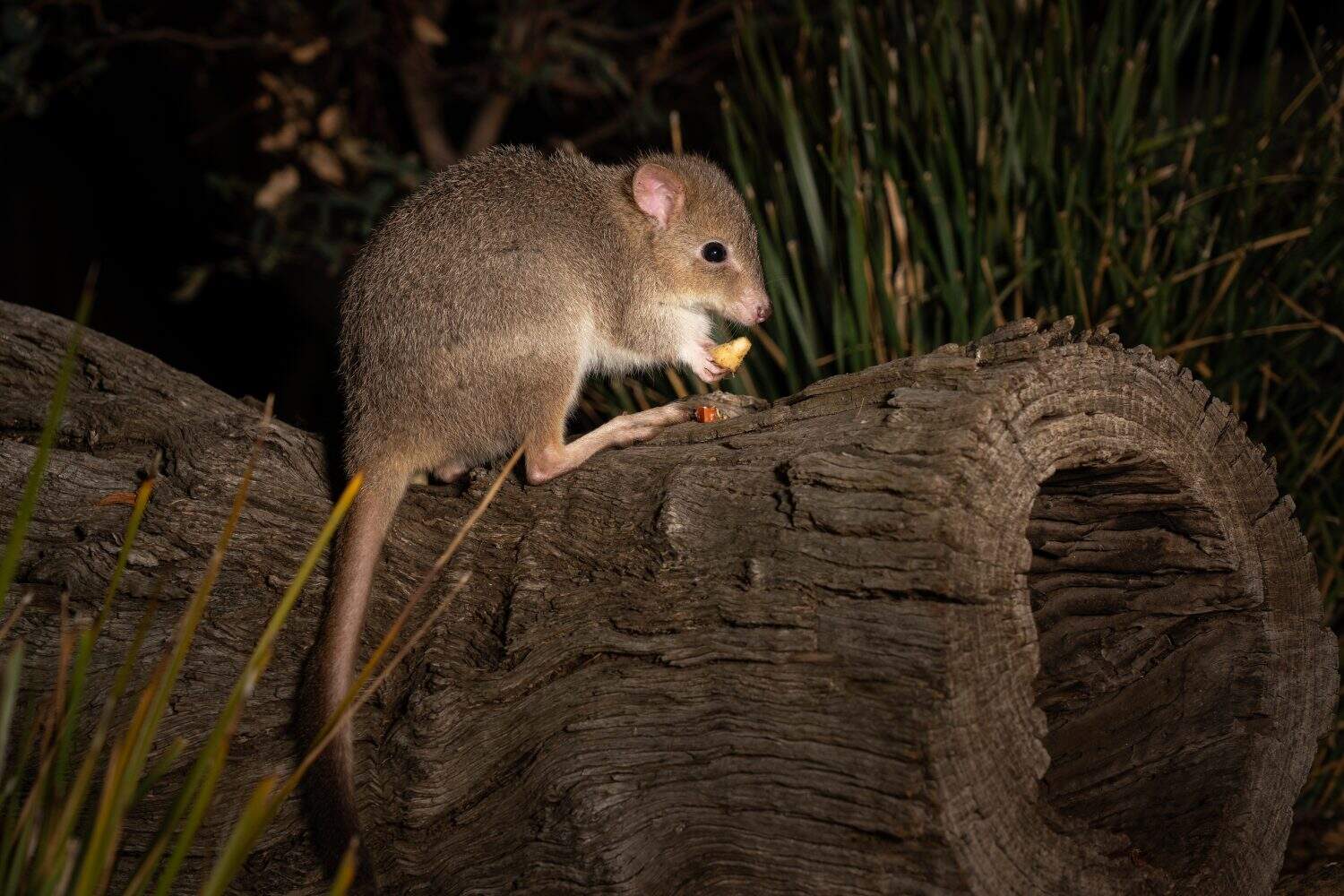
Eastern bettongs only live in the eastern half of Tasmania.
©Wirestock Creators/Shutterstock.com
There are five bettong species in Australia: the burrowing (or boodie), northern, eastern (or Tasmanian), brush-tailed (or woylie), and rufous bettongs. Unfortunately, almost all of them have seen a dramatic decrease in their numbers. This decline is caused by non-native predators such as cats and foxes, habitat destruction, and competition from feral animals like rabbits and pigs.
Currently, the brush-tailed bettong (or woylie) is Critically Endangered, and the northern bettong is Endangered. Both the burrowing bettong and the eastern bettong are Near Threatened. Only the rufous bettong remains relatively safe for now and is listed as Least Concern.
Tragically, many bettong populations have disappeared completely from the mainland and now survive only in areas protected by predator-proof fencing. Studying these animals is now essential for their survival.
How Does Something This Small Crack a Nut This Hard?
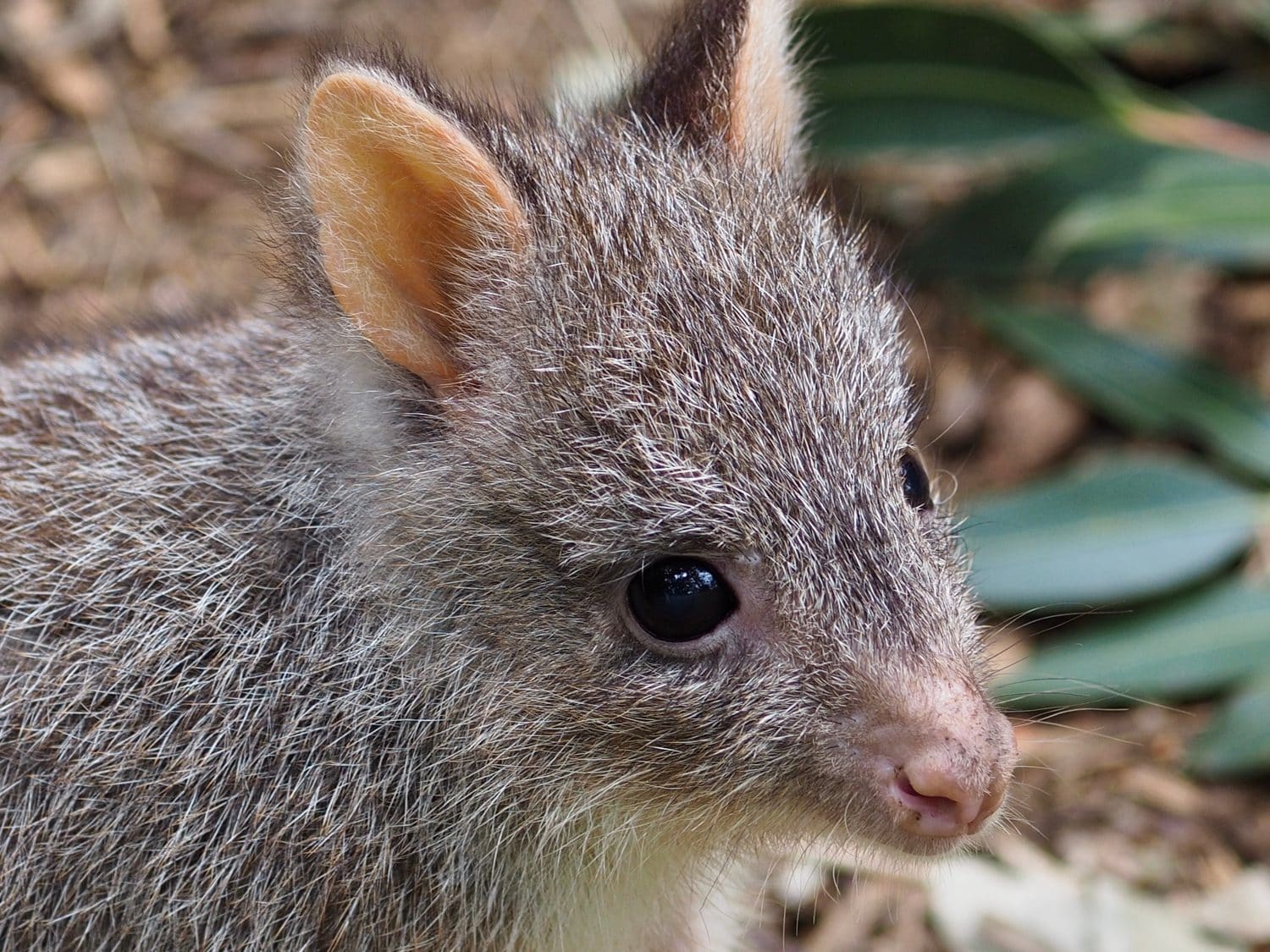
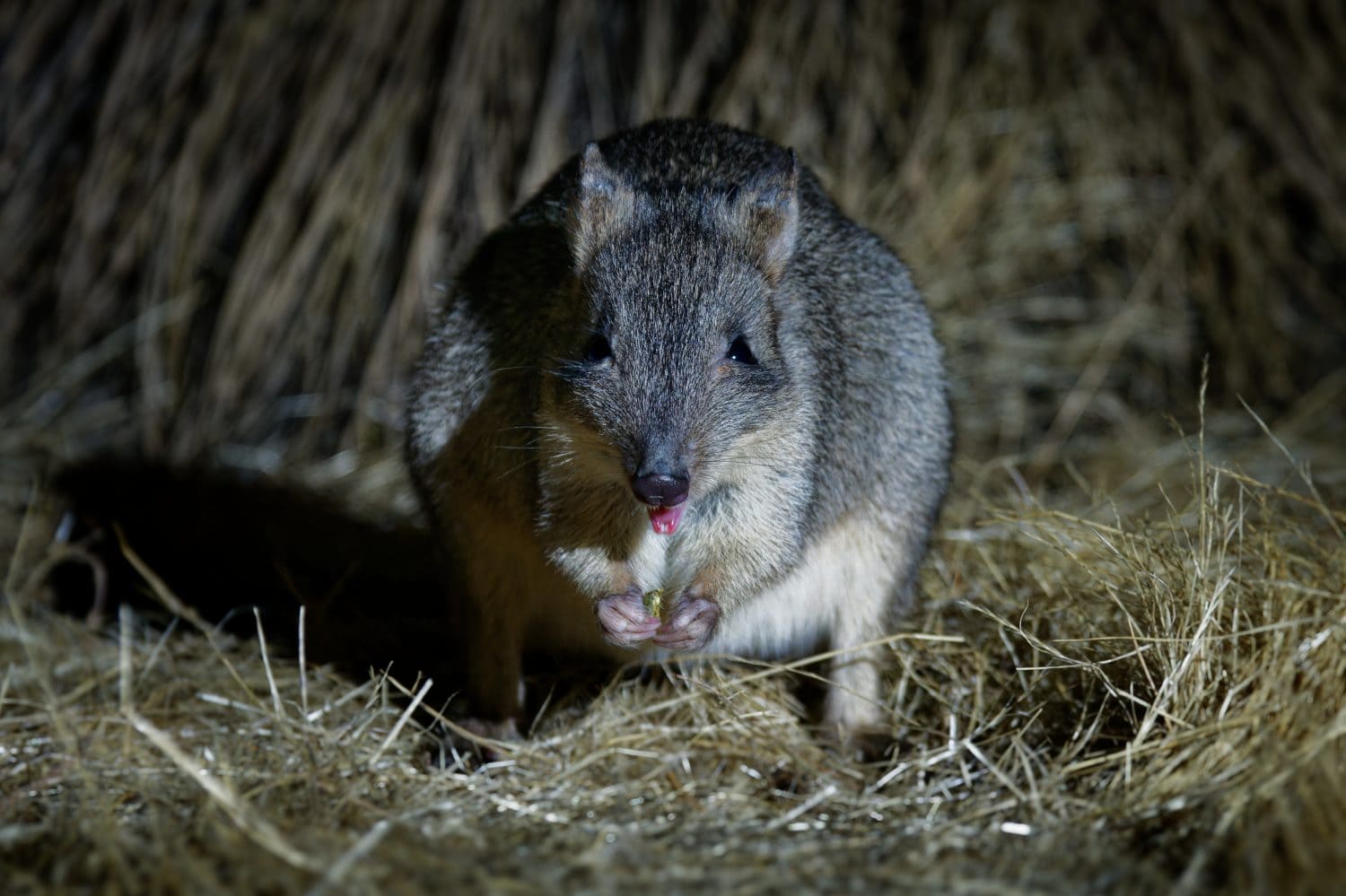
Rufous bettongs have shorter snouts to increase their biting power.
©Andreas Ruhz/Shutterstock.com
Recently, scientists discovered that two bettong species (the burrowing bettong and the brush-tailed bettong) can crack open the extremely hard seeds of Santalum plants, such as quandongs. These rock-hard seeds require over 220 pounds of force to break — an astonishing achievement for an animal that weighs less than 6 pounds!
What’s intriguing is that these two bettong species evolved completely different skull features to crack open the hard seeds. The burrowing bettong achieves maximum power by having a shorter snout. This adaptation acts like a short, strong lever, giving the animal a significant mechanical advantage and an incredibly powerful bite.
The brush-tailed bettong, in contrast, took an entirely different route. It retains its longer face (which is usually less powerful) because its long snout houses a large sensory system required to smell truffles underground. To compensate for the longer snout, brush-tailed bettongs evolved a reinforced skull and long premolars that focus the necessary force when biting. Thus, evolution found two distinct solutions to the same problem.
Why These Adaptations Matter for Survival
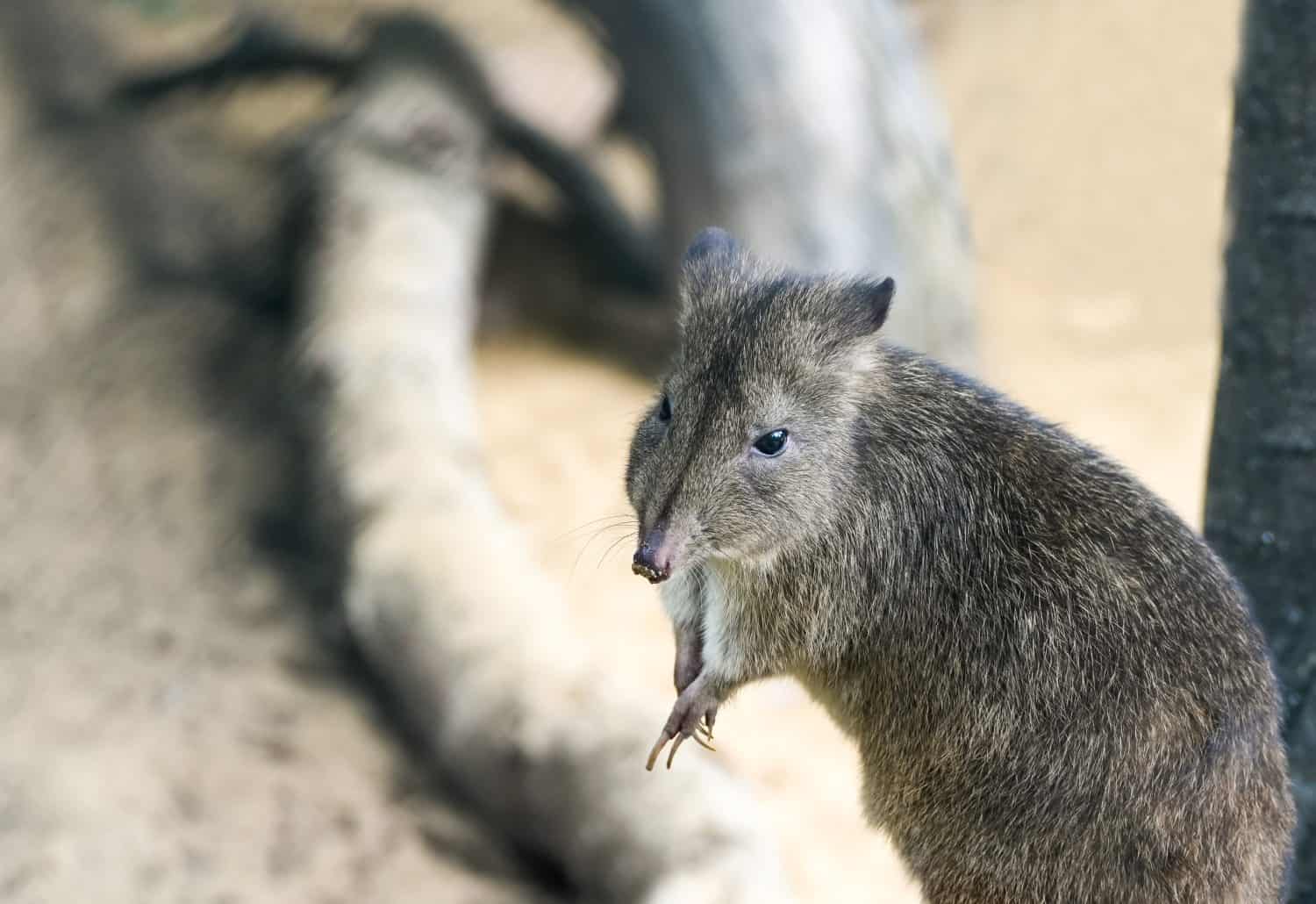
Brush-tailed bettongs kept their longer snouts for sniffing, but evolved a reinforced skull and long premolars for greater biting force.
©Elly Miller/Shutterstock.com
Although Santalum seeds are not the only thing these two bettong species eat, they are a very valuable fallback food. These seeds are reliable and nutritious, providing crucial calories when softer foods, such as fruits and fungi, are scarce. Being able to crack these seeds could literally mean the difference between life and death. Recent research suggests that an animal’s skull shape is determined not by its everyday diet, but by the maximum force or strain it must endure — specifically, the hardest bite it ever has to make.
Understanding these specialized skull adaptations is vital for conservation. If a species has a skull adapted for cracking hard seeds or sniffing out fungi, conservationists must ensure that those specific foods are available at reintroduction sites. For example, the brush-tailed bettong’s long face is functionally tied to its fungal diet, so it must have access to abundant underground fungi to thrive.
Instead of both species evolving the same solution to the same problem, the burrowing and brush-tailed bettongs developed completely different anatomical strategies to crack hard seeds. Each took a different path but ultimately achieved the same result.
Though small, bettongs are essential for their ecosystem — whether through their tireless digging or the surprising power of their jaws and teeth. These bettongs prove that often the most important and remarkable adaptations belong to small, unassuming creatures quietly getting the job done.