
Quick Take
- Six years of GPS data revealed something about hyena behavior that directly contradicts what every nature documentary has told you. See the core finding →
- Lions stealing from hyenas is surprisingly common, though that turns out to be only half of what the GPS collars uncovered. Unpack who steals from whom →
- Landscape-level wildlife studies missed a pattern hiding in plain sight, one that took a radically different method to finally catch. Why landscape studies missed it →
- Male and female lions behaved in opposite ways toward hyenas, a difference that may rewrite how we think about who actually controls this rivalry. Explore the male-female divide →
In The Lion King, the hyenas are the villains: sneaky, greedy, always creeping toward the lions’ food. Real hyenas spend a lot of their time doing the opposite.
For six years, scientists in Namibia and Botswana fitted lions and spotted hyenas with GPS collars that logged where each animal was every five minutes. When they lined up the tracks of lions and hyenas moving near each other, one pattern showed up again and again. The hyenas were walking away from the lions, and the lions weren’t walking away from them.
The rivalry we think we know
I grew up on that movie too, and it plants a pretty clear picture: hyenas as the thieves, lions as the noble ones defending their turf. Our own coverage of the real rivalry tells a different story. Hyenas tend to avoid lions, and lions often treat hyenas as pests they’ll attack given the chance. Pop culture loves the idea of sneaky hyenas stealing a lion’s kill, but in reality it usually runs the other way. The Ngorongoro Hyena Project, a team of biologists who study wild hyenas, says lions steal more food from hyenas than hyenas steal from lions, and there isn’t much a hyena can do about it besides lying down and waiting for the lion to finish.
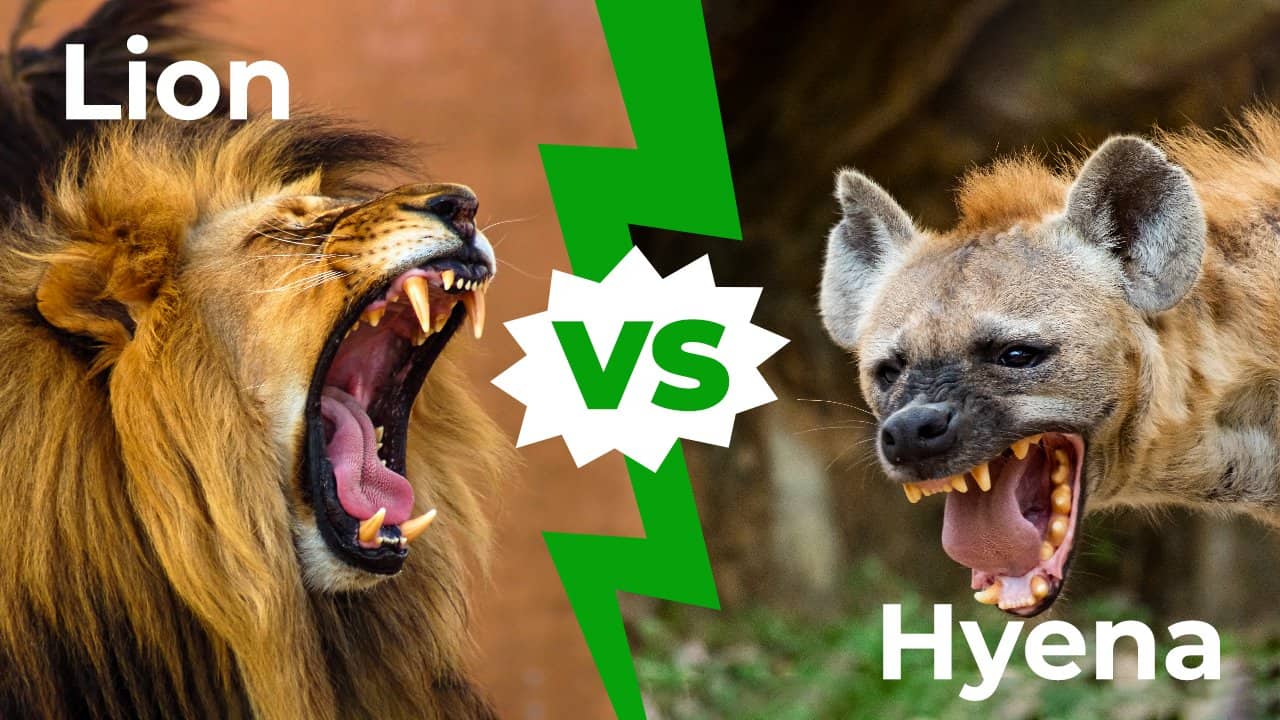
So if you could watch every step both animals took, day after day, who would actually be moving toward whom?
Six years of collars
This wasn’t a researcher parked in a truck with binoculars. Seventeen lions and 14 spotted hyenas wore GPS collars that recorded a position every five minutes during their most active hours, and over six years, from 2013 to 2018, those collars sent back 349,163 positions. Picture a dot on the map every five minutes, for six straight years, whether or not a human was anywhere nearby to see it.
The study ran in two places: Etosha National Park in Namibia and the Chobe-Linyanti area in Botswana. Ten times, a lion and a hyena happened to have collars logging positions at the exact same five-minute moments, which let the researchers line up their movements step by step and see who was heading toward whom. The team says this kind of tracking can stand in for watching the animals directly, in places where following them on foot just isn’t possible.
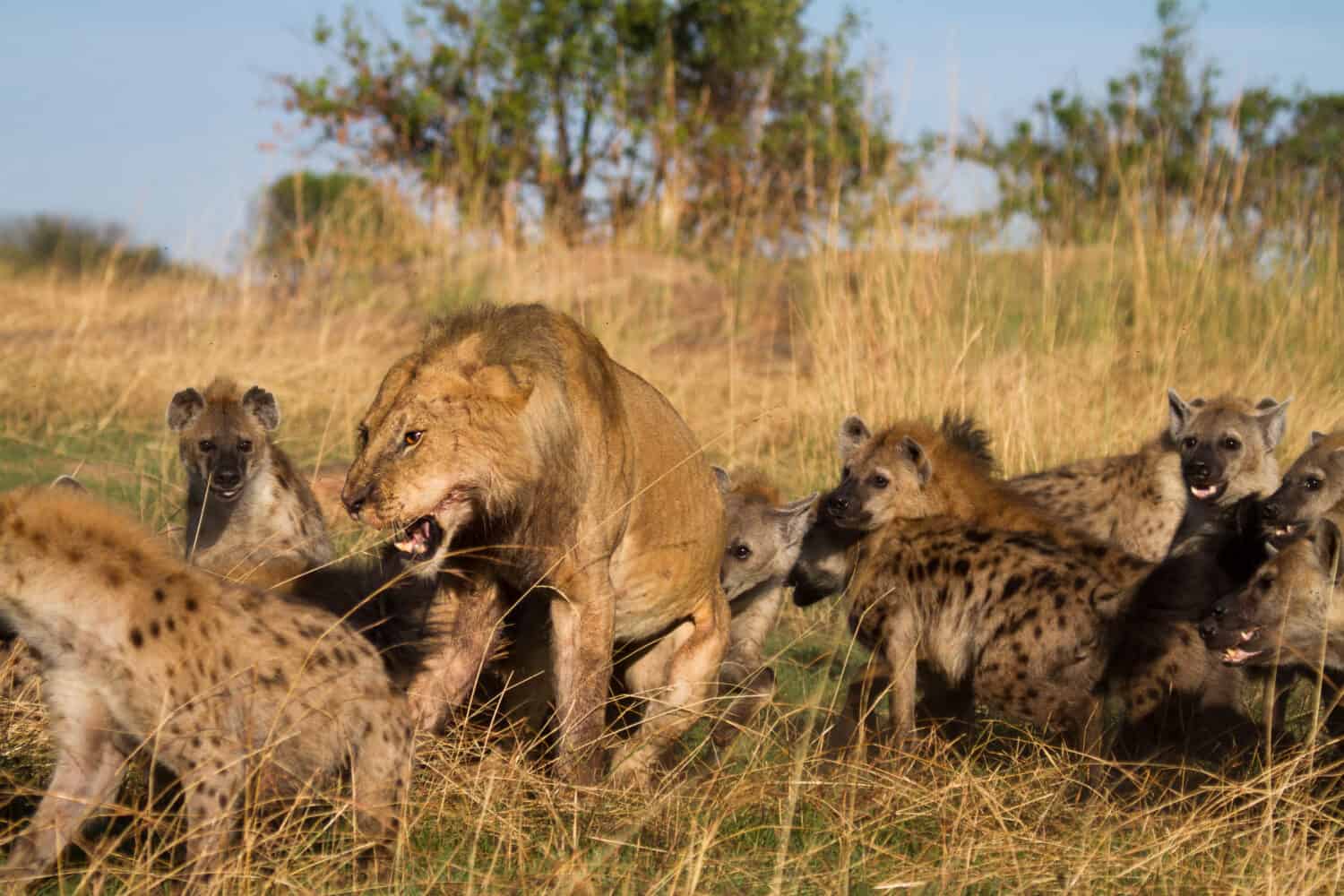
When Numbers Matter: 30 Hyenas Challenge a Male Lion
©Mark Sheridan-Johnson/Shutterstock.com
The hyenas kept leaving
Here’s the part that would surprise anyone who grew up rooting against the hyenas: they were the ones with cold feet. Within 10 kilometers of a lion, 8 of the 10 tracked hyenas spent more of their steps moving away than toward it. Zoom in closer, to 5 kilometers, and all nine pairs with usable data showed the hyena retreating, every single one strongly enough that it wasn’t just chance.
A hyena’s odds of moving toward a lion were 0.461, a coin landing on “away” slightly more often than “toward”. The researchers say that lean showed up no matter which of the three separate ways they checked the numbers.
One pair makes the whole pattern easy to picture. Lion OF-34309 and hyena SA-33872 had their collars logging at the same moments, and the two animals moved in opposite directions. The lion’s toward-ratio was 0.687, a clear and significant approach. The hyena’s was 0.299, just as clearly a retreat. Same two animals, same patch of ground, and one of them was closing the distance while the smaller of the two was opening it.
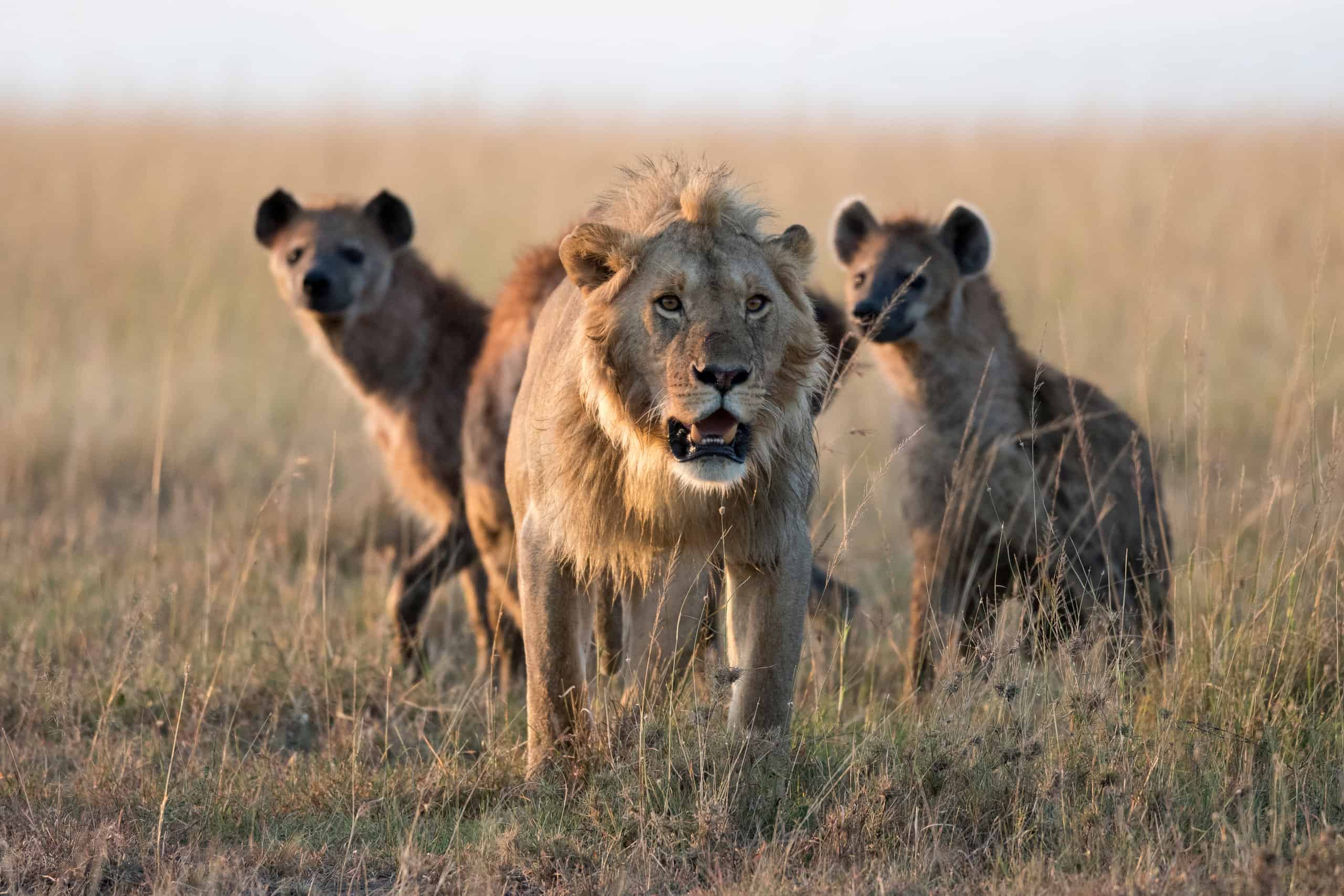
See What Happens When the King of the Jungle Gets Annoyed with a Group of Hyenas
©AfricaWildlife/Shutterstock.com
So were the lions the ones chasing?
Here’s where the headline needs to get more specific, because the lions didn’t behave as one group. Across the whole population, lions showed no consistent lean toward hyenas at all: the overall chance of a lion moving toward a hyena was 0.517, which sits right on the coin-flip line of 0.5. Only three of the ten pairs showed a significant approach by the lion.
But here’s the sentence that matters most. The researchers write plainly: “If hyena activity were aversive to lions, we would expect lion movement relative to hyenas to be biased toward retreat in at least some dyads. We see none.”
No lion in the study avoided a hyena, not one.
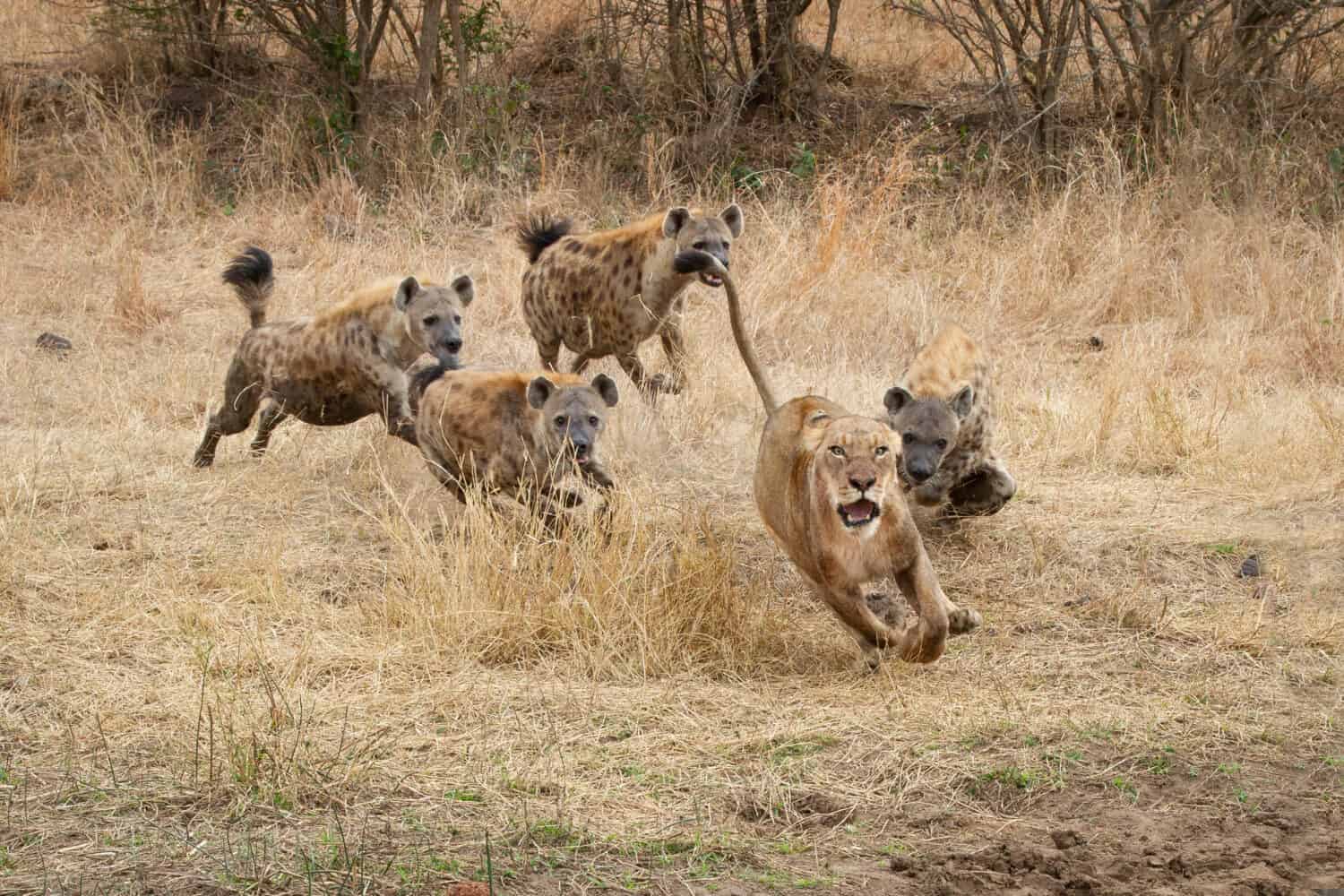
Inside the Fierce Rivalry Between Lions and Hyenas
©MintImages/Shutterstock.com
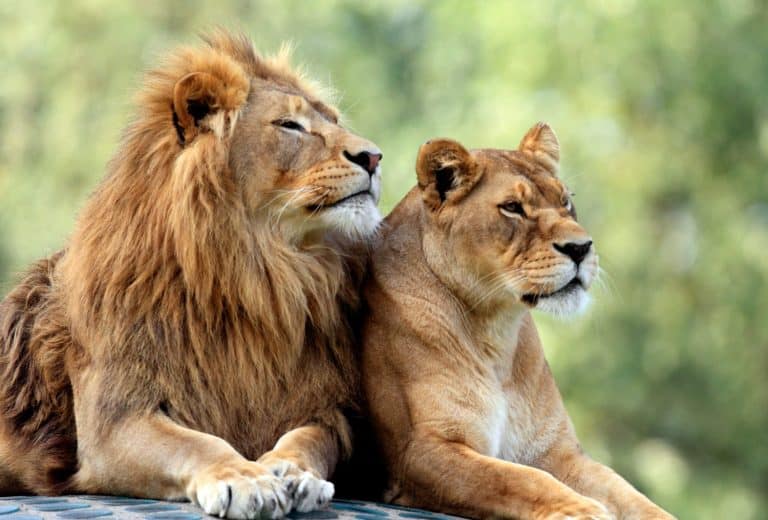
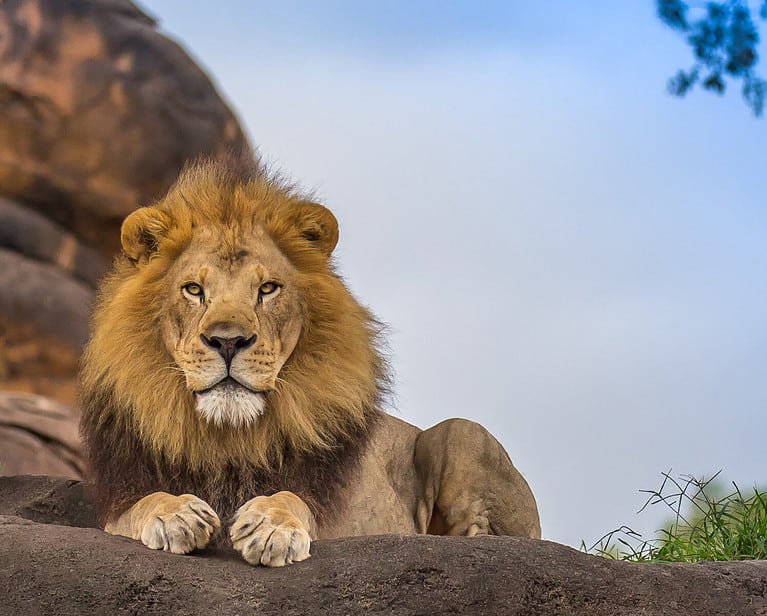
And the lions weren’t all the same. Male lions leaned toward hyenas: across three male-lion pairs, the mean toward-ratio was 0.573, and all three male pairs came in above the coin-flip line. Female lions, meanwhile, sat at 0.486, which is basically a coin flip. The researchers had actually guessed this before they ran the numbers, predicting that male lions would track hyenas more consistently than females, which is part of why they take the pattern seriously even though it’s small.
I’ll be honest, two animals is a small number. The male-lion result rests on just two unique lions across those three pairs, and the difference between males and females wasn’t statistically significant, meaning there weren’t enough animals to be fully sure it isn’t chance. And none of this tells us why. The collars record positions and times, not motives. “Villain” is the movie’s word, not the scientists’. What the data shows is a lopsided rivalry: the hyena moves off, the lion holds its ground, and if that lion is male, it drifts a little closer.
Why nobody caught this before
This is the part I keep thinking about. Earlier studies that looked at whole landscapes, tracking which parts of a park each species used, found that spotted hyenas don’t systematically avoid lions. From far away, that looks like the two species sharing the neighborhood without much fuss. Zoom in to a single afternoon, though, and the hyena in front of a lion is leaving. The fine-scale, step-by-step data caught something the landscape-level studies were never built to see.
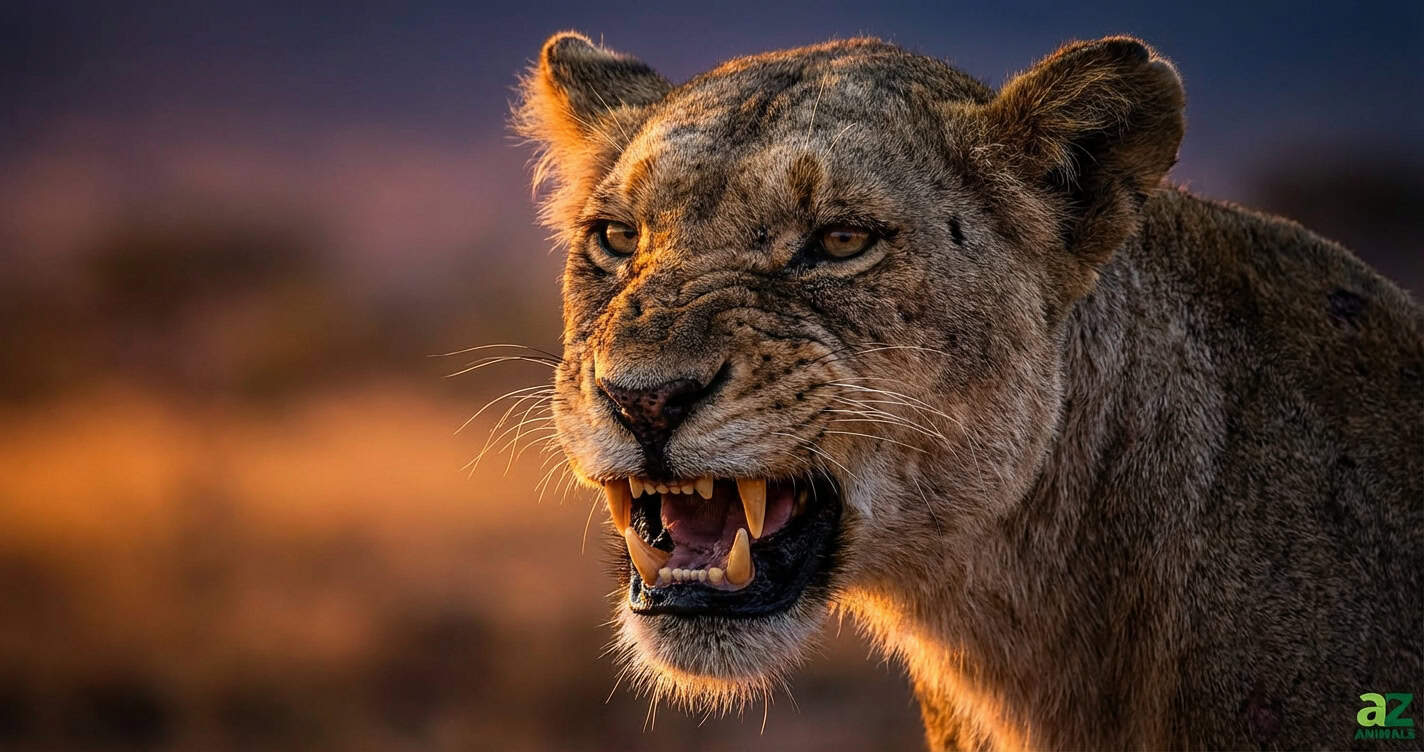
Wild Dog Pack Miscalculates Attack On Lone Lioness
©A-Z Animals
That zoomed-in avoidance fits with other things we already know about hyenas adjusting around lions. Hyenas have been found to be more active in daylight in places where lions are present, likely to dodge competition. And hyenas only steal food from lions when they have the numbers to drive them off, rarely doing it when male lions are around, because the presence of a male lion is a significant deterrent to that kind of mobbing. That lines up neatly with the GPS finding: the one kind of lion hyenas are least willing to crowd is the same kind of lion the collars show drifting toward them. The researchers add that hyenas don’t respond to lions with one fixed rule; individual hyenas are known to react differently depending on the situation.
The hyenas in the movie creep toward the lions, cackling and scheming. The hyenas wearing collars in Namibia and Botswana spent six years doing the opposite, keeping their distance from an animal that never once leaned away from them. It’s sense, given who actually steals from whom. The scientists won’t call anyone a villain, and this piece won’t either: the collars record where each animal went, not what it wanted.
But if you had to point at who’s leaning into this rivalry, the tracks point at the lions, and at the males most of all.