
Quick Take
- Nature documentaries have been telling the lion-hyena story backwards, and GPS data finally proves it. See the reversed assumption →
- Hyenas kill the vast majority of their own food, so why would they bother trailing lions at all? Hyenas as skilled hunters →
- Male and female lions don't behave the same way around hyenas, a difference that turned out to be more striking than researchers expected. Male vs. female lion behavior →
Anyone who’s watched a nature documentary about African animals has likely seen two of the continent’s most photographed predators — lions and hyenas. Usually, the two species are seen together. Lions take down prey, and hyenas swoop in after the lions eat their share.
It’s long been believed that hyenas trail lions to scavenge their kills. However, GPS data from a new study published in the journal Frontiers in Ethology challenges that belief.
Continue reading
Who’s Following Whom?
For years, researchers believed that hyenas shadowed lions to scavenge scraps from their kills. However, confirming this was difficult because both species roam vast, rugged areas and move at speeds humans cannot match.
At least one researcher, Dr. Nancy Barker of the University of KwaZulu-Natal and the lead author of the new study, believed otherwise.
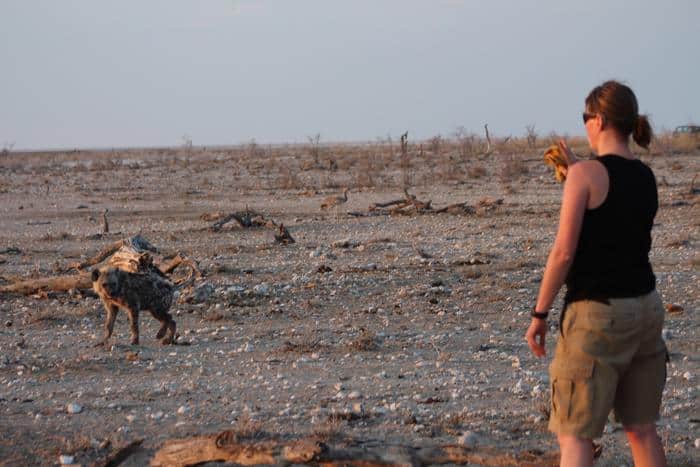
Dr. Nancy Barker interacts with a spotted hyena at Etosha National Park in Namibia.
“During my Master’s, I lived in the bush while studying brown hyenas,” she said in a press release announcing the study. “I repeatedly observed lions actively tracking hyenas. When I shared my observations with other leading researchers, I was often told that I had the relationship backwards: that hyenas are the ones tracking lions, primarily for scavenging opportunities, and that what I had seen was simply a series of chance encounters. I felt there was more to the story.”
However, other research suggested the opposite. One study tracking both species in Etosha National Park in Namibia found that lions were responsible for 71 percent of hyena deaths in the park, indicating that hyenas are wary of lions and unlikely to follow them.
Another now-disproven myth is that hyenas are strictly scavengers. In reality, hyenas kill most of their own food, sometimes up to 95 percent. They rarely rely on leftovers from lions.
But it would take GPS technology to prove Barker’s theory.
How Researchers Proved Barker’s Theory
To overcome the challenge that most lion-hyena interactions occur beyond human observation, researchers devised a novel approach: attaching GPS collars to track both species’ movements.
Over a four-year period, researchers fitted GPS collars on 17 lions and 14 spotted hyenas across Etosha National Park and the Chobe-Linyanti area in Botswana. The collars logged each animal’s location every five minutes during peak activity hours, typically at twilight and night.
The data helped researchers determine exactly which species moved toward the other and which one retreated.
The Unexpected Results
When lions and hyenas were in the same area at the same time, the data showed that hyenas usually moved away from lions. Lions, especially males, tended to advance toward hyenas. The hyenas’ avoidance behavior was evident from more than a mile away.
It wasn’t an isolated incident, either.
“Our GPS collar data shows that African lions and spotted hyenas leave a clear, measurable signature in the way they move around one another,” Barker said in the press release. “Spotted hyenas consistently move away from lions, while male lions tend to move toward hyenas. Because the hyenas’ retreat signal was consistent across three independent statistical tests, we can conclude that it reflects a repeatable behavioral pattern.”
Social Hierarchy Also Mattered
To select which animals to collar, Barker traveled to the two parks and the Linyanti Conservancy in Botswana to conduct first-hand research.
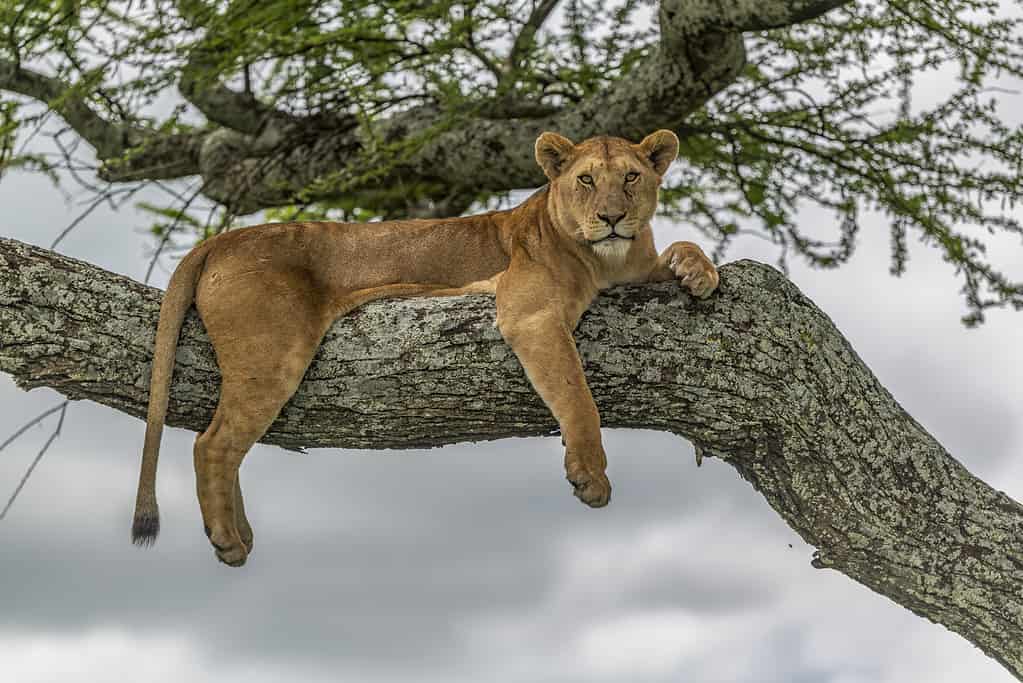
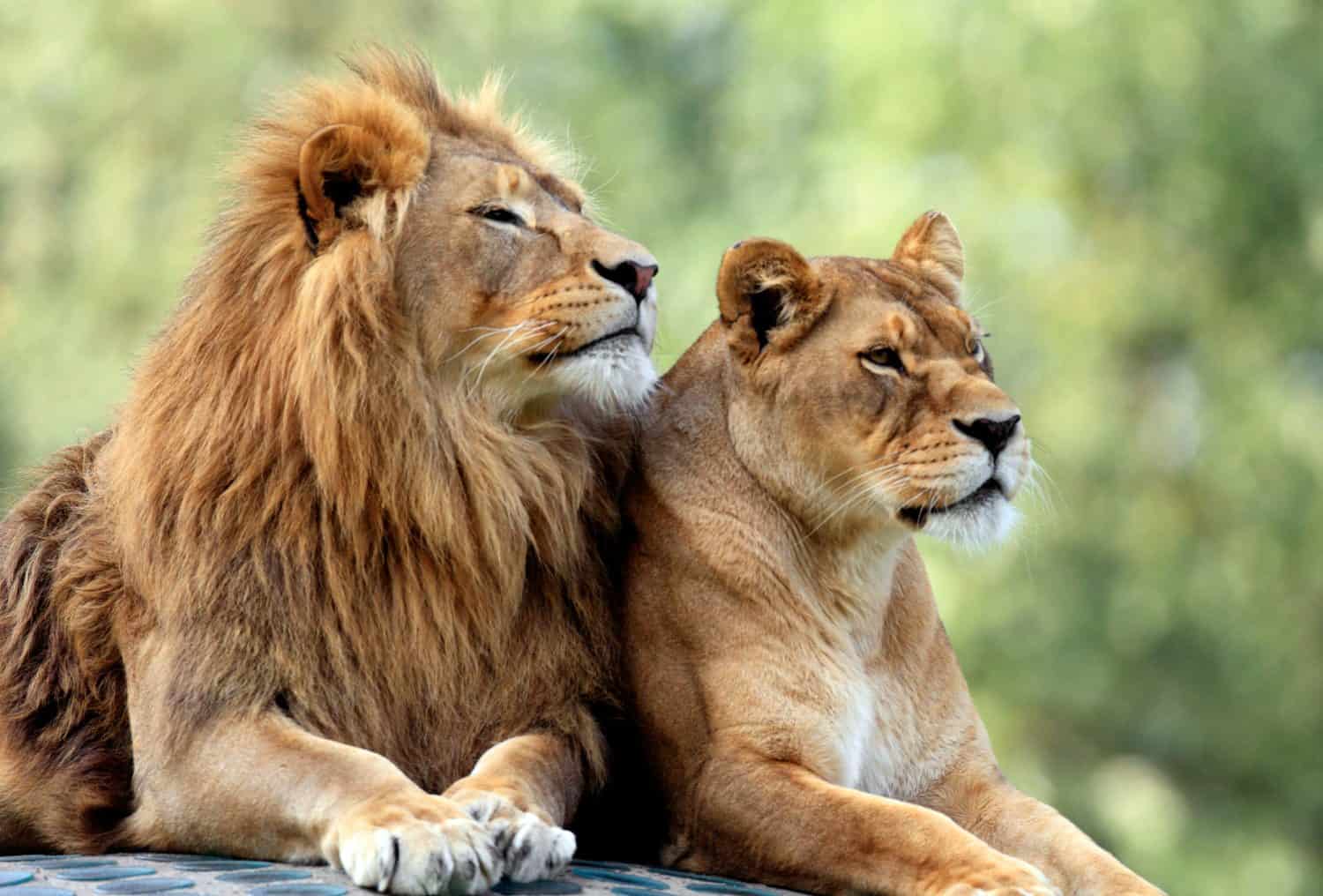
Female lions, called lionesses, tended to hang back and not pursue the hyenas.
©iStock.com/Jennifer Watson
“I spent several months simply learning the lions and hyenas, identifying the various lion and spotted hyena groups, understanding pride and clan dynamics and the areas they frequented,” Barker said in the press release. “Over time I determined which individuals ranked higher on the social hierarchy. They were least likely to disperse from their pride or clan’s territory, so I chose them for GPS collaring.”
Do All Lions React the Same?
Another interesting finding had to do with the difference between male and female lions. While the males were quick to approach hyenas, females didn’t seem to care as much. While males actively tracked hyenas, females behaved differently, often influenced by the presence of other pride members.
However, Barker cautions against drawing firm conclusions about female behavior based solely on this study.
“Tracking this many large carnivores simultaneously is extraordinarily difficult, and we had a relatively small number of collared individuals,” Barker said in the press release. “We also included only moments when both animals had a simultaneous GPS fix. This is the most rigorous approach, but it inevitably reduces the amount of data available for analysis. As a result, some of our finer-scale findings should be viewed as trends rather than firm conclusions.”
What’s Next?
Barker and her colleagues note that the small sample size and limitations on tracking — only when both species were within GPS range of each other — limit the conclusions that can be drawn from this study. However, they also note that this research demonstrates how predators like lions and hyenas constantly negotiate space in their daily lives, especially around fresh kills.
Barker would like to expand her research in this area, including to carnivorous species beyond lions and hyenas. However, much will depend on the availability of funding and resources.
“If I had unlimited resources, I would love to extend this approach to other members of the carnivore guild, to understand how the entire community negotiates space and risk,” she said in the press release. “Ultimately, I want to connect these movement patterns to what matters most for the animals: their survival and reproduction. The dream is to move from ‘here is the behavior’ to ‘here is how this behavior shapes which animals thrive.”