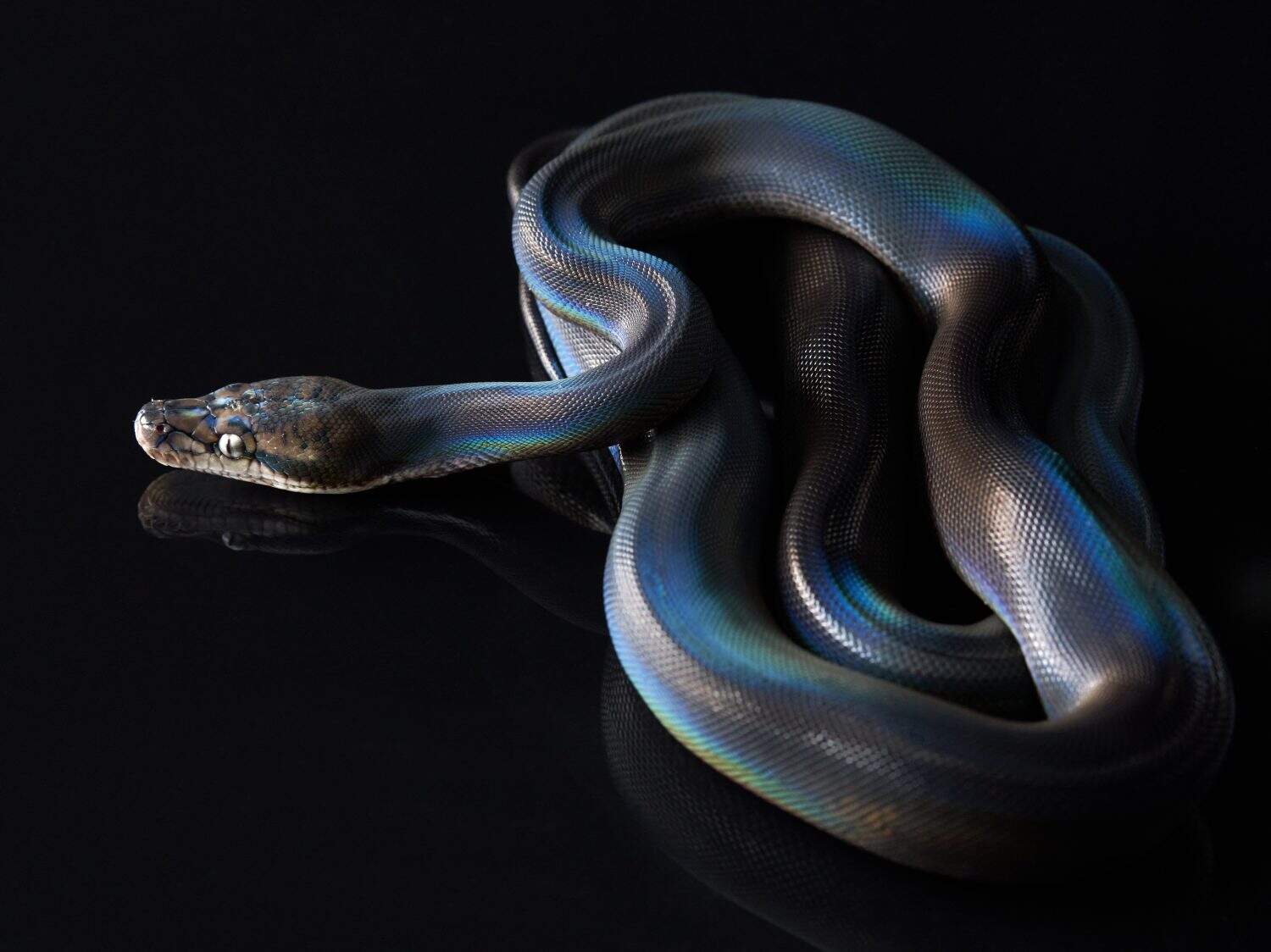

As if dipped in a mythical pool of liquid iridescence, the brilliant rainbow snake featured in this YouTube video looks like something straight out of a fairytale. While its shimmering scales may appear too magical to be real, this stunning creature is a genuine serpent! But what is this snake, and what gives it that mesmerizing, iridescent glow?
What Kind of Snake Is This?
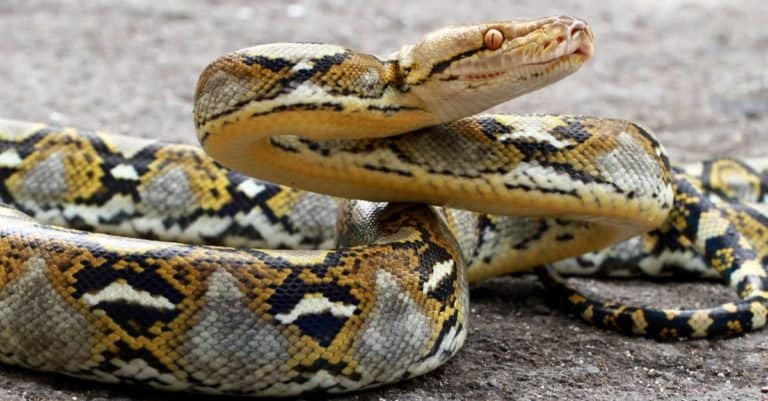
Reticulated pythons are typically most active at night or at dusk.
©YouTube / JayPrehistoricPetsTV – Original
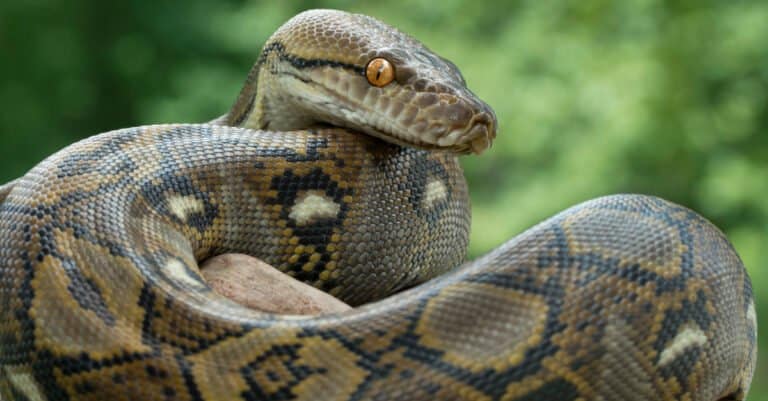
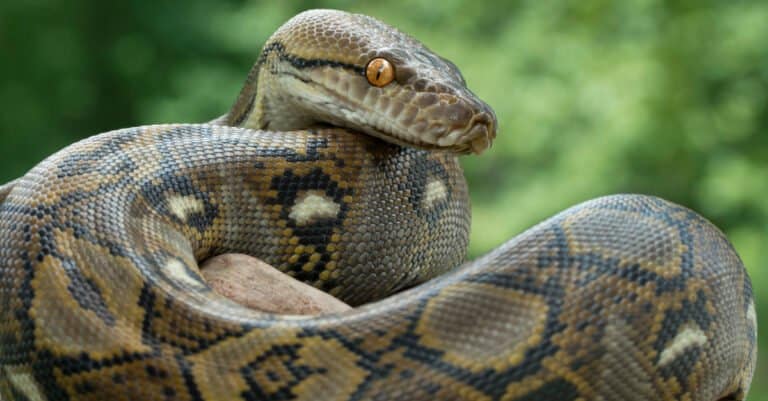
The snake in this YouTube video is a reticulated python (Malayopthon reticulatus). These impressive snakes are native to the rainforests of Southeast Asia. They hold the record as the longest snake species in the world, reaching lengths of 15 to over 20 feet and weighing over 150 pounds. In addition to their incredible size, reticulated pythons are also extremely muscular and strong. They can climb trees simply by contracting their powerful bodies around trunks and branches.
How It Gets That Magical Glow
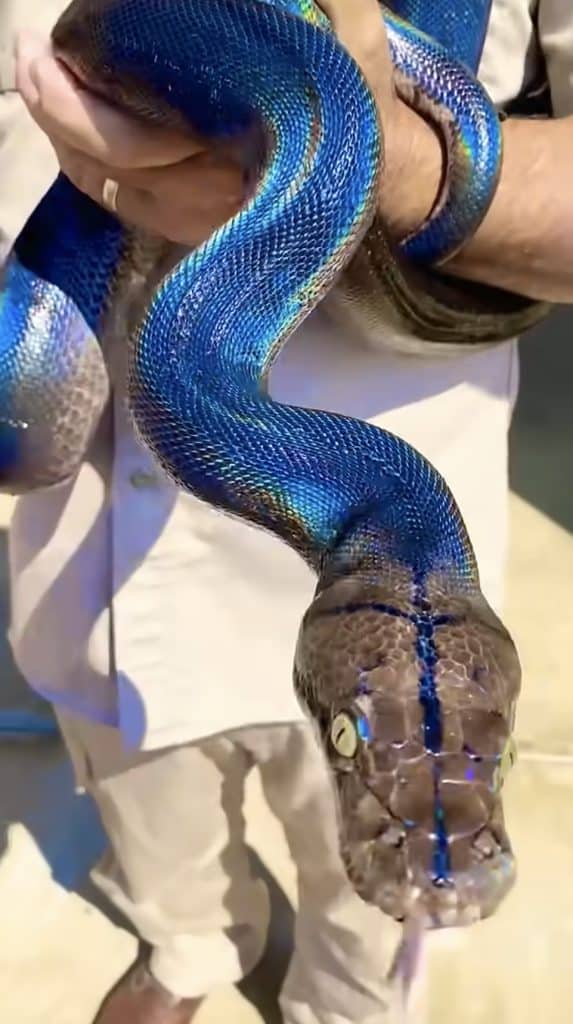
The python’s iridescent scales shine best in natural sunlight.
©YouTube / JayPrehistoricPetsTV – Original
Reticulated pythons get their name from the Latin word “reticulatus,” which means “net-like.” This describes the snake’s natural patterns, which are elaborate and geometric in design.
However, in captivity, these pythons are often selectively bred for specific colors and patterns. The “rainbow” python seen in the YouTube video is highly desired by reptile enthusiasts (and very expensive), but you would never see one like it in its natural habitat.
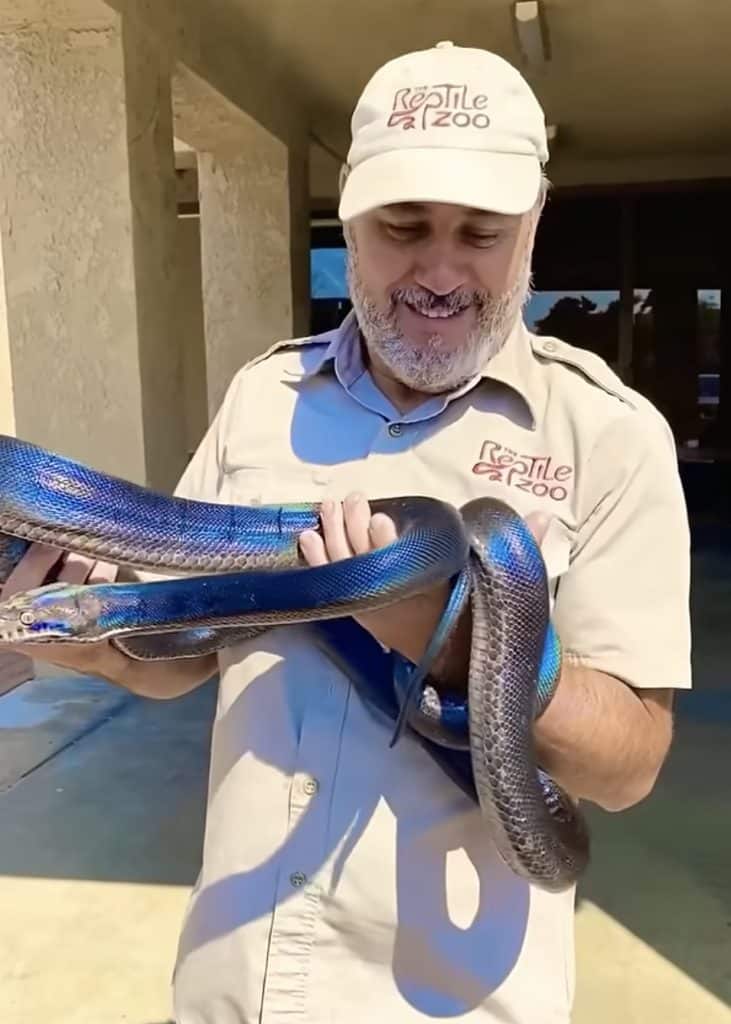
The stunning “rainbow” python featured in the video was bred by Jay Brewer, founder of The Reptile Zoo. Through selective breeding, Brewer combined two specific genetic variations to produce this iridescent rainbow snake: the Motley morph and the Golden Child morph.
The Golden Child variant drastically reduces the natural patterns on the snake’s scales and enhances a unique copper or golden color with a metallic sheen. The Motley variant also helps minimize the snake’s natural patterns, producing clean, bold contrasts.
When bred together, these two variants produce a nearly patternless snake with dark sides and an overall coppery, bronze, or golden sheen. This iridescent sheen reflects natural sunlight, creating the spectacular rainbow effect seen in the video.
The traits in the Motley Golden Child reticulated python are inherited through incomplete dominance (also known as codominant inheritance). This means the snake only needs to inherit one copy of the gene from one parent for the traits to be visible. If the snake inherits two copies of either gene—one from each parent—the resulting color and pattern will be even more dramatic.
Iridescence and Structural Coloration
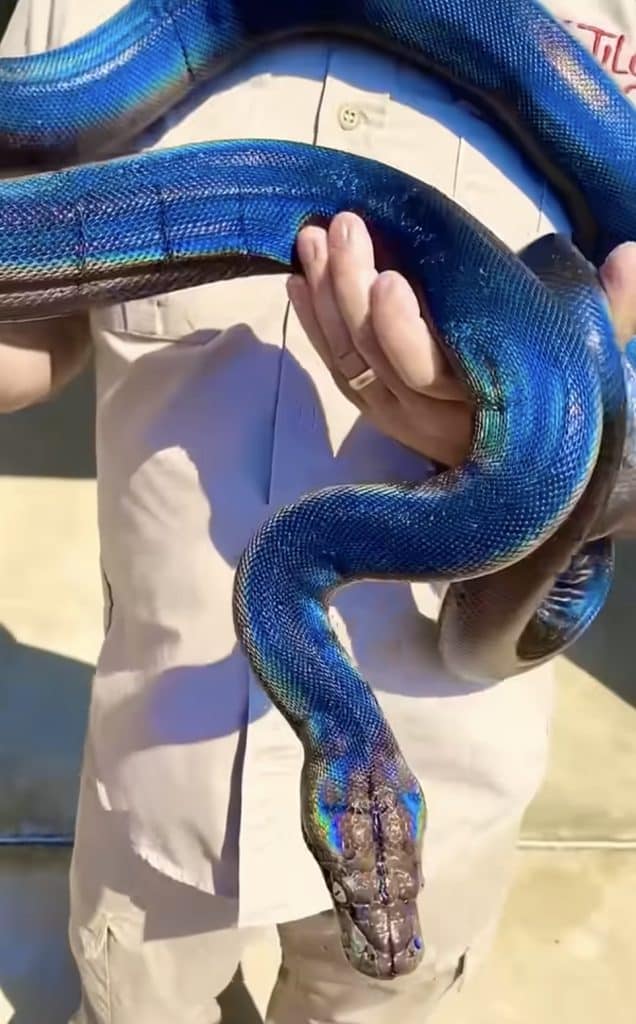
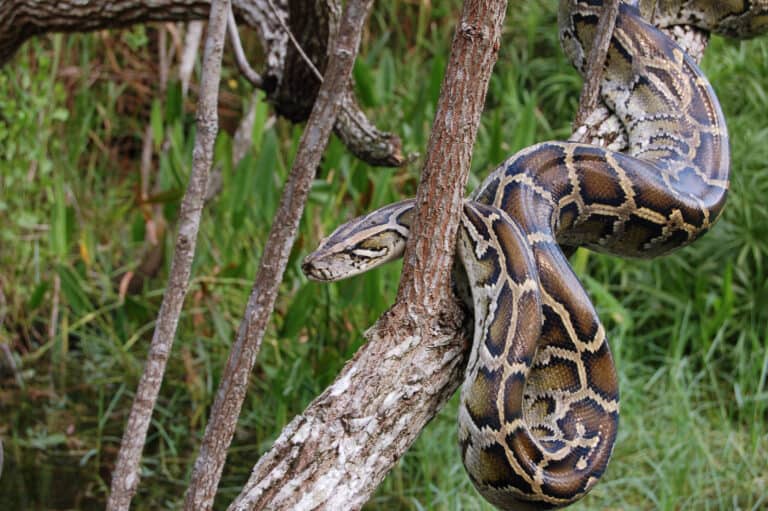
In the wild, reticulated pythons have black, brown, tan, and golden yellow patterns.
©YouTube/JayPrehistoricPetsTV – Original
The breathtaking, rainbow shine of a Motley Golden Child reticulated python isn’t created by colorful pigments at all—it’s actually just physics! The snake’s iridescence results from its reduced pattern and the unique structure of its scales. Each scale is covered in microscopic ridges and layers that act like a natural collection of tiny prisms and mirrors. When light hits these structures, it is reflected, scattered, and refracted, intensifying and separating the light’s wavelengths. Depending on the angle and intensity of the light, the snake’s scales will flash hues of blue, purple, and green, giving the illusion that its color is constantly shifting. This is why when the snake moves, it appears to change color. In other words, the rainbow effect is not actually the color of the snake itself; it results from the scales’ shape and texture.
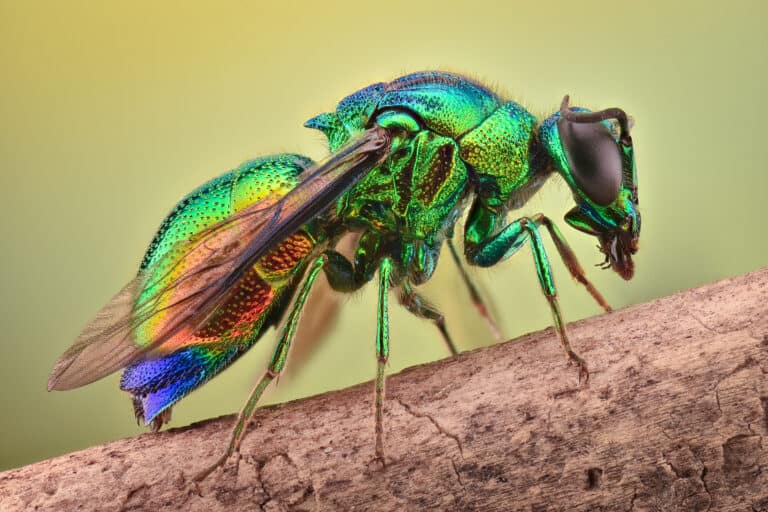
While breeders carefully select for this effect in the Motley Golden Child python, it is actually a naturally occurring phenomenon called structural coloration. It is the very same effect that gives simple soap bubbles their metallic shimmer. In nature, structural coloration is also responsible for some of the most intense blues and greens we see, such as the jewel-toned shells of beetles or the vibrant feathers of a peacock. These colors often appear shimmering or iridescent, meaning they seem to change and shift as the animal moves.
Is This Rainbow Snake Dangerous?
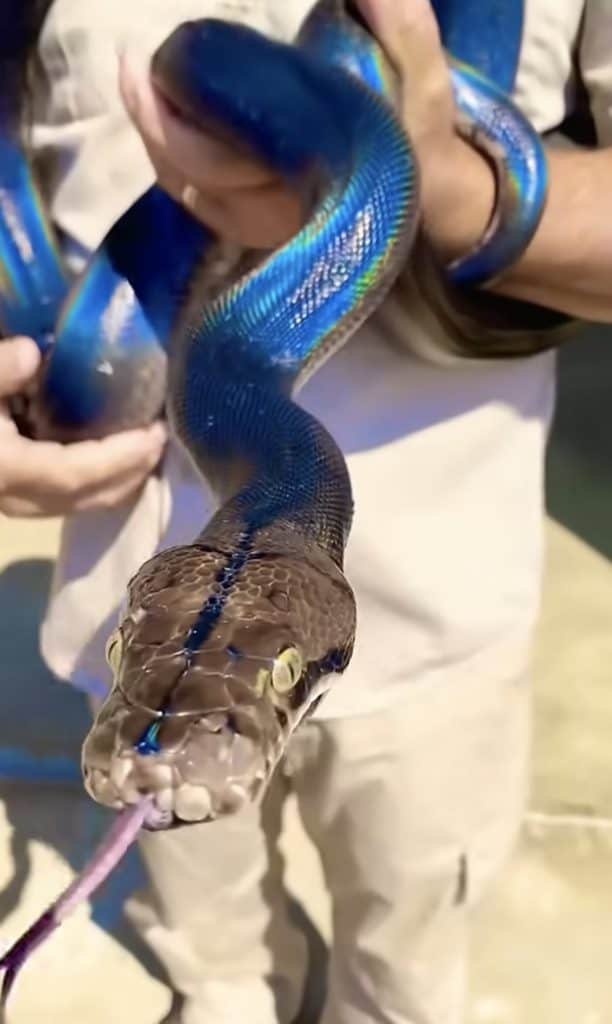
Younger reticulated pythons are often more defensive and agitated.
©YouTube/JayPrehistoricPetsTV – Original
While many people keep reticulated pythons as pets, they are not suitable for novice owners. These enormous snakes grow quickly and need lots of space. As constrictors, they use their muscular bodies to tighten around prey. When dealing with a snake that can grow over 20 feet long, this natural behavior can be extremely dangerous. Although extremely rare, reticulated pythons have killed and even swallowed humans.
Though they are not venomous, reticulated pythons have around 100 sharp, backward-facing teeth—meaning they can and do bite. While many captive-bred pythons are gentle, they are always alert for food and may act defensively or aggressively if they feel threatened. Keepers must develop a secure, trusting relationship with these snakes to handle them safely.