
Quick Take
- One insect on this list can physically change its color on demand, and the mechanism behind it is stranger than you would expect. See the color-shifting beetle →
- The most beautiful insect here is also a ruthless ambush predator, and its disguise is so precise that its own prey never sees it coming. Meet the orchid mantis →
- At least one species on this list looks completely unremarkable right up until the moment it moves. See the dramatic transformation →
- For several of these insects, their dazzling colors aren't pigment at all. So what exactly are you seeing? Discover structural color →
Nature has produced insects in nearly every color imaginable, from shiny blues and shimmering greens to bright pinks. While many of these colors are spectacular, they aren’t only pleasing to the eye and didn’t evolve for aesthetic reasons. These vivid hues help with camouflage, act as warning signs, or attract mates. Advances in photography have allowed these insects to be captured in incredibly close-up detail. These heavily magnified shots show just how dazzling some insects are. Some species even change color depending on the angle of the light. Here are ten of the most colorful insects found around the world.
1. Jewel Beetle
©aDam Wildlife/Shutterstock.com
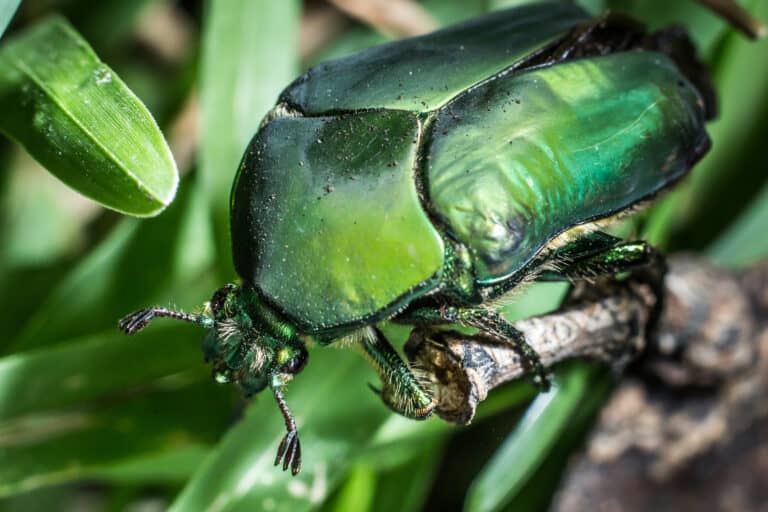
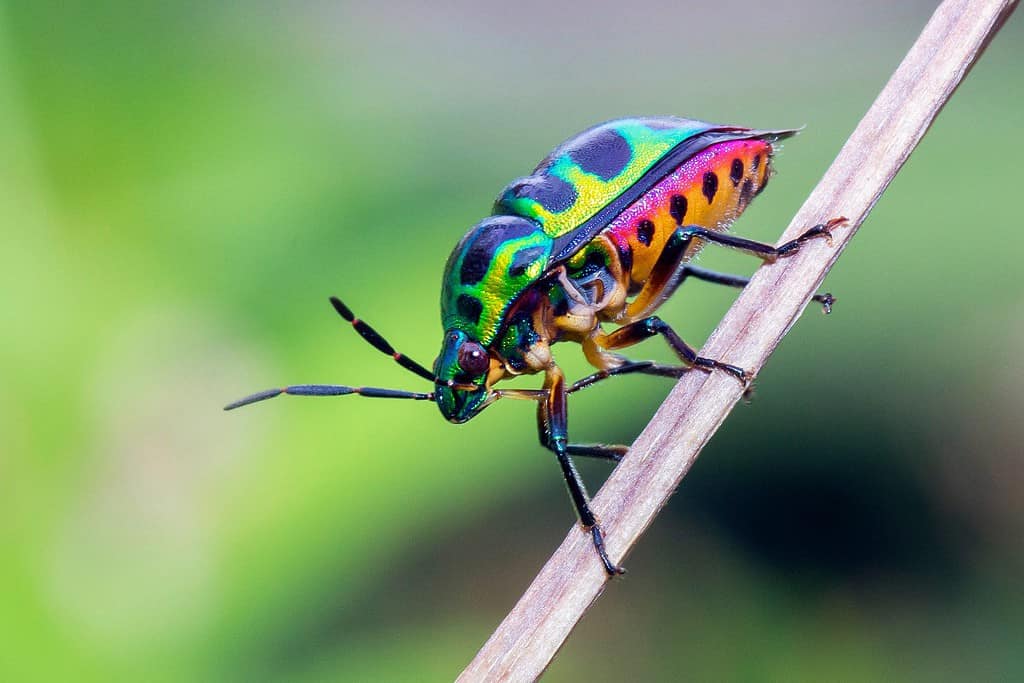
Jewel beetles are famous for their super reflective, brilliant colors. These bugs come in a variety of shades that include emerald, yellow-green, gold, fuchsia, and purple. Their shiny surface comes from microscopic structures in their exoskeleton. Some species shine so brilliantly that they can be jarring at first glance and even appear fake. Not surprisingly, their beauty has inspired jewelry and artwork.
2. Sunset Moth
©Frank Vassen from Brussels, Belgium / CC BY 2.0 – Original / License
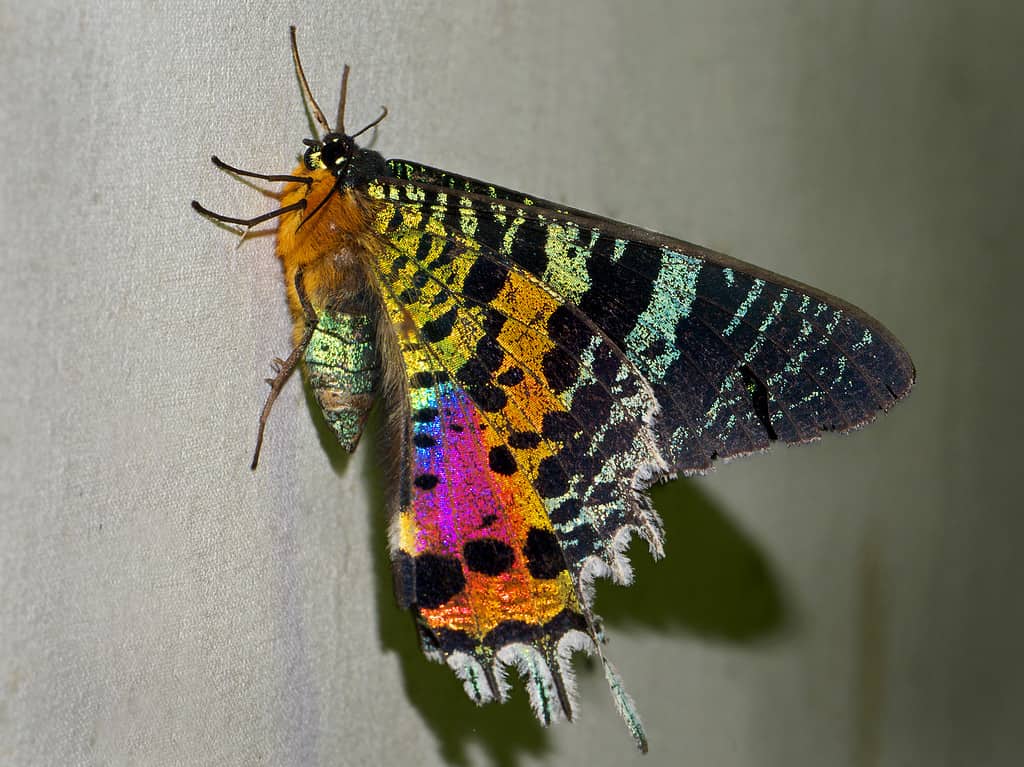
Native to Madagascar, the sunset moth is considered one of the world’s prettiest insects. Its wings are a kaleidoscope of colors in green, blue, red, orange, and purple hues. The scales on its wings catch and reflect light in a way that makes them appear dusted with glitter. Unlike many other colorful moths, the sunset moth is active during the day. In bright sunlight, or perhaps during a particularly gorgeous sunset, the moth sparkles to an unbelievable degree.
3. Orchid Mantis
©monster_code/Shutterstock.com
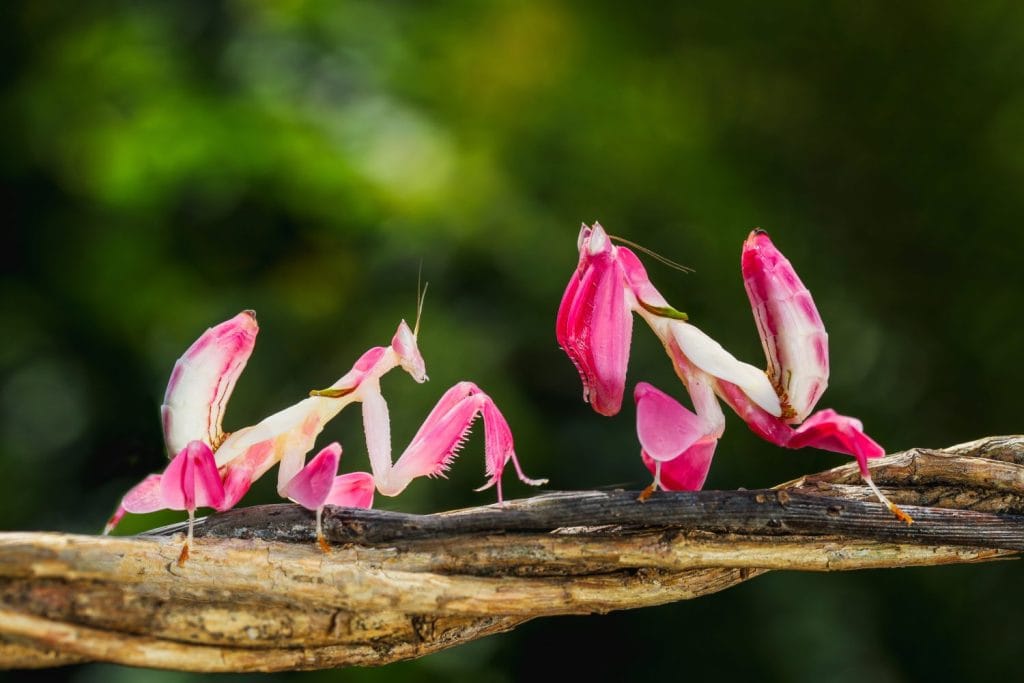
The orchid mantis uses a mix of specific colors to resemble a beautiful blooming tropical orchid. Its body is white, pink, and tinged with purple. Indeed, the coloration is incredibly precise, closely matching the pinkish-purple tones of tropical orchids. Pollinators are fooled by the camouflage and approach what they think is a blossom. The mantis then uses its lightning-fast reflexes to capture prey. No other insect is as skilled at floral mimicry.
4. Peacock Butterfly
©iStock.com/Svetlana Sinichkina
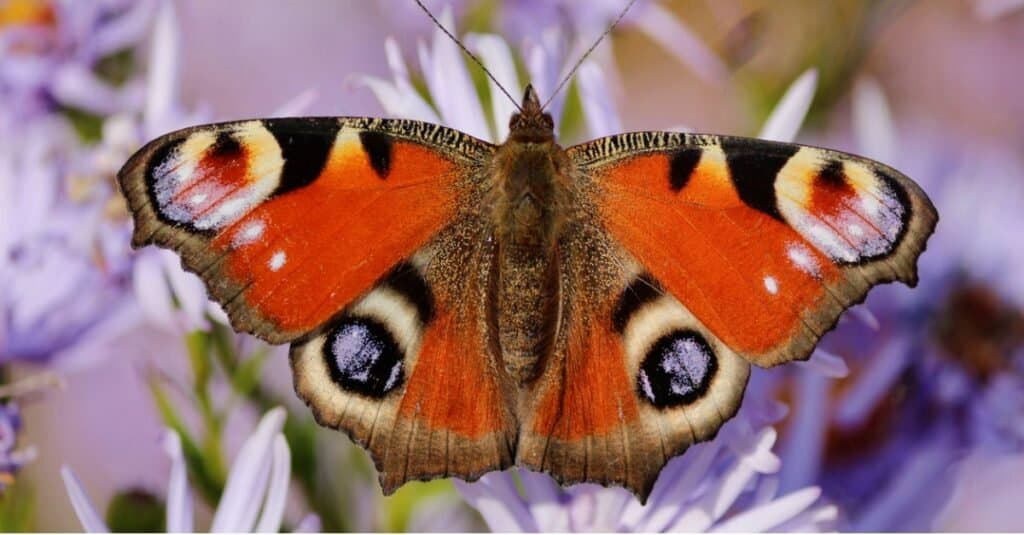
The peacock butterfly undergoes a major change between its larval stage and adult winged stage, not just in form but in color too. The striking caterpillars are primarily black and white, covered with bright white spots and spines that contrast against a dark background. Once transformed, the adult butterfly sports rich orange tones on its wings, which contrast nicely with dark and dramatic eye-like markings. While it doesn’t feature as many colors as some of the insects on this list, the deep orange-red hue is especially beautiful. These patterns and eye spots offer protection by startling predators into retreating.
5. Cuckoo Wasp
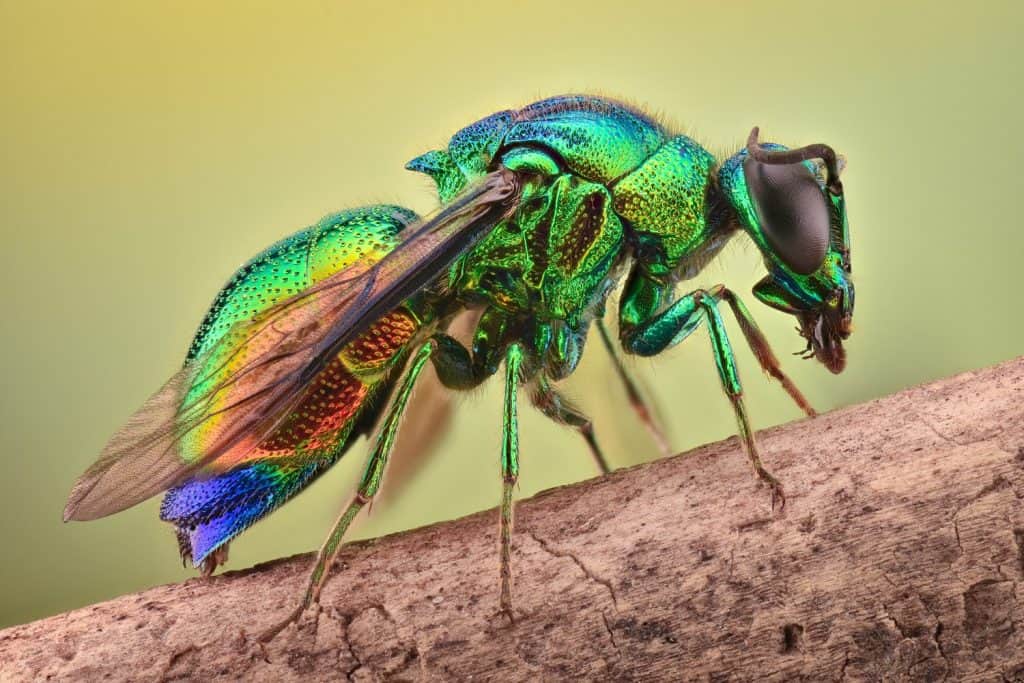
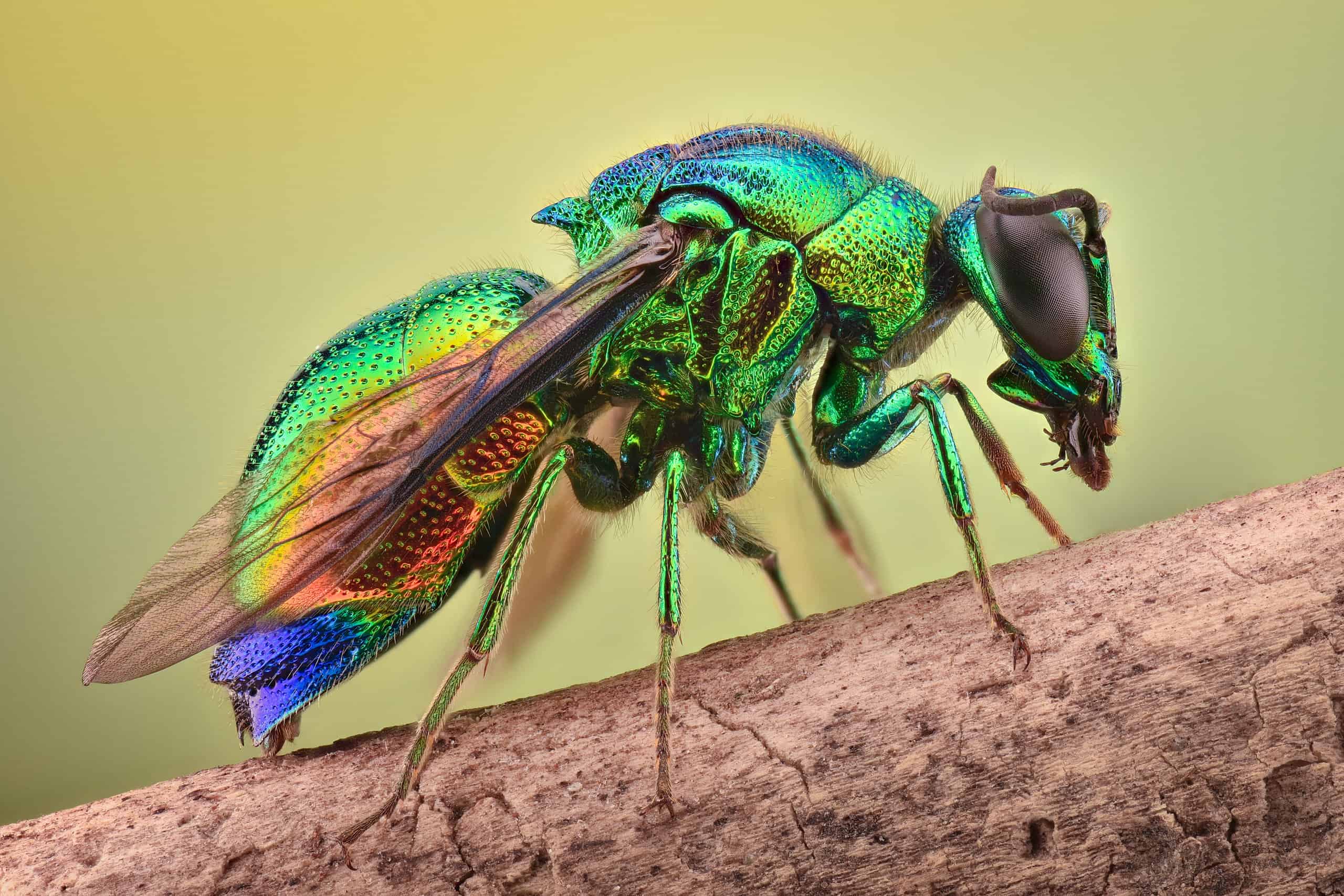
©Cornel Constantin/Shutterstock.com
Cuckoo wasps are tiny insects with highly metallic bodies in a rainbow of shades, including royal blue, bright green, red, and gold. Their iridescent appearance looks a lot like polished metal. Under magnification, their colors become even more gorgeous. These wasps are parasites that lay eggs in the nests of other insects. Despite their small size, they are one of the most colorful wasps in the world.
6. Lantern Bugs
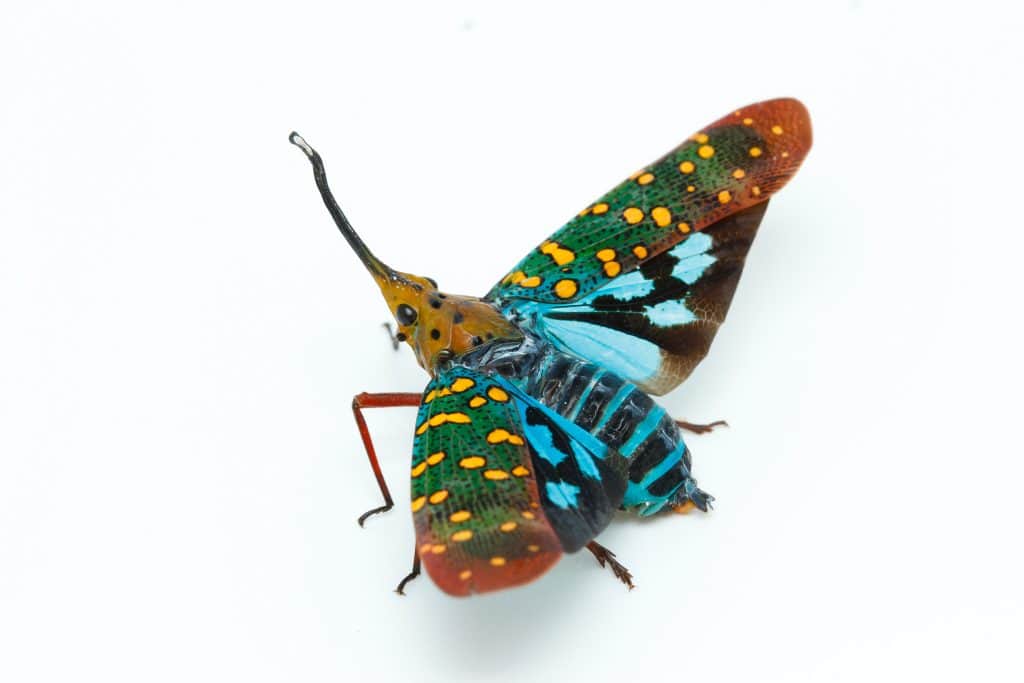
©Kawin Jiaranaisakul/Shutterstock.com
Many tropical lantern bug species feature extraordinary mixes of red, yellow, green, black, and blue. Though they can look fairly dull while stationary, they reveal brilliant colors when they take flight. These flashes of dark green, golden yellow, and turquoise might help ward off predators. Their unusual shapes, polka-dotted wings, and striped bodies only add to their beauty.
7. Blue Morpho Butterfly
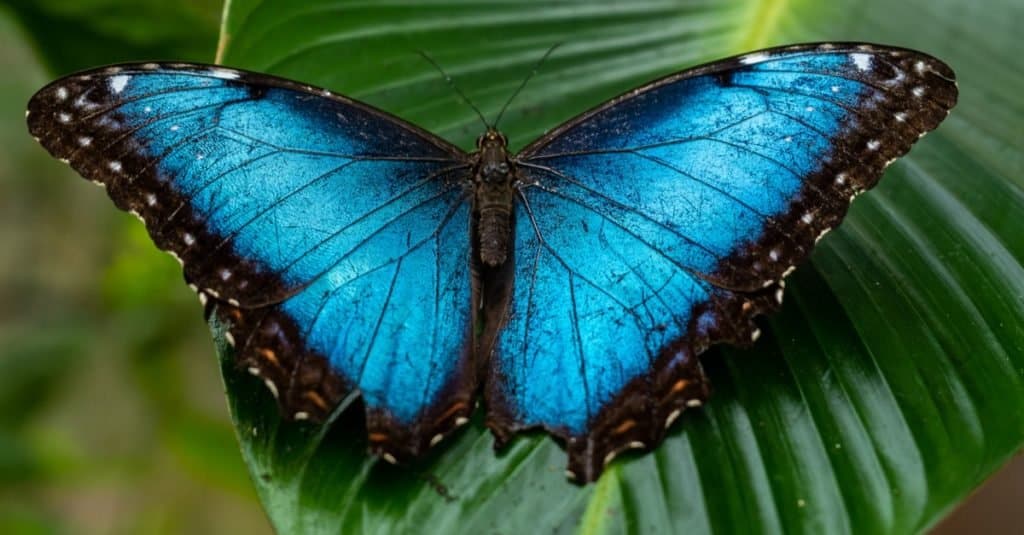
©Gianfranco Vivi/Shutterstock.com
The blue morpho is one of the most recognizable butterflies due to its incredible beauty. Its wings shimmer with a brilliant shade of blue, best described as electric. They are so bright that they’re visible from quite far away. The blue comes from microscopic light-reflecting scales on their wings. When the butterfly wishes to blend in, it simply closes its wings, which are brown on the underside.
8. Rainbow Grasshopper
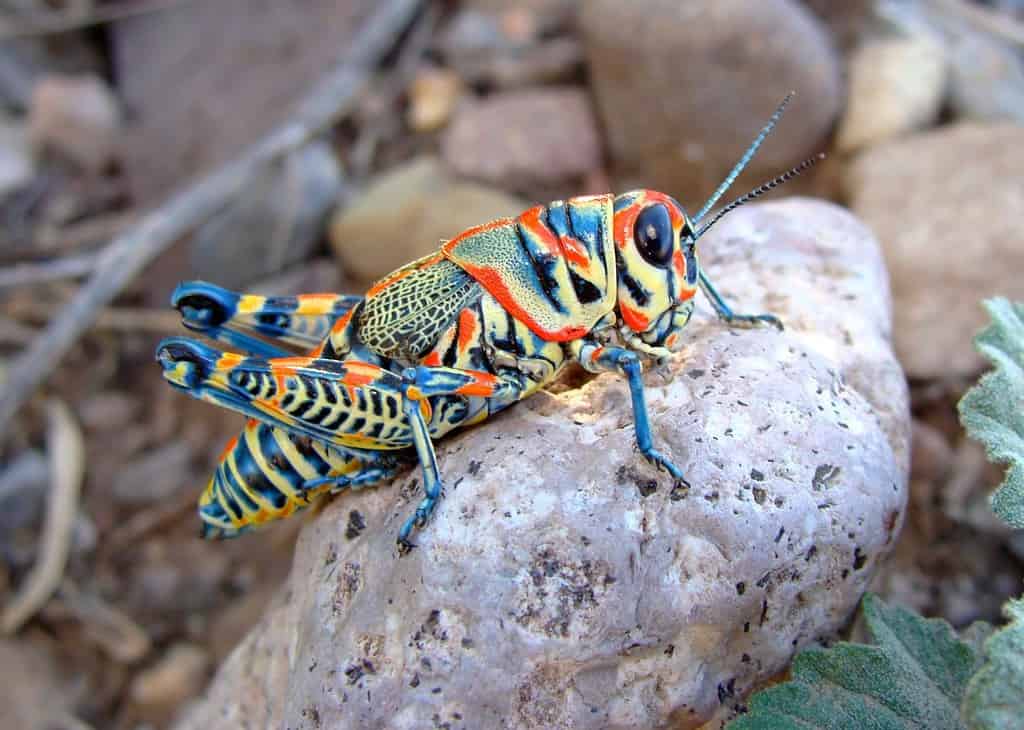
©Matt Jeppson/Shutterstock.com
As you might guess from its name, the rainbow grasshopper displays a host of colors. They feature intricate patterns in red, yellow, orange, and dark blue. Like many brightly hued animals, its vivid colors are meant as a warning to predators that they may taste unpleasant. This eye-catching grasshopper certainly doesn’t rely on camouflage, instead standing out boldly. It inhabits dry grasslands and open areas where it hops around like a living rainbow.
9. Golden Tortoise Beetle
©Tran The Ngoc/Shutterstock.com
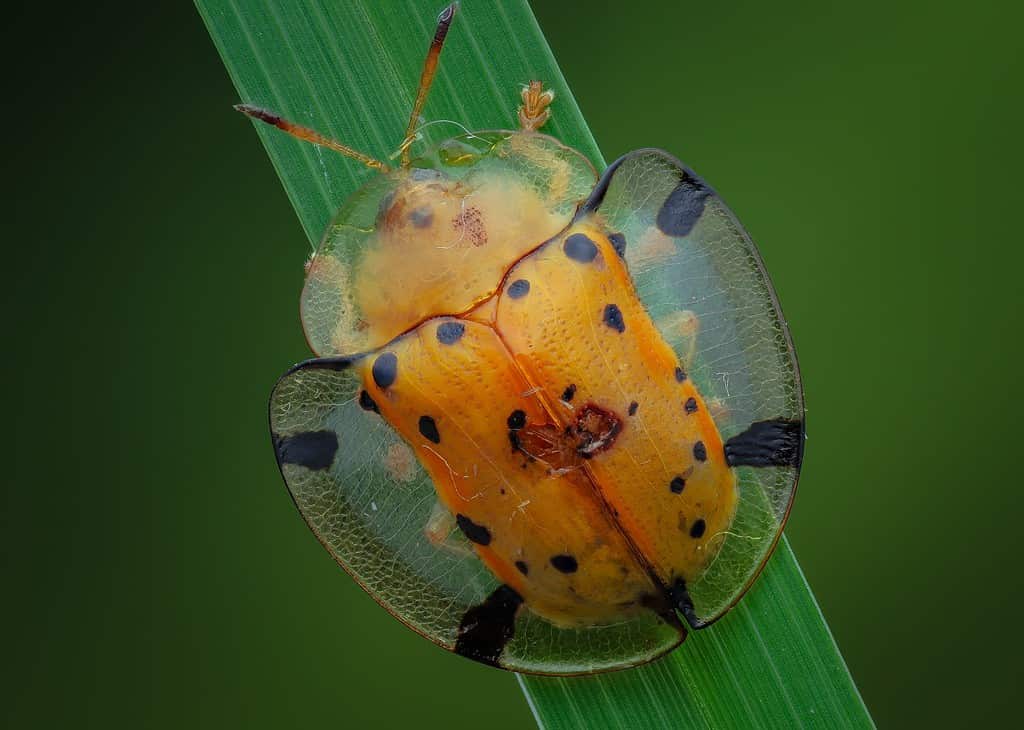
The golden tortoise beetle looks like it was built from polished gold. Adding to its unusual appearance, transparent sections around the edges of its shell give the beetle a glass-like quality. These clear portions contrast with the golden midsection. But it’s not stuck wearing one shade forever; it can actually shift colors based on factors like mood, age, or environment. At times it changes to a more reddish or bronze shade. The color changing skill is accomplished by fluid-filled layers beneath the outer shell. This beetle is truly a precious metal within nature.
10. Madagascan Moon Moth
©Anton_Ivanov/Shutterstock.com
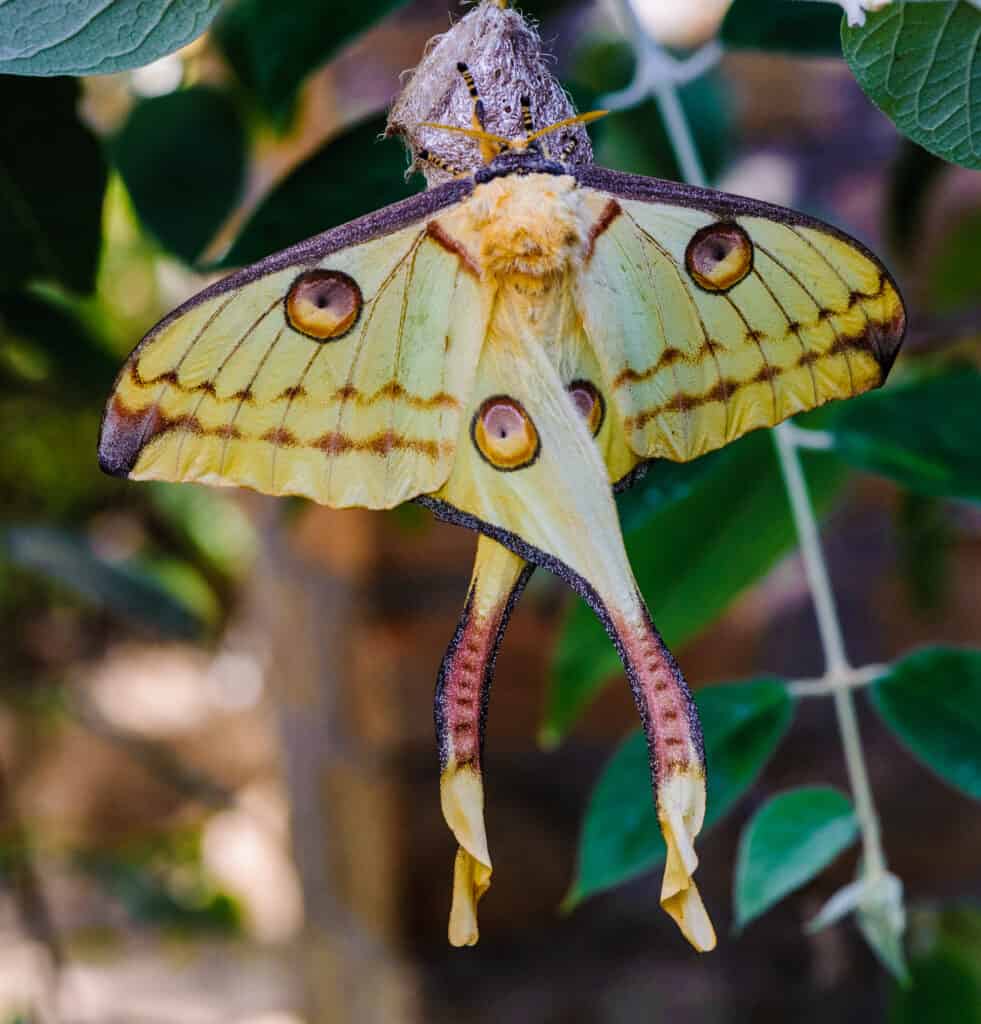
The Madagascan moon moth is a mix of soft pastel shades. Its dramatic wings feature light Easter egg yellow, alongside pink, purple, and green. Long tail-like extensions give it an ethereal appearance, like it flew out of a fairytale and into the African wild. Adults live only a few days and do not feed at all. Their short lives are spent reproducing and displaying their beauty for anyone lucky enough to stumble upon them.