
Quick Take
- Boa constrictors and pythons may look similar, but they belong to different snake families and live in different parts of the world.
- One of the biggest differences is reproduction: boa constrictors give birth to live young, while pythons lay eggs.
- Pythons include some of the largest snakes on Earth, but the boa constrictor is still a powerful, impressive constrictor in its own right.
At first glance, a boa constrictor and a python can look surprisingly similar. Both are thick-bodied, nonvenomous snakes that kill prey by constriction, and both come in a wide range of colors and patterns. That is exactly why people mix them up so often. But once you know what to look for, the differences become much easier to understand.
The biggest distinction is simple: a boa constrictor is a member of the family Boidae, while pythons belong to the family Pythonidae. That split matters because it helps explain several of the major differences between them, including where they live and how they reproduce.
The Biggest Difference Between a Boa Constrictor and a Python
The clearest difference between a boa constrictor and a python is reproduction. Boa constrictors give birth to live young, while pythons lay eggs. Female pythons often coil around their eggs, and in some species they even generate heat with tiny muscle contractions to help incubate them. A female boa constrictor, by contrast, carries developing young inside her body until they are born.
That one trait alone is enough to separate the two groups in many basic comparisons. If the snake in question is a boa constrictor, it is a live-bearing snake. If it is a python, it is an egg-layer.
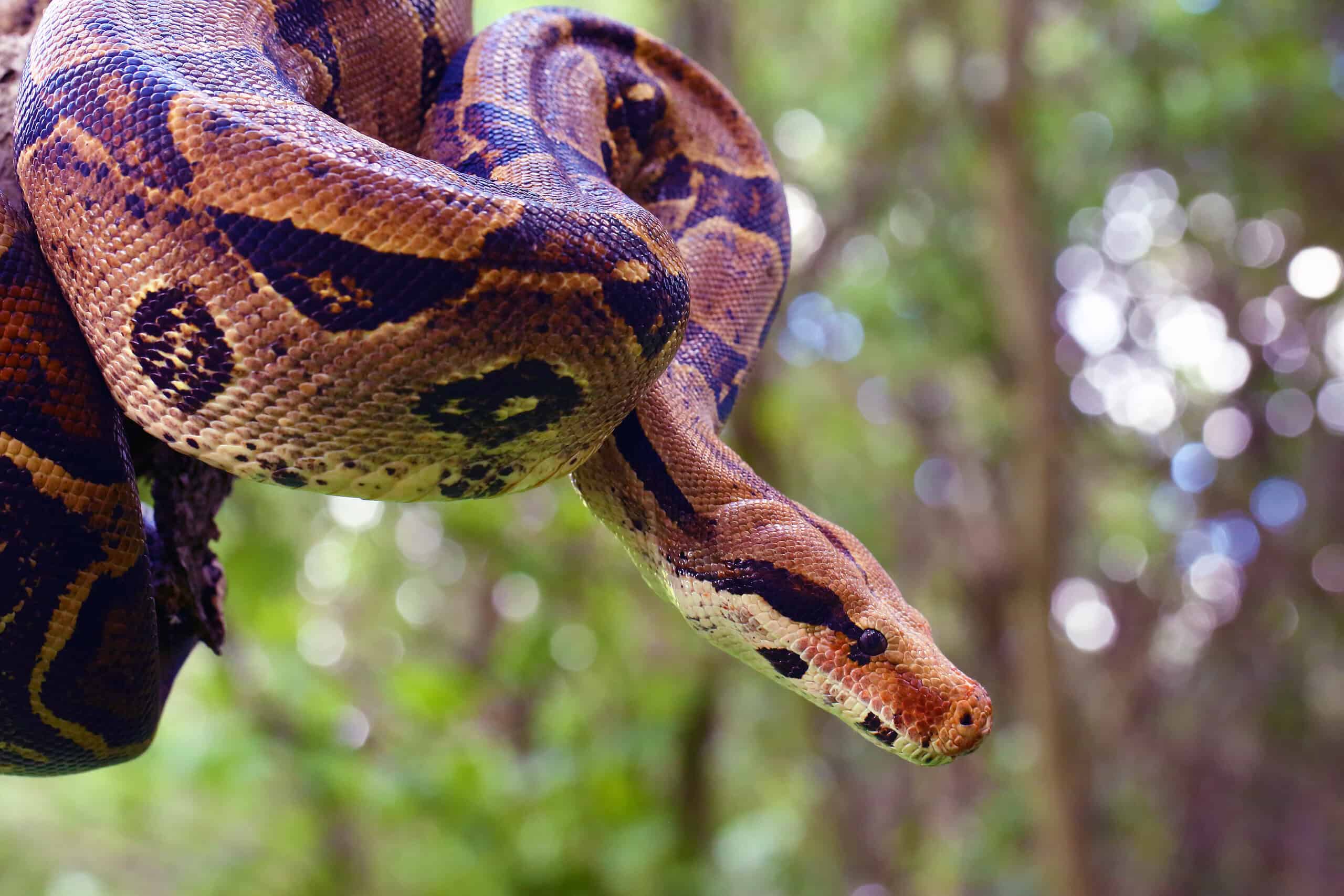
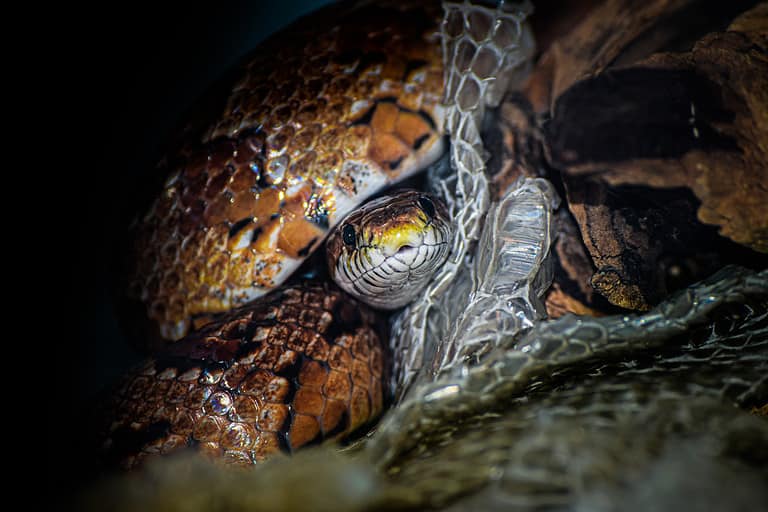
Boa constrictors, like the one pictured here, give birth to live young.
©Karel Bartik/Shutterstock.com
Family Classification
A boa constrictor is one species, Boa constrictor, within the boa family. “Python,” on the other hand, refers to a whole group of snakes in the family Pythonidae rather than a single species. That is one reason blanket comparisons can get messy: you are comparing one well-known boa species to a diverse group that includes everything from small pythons to some of the longest snakes on Earth.
Both groups are nonvenomous constrictors, and both still retain tiny vestiges of hind limbs called pelvic spurs. These are easier to notice in some individuals than others, especially near the cloaca. So while people often expect boas and pythons to be built very differently, they actually share a number of ancient snake traits.
Size
Size is another major difference. A boa constrictor is a large snake, with adults typically reaching about 10 feet, though larger individuals have been reported. Pythons, however, vary tremendously by species. Some are relatively small, while the biggest species, including the reticulated python, can grow far longer than a boa constrictor.
Ultimately, the one that is the biggest between the two is the python. The python group includes some of the largest snakes in the world, and that pushes its upper size range well beyond that of the boa constrictor. But that does not mean every python is larger than every boa constrictor. It depends on the species.
Range and Habitat
A boa constrictor is native to the Americas. Its range stretches from northern Mexico through Central America and into South America as far as Argentina. It is often associated with tropical forests, but it also lives in savannas, scrublands, and other warm habitats.
Pythons are native to the Old World, not the Americas. Depending on the species, they occur in Africa, Asia, Australia, and nearby islands. They also occupy a wide variety of habitats, including forests, grasslands, scrublands, and wetlands. Some species spend time in trees, some are mostly ground-dwelling, and some are strongly tied to water.
That means geography is often one of the easiest ways to narrow things down. In the wild, a large native snake in Brazil or Belize might be a boa constrictor. A large native snake in India, Indonesia, or Australia is far more likely to be a python.
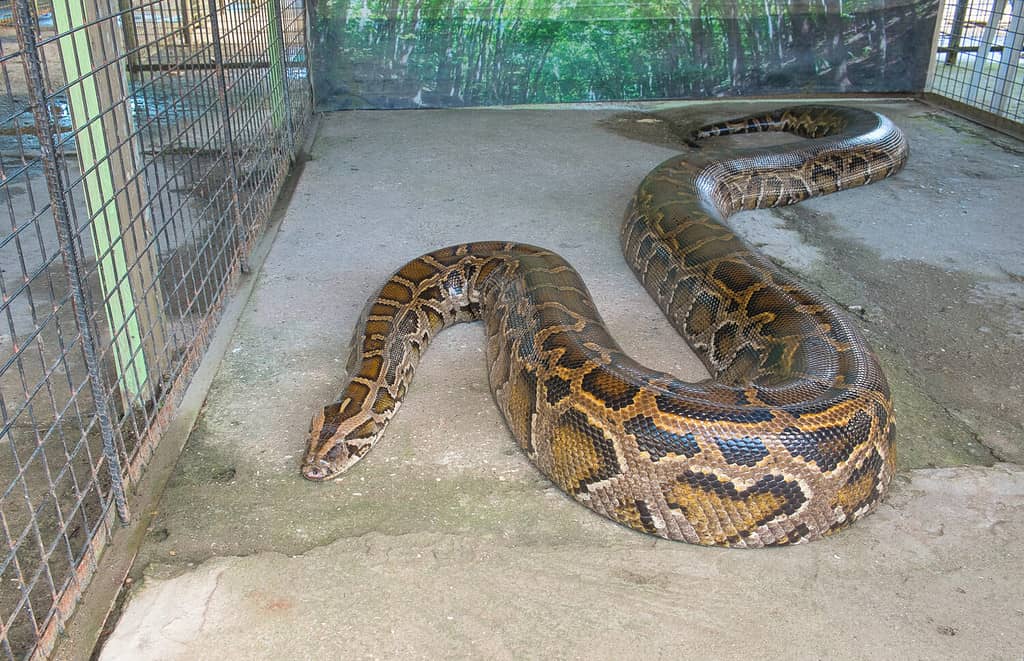
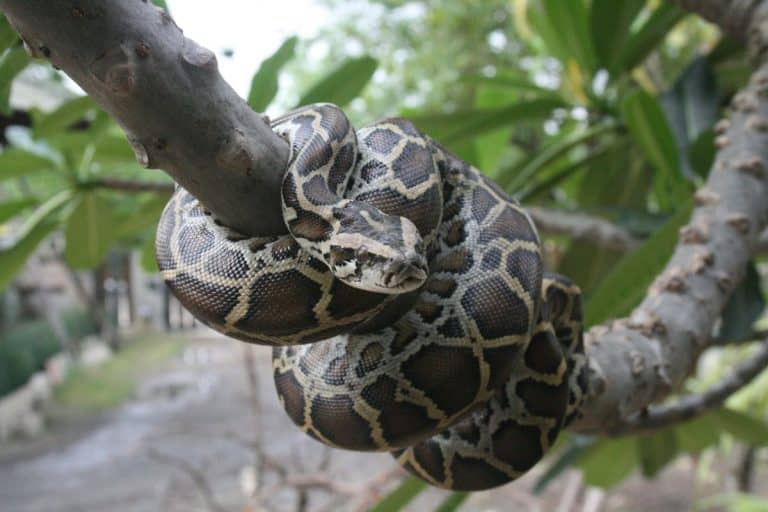
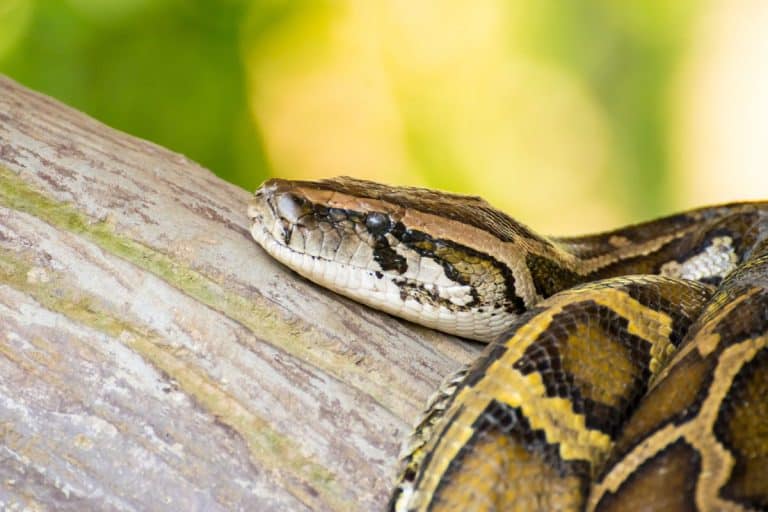
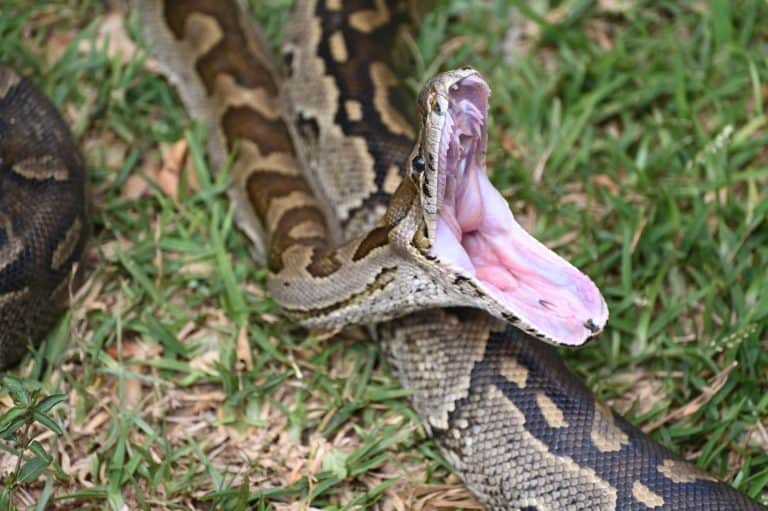
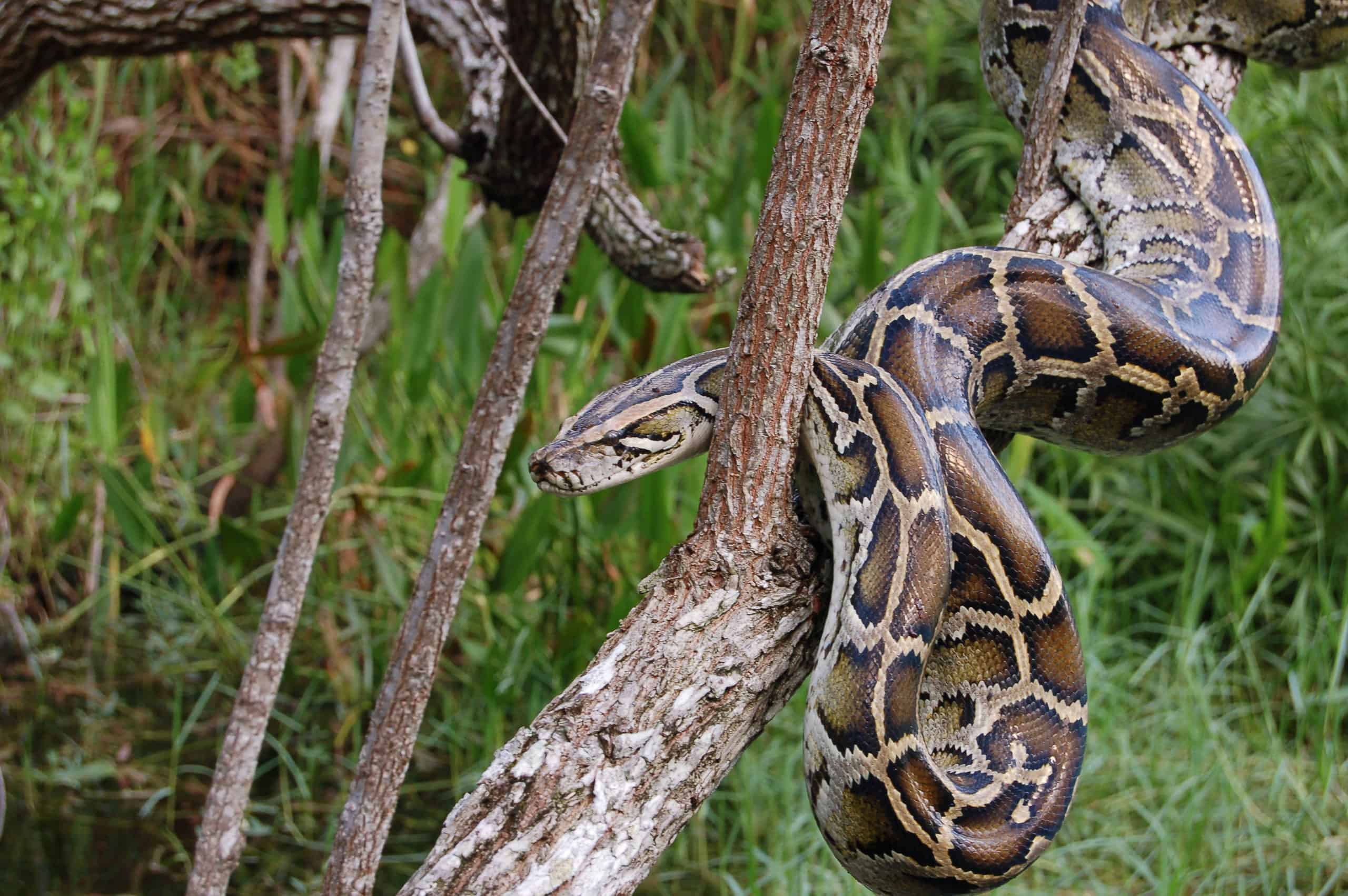
Geography is perhaps the simplest way to differentiate these large snakes from each other. Pythons, like the Burmese python pictured here, are native to the Old World, meaning their natural geographic range includes Africa, Asia, and Australia, whereas boas are from the New World (the Americas).
©PhotoRoman/Shutterstock.com
Appearance
This is where many comparisons go wrong. It is tempting to say that a boa constrictor has one “look” and pythons have another, but that oversimplifies things. A boa constrictor usually has a tan, brown, gray, or reddish base color with darker blotches or saddle-like markings. Pythons also come in many shades of brown, tan, olive, yellow, or green, and many species are heavily patterned.
Color alone is not a reliable shortcut, though. A patterned snake is not automatically a boa constrictor, and a large brown snake is not automatically a python. Accurate identification usually depends on the exact species, the snake’s range, and finer anatomical details rather than one quick glance at the pattern.
Behavior
Both boa constrictors and pythons are ambush predators that use powerful bodies to subdue prey. Both are nonvenomous, and both swallow prey whole after constricting it.
Final Takeaway
If you want the simplest way to tell a boa constrictor from a python, focus on three things: where it lives, how it reproduces, and how large the species can get. A boa constrictor is a New World snake that gives birth to live young. Pythons are Old World snakes that lay eggs, and the largest among them outgrow boa constrictors by a wide margin.
They may look alike at a glance, but they are not the same kind of snake. Once you know the basics, the comparison becomes much clearer.