
Quick Take
- The Queen Alexandra’s birdwing is the largest butterfly in the world, boasting a 10-inch wingspan.
- Its 7-month development cycle is a biological challenge to replenishing the wild population.
- The butterfly is a specialist and lives in a very narrow ecological niche within Papua New Guinea’s Oro Province.
- Poaching and habitat loss nearly decimated the entire population.
- Beyond simply banning hunting, conservation now focuses on empowering local tribes to protect their own forests.
In 1906, naturalist Albert Stewart Meek discovered a butterfly so large that it defied belief. Living high in the canopies of Papua New Guinea, the Queen Alexandra birdwing (Ornithoptera alexandrae) displayed a wingspan that rivaled that of a bird and was well out of reach. The butterfly’s size and high location rendered traditional nets useless. Instead, Meek collected the first specimen by firing a shotgun loaded with “dust shot.” This unorthodox capture forever linked the remarkable species to its original nickname: the Shotgun Butterfly.
In London’s Natural History Museum, the iridescent wings of the Queen Alexandra’s birdwings still show microscopic scars from the “dust shot” that brought them down. Today, these legacy specimens serve as biological vaults, holding the genetic secrets of a species fighting to survive. While these butterflies are now a protected global treasure and a symbol of national identity for Papua New Guinea, illegal black-market trade persists, with poachers fetching high prices for rare individuals.
The Birdwing’s Impressive Palette
The butterfly was named in honor of Alexandra of Denmark, the Queen of Great Britain in the 1900s.
©Ashley Swanson/Shutterstock.com
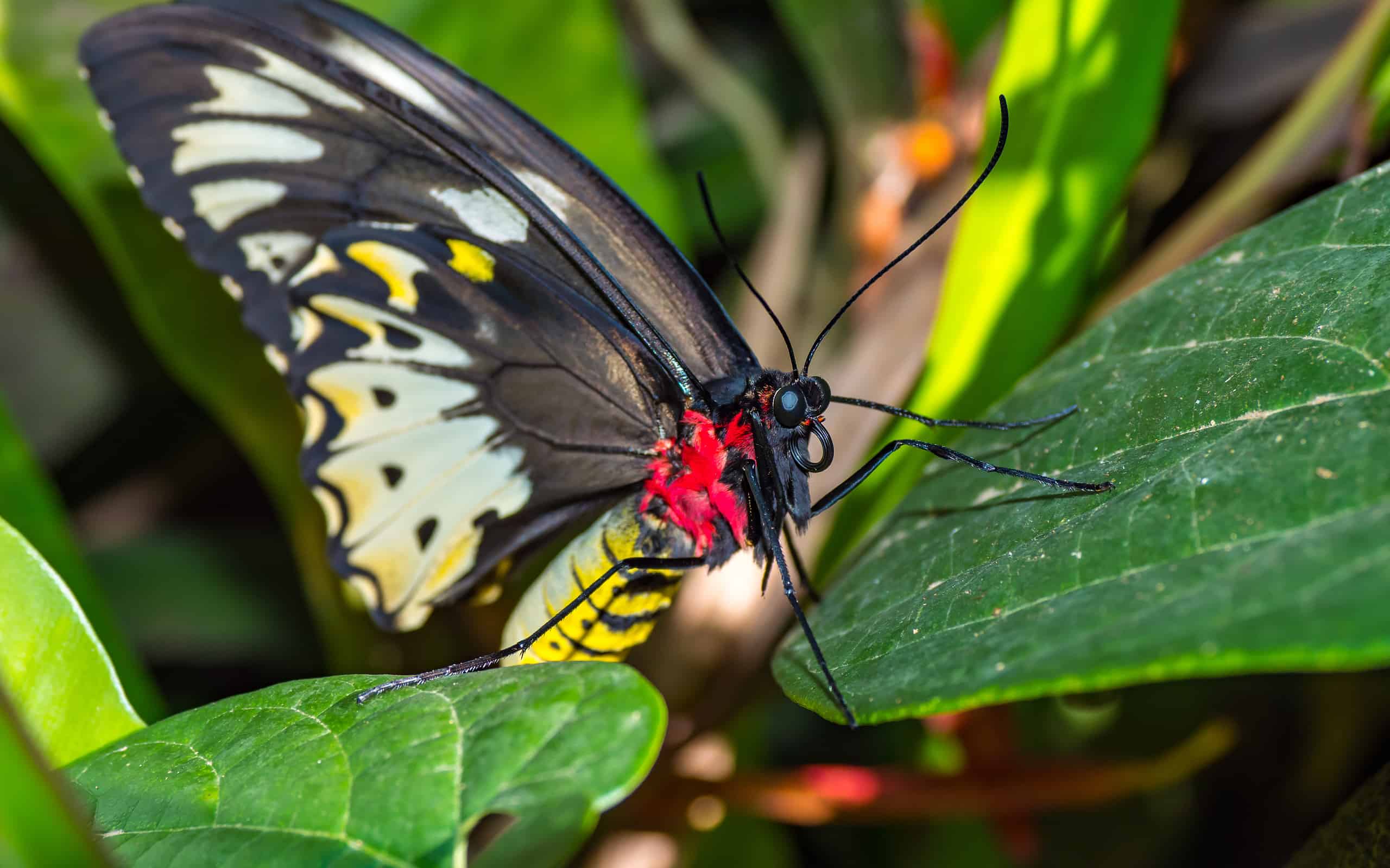
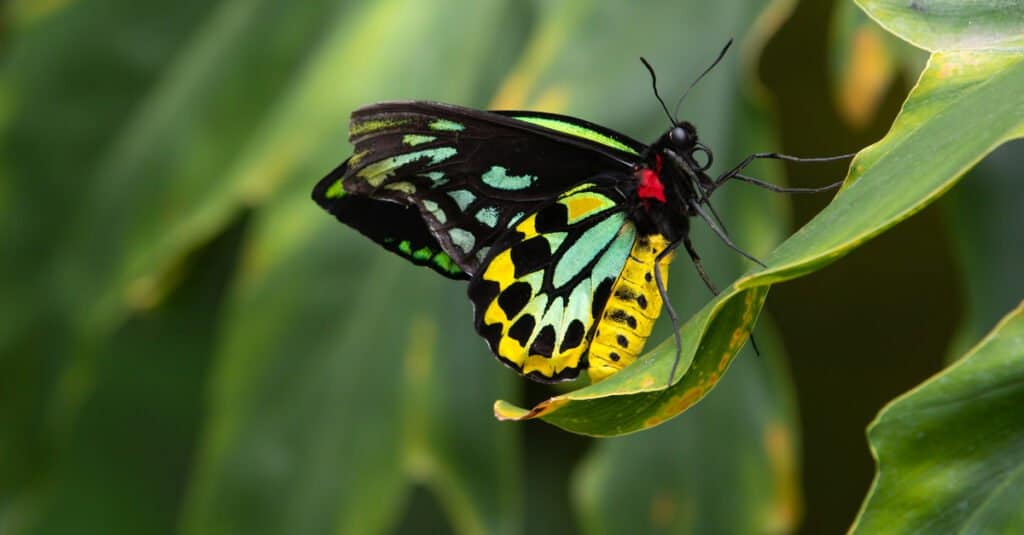
Male and female Queen Alexandra’s birdwing butterflies are so visually distinct that you might easily mistake them for two different species. While they share a few common traits — such as a black thorax with a splash of red and a vibrant yellow abdomen — their wings are completely unique.
The female is the larger of the two; their bodies can reach more than 3 inches long, while their wingspans are an impressive 7 to 10 inches. Light spots decorate their dark brown forewings, while their hindwings sport seven pale yellow patches separated by thick, dark veins.
In contrast, the male is smaller and slenderer, with a wingspan between 5.5 and 8 inches. However, what males lack in size they make up in brilliance; their wings are deep, velvety black, highlighted by shimmering bands of iridescent blue-green.
A Fragile Kingdom
The Queen Alexandra’s birdwing is a specialist of the Oro Province, confined to the unique volcanic soils of the Popondetta Plain and the Managalas Plateau. Unfortunately, this narrow ecological niche creates a precarious existence; the butterflies live in such fragmented pockets, and females rarely venture beyond their established territory. Because they refuse to relocate — even when suitable habitat is nearby — the population has little capacity to recover from environmental disturbances.
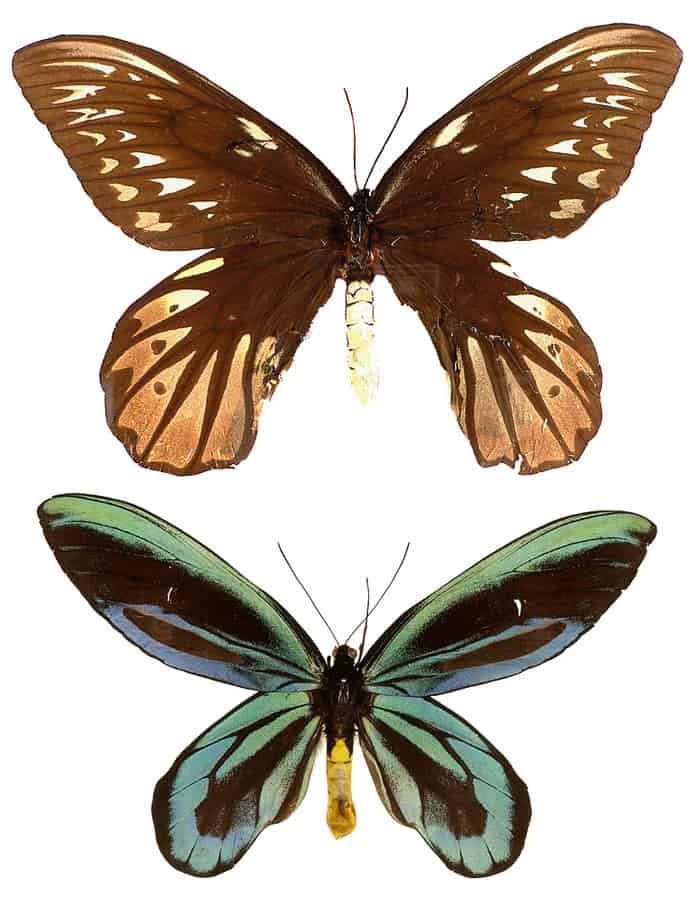
Museum specimens show small tears or holes in their wings from the violent collection methods of the past.
©MP_-_Ornithoptera_alexandrae_3.jpg: Mark Pellegrini (Raul654)Ornithoptera_alexandrae_nash.jpg: Robert Nash <robert.nash at magni.org.uk>derivative work: Bruno P. Ramos / CC BY-SA 3.0 / Wikimedia Commons – Original / License
The limitations of the butterfly’s behavior proved tragic when Mount Lamington erupted in 1951. The volcano destroyed 250 square kilometers of primary habitat in a matter of days. The disaster permanently severed connections between surviving colonies. Because they failed to migrate to safer zones, the surviving butterflies formed isolated clusters. This genetic bottleneck left the population more fragile than ever.
By the 1960s, the butterfly’s status as the “Holy Grail” for collectors had pushed the species to the brink of extinction. This triggered a complete legal shutdown, beginning with Papua New Guinea’s 1966 Fauna Protection Ordinance, which banned all hunting within the country. By 1987, the species was placed on CITES Appendix I, the highest level of international protection. This effectively shut down the legal trade, acknowledging that the sale of even a single specimen could push the species toward permanent disappearance.
Today, the Queen Alexandra’s birdwing is classified as Endangered on the IUCN Red List. It is also protected under CITES Appendix I, making international trade illegal and subjecting the species to some of the strictest conservation measures in the world.
Modern Pressures and the Struggle to Survive
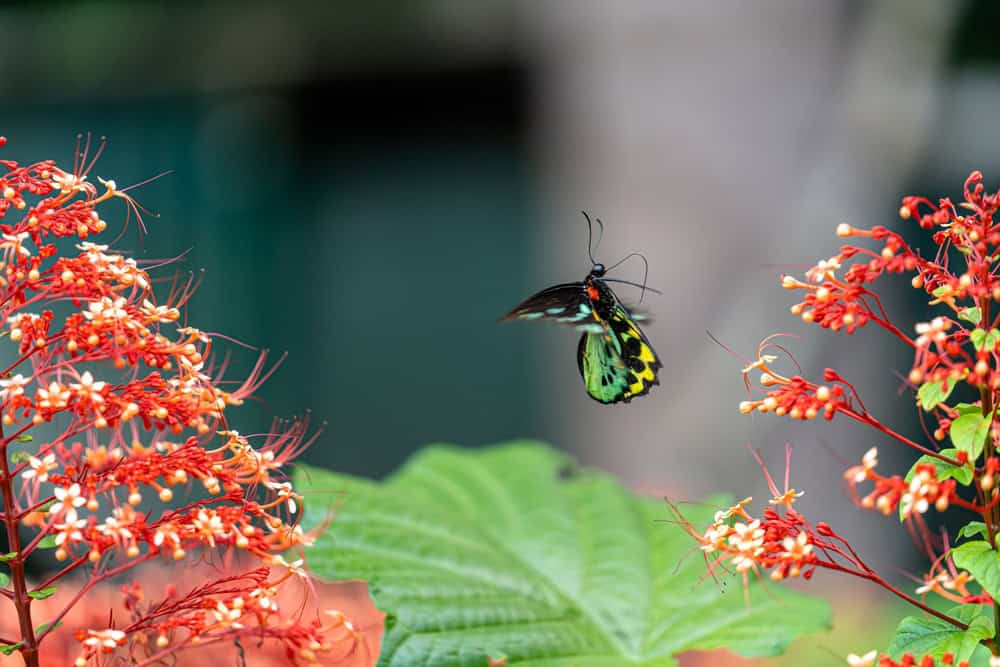
Queen Alexandra’s birdwing butterflies are specialists and struggle to adapt to new areas.
©Wirestock Creators/Shutterstock.com
Unfortunately, the Queen Alexandra’s birdwing lacks the biological tools necessary to survive against many modern threats facing it today. Developers continue to convert massive tracts of primary rainforest into cocoa, rubber, and oil palm plantations, reducing the biodiversity and habitat necessary for the Queen Alexandra’s birdwing.
Larvae are also evolutionary hostages to a single food source: the toxic vine Aristolochia dielsiana. Because these vines grow high in the canopy, cutting down even just one old-growth tree can instantly wipe out the food supply for an entire colony.
Queen Alexandra’s birdwings are slow to reproduce. With a low egg count and a grueling seven-month development cycle, the butterfly simply cannot replenish its numbers as quickly as it is losing habitat.
The Genetic Vault
Because the Queen Alexandra’s birdwing is so strictly protected, modern research relies almost entirely on legacy specimens — those legally gathered before the 1966 and 1987 bans. Under international law, a specimen is only legal to own or study if it carries a Certificate of Antiquity. This document proves the butterfly was collected before the 1987 CITES ban.
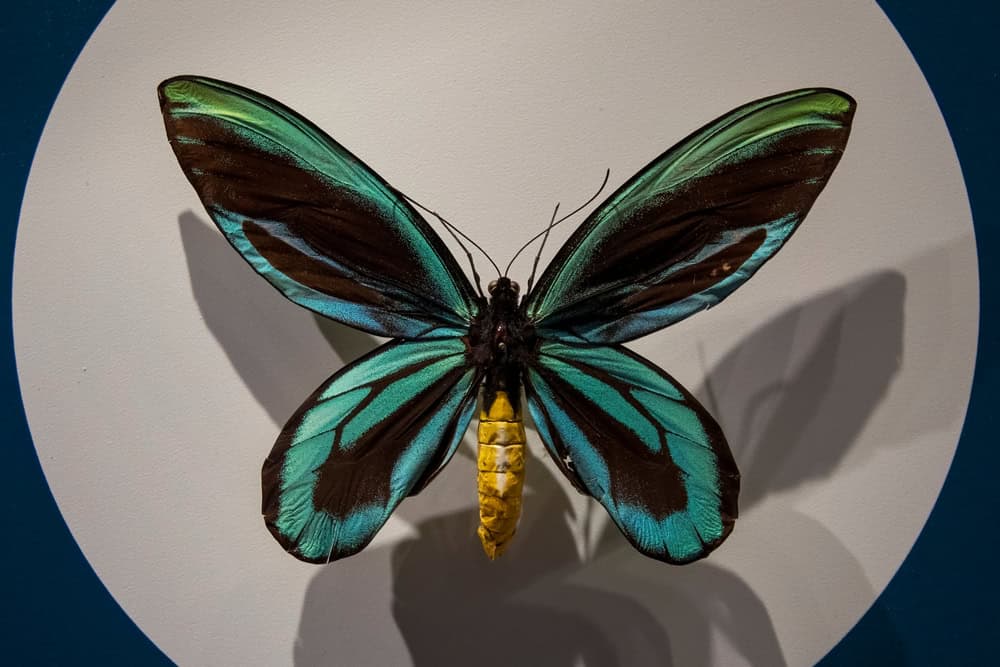
The Queen Alexandra’s birdwing is the largest butterfly in the world.
©Anthony King Nature/Shutterstock.com
Scientists are using DNA extracted from these specimens to map the species’ entire evolutionary history. Researchers can track the genetic decline of the species and identify which specific clusters are at the highest risk of genetic failure. This data provides vital information for conservationists to create a blueprint for the butterfly’s survival.
These vital specimens also provide a unique chemical and physical reference point. This helps law enforcement authorities identify poached insects and prosecute the illegal black-market trade with scientific precision.
The “Oro Butterfly” as a National Icon
With the end of the global trade, the Queen Alexandra’s birdwing transformed from a black-market target into a cornerstone of Papua New Guinea’s identity. Known locally as the “Oro Butterfly,” it is a symbol of both provincial and national heritage.
The butterfly’s iconic silhouette is a staple of traditional tapa cloth designs and ceremonial performances. It has been featured on Papua New Guinea’s postal stamps and commemorative coins.
Many local communities now view the species as a shared inheritance rather than a commercial product. As stewards, these communities ensure that the Queen Alexandra’s birdwing remains a living symbol of their land.
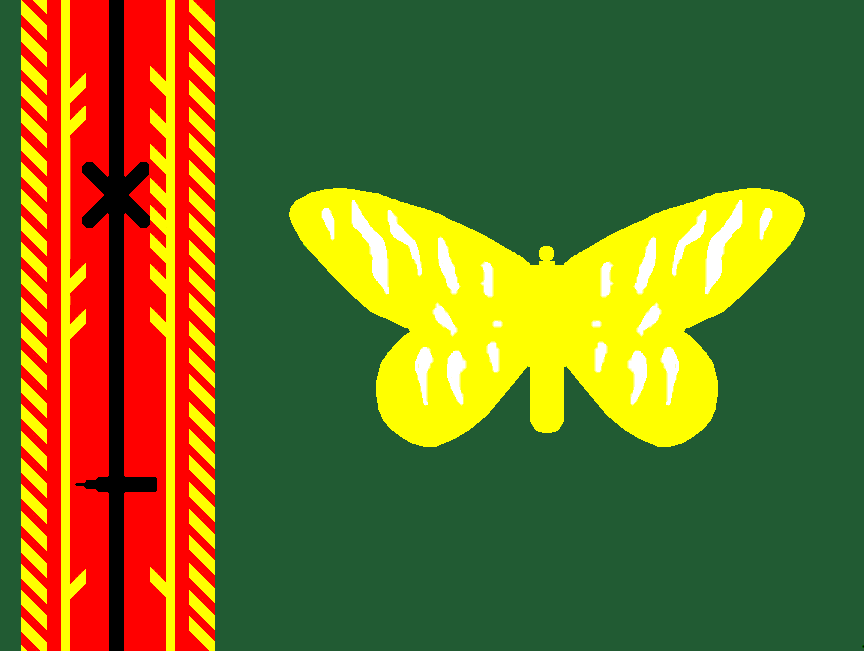
The official flag of the Oro Province features the Queen Alexandra’s birdwing butterfly.
©Juergen Krause / Public domain / Wikimedia Commons – Original / License
From Poaching to Stewardship
The survival of the Queen Alexandra’s birdwing butterfly hinges on a fundamental shift in how local landowners view their environment. After decades of battling habitat loss and the black market, a more resilient model of community protection is taking root.
Conservation is proving that when ecosystems are healthy, people thrive. By moving away from poaching toward stewardship, Indigenous landowners are reclaiming their ancestral lands. Through community forestry, locals can reject the encroachment of logging and industrial palm oil. Instead of clear-cutting, they are managing forests for sustainable resources like traditional medicines, nuts, and natural fibers. In some cases, landowners are even paid to maintain “carbon sinks” and protect the vital watersheds that supply the entire region with clean water.
On the ground, an intensive reforestation effort is underway at the Lejo Agricultural Station. Inside a dedicated 9.88-acre reserve, teams have planted thousands of cuttings of Aristolochia dielsiana — the specific host vine these butterflies need to survive. These sanctuaries provide a safe haven where the butterflies can feed and lay eggs far from industrial disruption.
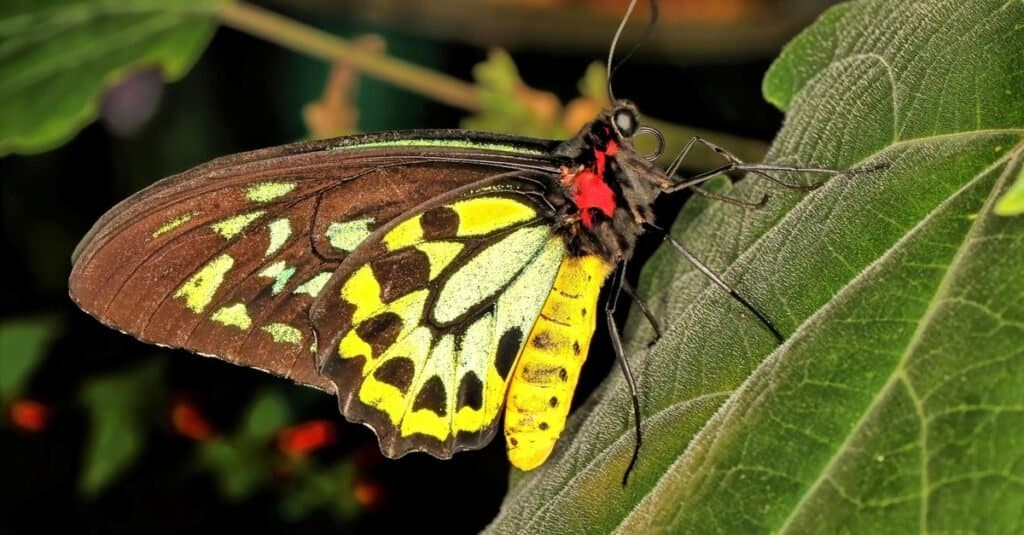
Queen Alexandra’s birdwing butterflies only live in lowland, old-growth rainforests.
©Russell Marshall/Shutterstock.com
Despite the Queen Alexandra’s fame, much of the insect’s life cycle remains a mystery. To bridge this gap, researchers — supported by the Sime Darby Trust and New Britain Palm Oil Ltd. — are using large flight cages to study the butterfly’s complex life cycle in a controlled setting.
Researchers are experimenting with breeding and training a strain of the butterfly to feed on different Aristolochia species. If successful, this could pave the way for captive rearing programs, turning the butterfly into a sustainable industry. This shift would boost eco-tourism while providing residents in Papua New Guinea with a steady income. Such economic benefits ensure that the community protects the Queen Alexandra’s birdwing for generations to come.