
Quick Take
- Starry-eyed hermit crabs must achieve multispecies integration to successfully deter 2 different aquatic predators.
- The Calliactis polypus faces a sedentary limitation that prevents vital water flow for sustenance.
- Calliactis polypus lacks bioluminescent capabilities, contradicting common misconceptions regarding its visual signaling.
- Hermit crabs must complete a manual collection event to secure essential protection for their exposed shells.
Symbiosis is the long-term, close interaction between two or more biological species, most often for the benefit of one or both parties. These interactions highlight the diversity of nature. One example can be seen in this Instagram post by @ocean.destinations. The post shows a starry-eyed hermit crab and sea anemone working together for mutual benefit. Read here to learn about this relationship.
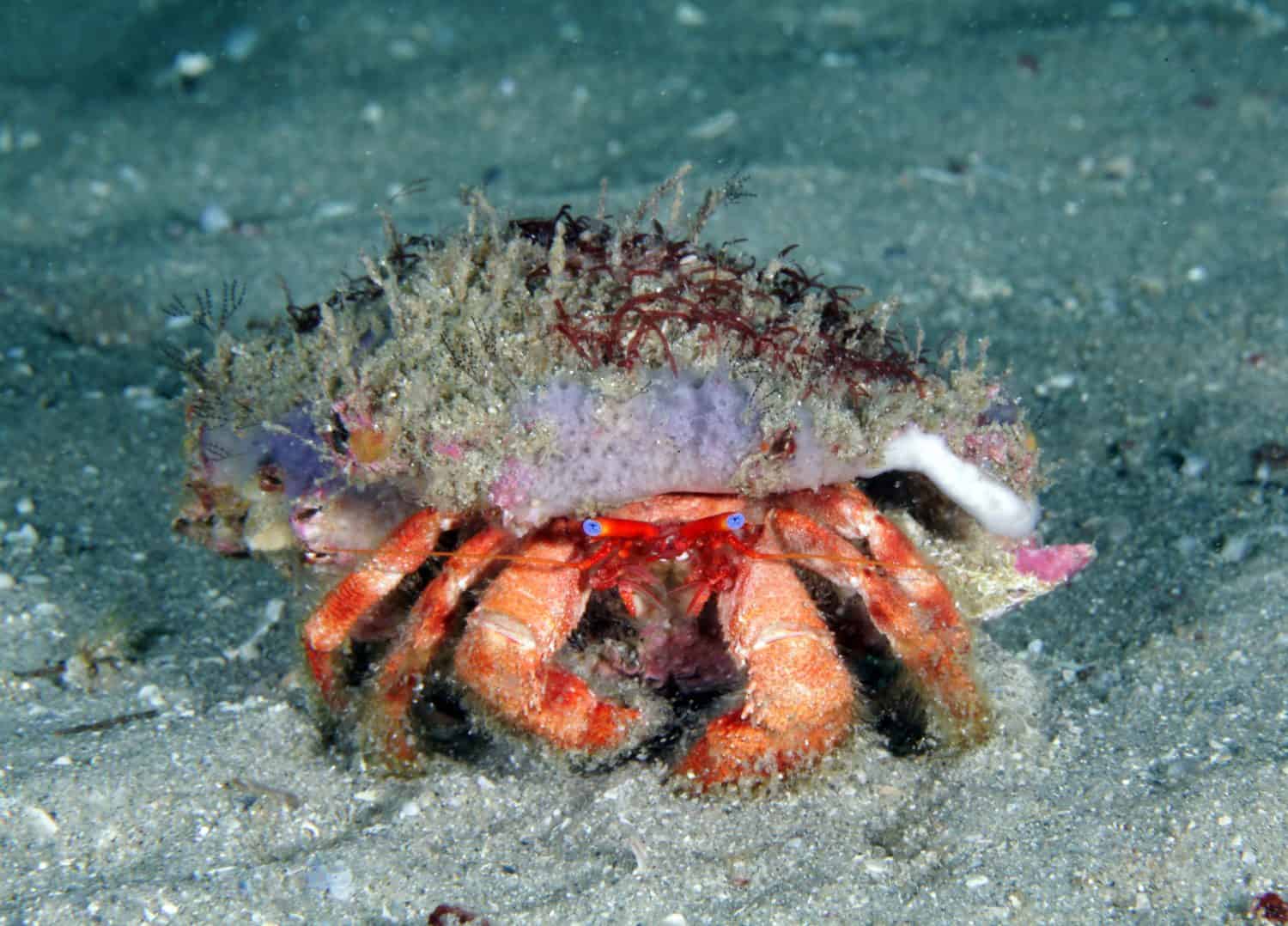
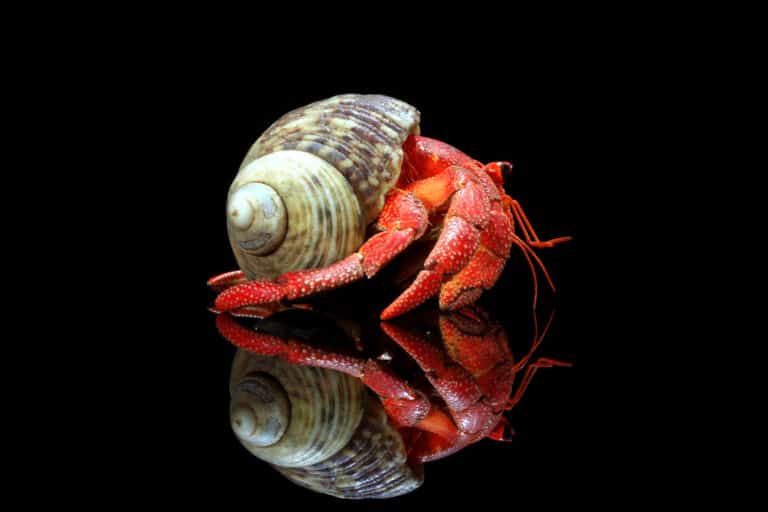
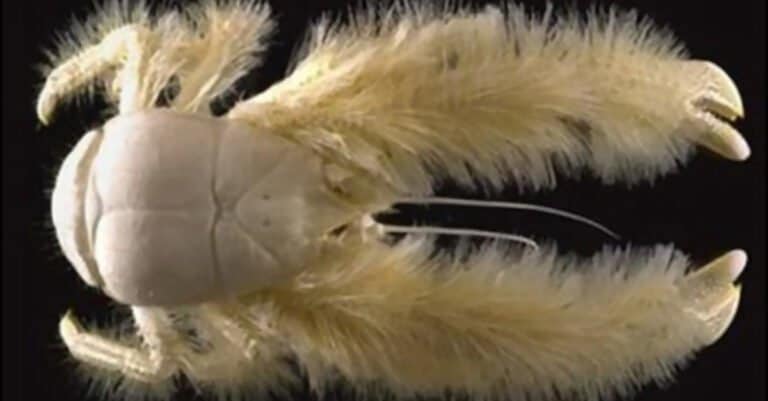
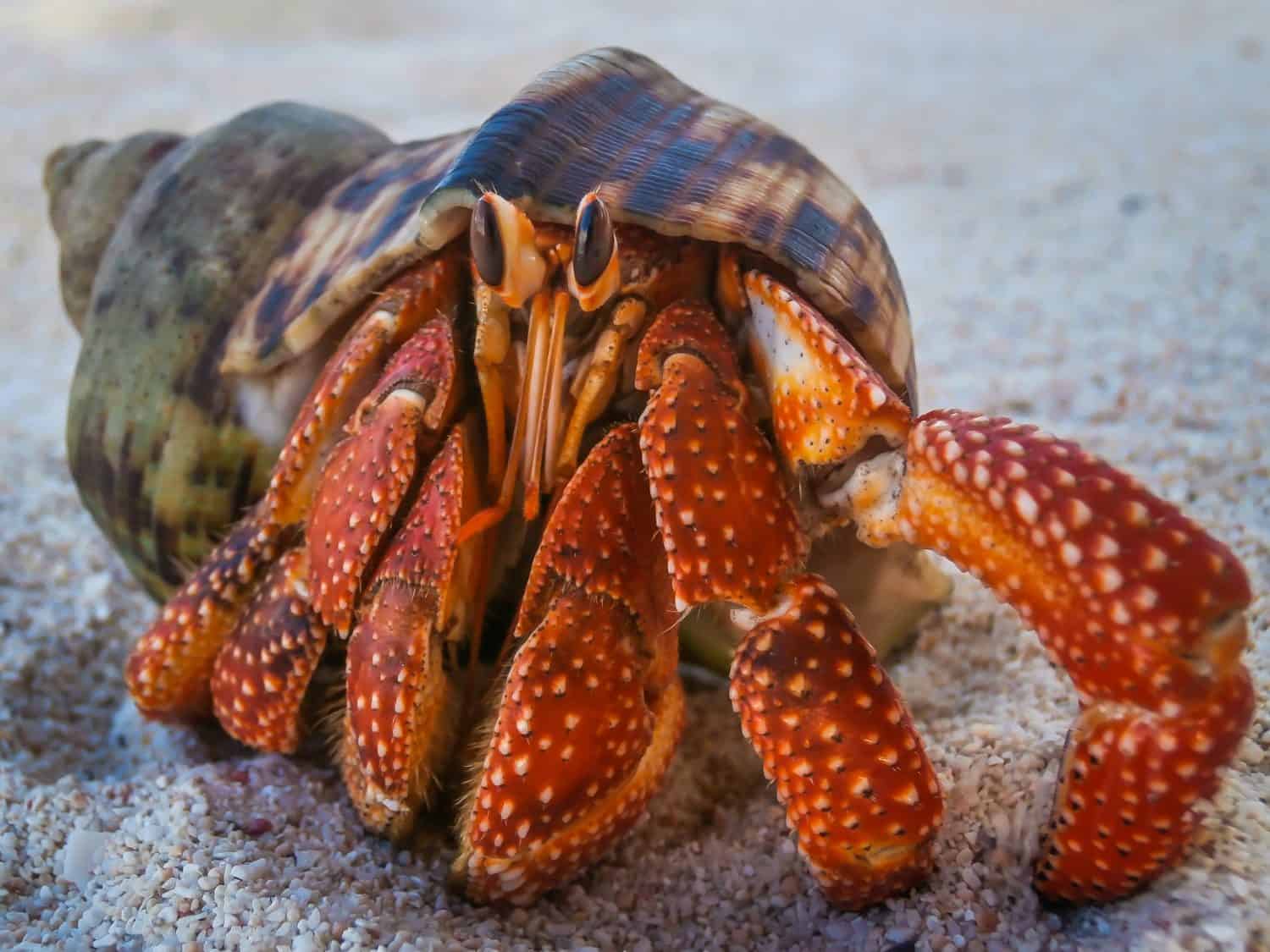
The starry-eyed hermit crab gets its name from its bright blue eyes.
©lego 19861111/Shutterstock.com
Biological Mutualism
Mutualism is a form of symbiosis where both organisms benefit. The relationship between the starry-eyed hermit crab and Calliactis polypus, a species of sea anemone, is a great example. Each organism offers the other something it needs. In this relationship, the sea anemone lives on the shell of the hermit crab. The sea anemone benefits by gaining mobility and increased access to food. Without the mobility of the hermit crab, sea anemones are generally sedentary creatures.
However, by moving with the help of the hermit crab, the sea anemone can encounter more water flow, which brings it more food. This helps the sea anemone stay alive and well-fed. The hermit crab also gains protection from the anemone. The species Calliactis polypus has nematocysts, or stinging cells, that deter predators like octopus and fish. Because of the anemone’s bright colors, it is noticeable to predators, which know to avoid it. This means that the hermit crab’s shell and movement, combined with the anemone’s warning colors, signal to predators to stay away, helping to deter attacks.
What the Post Gets Wrong
The post incorrectly describes Calliactis polypus as bioluminescent. In reality, this species does not produce light via chemical reactions; it is not bioluminescent. While colorful and full of interesting patterns, like most sea anemones, they do not produce light via chemical reactions. Instead, they have stinging cells, which most predators are wary of. These stingers are what the hermit crab wants.
Hermit crabs purposefully collect and place the anemones on their shells. Not only do they provide defense through their painful stings, but they also offer camouflage. Since most anemones naturally occur on rocks and other hard surfaces, the hermit crab can better blend into these surroundings. So, while the post contains a minor error, the relationship between these two very different species remains fascinating to observe.