
Quick Take
- Bubbles never eats the fish he chases, and that is exactly the point. See why he never eats trevally →
- He uses a sense dolphins are famous for to pick his targets, though not in any way scientists had seen before. See how echolocation is used →
- Forcing a fish to give up its last meal might actually be the smarter hunt. Here is why the math works out. Explore the energy calculation →
- Scientists watched the same trick repeated over four years and still can't answer the most important question about it. See what remains unanswered →
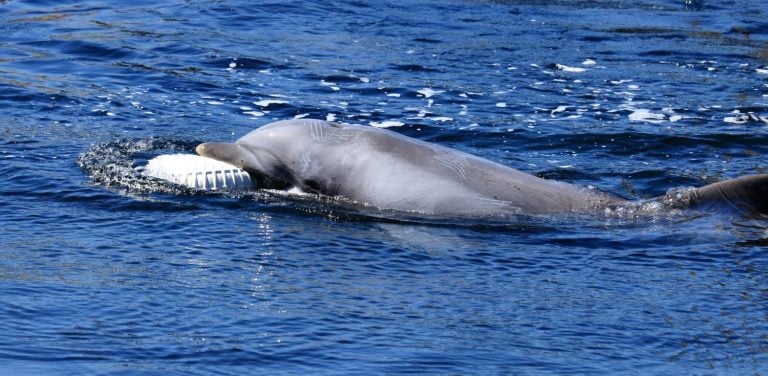
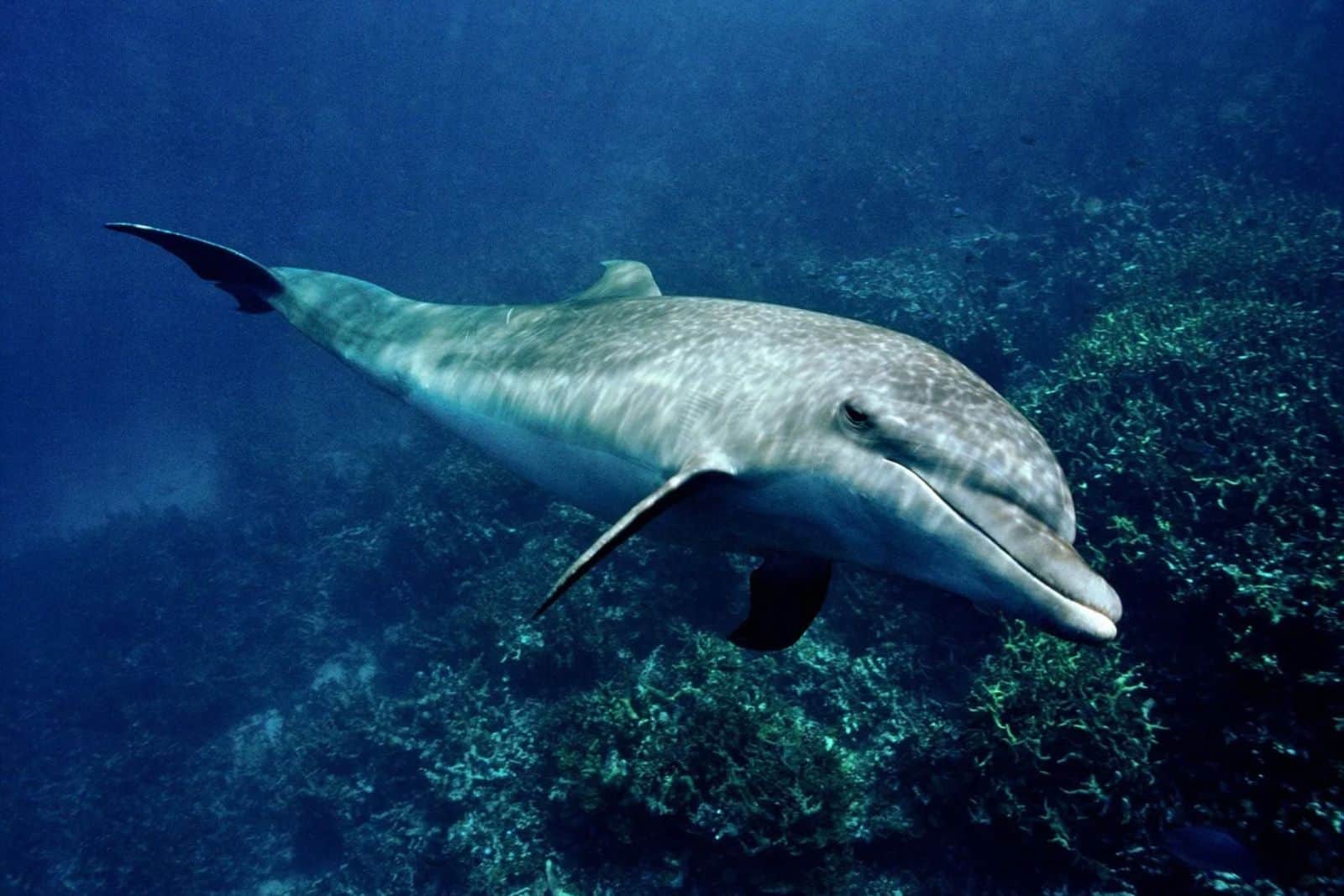
Off Lady Elliot Island, at the southern tip of the Great Barrier Reef, a wild bottlenose dolphin known to locals as Bubbles swims slowly along a school of bigeye trevally, his head swinging side to side. Then he locks onto one fish, breaks into a chase, and mirrors its every turn. Within seconds the trevally regurgitates its last meal, and Bubbles eats it on the spot while the fish swims off, untouched.
Researchers at the University of the Sunshine Coast say it is the clearest evidence yet that a dolphin steals food this way, something documented in birds and a few other animals but never before described in detail in any cetacean, according to the study.
How Bubbles Picks His Target
Between 2021 and 2025, the team recorded 20 foraging attempts from Bubbles, using GoPro footage and photo identification to confirm every encounter involved the same animal, recognizable by notches in his fin and a V-shaped scar on his right side. Of those 20 attempts, 11 ended with him eating a trevally’s regurgitated meal.
The sequence always follows the same pattern, described in the journal Ecology and Evolution: scanning with echolocation clicks, then targeting a single fish, then a close chase that ends only when the trevally throws up. Study co-author Asia Armstrong told Scientific American that dolphins can use echolocation to pick up small differences in a target’s shape and structure, so Bubbles may be using it to work out which trevally is carrying a full stomach worth stealing.
Why Stealing a Meal Might Beat Catching One
Lead author Romney Edwards-Francis has another idea about why he bothers. “I’d speculate that the trevally vomit provides an easy snack on days when Bubbles hasn’t been as successful with hunting,” Edwards-Francis told Discover Wildlife, noting the trevally school shows up in roughly the same spot almost every day.
Bigeye trevally are large, solidly built fish, and catching and eating one outright takes real effort. The researchers suspect that forcing a fish to give up its last meal might be a cheaper way for Bubbles to get fed than chasing it down himself. Tellingly, he has never once been seen eating a trevally directly, only the food it brings back up.
Why Scientists Are Being Careful About What This Means
The study is built on one individual, observed over four years, and the researchers are upfront about what that does and does not prove. They cannot say whether Bubbles invented this trick on his own or picked it up from another dolphin, since he has mostly been seen doing it alone. He was once filmed near another adult and a calf while trevally were nearby, but no feeding happened that day, so the question of whether the behavior could spread to other dolphins stays open.
Jason Bruck, a dolphin behavior researcher at Stephen F. Austin State University who had no part in the study, told reporters that watching the same dolphin repeat this exact routine over and over is strong evidence it is more than a lucky accident during a normal hunt. The researchers agree, but they also note that underwater behavior like this is notoriously hard to catch on camera, so there is no way yet to know if other dolphins are doing the same thing unnoticed.