
Quick Take
- Dolphins use shells the way you'd shake the last chips from a bag, and the physical coordination required reveals something unexpected about what counts as tool use. See the shaking technique →
- A marine disaster accidentally turned dolphins into better hunters, and the mechanism behind that shift is stranger than it sounds. How the heatwave helped →
- Most dolphins in the area never learn this trick, and the availability of nearby shells is not the reason why. Why shelling stays rare →
- A dolphin calf watching its mother hunt made the strongest case yet for how animal cultures are born, and it happened in real time. Watch a calf learn →
While dolphins typically rely on speed, agility, and echolocation to hunt, some bottlenose dolphins use a far more unusual tactic: turning empty seashells into portable fish traps. In a process known as “shelling,” a dolphin herds a fish into a large shell on the seafloor, carries it up to the surface, and tips or shakes it until the fish falls straight into its mouth. This clever technique is an ingenious example of animal tool use — and evidence suggests dolphins learn it not only from their mothers, but also by watching other members of their social groups.
Continue reading
How Dolphins Hunt with Shells
To perform “shelling,” dolphins target large, empty sea snail shells — specifically bailer shells (Melo amphora), which can reach the size of a football. The technique follows four distinct stages:
- The Chase: The dolphin herds a fish into an empty shell resting on the seafloor.
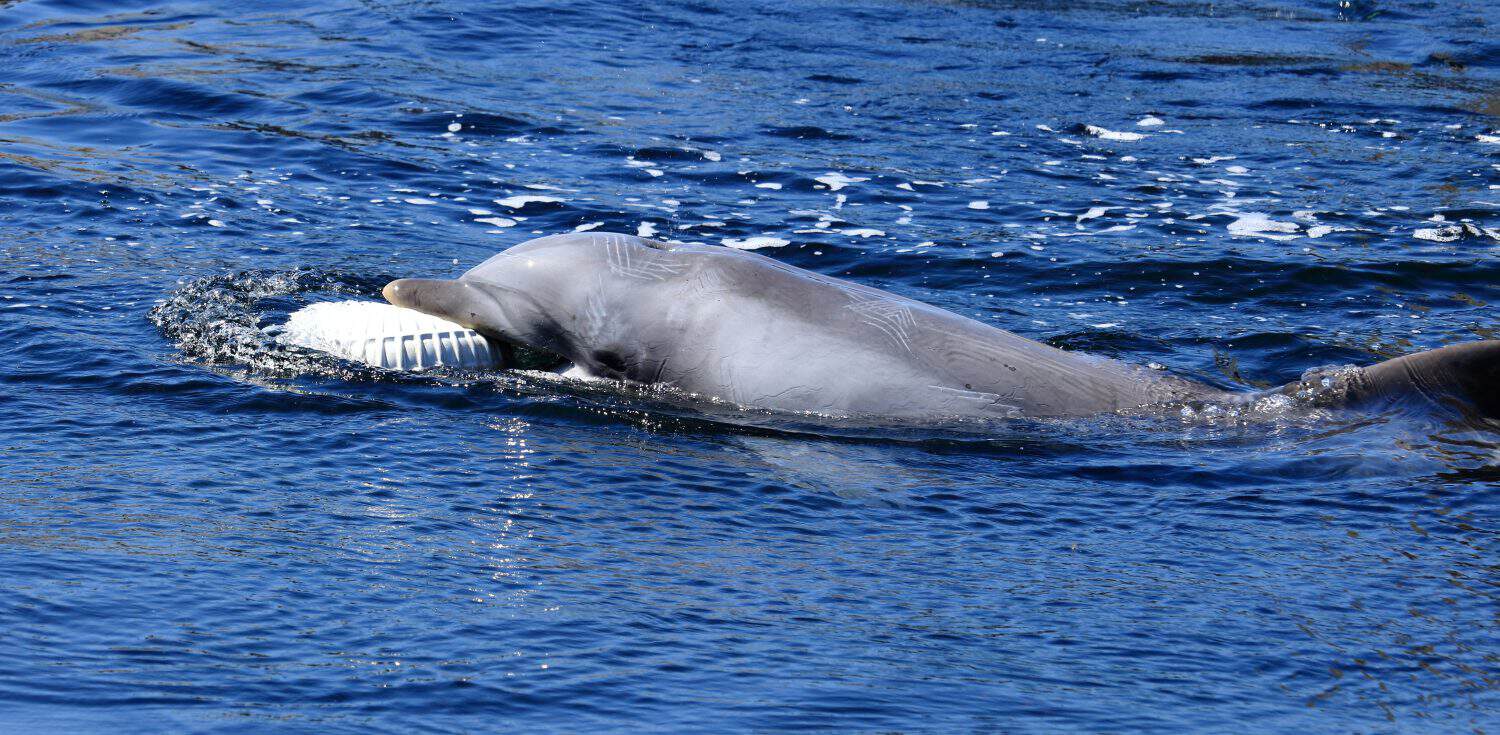
- The Pickup: Inserting its beak (rostrum) into the opening, the dolphin lifts the shell and carries it to the surface.
- The Shake: Above water, the dolphin tips and shakes the shell upside down to drain the water while keeping the fish trapped inside. Researchers compare it to shaking the last few chips out of a bag.
- The Catch: The fish slides out of the shell and straight into the dolphin’s open mouth.
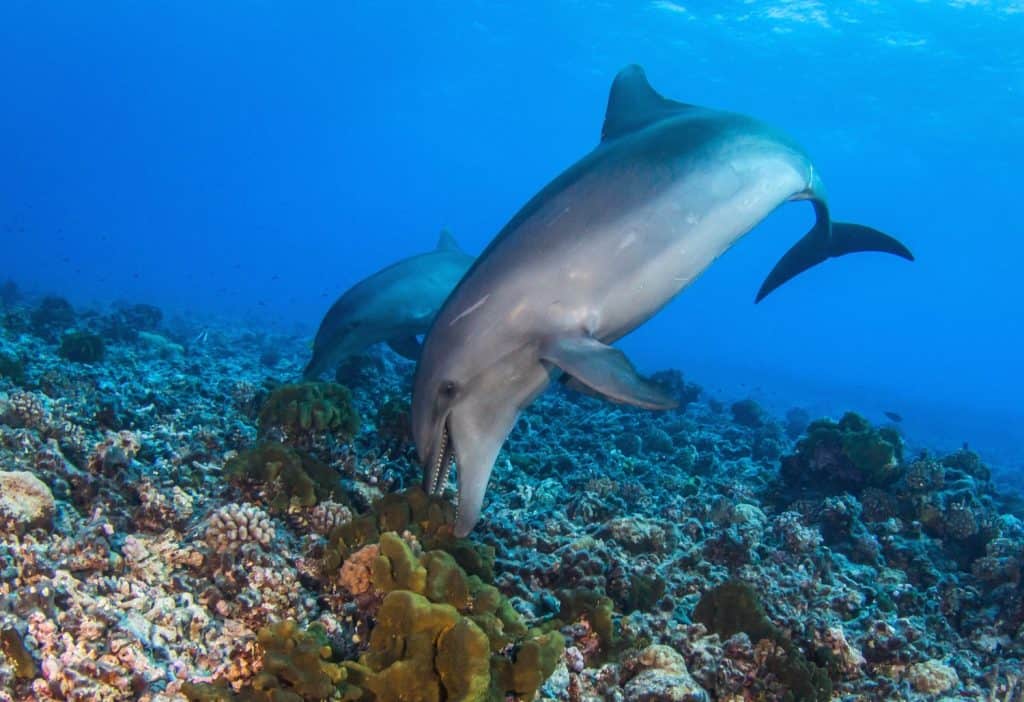
Bottlenose dolphins are among the most intelligent species on the planet.
©Tropicalens/Shutterstock.com
This sequence involves much more than simply picking up an object. The dolphin must treat the shell as a container, transport it with prey inside, and manipulate it in a specific way to separate the fish from the shell. This combination of planning, physical coordination, and flexible problem-solving makes shelling an incredibly sophisticated form of animal tool use.
The dolphins can also adapt when things do not go according to plan. In one recorded encounter, a fish escaped from a shell right at the surface. The dolphin immediately abandoned the shell and chased the escaping fish instead.
How Researchers Uncovered “Shelling”
Because shelling happens in a matter of seconds at the water’s surface, it is notoriously difficult to document. To confirm the practice, researchers rely on boat surveys, high-resolution photography, and drone footage. Drones are especially crucial — by looking directly down into a shell’s opening, aerial cameras can capture the tail or body of a trapped fish (such as a lizardfish), helping researchers confirm what the dolphin is doing.
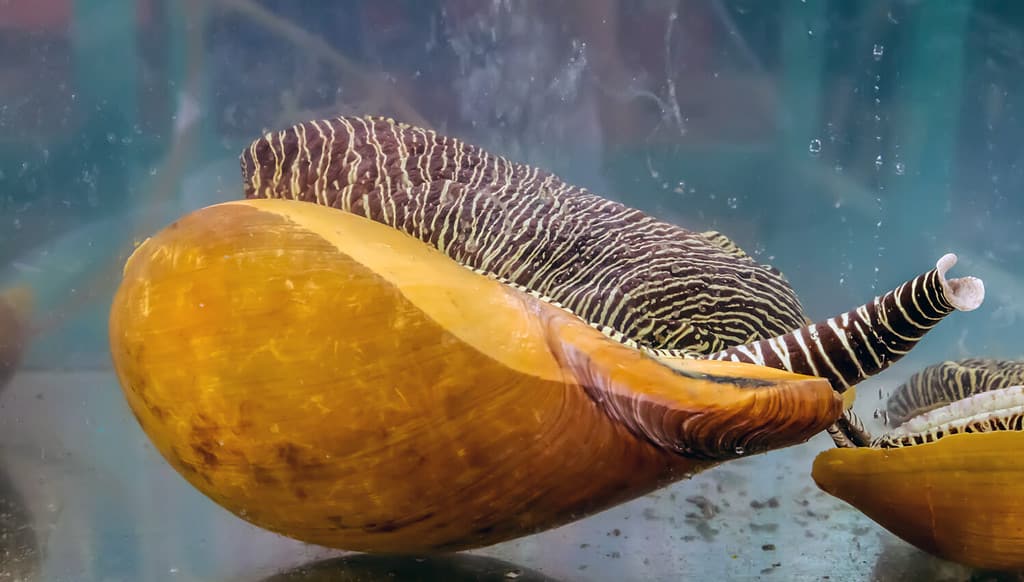
Bottlenose dolphins commonly use giant baler shells for shelling, as these can reach lengths of up to 21.5 inches.
©VladyslaV Travel photo/Shutterstock.com
In 2025, researchers published the first formal scientific documentation of two key shelling events in Hervey Bay:
- July 6: An adult female named “Stevie Nicks” was spotted repeatedly maneuvering a large bailer shell above the water to extract prey before letting the shell go.
- October 1: High-definition video and drone footage captured another female, “Maserati,” surfacing with a fish trapped inside a shell. When the prey escaped and Maserati dropped the shell to chase it, her calf, “Bentley,” immediately retrieved the shell and mimicked her precise handling technique.
While these marked the first official scientific records for the region, historical photos from local ecotour operators — such as Blue Dolphin Marine Tours — show that people have observed this behavior for years. Archived photos confirm that Hervey Bay dolphins have been practicing this clever trick for much longer than scientists previously realized.
How Dolphins Learn to Shell
After watching his mother Maserati, the calf Bentley immediately tried the technique himself. This provides compelling evidence of vertical social learning — the passing of skills from parent to offspring. However, mothers are not the only teachers for young dolphins.

Calves often learn shelling techniques from their mothers.
©vkilikov/Shutterstock.com
A 2020 study analyzed social learning in Shark Bay dolphins over an 11-year period, documenting shelling behavior among multiple individuals. Researchers recorded 42 shelling events among 19 individuals from distinct genetic lineages. Using social network analysis, they discovered that a dolphin’s likelihood of shelling depended primarily on its peer group, rather than its genetics or shared environment.
Together, these studies demonstrate that dolphins learn tool use through multiple avenues: they adopt techniques from their mothers, but they also learn by observing friends and peers in their social community.
Social Learning
Social learning is an especially powerful tool during environmental crises, when rapid changes force animals to adapt and innovate.

Bottlenose dolphins are extremely social creatures.
©wildestanimal/Shutterstock.com
In 2011, a severe marine heatwave struck Shark Bay, triggering a massive die-off of fish and giant marine gastropods. While devastating, it left the seafloor littered with empty shells — creating an abundant supply of potential tools. Shelling incidents spiked shortly after, suggesting this sudden influx of shells drove dolphins to experiment with new hunting strategies. Once a few individuals mastered the technique, others could simply observe and copy them, rather than figuring everything out from scratch.
Still, shelling remains a rare skill in Shark Bay, practiced by fewer than 2 percent of the population. While some dolphins use shells regularly, others have only been seen attempting it once. This variation suggests that simply having empty shells nearby isn’t enough. Mastering the technique requires specialized practice, physical coordination, and individual dedication.
What Shelling Reveals About Dolphin Culture
The discovery of shelling in Queensland — thousands of miles from Shark Bay — raises another fascinating question: did these distant populations invent the exact same technique independently, or are there other dolphin groups along Australia’s coast practicing shelling without our knowledge?
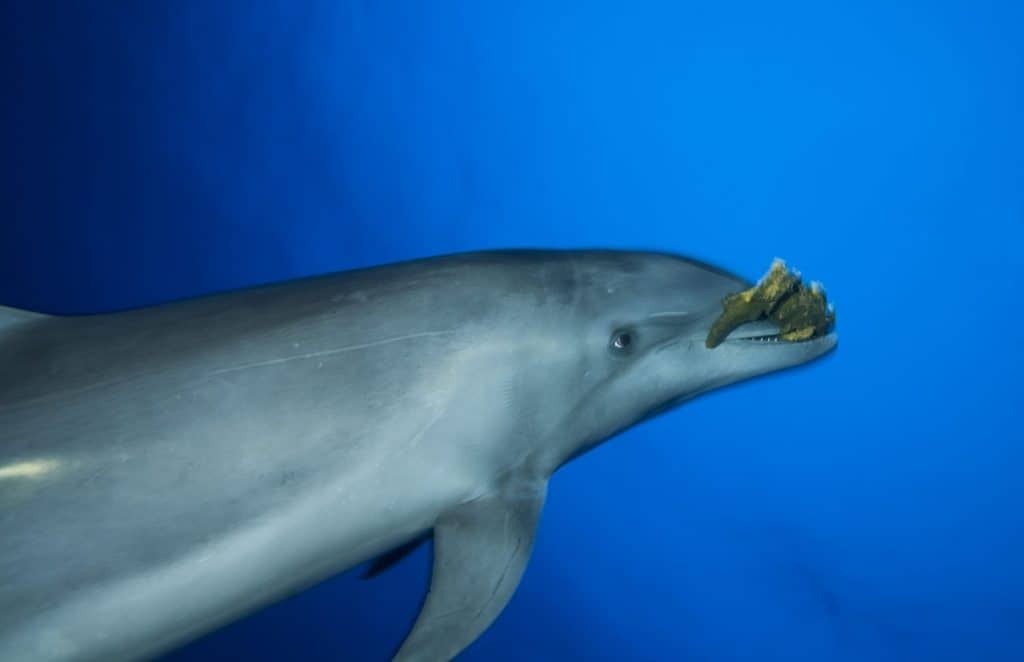
Bottlenose dolphins use marine basket sponges to protect the skin on their snouts while foraging.
©Yann hubert/Shutterstock.com
Shelling adds another piece to the puzzle of dolphin intelligence. Alongside “sponging” — where dolphins wear sea sponges over their beaks for protection while foraging — this behavior demonstrates an extraordinary ability to incorporate natural objects into complex hunting strategies.
Ultimately, shelling illustrates how individual innovation becomes shared culture. When dolphins observe, adapt, and copy a successful tactic, a clever idea transforms into a community-wide tradition — passed down from mother to calf or shared friend to friend.