
Quick Take
- Octopuses just crossed a cognitive threshold that scientists believed only vertebrates could reach, and the experiment that proved it is stranger than you would expect. See the experiment →
- Before octopuses could pass the test, they had to go through something researchers called 'mirror school,' and what that reveals about animal intelligence is genuinely unsettling. See octopus mirror school →
- The way octopuses solved this puzzle forces biologists to rethink where intelligence comes from, with convergent evolution emerging as the unexpected culprit. Explore convergent evolution →
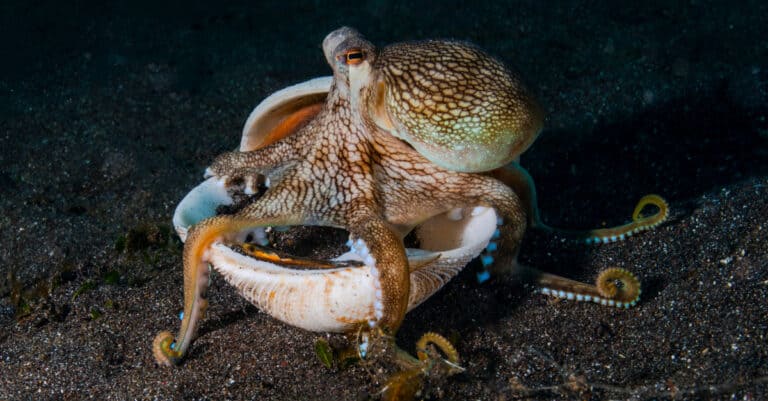
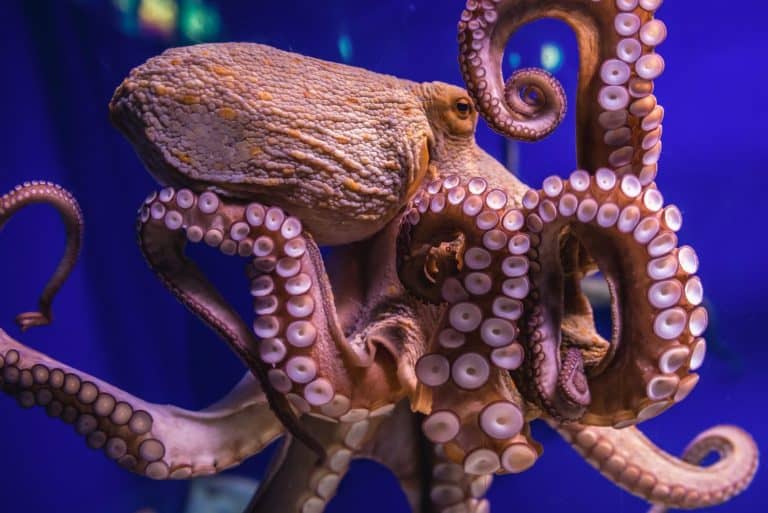
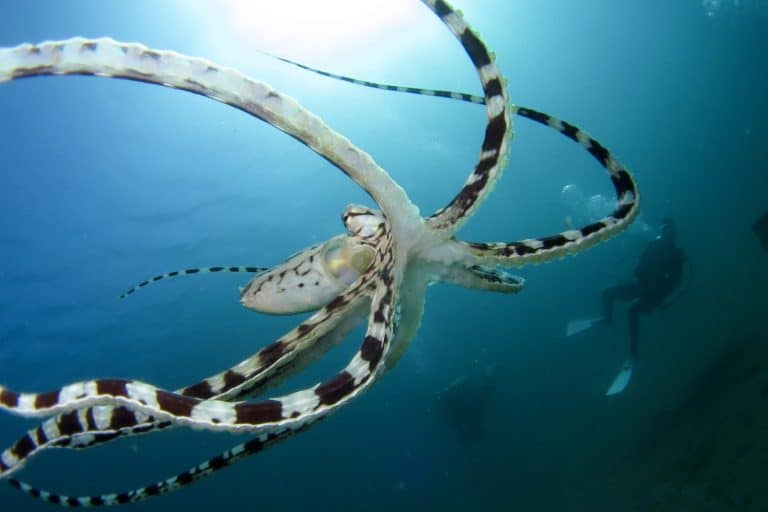
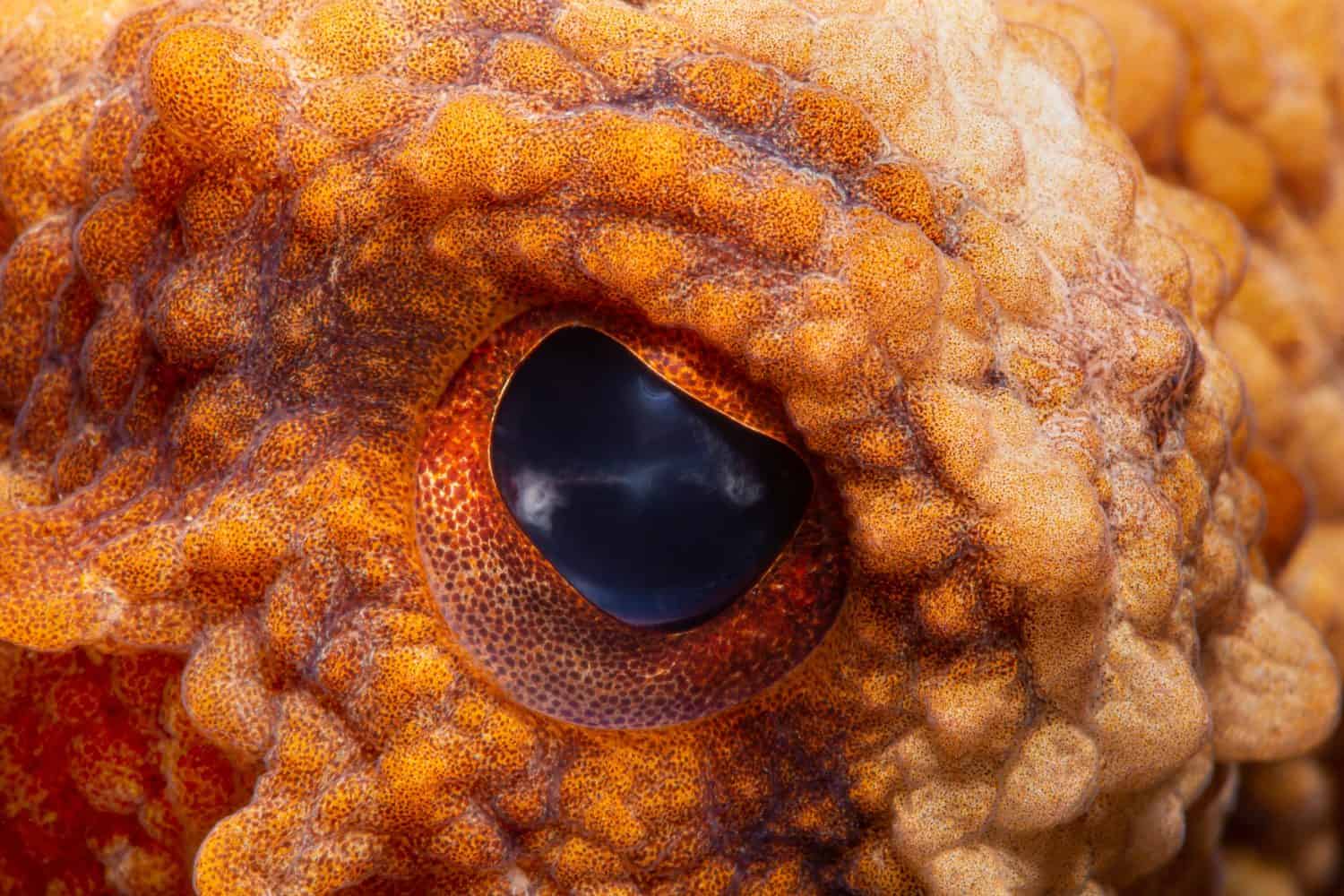
If you were to make a case for evidence of extraterrestrial life on Earth, you would probably use octopuses as an example. Whereas humans have about 20,000 genes, octopuses have 33,000, making them different from any other invertebrate on the planet. Adaptable, resourceful, and incredibly intelligent, octopuses have similar genes to humans that comprise the neural networks in their brains. The more we learn about octopuses, the more intelligent they appear. A new study put out by scientists at Dartmouth College discovered a new ability in the octopus arsenal: spatial reasoning.
Indeed, the latest research shows that octopuses can use mirrors to analyze their environment while hunting for prey. This type of spatial reasoning is used by vertebrates like humans, primates, dolphins, and even certain birds. The recent Dartmouth-backed study marks the first documented instance of an invertebrate using a mirror to map and analyze its environment spatially. While this is certainly a feather in the cap for octopuses everywhere, it also has profound implications. For one, it means that biologists will have to revise their understanding of intelligence and its development in different creatures. Let’s learn more about this fascinating study. We will also discuss convergent evolution as it relates to the most sophisticated of creatures: the octopus.
Reflections
The intelligent reputation of octopuses precedes them; they can use tools, recognize people, use disguises, and camouflage themselves. Thanks to researchers at Dartmouth College, octopuses can add another attribute to the list: using mirrors to recognize and hunt prey. The study, published in the current issue of Current Biology, details how certain cephalopods can learn to use mirrors for spatial navigation.
The octopuses were able to understand the purpose of mirror reflections as it relates to spatial navigation. They also seemed to learn from the reflections. For example, as the experiment continued, they were able to reach reward sites more quickly. Additionally, they used mirror cues to climb over a barrier, indicating an understanding of their tank’s spatial layout. As explained by lead author Mary Kieseler in a statement to EurekAlert, the octopuses really got the hang of it. She said, “Our findings are the first to demonstrate that invertebrates can use mirrors to understand their environment to find prey. It’s a skill that previously has only been documented in vertebrates, such as in some mammals and some birds.”
Mirror, Mirror
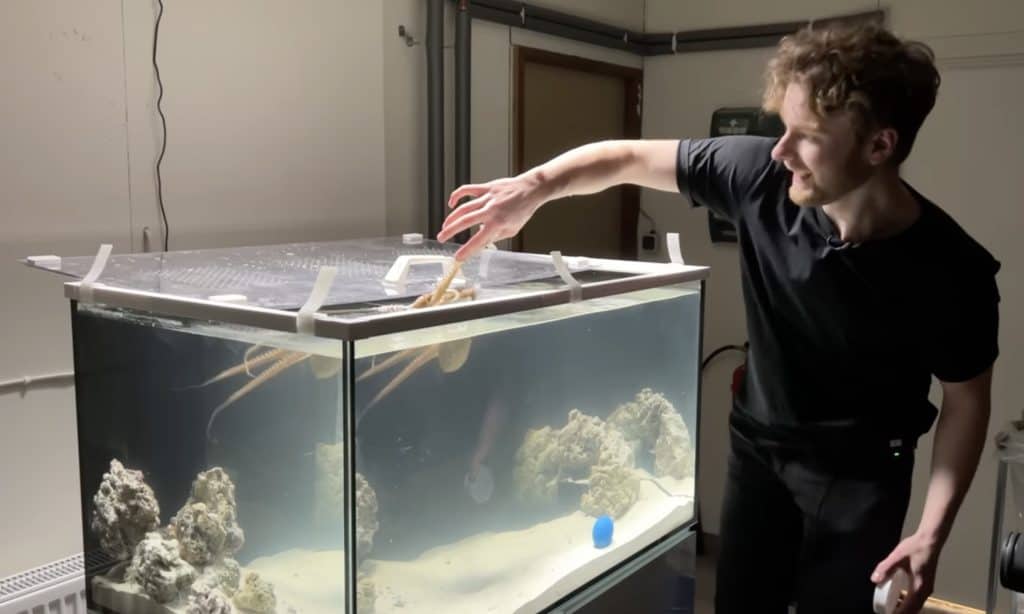
Researchers trained octopuses to use the reflections from a mirror to find prey.
©YouTube/Mattias Krantz – Original
Octopuses are incredibly smart, but like humans, they need training to understand how reflective surfaces work and how they can be useful. According to a professor of psychological and brain sciences at Dartmouth College, Peter Tse, the octopuses needed training with mirrors before they could pass the test. He said, “We don’t enter the world knowing how to use a mirror but learn how to use a mirror. Octopuses can also learn how to use a mirror to infer where things are in the world.”
As such, the researchers used seven California two-spot octopuses, though only three completed the full study. They trained them to avoid attacking crab images in the mirror so they could learn the process of spatial inference. This involved familiarizing them with a mirror placed in their habitat. Then, researchers put a live crab in a glass jar that the octopuses were able to see with the mirror. They learned to use the mirror because acquiring the tasty crab meal required inferring its location and making a 90-degree turn around a corner.
When it came time for the actual experiment, however, researchers opted for a virtual crab stimulus instead of a live specimen. The experiment involved placing an octopus in a box. This gave it a view of the top and front, showing a virtual crab image in a mirror. This was directly in the octopus’s line of sight even though it was projected from the left or right side. To obtain the reward, the octopuses had to infer the location from the mirrored image, make a 180-degree turn, and get the live crab reward.
Impressive Results
The octopuses quickly understood the objective of the experiment. They traveled to the correct side of the enclosure approximately 73% of the time. Sometimes, they would even climb over the box toward the projected crab image instead of swimming around to the side.
To better understand their responsiveness and movement, researchers tracked a spot between the eyes on each octopus’s mantle. The mantle is roughly analogous to the octopus’s head. Although they didn’t always take the most direct route, their navigation speed improved as the experiment progressed.
Convergent Evolution
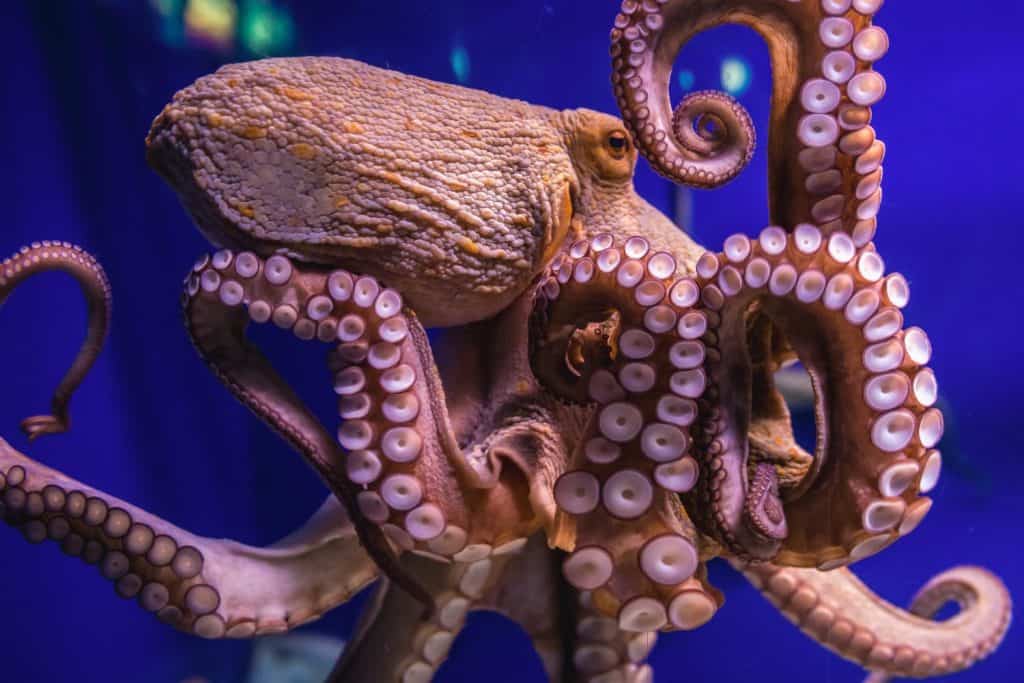
Octopuses likely learned spatial reasoning due to convergent evolution.
©Fotokon/Shutterstock.com
Researchers were surprised at how quickly the octopuses caught on to the physics of mirrors and reflections. However, they believe it might have to do with convergent evolution. As lead author Kieseler told Eureka Alert, octopuses are among the most evolutionarily distant animals relative to humans. She said, “Given that such a remote organism has independently evolved the means to use a mirror as a tool to process spatial cognition suggests that the underlying cognitive processes might be subject to convergent evolution, where different species evolve similar neural solutions to the same challenge.”
Although more research is needed, the team also believes their findings point toward octopus mental mapping abilities. As Professor Tse explained, “Hunters are very effective when they have a mental map of their territory, so that they know where they are within their environments. Our work suggests that octopuses might also have internal maps, an internal representation of space.”