
Quick Take
- Some animals rely on insects not for food but for something far stranger, and losing them would leave these species completely defenseless. See the chemical defenses →
- Apex predators like lions depend on insects too, though not in the way you'd expect. Lions and termite mounds →
- A single insect species quietly maintains the health of entire ecosystems, yet most people have never considered it a conservation priority. Termites shaping ecosystems →
Scientists from the UK Centre for Ecology & Hydrology (UKCEH) and Binghamton University recently accomplished a massive undertaking. Teams examined nearly 300 studies published over the last 75 years in search of clues about today’s wildlife. Each analysis revealed new information about mammals, amphibians, birds, reptiles, and fish.
But the most sobering information came from something each of these groups had in common. An overwhelming majority of these species rely on insects. And the more scientists learned, the more it became clear that, as insect populations decline, so too does the animal kingdom that depends on them.
Insects Are More Than Just Food
Nearly 75% of all the wildlife studied consumed invertebrates, or insects. Of this, nearly two-fifths exclusively consumed insects as part of their diets. If insect populations were to decline—or worse, become extinct—these animals would suffer first. Evolutionary adaptation is impressive, but few species can overcome a dwindling or nonexistent food source.
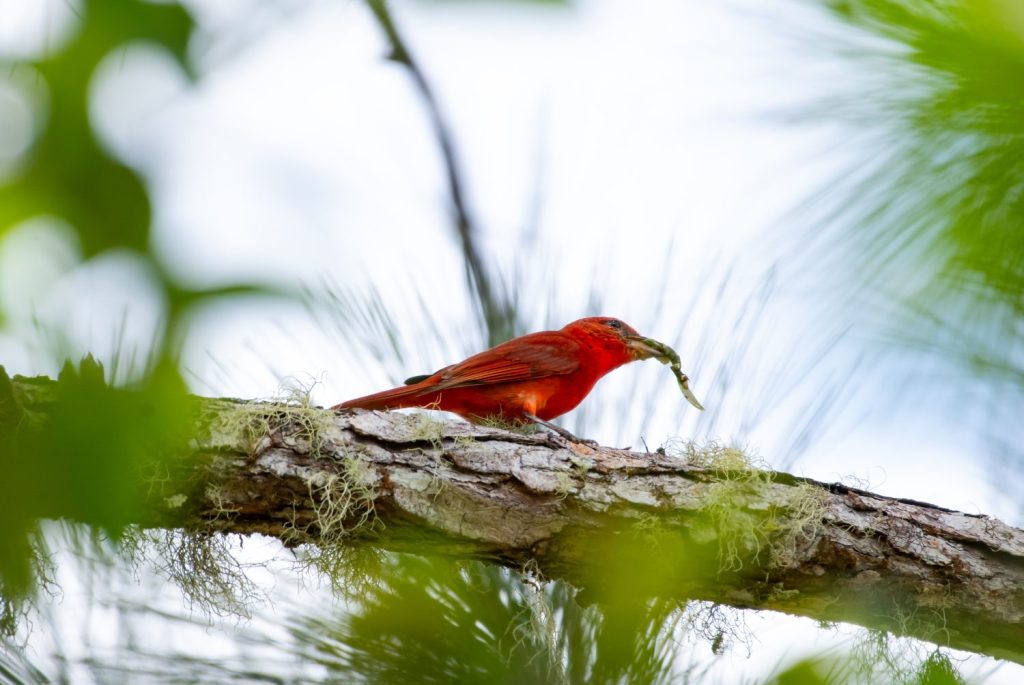
Insects are a crucial food source for more than three-fourths of the species studied.
©Chelsea Sampson/Shutterstock.com
Beyond this, scientists quickly learned that insects are more than a meal. Of the 300 studies analyzed, researchers noted that, in some cases, insects play a crucial role in linking food sources for certain species. Pollinators, for example, are responsible for much of the plant life that herbivores and omnivores consume. As bee and butterfly populations decline, so do the plants that feed animals higher on the food chain.
Some animals, such as amphibians and reptiles, also consume pollinators. Chameleons have learned to hunt bees without getting stung by removing the stinger prior to swallowing. Often, they catch the insect so quickly that it’s crushed before it has a chance to sting. If the stinger is swallowed, digestive acids in a chameleon’s stomach neutralize the venom. And while bees are usually an opportunistic meal, they’re a high source of protein for daytime feeders like chameleons.
Some Insects Provide Shelter for Small Mammals
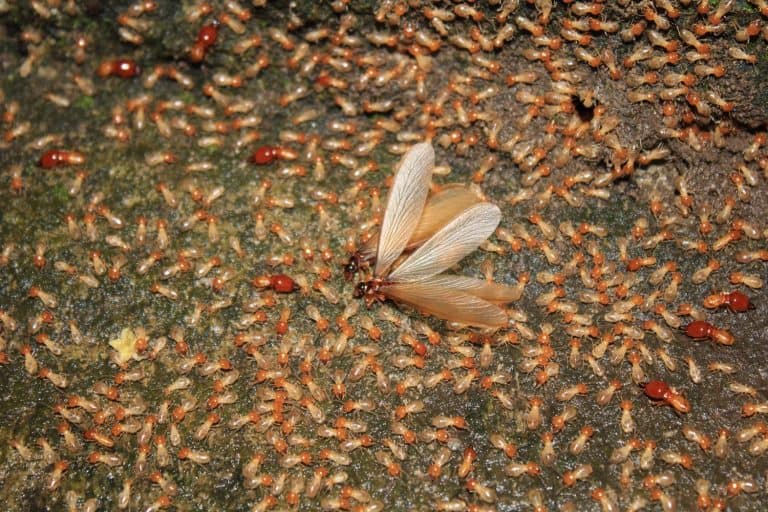
It’s hard to imagine that a tiny insect can provide shelter for an animal 30 times its size. In the African grasslands, termites offer some of the best protection. They build mounds that can reach up to 17 feet high, with some reports of mature mounds growing even taller. They’re equally impressive below ground, with many tunnels reaching remarkable depths.
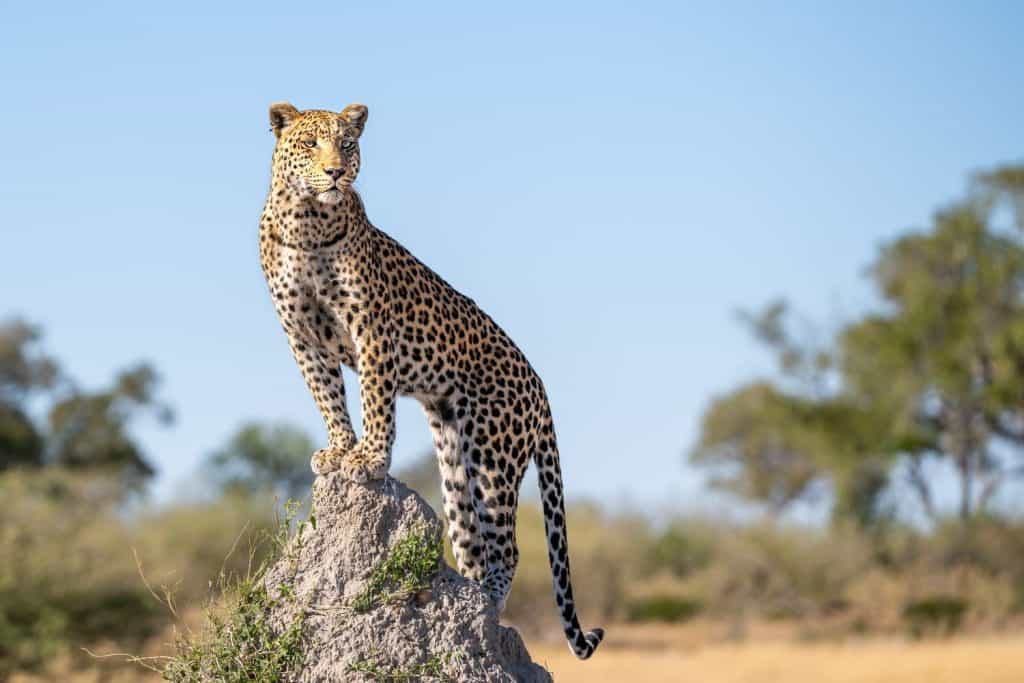
Big cat species sometimes use termite mounds to observe their surroundings.
©Tomas Drahos/Shutterstock.com
To an aardvark, this is both a safe haven and an all-you-can-eat buffet. Termites are its primary food source, but the deep tunnels of a mound also protect it from predators. Warthogs see the same opportunity in termite mounds and often hide in them at night for shelter. If a mound is abandoned, it often becomes a home for dwarf mongooses, which raise their young in its deep cavities.
Termite mounds are even attractive to apex predators. They’re so well-built that big cats, such as lions, cheetahs, and leopards, often use them as observation decks. From these heights, they can locate threats and potential prey. While lower on the food chain, hyenas and jackals also use termite mounds as dens, seeking protection rather than a vantage point.
Insects Offer Natural Chemical Defense
Shelters aren’t the only benefit insects offer other wildlife. If ants, mites, and beetles were to decline, they would also take many species with them. Some amphibians, such as the poison dart frog, have a natural defense only when they consume alkaloid-producing insects. The insects that produce these toxic compounds support the poison dart frog’s noxious skin toxin, which—combined with its neon coloring—deters predators.
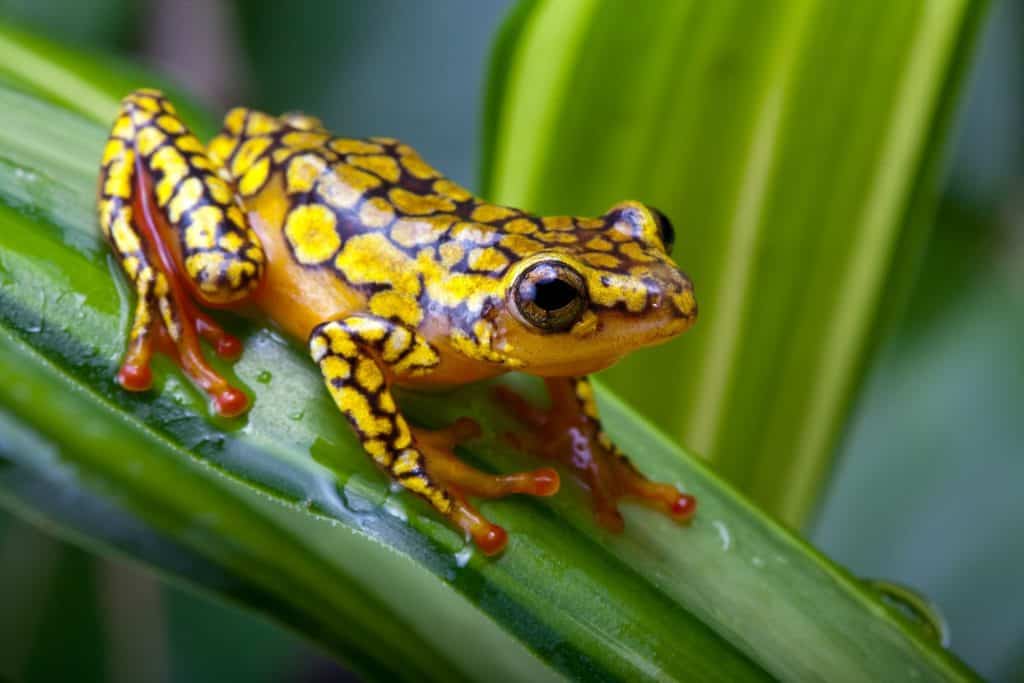
A poison dart frog’s toxins come from its insect-heavy diet.
©Anneka/Shutterstock.com
Another unique species, the passerine bird, uses beetles in a similar manner. Choresine beetles contain the potent alkaloid batrachotoxin, which makes up a large portion of the bird’s diet. As passerine birds consume these beetles, the toxin is absorbed into their skin and feathers. This results in a toxic defense that wards off predators such as raptors and big cats. Without choresine beetles, passerine birds would be left vulnerable and defenseless.
Population Declines Mean Less Sanitation
According to the study’s co-lead author, Dr. Rob Cooke, a senior ecologist at UKCEH, the team’s analysis provides the most up-to-date holistic picture of interactions between insects and wildlife. Through this research, scientists discovered just how far-reaching the connection between the two is, even at a surface level. When animals aren’t consuming insects or using their habitats for shelter, they still gain other benefits, such as hygiene.
Within the insect kingdom, there’s a natural waste removal process. Flies and dung beetles naturally carry away animal waste, reducing its carbon footprint and negative impact on habitats. This maintains a delicate system of checks and balances to reduce parasites and bacteria. And while these insects don’t directly interact with wildlife, their behavior ensures the health of many species.
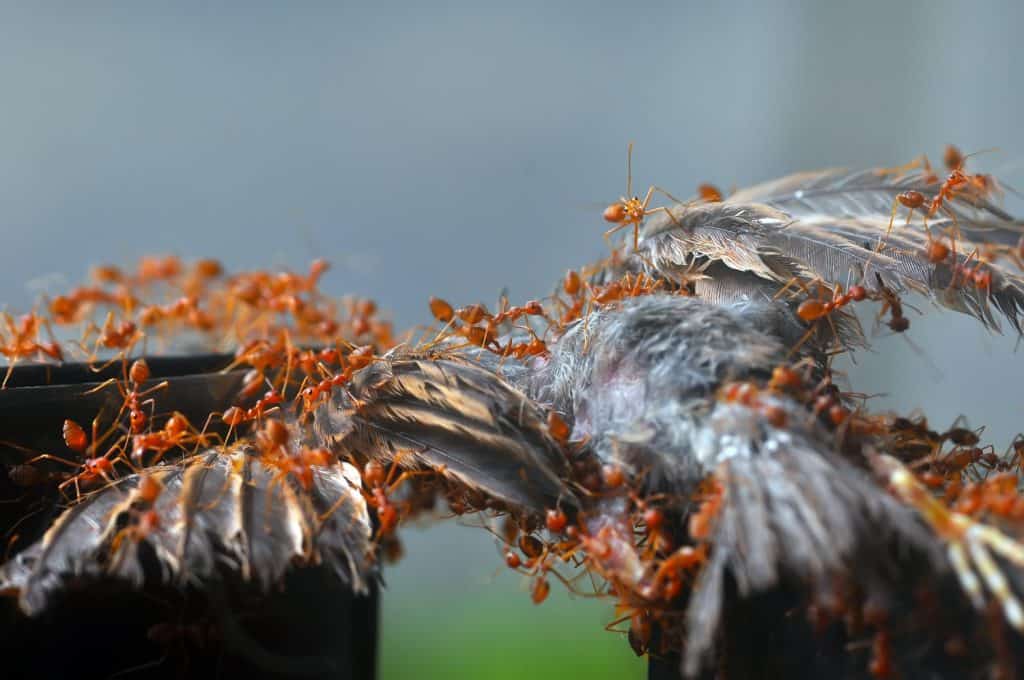
Ants are natural custodians, cleaning up bacteria and parasites invisible to the naked eye.
©Haryadi CH/Shutterstock.com
For others, the health benefits are more direct. Corvids have been observed allowing ants to swarm them, indicating an infection or parasite. As the ants seek out the source of the illness, the corvid reaps the benefits of being naturally groomed by the insects. Chimpanzees have a similar first-aid practice and have also been observed placing insects into their companions’ open wounds.
These significant findings encourage us to reevaluate how we view insects in the world. While small in size, their impact sends ripples throughout the animal kingdom, underscoring the need for better conservation to ensure the survival of those who depend on them.