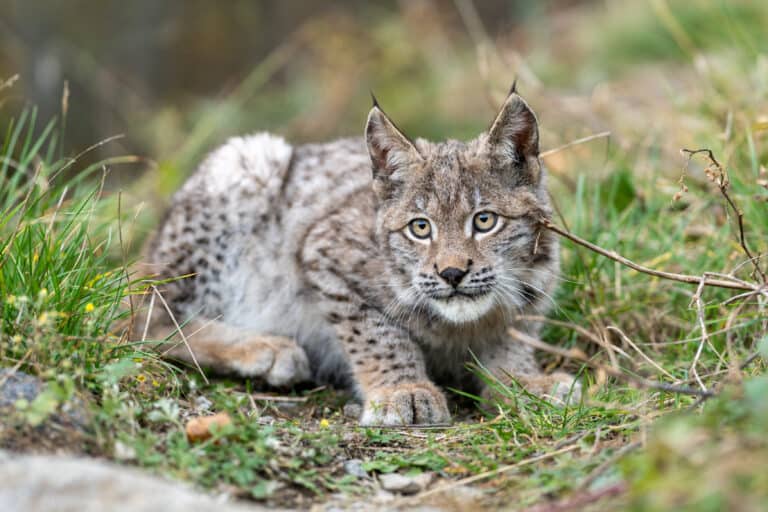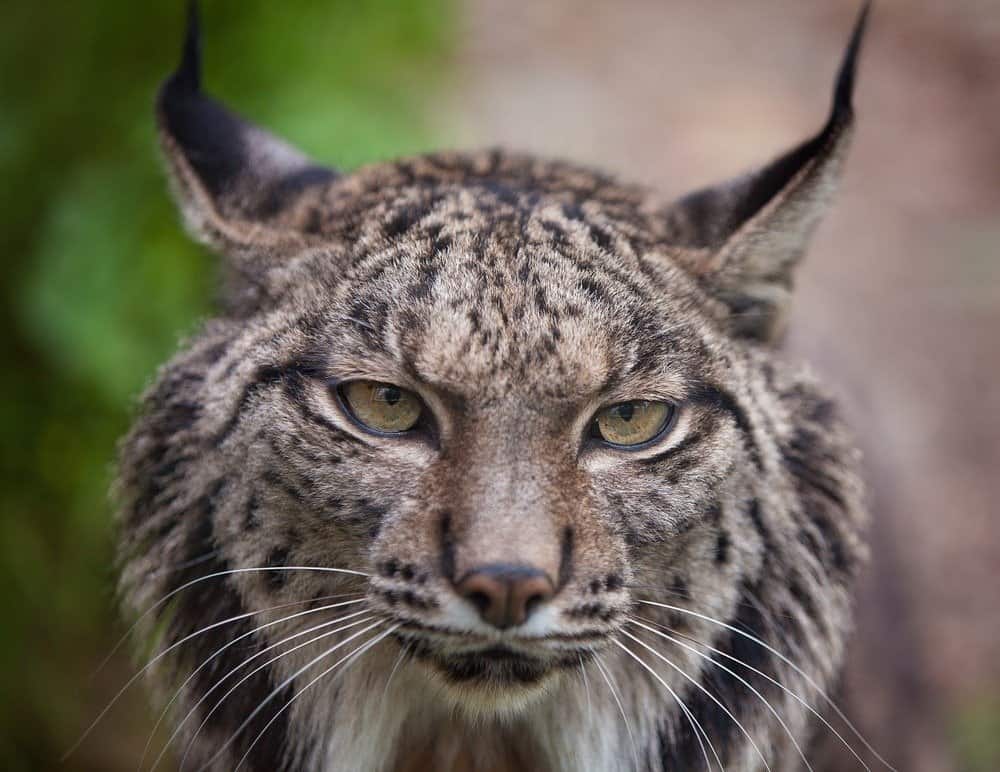

If you’ve been keeping up with wildlife news lately, you’ve likely heard about the photographer who captured an incredibly rare white Iberian lynx on camera for the first time. Ángel Hidalgo, an amateur nature photographer, spotted the animal in a mountain range in southern Spain. According to Euro News, the particular lynx has a condition called leucism, which essentially causes the animal to lose pigmentation.
“The recent sighting of a white Iberian lynx in Spain is an extraordinary sighting,” says Peter Gros, wildlife expert and co-host of Mutual of Omaha’s Wild Kingdom Protecting the Wild. “Researchers from the species’ recovery plan know this female Iberian lynx as Satureja, and noted that she was born with normal coloring but later developed a white coat.”
Keep reading to learn more about the feline and just how rare this sighting was.
What Is the Iberian Lynx?

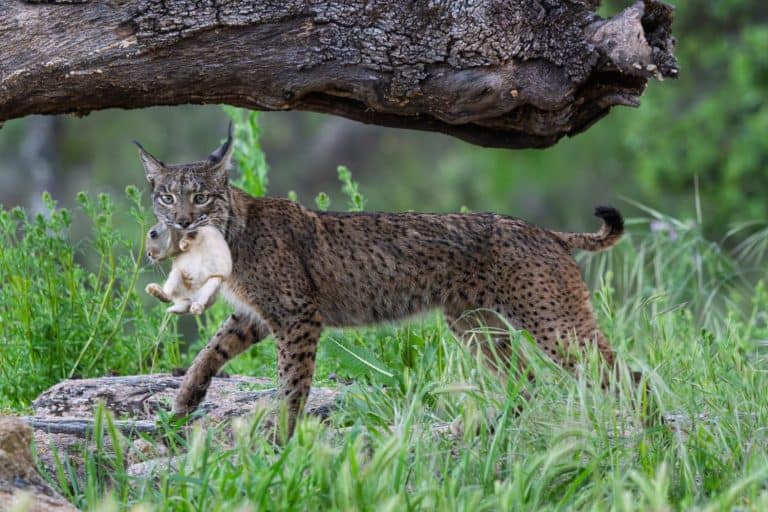
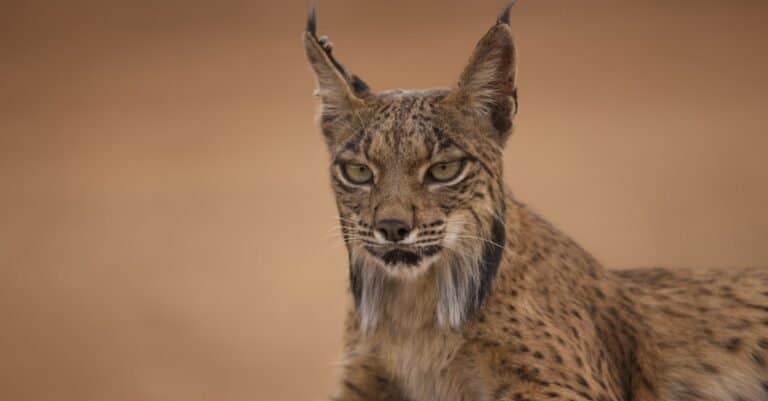
Iberian lynxes have spotted, reddish-brown fur, unlike the rare white lynx that was recently photographed.
©J.A.CALA/Shutterstock.com
The Iberian lynx is a wildcat that’s native to the Iberian Peninsula in southwest Europe. According to Gros, adults weigh only between 20 and 30 pounds. In other words, it is on the smaller side for wildcats, but it is still incredibly strong.
“A treasure of the Iberian Peninsula, the Iberian lynx is one of only four lynx species in the world,” says Gros. “You’ll find this elusive cat roaming the forests and scrublands of Spain and Portugal, where it’s perfectly adapted to a life of stealth and agility.”
According to Gros, the Iberian lynx is a highly specialized predator and relies heavily on Europe’s rabbit population. In fact, rabbits account for at least 75% of the cat’s diet.
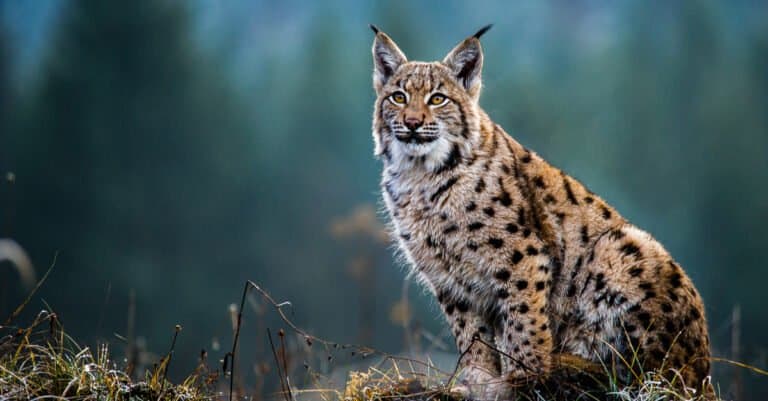
“You can recognize the Iberian lynx by those long, black ear tufts and that short, bobbed tail with a dark tip,” Gros continues. “It’s like nature gave it a built-in exclamation point! It’s smaller than its northern cousin, the Eurasian lynx, and it lives in thick scrubland rather than snowy forests. Every Iberian lynx has a distinct spotted coat, which helps researchers identify individuals in the wild and serves as a crucial part of one of Europe’s greatest wildlife recovery stories.”
How Rare Is the Iberian Lynx?
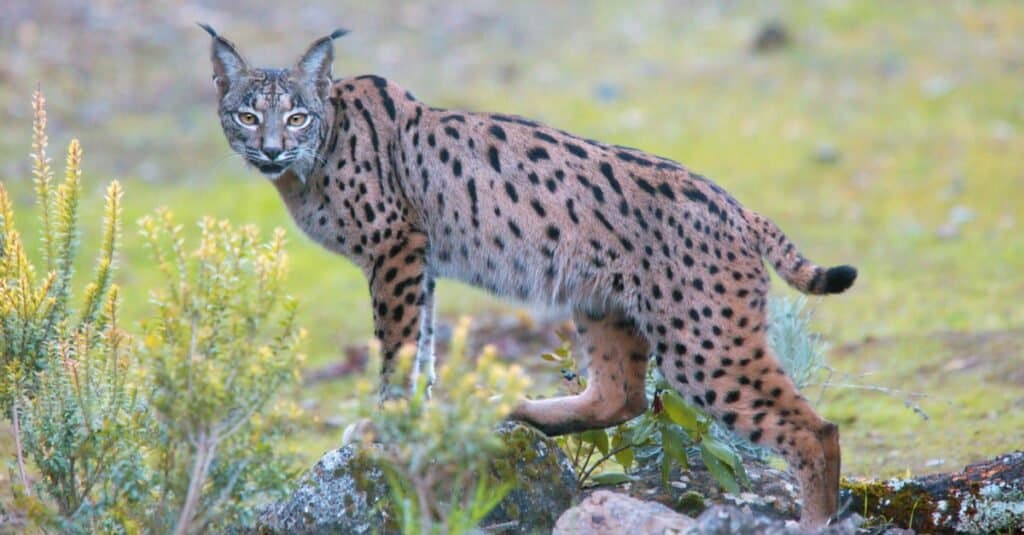
The Iberian lynx preys on rabbits, rodents, and other small mammals.
©tony mills/Shutterstock.com
Once almost extinct, the Iberian lynx has made quite the comeback. It used to be considered one of the rarest cats in the world. Some of the animal’s main threats include habitat destruction, human activities, and the decline in the population of its main prey. However, conservation efforts have helped the wildcat population recover.
“In the early 2000s, there were fewer than a hundred left in the wild, gaining the name as ‘the rarest cat on the planet,’” says Gros. “Almost its entire diet is built around one animal, the European rabbit. That’s unusual, as most big cats will eat whatever they can find. When rabbit populations dropped because of disease, along with continued habitat fragmentation, poaching, and vehicle collisions, the Iberian lynx nearly disappeared. It shows how delicate the balance of nature can be.”
According to NBC News, in 2001, only 62 mature Iberian lynx were left on the Iberian Peninsula. At the time, the cat was nearly extinct.
“However, thanks to decades of conservation efforts, there are over two thousand Iberian lynx today,” Gros says. “That recovery didn’t happen by accident; it’s the result of decades of habitat restoration, breeding programs, and dedicated local education initiatives.”
“As of 2024, the Iberian lynx has moved from Endangered to Vulnerable on the IUCN Red List, making it one of the best examples we have of how humans can help turn the tide when we choose to protect our wild kingdom,” Gros continues. “It reminds us that even the smallest predator can have a big impact on the health of an entire ecosystem.”
Though the wildcat isn’t nearly as uncommon as it once was, the recently photographed white Iberian lynx certainly is rare. The animal has a condition called leucism, which causes its fur to lose pigmentation over time.
Even the smallest predator can have a big impact on the health of an entire ecosystem.
Peter Gros, co-host of Mutual of Omaha’s Wild Kingdom Protecting the Wild
Where Do Iberian Lynxes Reside?
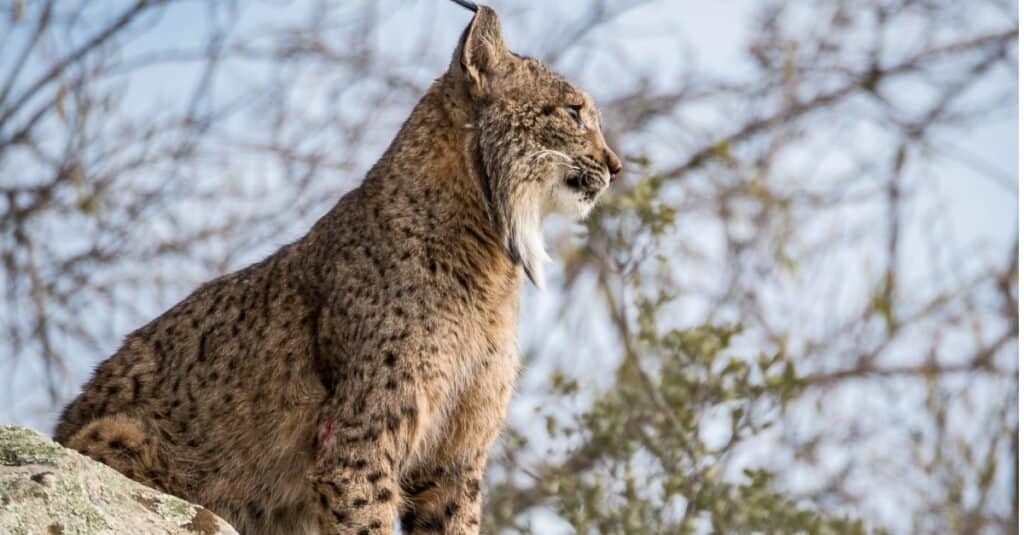
The Iberian lynx prefers to hide in dense vegetation.
©iStock.com/RamonCarretero
Iberian lynxes are endemic to the Iberian Peninsula, which includes Spain and Portugal. Their habitats include Mediterranean scrublands and woodlands, and they prefer a mix of dense vegetation and open grasslands.
“[The cat] can leap over nine feet and use its long legs and that famous spotted coat to move like a ghost through Mediterranean scrubland,” Gros says.
The recently photographed Iberian lynx was spotted on one of Jaén’s mountain ranges in southern Spain. In the footage, which you can see here, the white feline calmly sits on the edge of the mountain.
When it comes to breeding, the animal chooses quiet, secluded areas. These include rock caves and dense bushes, the International Society for Endangered Cats (ISEC) reports.