
Quick Take
- Yellow-headed caracaras, native to South America, were seen in Wilmington, Delaware, marking the sixth North American record and the first in the state.
- Yellow-headed caracaras are omnivorous and opportunistic, eating insects, small vertebrates, fruit, and carrion.
- The Copeland Maritime Center capitalized on the sighting, drawing birders from hours away and boosting local tourism.
Birding is one of those hobbies that is easy to mock—until you turn thirty. Then, suddenly and perhaps against your better judgment, the idea of spending hours in a bush waiting for a particular bird to appear becomes incredibly appealing.
Birding is the type of hobby that kids make fun of, but adults dive into with a preternatural passion. There’s nothing like searching for a chestnut-throated monal-partridge or an amboyna cuckoo-dove. American birders enjoy quite an extensive range of birds that they can watch, but the large oceans on either side of the country restrict them from spotting anything too exotic. Recently, however, a group of birders in Delaware earned serious bragging rights after spotting an exotic bird.
That’s because seeing an exotic bird in an unexpected place is one thing. Seeing an exotic bird in North America for only the sixth time on record, however, is another. The yellow-headed caracara is native to South America. However, it was recently spotted in the decidedly more temperate location of Wilmington, Delaware. People aren’t exactly sure how it got there, but they have some theories. Even so, its presence in the ‘First State’ has already attracted a steady stream of observers. Good thing proper birders were around to confirm its identity in the first place. Let’s learn more about the yellow-headed caracara. Then we will investigate how one traveled all the way up to Delaware, and what Wilmington residents are doing to celebrate its presence.
Yellow-headed Caracara Facts
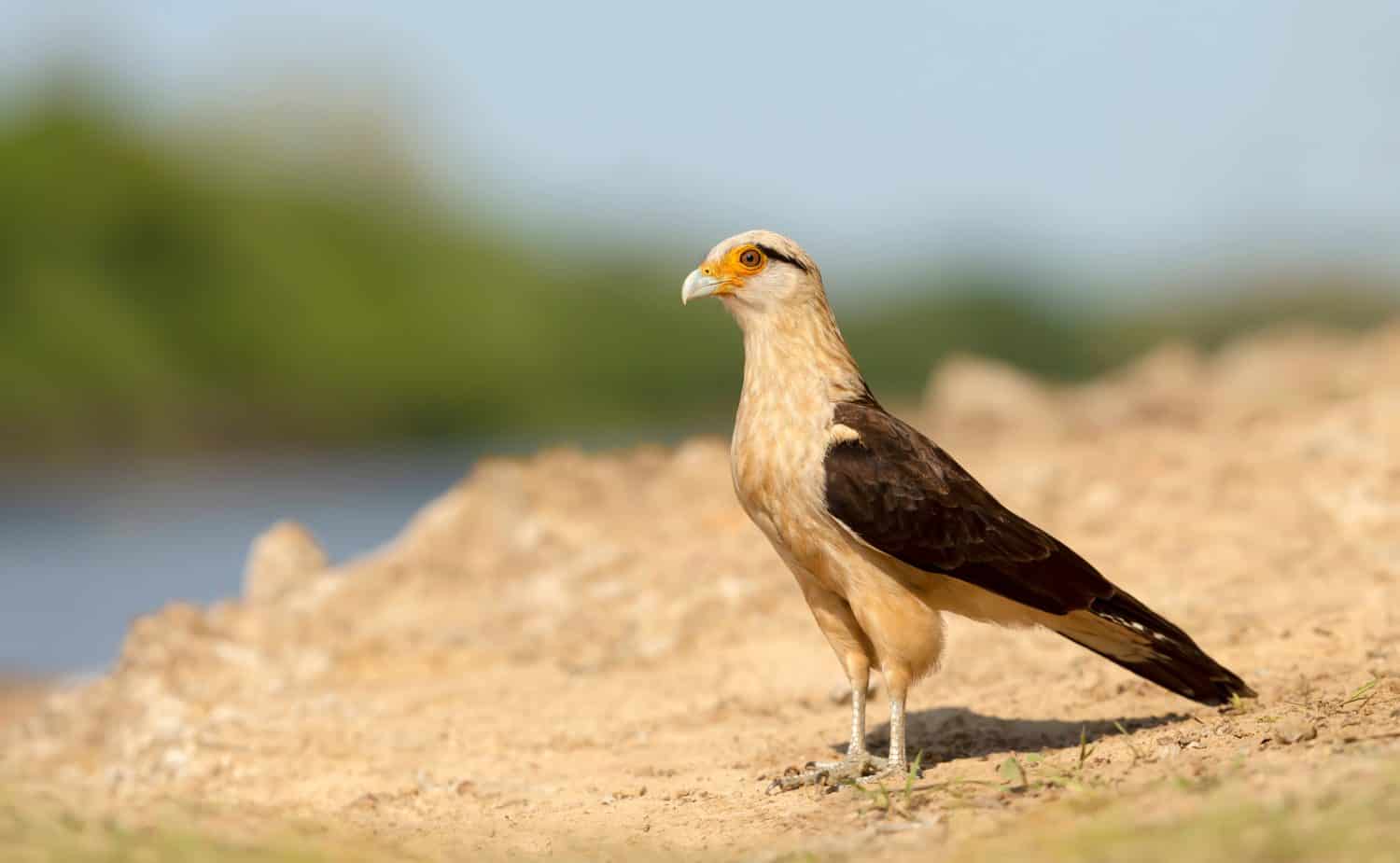
These raptors are about the size of crows and live across Central and South America.
©Giedriius/Shutterstock.com
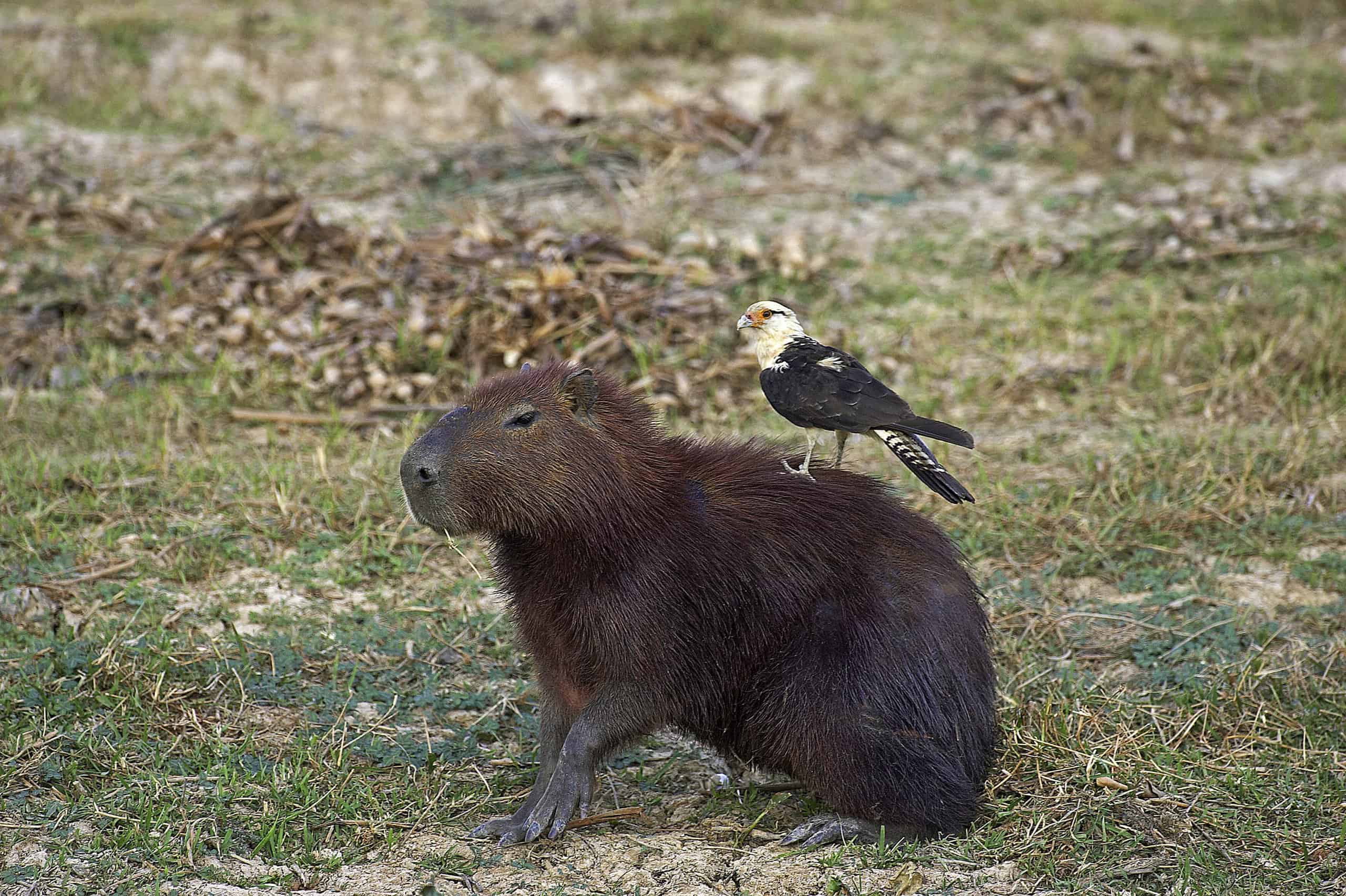
Yellow-headed caracaras (Milvago chimachima) are small, opportunistic birds of prey that enjoy a widespread distribution across both Central and South America. They are characterized by pale, yellowish-colored heads and necks, but darker brown bodies and wing feathers. They also feature noticeable dark streaks of color that sit behind their eyes. As one of the more modest-sized birds of prey, yellow-headed caracaras grow to about sixteen inches in length, with wingspans that reach about 30 inches. Some birds of prey only glide. However, these predators have a distinctly bouncy flight style and hunched posture, which makes them easy to identify from long distances. Even if you fail to see them, you’ll likely recognize their distinct wheezy screams and vocalizations. They use these shouts for hunting, mating communications, and other interactions.
Adaptable and shrewd, yellow-headed caracaras are found throughout a wide range of habitats. These include lowland forests, developed farm fields, open savannas, and even the edges of civilization. Indeed, they are a common sight on roadsides, often seen perched on fence posts looking for food. They have regular populations in countries like Costa Rica, Colombia, Brazil, Argentina, and Panama. Some birds of prey have not fared well with human development, but caracaras have adapted well. So much so, in fact, that they are considered a species of “Least Concern.”
Bird of (Peculiar) Prey
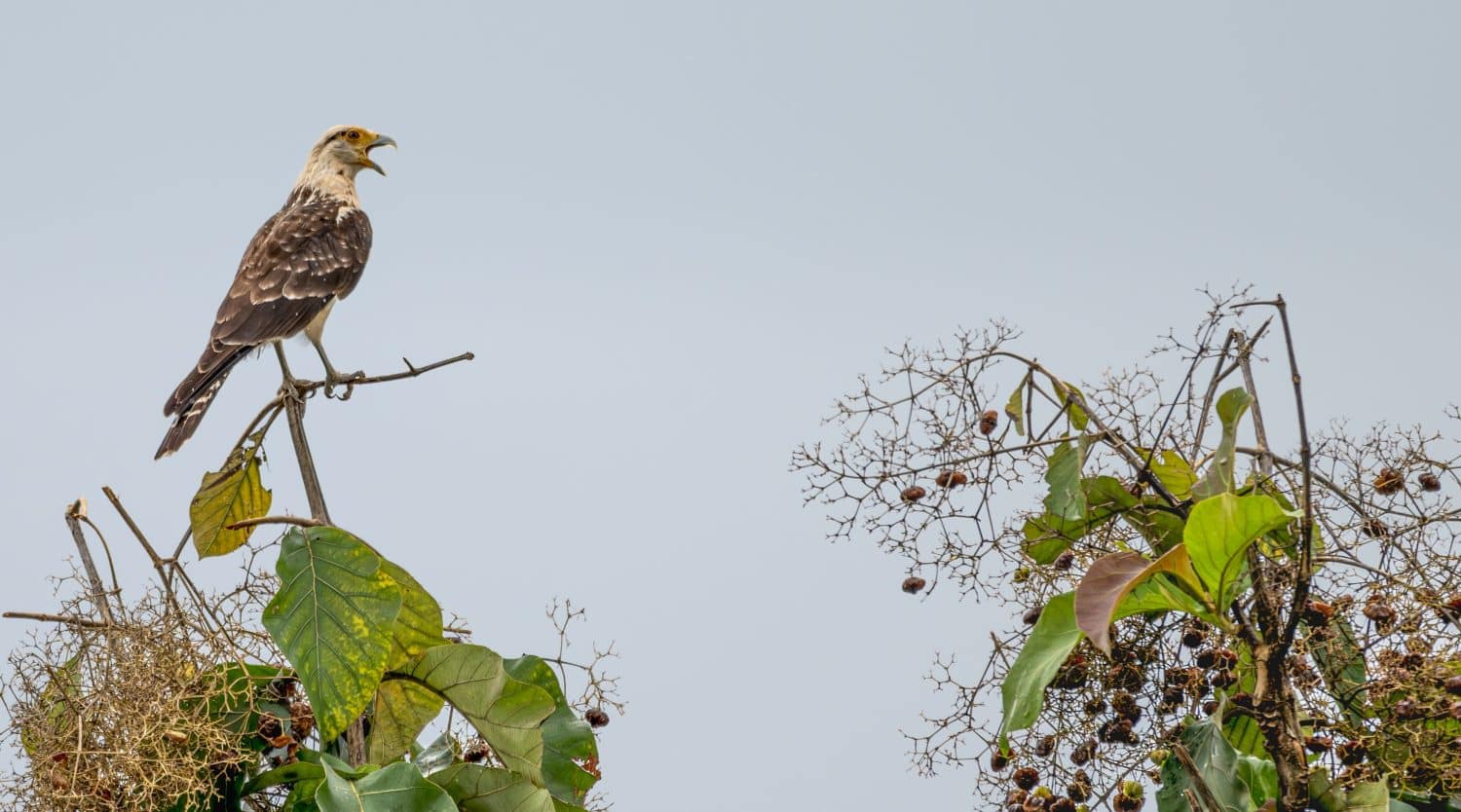
Yellow-headed caracaras are notable for being one of the few birds of prey that will eat an omnivorous and opportunistic diet.
©Lecia Michelle/Shutterstock.com
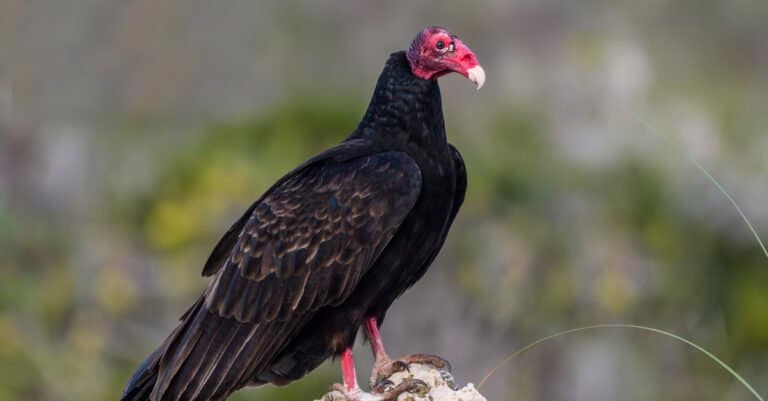
Other birds of prey soar through the sky for hours, looking for a mouse or rabbit to swoop. Yellow-headed caracaras, however, prefer their meals a little cold. Indeed, the most defining feature of this bird of prey is its omnivorous and opportunistic eating habits. Yellow-headed caracaras will eat insects, small vertebrates, fruit, and even carcasses. More than one farmer in South America has seen a caracara casually walk up to a cow and pick ticks directly off of its back. They will even stir up the dirt to unleash insects to feast upon. An incredibly smart creature, the yellow-headed caracara is one of the few birds that has been documented using tools. Called “anting,” these birds will grab ants and rub them on their feathers in what is theorized to be an anti-parasite cleanse.
Where other birds of prey go hunting alone, yellow-headed caracaras find safety and opportunity in numbers. They are one of the few raptors that hang out in loose groups. People often see a group of yellow-headed caracaras casually loitering around garbage pits or next to roadkill. Most vultures and raptors don’t like company, especially from their own kind. Yellow-headed caracaras, however, tolerate each other to a surprising extent. That’s what makes the presence of a single individual thousands of miles outside of its habitable zone so curious.
Welcome to Wilmington

The bird was spotted by a sea captain on November 19.
©iStock.com/ChrisBoswell
Delaware may be known for many things, including rich birdwatching opportunities; over 400 different species of birds have been spotted in the state over the past several decades. Even so, those birds are usually more local. Last week, one birder got the surprise of her life when she saw an exotic bird flying by.
According to an article from Forbes.com, Lauren Morgens is both captain of the replica tall ship Kalmar Nyckel and an accomplished birder. On November 19, she was attending a meeting on the city’s Copeland Maritime Center grounds. That’s when she noticed a certain bird flying by. As she explained to Forbes, “This bird flew by, and I knew immediately what it was in the first millisecond. And the second, millisecond, I thought ‘that’s absolutely impossible.'”
Morgens managed to get a few photos of the bird, which she immediately sent to former American Birding Association president Jeff Gordon for a second opinion. Presumably, he confirmed her suspicions, as a nearby parking lot filled up with birders hoping to catch a glimpse within a few hours. Not only was it only the sixth recorded instance of a yellow-headed caracara being spotted on American soil, but it was the first time this distinct-looking South American raptor had been in the state of Delaware.
A Birding Field Day
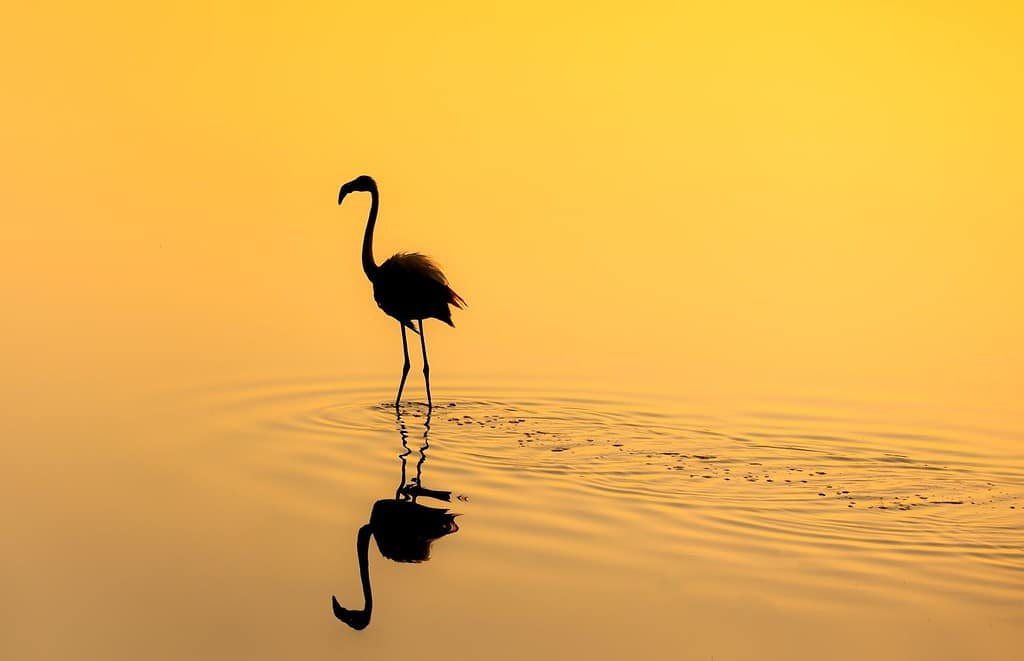
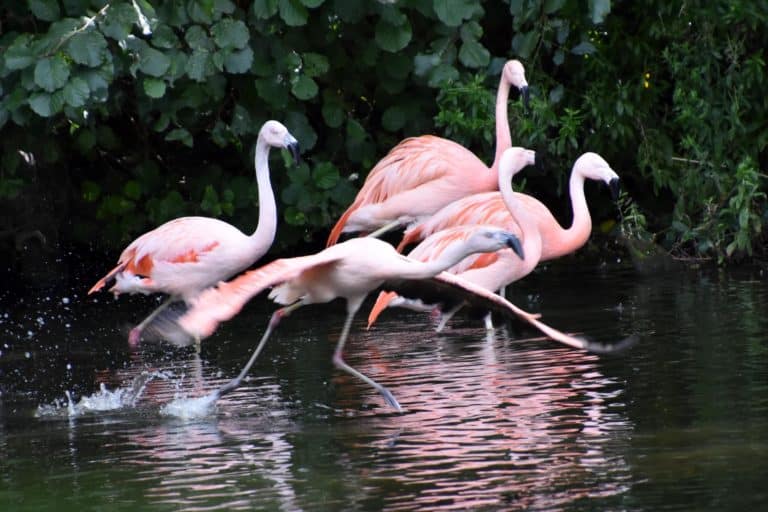
Exotic animals in unexpected places are not unheard of; a lone flamingo was spotted in Massachusetts last year.
©ROBERTO MURGIA/Shutterstock.com
As reported by Delaware Online, the presence of a yellow-headed caracara on the shores of Wilmington has broken several records. Besides being its first appearance in the state, it’s also the northernmost point the species has ever been documented. No one is quite sure how Delaware’s brisk fall temperatures will affect the bird, but the outlook is unlikely to be good. According to Michael Moore, a former University of Delaware biological sciences professor and past president of the Delaware Ornithological Society, cold temperatures are not favorable for birds from the southern hemisphere. As Moore explained, “There was another southern hawk, a great black hawk, that tried to winter in Maine a few years ago, and it died of frostbite. If it gets really cold, the bird could be in trouble. We just don’t know.”
While the presence of a yellow-headed caracara in Delaware is a first, it’s not without precedent. When an animal travels far outside of its normal range, scientists call the process “vagrancy.” Sometimes exotic birds show up in unexpected places. In June 2024, a single American flamingo was spotted at Chapin Beach in Dennis, Massachusetts. Wilmington locals, including Captain Morgens, suspect the caracara may have arrived by hitching a ride on one of the many fruit boats that dock in Wilmington’s harbor each year.
Seizing Opportunity

Best known for its replica ships, the Copeland Maritime Center in Wilmington has embraced its newfound status as a birding hotspot.
©iStock.com/ymn
Since the yellow-headed caracara was spotted, the Copeland Maritime Center has taken advantage of the publicity. It was the last thing anyone expected, but the center has embraced its new status as a birding hotspot by welcoming birders from far and wide. Some people are driving three or four hours just to catch a glimpse of the bird. As Morgens explained to Forbes.com, the bird has been a boon for the Copeland Maritime Center. She said, “It’s really been an amazing experience for us to see this go from a contaminated gravel parking lot to this vibrant space filled with birds. Now that being said, never in a million years would we have expected a yellow-headed caracara.”