
Quick Take
- Counter-intuitively, interspecies friendships provide essential psychological healing despite the animals’ sharpening natural instincts.
- The Sheldrick Wildlife Trust maintains a success record of raising 322 orphaned elephants for wild reintegration.
- A population low of 2,475 individuals creates a critical survival barrier for the black rhino species.
- The reintegration process for black rhinos is specifically delayed because of their highly territorial nature.
It’s unusual to see animals of different species become friends — especially in the wild. Sure, we’ve seen farm animals or pets of different species befriend each other in the same home, but to see a baby rhino and a zebra foal take to each other is definitely unique. And Tytan and Notty form the cutest duo since Winnie-the-Pooh and Tigger. Their heartwarming story will have you rooting for them as well.
Meet Tytan and Notty
Tytan, a baby black rhino, and Notty, a zebra foal, both arrived at Sheldrick Wildlife Trust’s Nairobi Nursery in Kenya within a few days of each other in September 2023, according to PEOPLE. The rescue nursery cares for infant orphaned wildlife, and Tytan and Notty both qualified after their mothers died.
“The unlikely pair share remarkably similar stories, although they were rescued from different parts of Kenya: Both their mothers fell down cliffs and died (we believe that Tytan’s mother was being pursued by a male black rhino). Miraculously, both babies survived,” Sean Michael, Sheldrick Wildlife Trust’s director of communication, told PEOPLE.
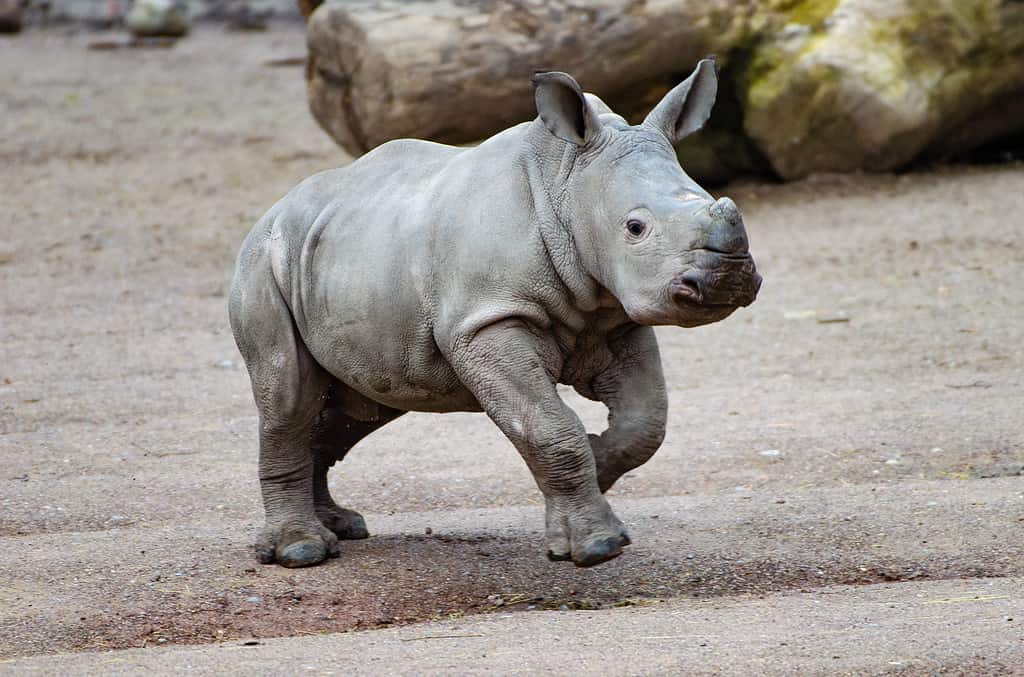
Tytan is a baby rhino, like the one pictured here.
©CCFD Photography/Shutterstock.com
According to the outlet, Tytan and Notty each have their own private sleeping areas and a caretaker dedicated to helping them rehabilitate so they can eventually return to the wild. Yet, during the day, they choose to spend much of their free time together.
“Notty and Tytan are firm friends at this stage,” Michael continued. “Interspecies friendships are quite common among infant orphans — they don’t seem aware of species differences and instead operate as one big family. As the orphans get older, their natural instincts sharpen, and they start to become more focused on their own species. Generally, these interspecies friendships fade with time.”
Friendships That Heal
According to Michael, these unusual friends are strictly hanging out because they want to, which is so sweet.
“They clearly enjoy spending time together, following one another throughout their days,” Michael told the outlet. “If they were not interested in each other’s company, they would avoid each other — as Tytan does with the elephants. These special relationships help orphans overcome any emotional trauma from being orphaned, making them feel loved and accepted.”
Doesn’t that just melt your heart? Like humans, these animals are drawn to each other for strength and support during difficult times, demonstrating their strong emotional intelligence. Even though they may not remain friends forever, witnessing how they formed this strong attachment to help each other heal is truly beautiful.
A Special Bond
The Sheldrick Wildlife Trust often posts video updates of Tytan and Notty on Instagram. In one, Notty gently grooms Tytan’s head as he just lies on the ground and relaxes.
“This is a zebra’s love language!” the organization explains in the video’s caption. “In the wild, grooming is an important bonding ritual. Little Notty lost her natal family, but the loving instinct is still strong. Now, she bestows it upon her best friend, Tytan the rhino. As you can see, he is very happy to be an honorary zebra!”
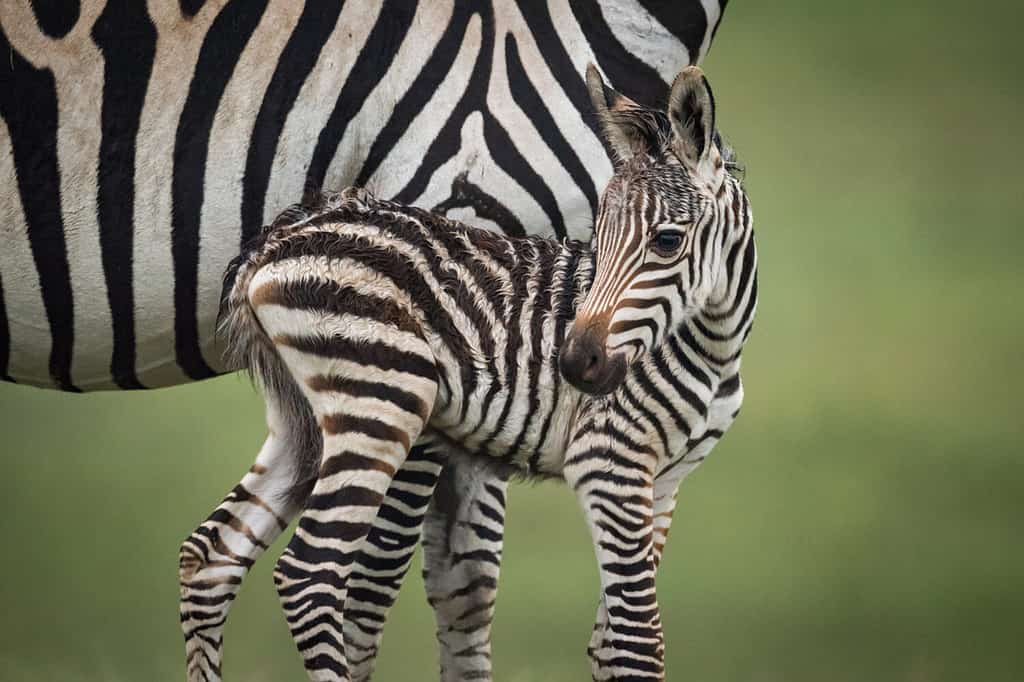
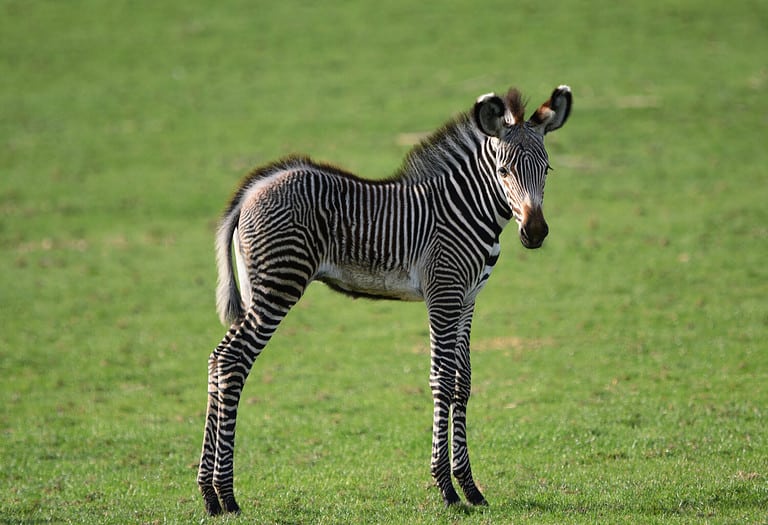
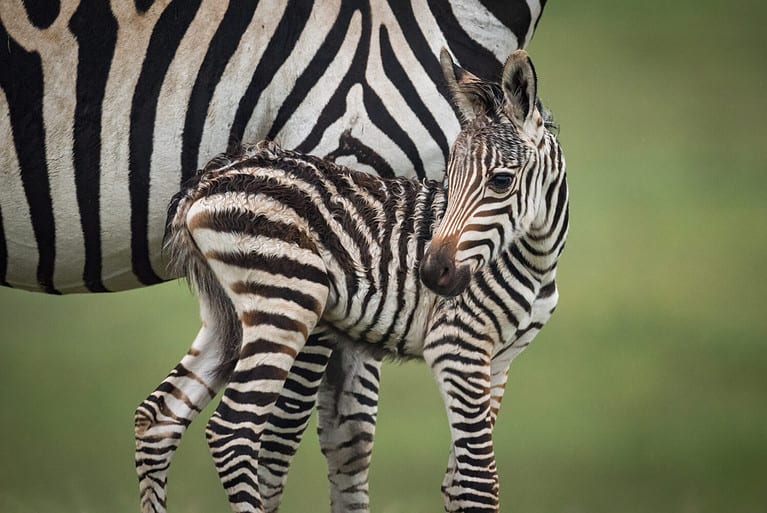
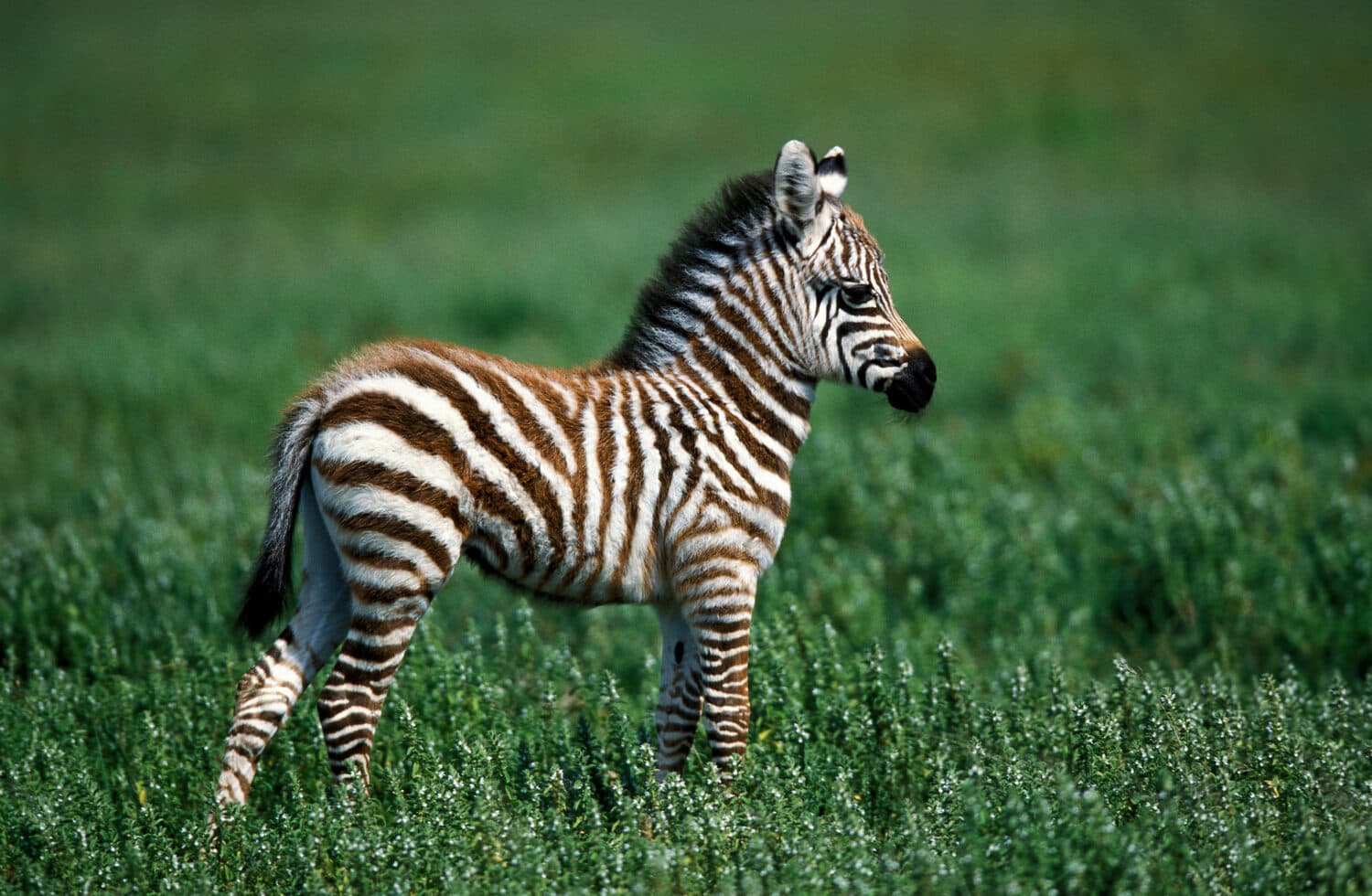
Notty is a zebra foal, like the one pictured here.
©nwdph/Shutterstock.com
Another video shows that Notty and Tytan like eating together as well. They munch on leaves and other food side by side, just like the best friends they are. “‘Table for two’ is how Notty and Tytan prefer to take their meals,” the caption explained. “Sometimes, their Keepers treat them — other times, they find their own feast!”
What’s Next for These Animals?
Once Tytan and Notty are ready and have relearned how to behave in the wild, the plan is to gradually reintegrate them into Nairobi National Park.
“We do not force the choice to go wild; orphans leave our care when they feel ready,” Michael said. “Reintegration is usually a very gradual process, especially for black rhinos, which are a territorial species and need time to establish their own territory.”
Sheldrick Wildlife Trust is known for its Orphans’ Project, which is one of the first to rescue, raise, and rewild orphaned elephants, rhinos, and other animals. Since it opened 48 years ago, the organization has successfully raised 322 orphaned elephants and has nine field-based conservation projects.
All About Black Rhinos
Black rhinos (Diceros bicornis) are considered Critically Endangered on the IUCN Red List. These typically solitary beasts live in tropical bushland, grassland, and savannas, surviving off grass, fruit, berries, and leaves. They have a lifespan of 35-50 years, stand about 4.5-6 feet tall at the shoulder, and weigh between 1,800 and 3,100 pounds.
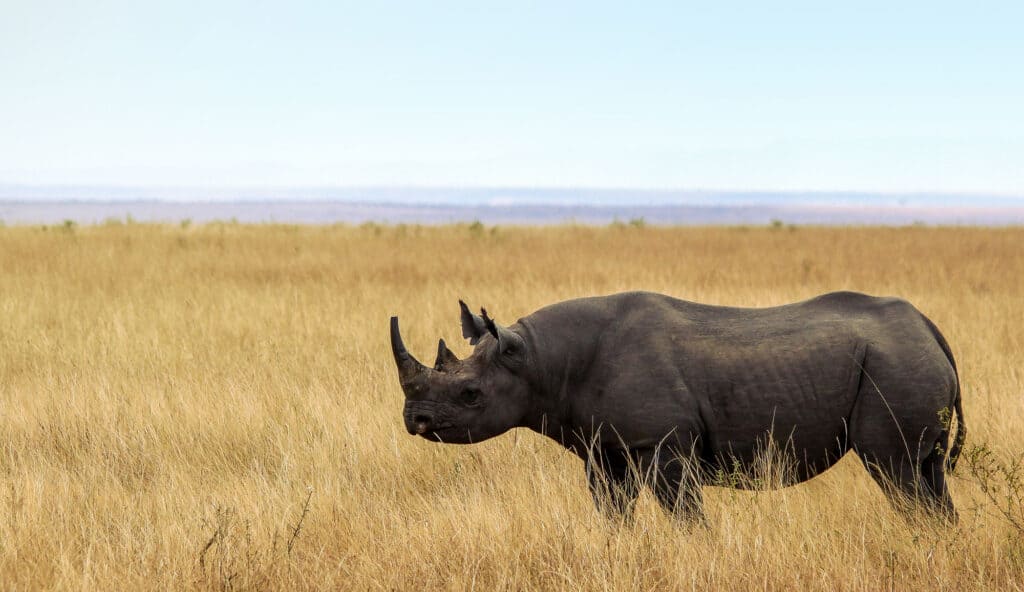
Black rhinos are considered Critically Endangered.
©iStock.com/Black Rhinoceros, Rhinoceros, Savannah, Tanzania, Animal
Thanks to conservation efforts, black rhino populations have been rebounding since reaching an estimated low of 2,475 individuals in 1993.
More About Zebras
Zebras tend to live in bands of 6-12 in open grassland, plains, savanna, and woodlands, eating grass, leaves, bark, and shrubs. They have a lifespan of 20-30 years, grow 6.6-7 feet long, and weigh between 386-992 pounds.
The different species of zebras include the Common Zebra (Equus quagga), Grevy’s Zebra (Equus grevyi), and Mountain Zebra (Equus zebra). Grevy’s Zebra is considered Endangered, and the Mountain Zebra is considered Vulnerable on the IUCN Red List. Although the Common Zebra is more widespread, sharp population declines have occurred in certain areas due to habitat loss and hunting, and they are now considered Near Threatened.