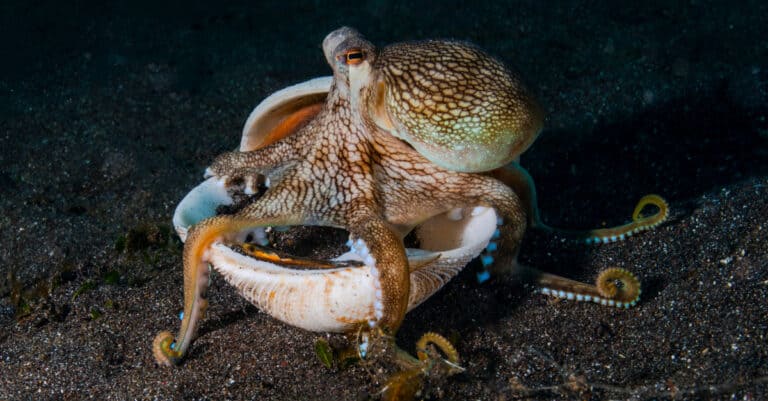

Off the coast of the UK, fishermen and marine biologists are witnessing something not seen in generations. Sightings of the common octopus (Octopus vulgaris) exploded across the southwest coast of England, in what ecologists call an “octopus bloom.” In some areas, 15 times as many octopuses were spotted in 2025 than just two years earlier. This sudden change has gotten the attention of marine biologists and has led to both headaches and celebrations among those fishing these highly productive waters.

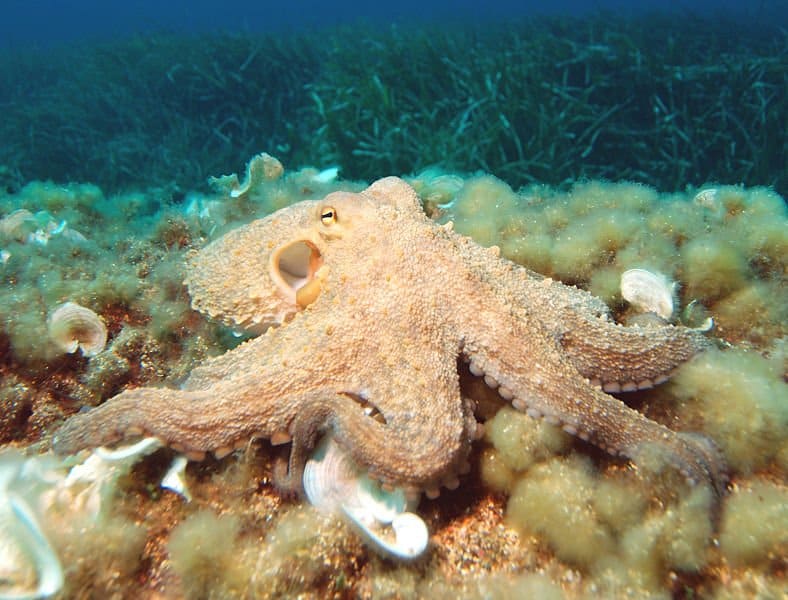
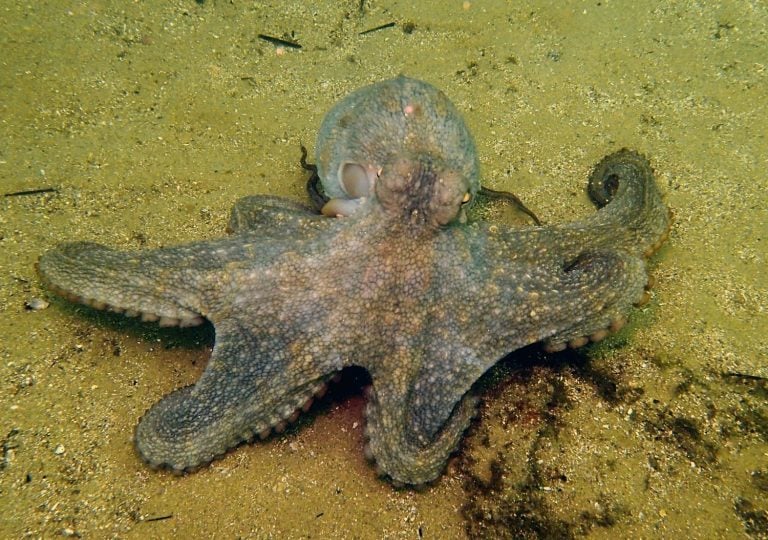
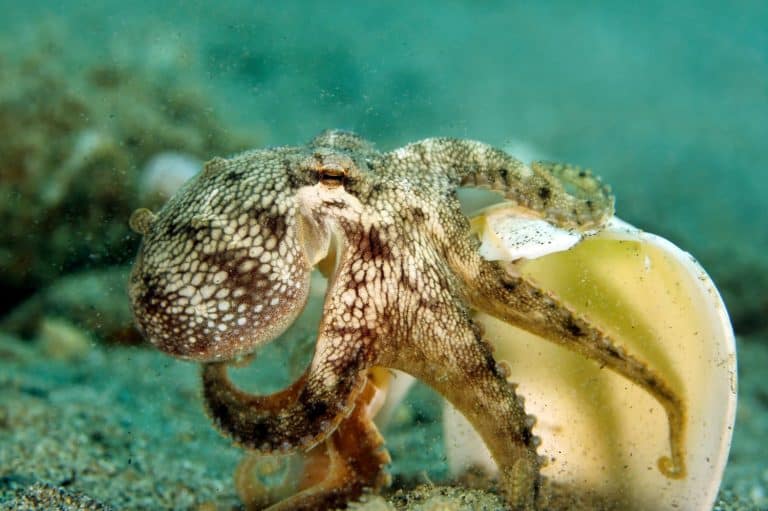
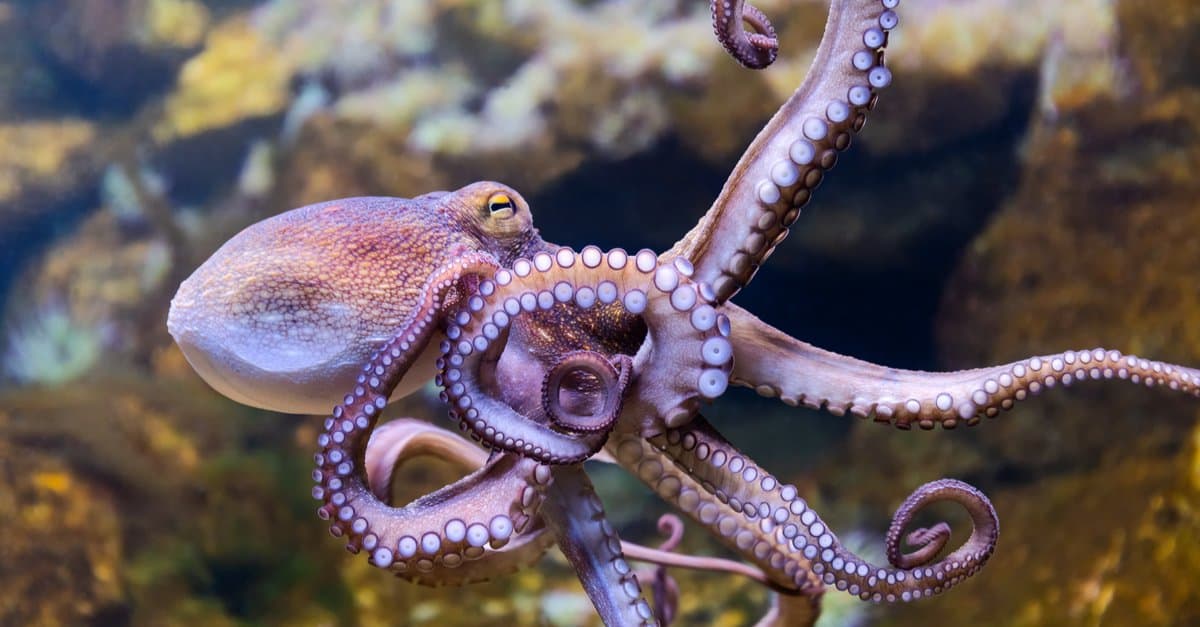
2025 saw a huge explosion in common octopus numbers.
©albert kok, CC BY-SA 3.0, via Wikimedia Commons – Original / License
What Caused the Octopus Boom
Climate change has led to warmer waters worldwide, and off the coast of southwest England, the common octopus has the attributes to really take advantage. Dr. Alex Schnell, octopus expert, comparative animal psychologist, and National Geographic Explorer, explains, “In 2024 and early 2025, the English Channel experienced a marine heatwave, with sea surface temperatures around 2–4°C (35.6–39.2°F) above average. In warmer water, octopuses grow extraordinarily fast and far more larvae survive through winter and spring.”
But temperature wasn’t the only cause for this population spike, reports Dr. Schnell. “In the years leading up to 2025, spider crab populations surged along the south coast, providing a high-protein food source that allowed large numbers of juvenile octopuses to thrive.”
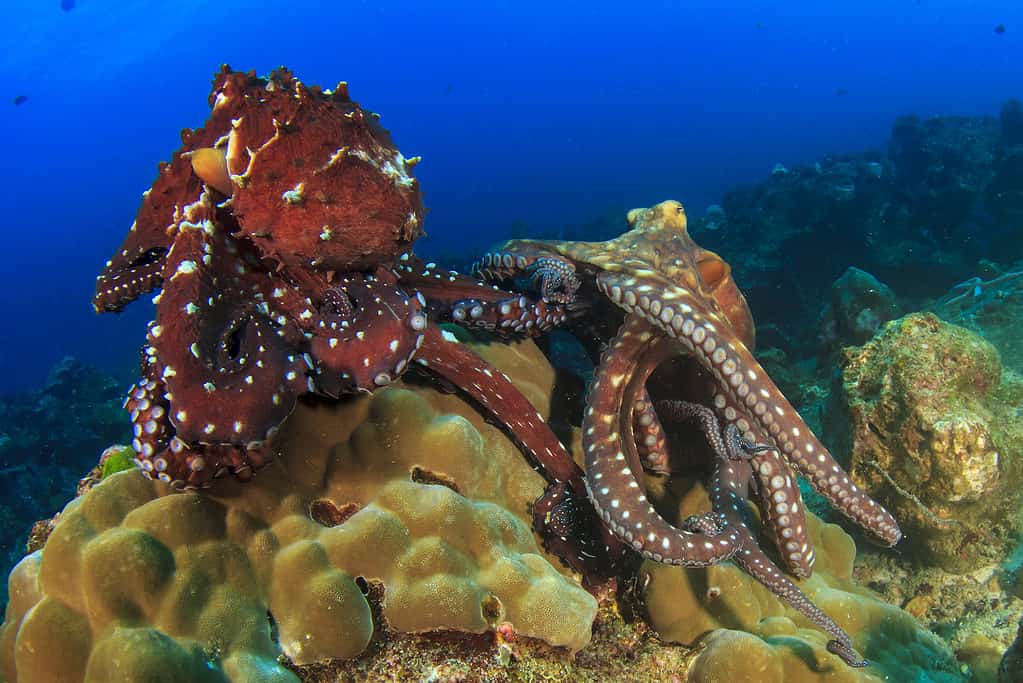
A male octopus offers a female one of his arms as part of their mating
©iStock.com/richcarey
Octopus breed in the spring and summer, and while they benefit from warm temperatures during those seasons, it’s the winter months that are crucial. Cold waters kill off many of the eggs and hatchlings, but the winter of 2024-2025 was exceptionally warm, contributing to the bloom that’s been seen since then.
Unlike other economically important sea catches like lobster and tuna, octopuses can reproduce within their first or second year, dying after reproduction. According to Dr. Schnell, octopuses are the rockstars of the sea; they live fast and die young, which means they can respond to favorable conditions very quickly. A single female can lay up to 500,000 eggs, so even a small increase in survival can translate into hundreds of thousands more octopuses in a single year.
This reproductive strategy, called semelparity, allows octopus populations to quickly respond to environmental changes, but it’s not the only attribute that makes the common octopus a remarkably adaptable ocean dweller.
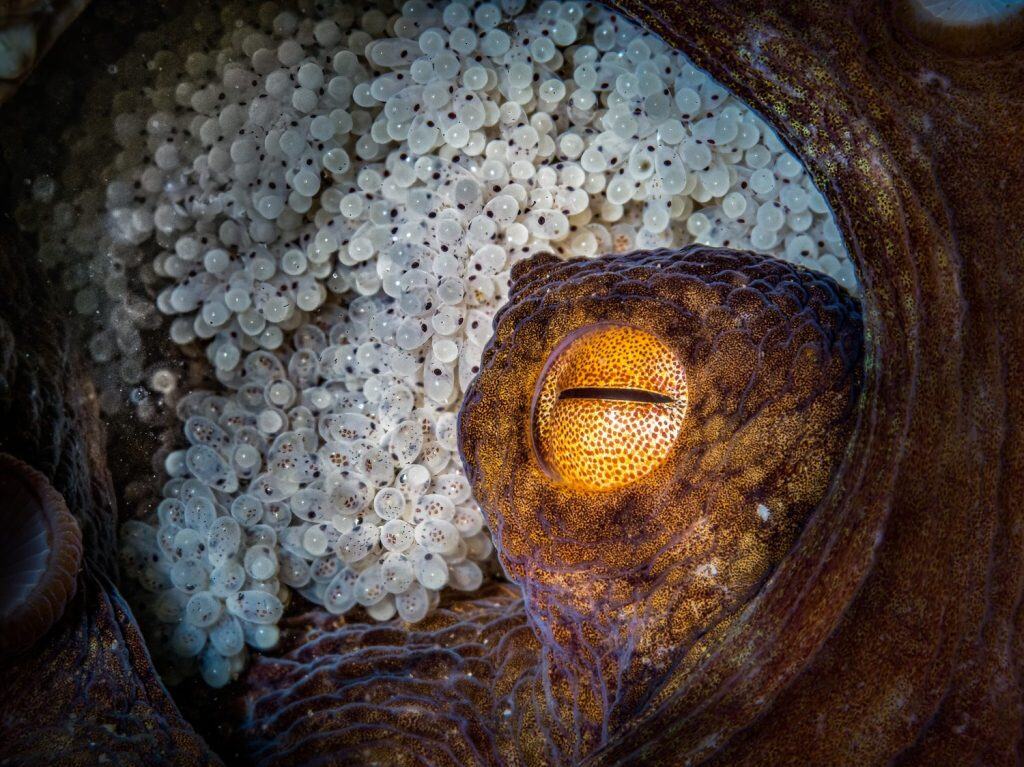
Female octopuses guard their egg clutches during the last stage of their life cycle. She will stop eating and die shortly after the eggs hatch.
©kkshxt/Shutterstock.com
What makes the common octopus unique?
The common octopus has captivated marine biologists and the public worldwide. Its ability to adapt to varied environments has allowed it to flourish in the waters close to the coasts of five continents. Dr. Schnell writes admiringly about the flexibility of the species. “The common octopus stands out as the ultimate generalist. Most species are specialists; the mimic octopus prefers tropical waters, and the giant Pacific (octopus) favors cold northern seas. Octopus vulgaris is almost everywhere, from the Mediterranean and the UK to South Africa and Southeast Asia. They can thrive from 5 meters down to 200 meters, which is exactly why they’re the ones ‘booming’ in the English Channel while others aren’t.”
In warmer water, octopuses grow extraordinarily fast and far more larvae survive through winter and spring.
Dr. Alex Schnell, octopus expert, comparative animal psychologist, and National Geographic Explorer
Captivating Camouflage
It has a list of survival techniques that is as impressive as any other in the animal kingdom. Common octopuses have the ability to change their colors in the blink of an eye, a strategy called adaptive camouflage. They can make themselves look just like seaweed, rocks, or sand, and they can even change their texture and shape of their skin to make the illusion all the more effective. This strategy can make them impressive hunters, not revealing themselves until their prey is already in the grasp of their 8 arms.
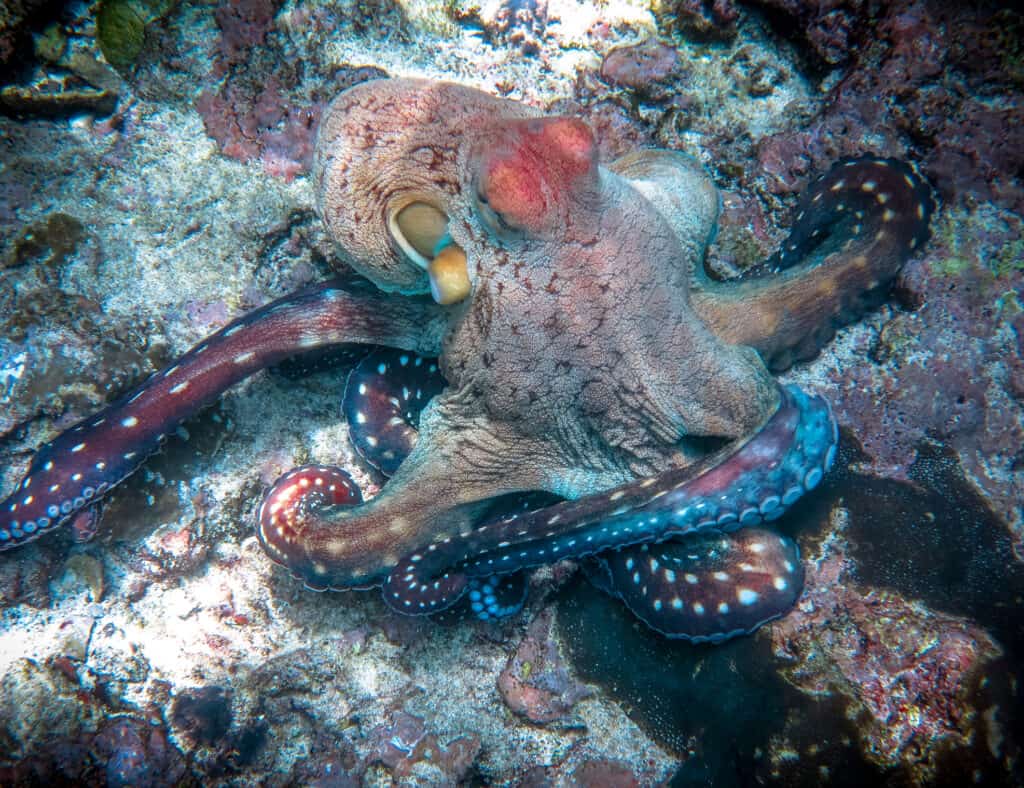
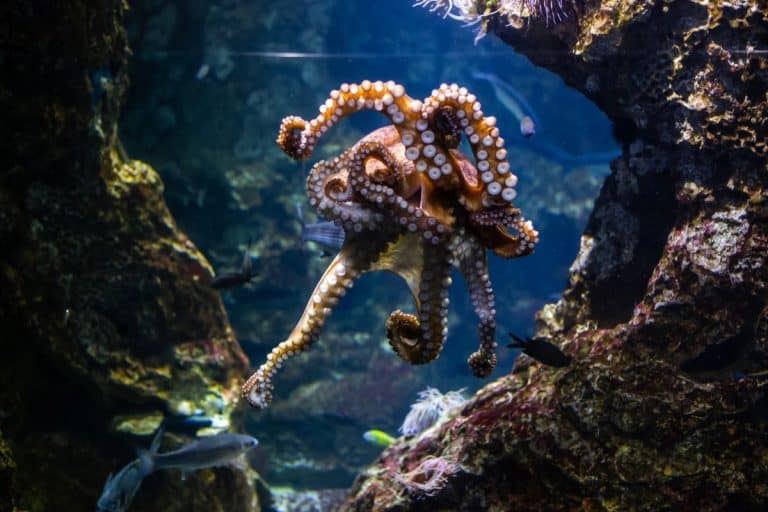
One wild reef octopus (Octopus cyanea) swims over the coral reef and changes colors to blend into the rocky environment.
©iStock.com/Crédito:Placebo365
Independent Arms
Those eight arms are where the majority of an octopus’s nervous system is, and they are controlled independently by a nerve cluster, sort of like a mini brain, capable of independent movement and sensory processing. Amazingly, the hundreds of suckers on each arm can feel, smell, and taste, figuring out the difference between a rock and a clam independent from the donut-shaped central brains in their heads.
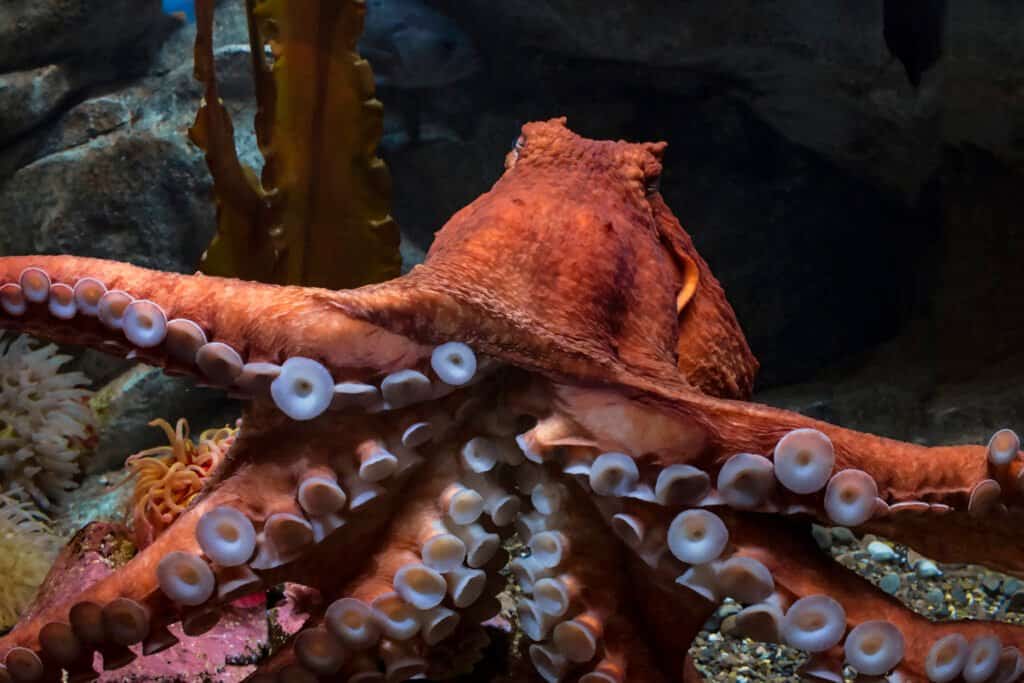
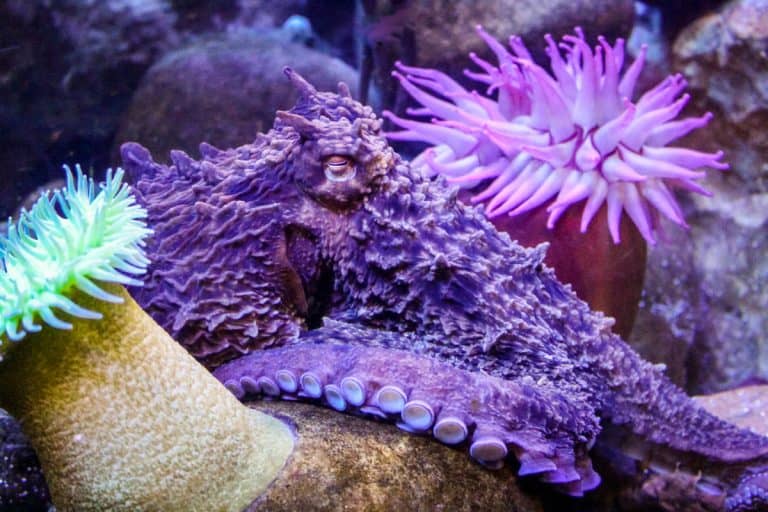
A giant Pacific octopus, the largest octopus species on earth, shows off its arms and suckers
©karen crewe/Shutterstock.com
A Stunning Bite
Prey gripped tightly in its suckers, the next step is the beak, which features its own surprises. All octopuses are equipped with venom capable of stunning prey, though only the blue-ringed octopus is a serious threat to humans. Once its prey is incapacitated, the octopus can begin biting it with its pointed beak, the only hard part of its anatomy. Their small teeth can be used to punch holes in clams that they couldn’t pry apart, sucking out the nourishing contents.
An Inky Escape
Though it’s a formidable hunter, an octopus is attractive prey to animals like dolphins, sea lions, seals, sharks, and tuna. When camouflage fails, it has another survival technique: the ability to release an ink jet that quickly becomes a dark cloud in the water, with the hopes of hiding the octopus and disorienting its predator, giving it one more chance to escape, expelling a jet of water, and moving its arms in unison in a burst of speed. They can also use this inky cloud to hunt dangerous prey, like lobster, blinding and confusing it before sneaking up on it from behind.
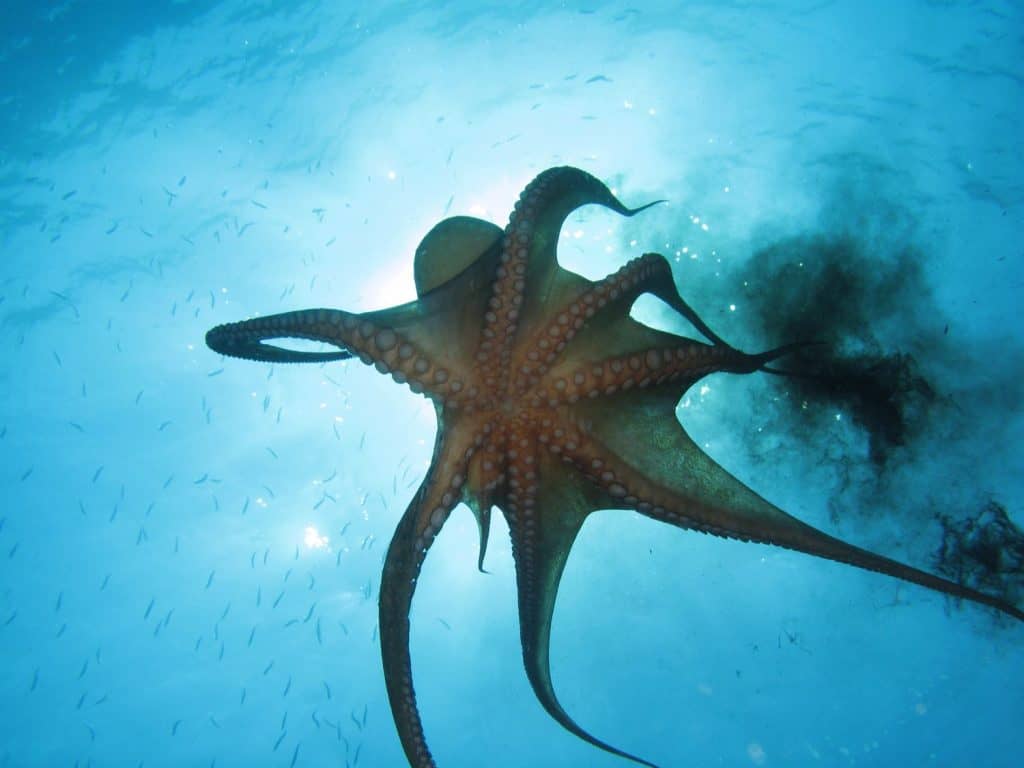
An octopus can release a black ink cloud as a defence mechanism.
©Vittorio Bruno/Shutterstock.com
Not A Picky Eater
Octopuses can rely on a wide variety of prey. In fact, they can eat almost anything that they can get hold of. Crabs and lobsters are a favorite, as are bivalves like cockles, mussels, and clams. But they’ll also eat any fish small enough for them to catch as well as snails, shrimp, and worms. They’ve also been observed to eat smaller octopuses, including those of the same species.
Animal Ingenuity
Viewers around the world were captivated by the creativity and ingenuity of one common octopus in the film, My Octopus Teacher, seeing it remember and respond to the diver who films it, create armor using shells to protect itself against predators, and even jumping onto a shark’s back to hide from the same hungry predator. But observations of octopus intelligence don’t stop there: they have learned to navigate mazes, unscrew jars, solve puzzles, and escape from their enclosures at aquariums. In fact, researchers have come to believe that octopuses have awareness of whether or not they are being watched, and they plan their escapes accordingly.
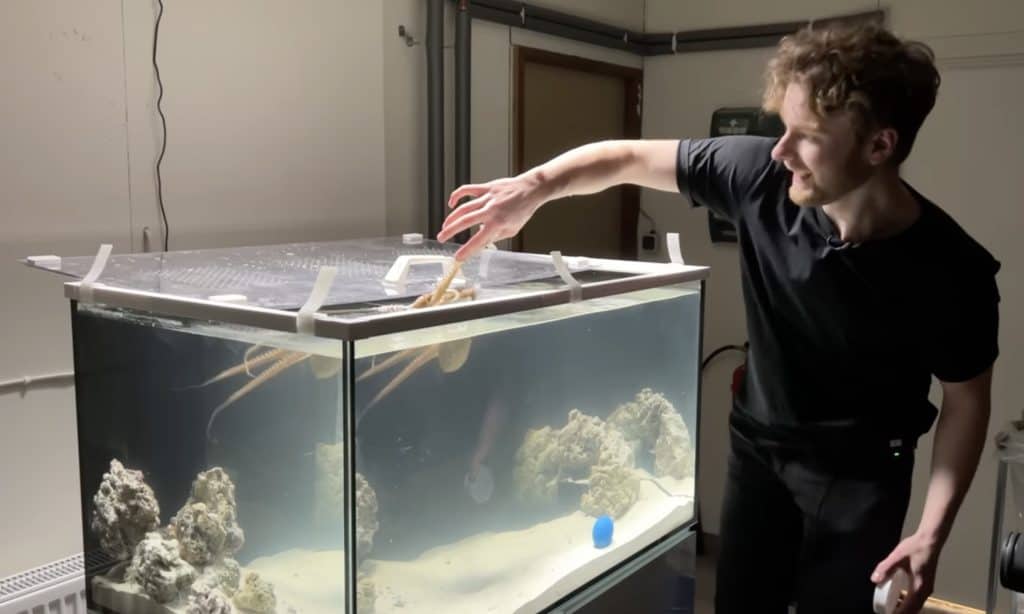
According to the Washington Post, musician Mattias Krantz taught his octopus, Takoyaki (a word for grilled octopus), to play keys on a submerged keyboard using crabs as a motivator.
©YouTube/Mattias Krantz – Original
Even more impressive, octopuses have been observed squirting jets of water at light fixtures, circuiting the system and giving the animal the darkness it prefers. In one notable case, an octopus seemed to take a dislike to one of its keepers, showering her in a half-gallon water jet whenever she walked by the tank.
How is the octopus surge changing the marine ecosystem?
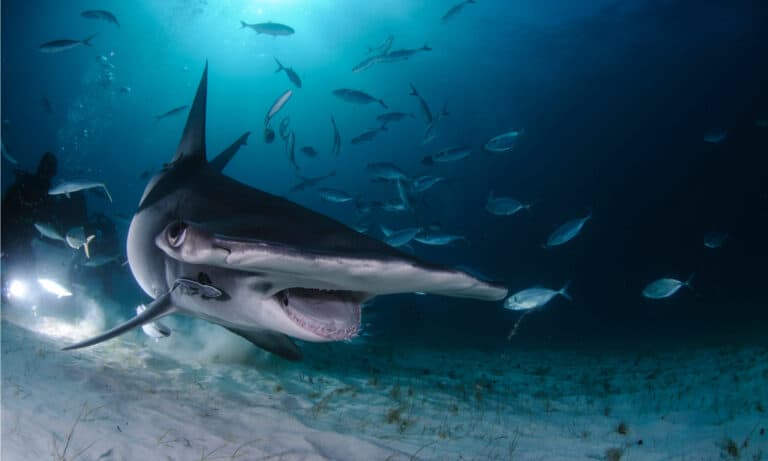
The octopus bloom off the coast of England is dire news for its favorite prey: the octopuses have been seen feasting on crabs, lobsters, and scallops, and have even been observed sneaking into the crab and lobster pots of fishing boats, making off with the would-be catch. Animals that prey on octopus, like sharks, dolphins, and large seabirds, could benefit, though the populations of such larger animals change more slowly than the adaptable octopus.
Ultimately, the same conditions that help octopuses could lead to their decline, as warmer waters increase the chances of toxic algal blooms, which dramatically decrease the oxygen content of the water where they occur, and active animals like octopuses require oxygen-rich waters to survive. Not only that, but bluefin tuna, a predator of octopuses, have been reported in larger numbers in these same waters, attracted by the increase in temperature.
What does this mean for seafood consumers?
Octopus is a valuable seafood, and fishermen who specialize in catching the cephalopod have had a record-setting year. In some markets, the price of octopus has nearly halved, and England’s restaurateurs have responded by adding it to their menus. But it’s a double-edged sword: crab, lobster, and scallops, all seafood staples in the UK, have seen their prices rise, as octopuses have been eating them off the seafloor as well as sneaking into shellfish pots, making off with the catch. Not only that, but hake fishermen have transitioned to catching the more valuable octopuses, causing hake prices to rise. Bluefin tuna catches have also increased, driving down their prices in England.
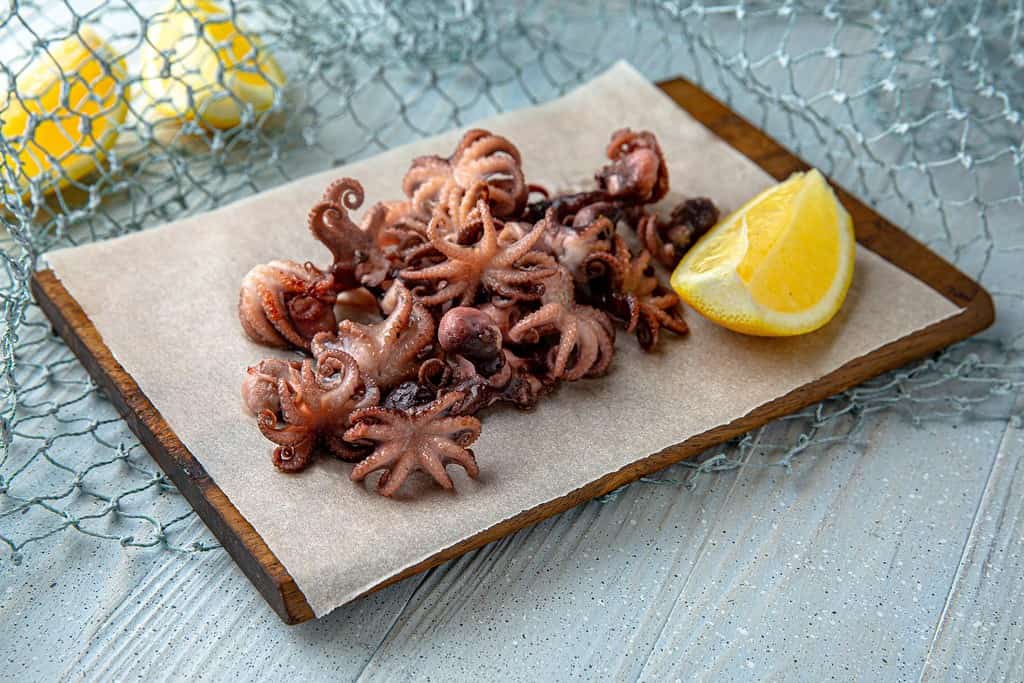
Fried octopus is a popular dish around the Mediterranean, as the sea’s warm waters are excellent breeding grounds for the animal.
©Katerininamd/Shutterstock.com
Dr. Schnell cautions against getting used to this octopus abundance. “It’s a temporary ecological shift driven by a short-lived species. Relying on it as a long-term food source is risky because semelparity guarantees sudden drops in supply, and environmental sensitivity means one bad winter can turn a ‘boom’ into a total ‘bust.'”
Furthermore, a growing respect for the intelligence of the octopus might further change UK consumers’ access to octopus, according to Dr. Schnell. “Emerging sentience laws, like the 2022 Animal Welfare (Sentience) Act, may soon tighten regulations on how these animals are caught and killed, further affecting price and availability.”
Other Cephalopods Responding to Climate Change
Marine biologists have seen cephalopod populations change dramatically due to warming oceans before. For over a decade, Humboldt squid (Dosidicus gigas), an eastern Pacific open-ocean predator that can grow up to 8 feet (2 meters) and 100 pounds, has been expanding their range north to the Gulf of Alaska and south towards the Tierra del Fuego. In the last century, they were rarely found so far from the equator, but biologists believe that as ocean temperatures continue to rise, the range of these large squid will continue to grow. Humboldt squid are an important commercial catch and have become more common and affordable on grocery shelves and in restaurants, but this comes at an ecological cost. They have been found to disrupt other important fisheries, like that of the Pacific hake, a favored prey of the squid.
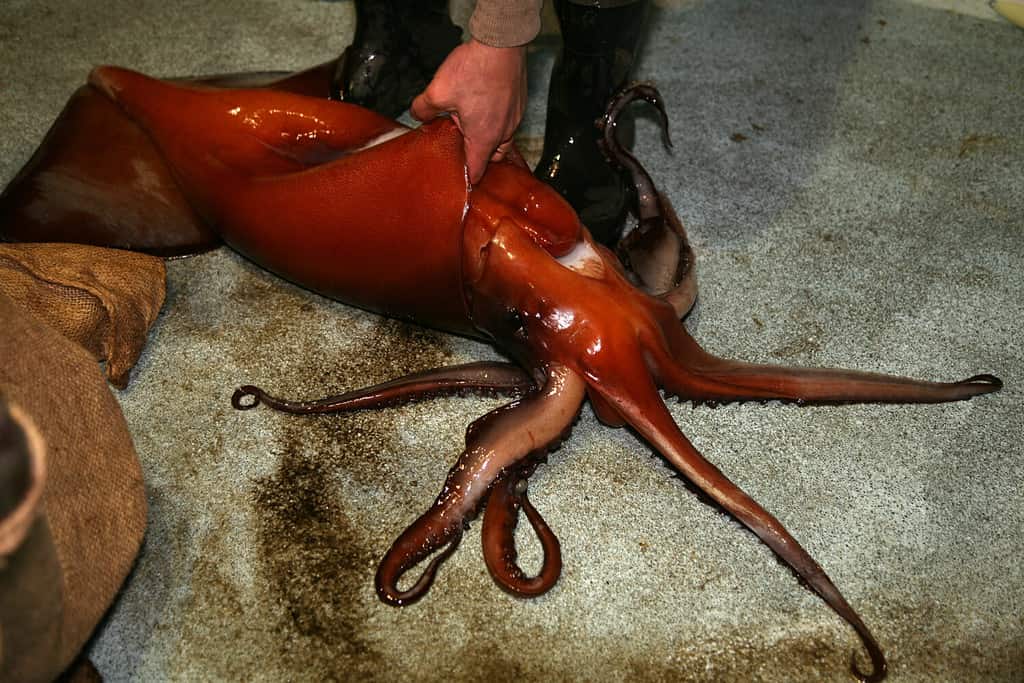
The Humboldt squid range continues to grow as a result of rising ocean temperatures.
©mikeledray/Shutterstock.com
The Best Way to See the Octopus Bloom
Divers and fishermen have been reporting the largest numbers of octopuses off the coasts of Cornwall and Devon counties. Though octopuses are most active at dusk, it’s possible to see them during the day on a dive. Look for strewn about carapaces of crab or other shellfish. This can be a sign of a nearby octopus den. If you move slowly, the octopus may acclimate to your presence and show itself. Make sure to keep a respectful distance to not disturb it from its food-gathering activities.
Though octopuses are not frequently seen on shore, present conditions are giving beachgoers better odds than average. They are more likely to be found after rough weather, as they are thought to take refuge on shore. Look for them moving between rocky pools to seek food and shelter, or in holes in the rock submerged in water. As these are wild animals, look, but don’t touch!
The Surge Won’t Last Forever
The octopus bloom observed in 2025 was in response to a marine heatwave off the coast of southwest England, in which the waters were much higher than the average temperature in southwest England. Blooms like this were recorded in 1899, 1948, 1950, and 2022. If ocean temperatures return to their average levels this winter and into spring, it could mean adverse effects to the octopus populations and a return to a more familiar fishery off the southwest coast of England, giving lobster, crab, and other shellfish a chance to bounce back. But with a warming climate, heatwaves — and the octopus blooms that follow — are only going to become more likely.
As marine ecologists have seen in the example of the Humboldt squid, as average ocean temperatures rise, rare visitors can become permanent residents. 2025’s octopus bloom may point to a long-term change in our dynamic ocean ecosystems as well, according to Dr. Schnell. “Unlike 1950, the 2025 bloom confirmed active, large-scale breeding in UK waters, showing the Channel is now a viable nursery.”
Whether you’re an animal lover, an ocean explorer, or a seafood enthusiast, our warming seas will continue to change our understanding and connection with the ecosystems in those waters, reports Dr. Schnell. “The octopus surge represents a rapid shift in the marine food web. While this changes the availability of prey for traditional fisheries, it also provides a massive new energy source for larger marine predators and demonstrates the ocean’s remarkable ability to reorganise itself in response to warming temperatures.”