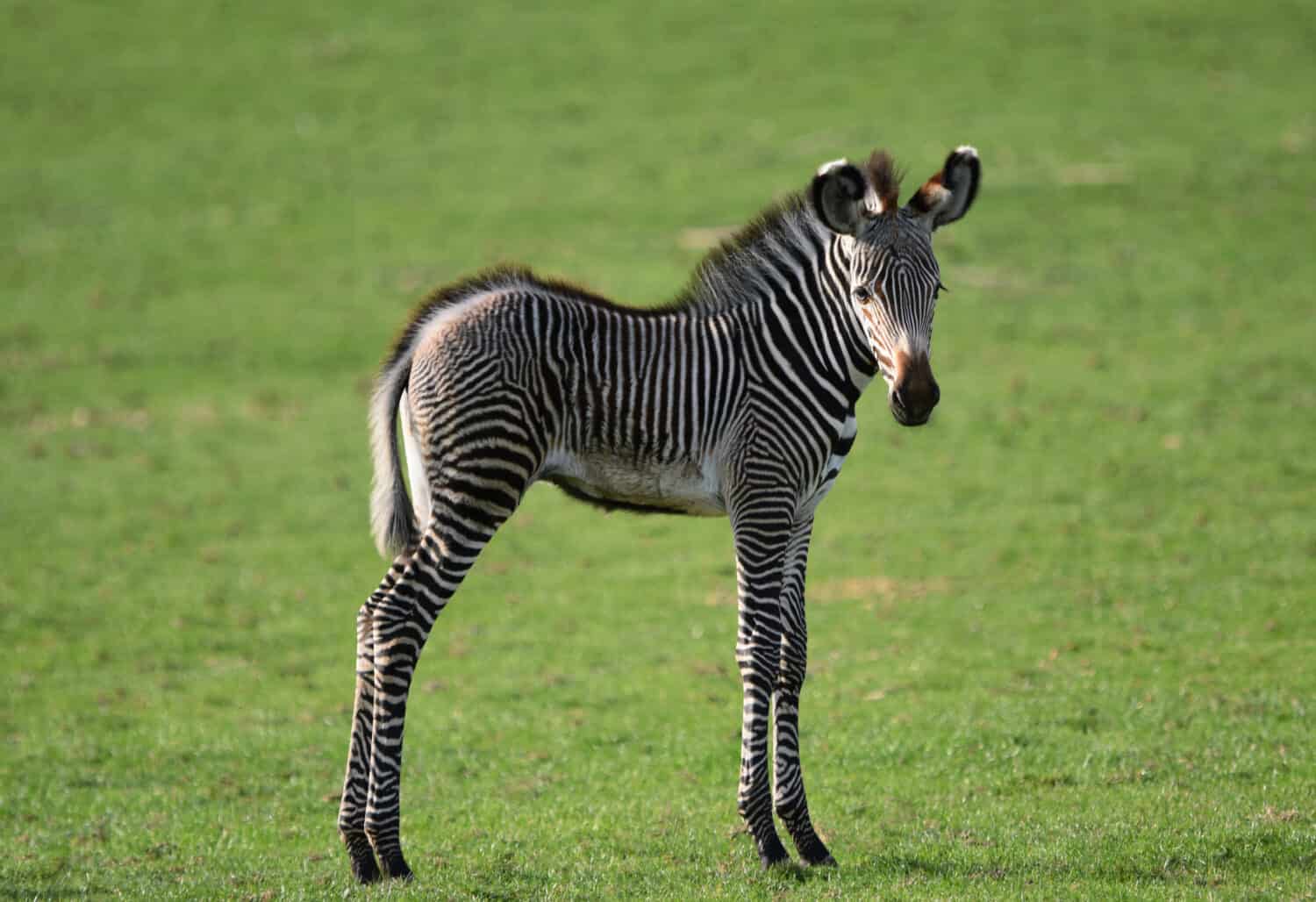

The zebras in this very special YouTube clip show us that nature can be extraordinarily kind as well as cruel. It captures the moment when a baby zebra has been left alone because its mother has died. Without her protection, he will inevitably perish, and it appears that his fate is sealed. But, just when you think that all is lost, the herd arrives and he is saved. Watch the clip for yourself, and once you have stopped sobbing, read on for a fuller explanation of zebra social relationships and reproduction.
Zebra Relationship Dynamics
The animals in this clip are plains zebras (Equus quagga). You can distinguish them from the other species of zebra, Grevy’s zebra, by the size of their stripes and their smaller ears. They are found in eastern and southern Africa in many types of habitat, including grassland, grassland-bushland, and grassland-woodland mosaics.
Zebras are highly social animals and live in a family group called a harem. This comprises a single adult male (stallion), one or more adult females (mares), and their offspring who are under three years of age. Harems can live close to each other and form herds of several hundred zebras.
Familial affection has been recorded in zebras. The family members look after one another. When a group member is sick or weak, the rest of the group will slow down to accommodate them. Also, lost or lagging members are led back to the group. This is exactly what you can see in action in this clip. Zebras have an excellent sense of smell, and you can see the individuals in this clip checking the foal out by smelling it. The foal also recognizes the scent of the other zebras. Zebras have an organ called Jacobson’s organ located at the roof of their mouth, which can detect odors and pheromones.
Plains Zebra Reproduction
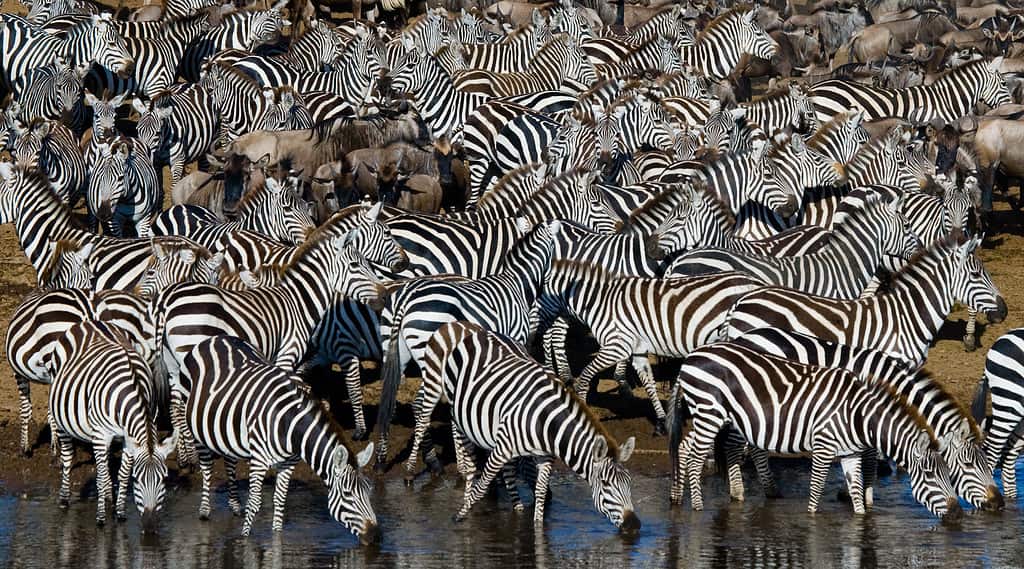
Zebras gather together in herds.
©iStock.com/ANDREYGUDKOV
Mother zebras almost always give birth to a single foal (rarely they can have two), and the babies are typically on their feet within 13 minutes of birth. During the first few weeks of the foal’s life, the mother keeps other zebras at a distance. This behavior may explain why the young zebra in the video was found alone. Imprinting in zebras occurs shortly after birth, when the foal comes to recognize and bond with its mother. If a foal is separated from its mother during this early period, it may imprint on another animal or even an object, following it as if it were its mother. Orphaned zebra foals have even begun following vehicles, mistaking them for their mothers. At least in this scenario, there was a happy ending, and the calf secured the protection of the herd.