
Quick Take
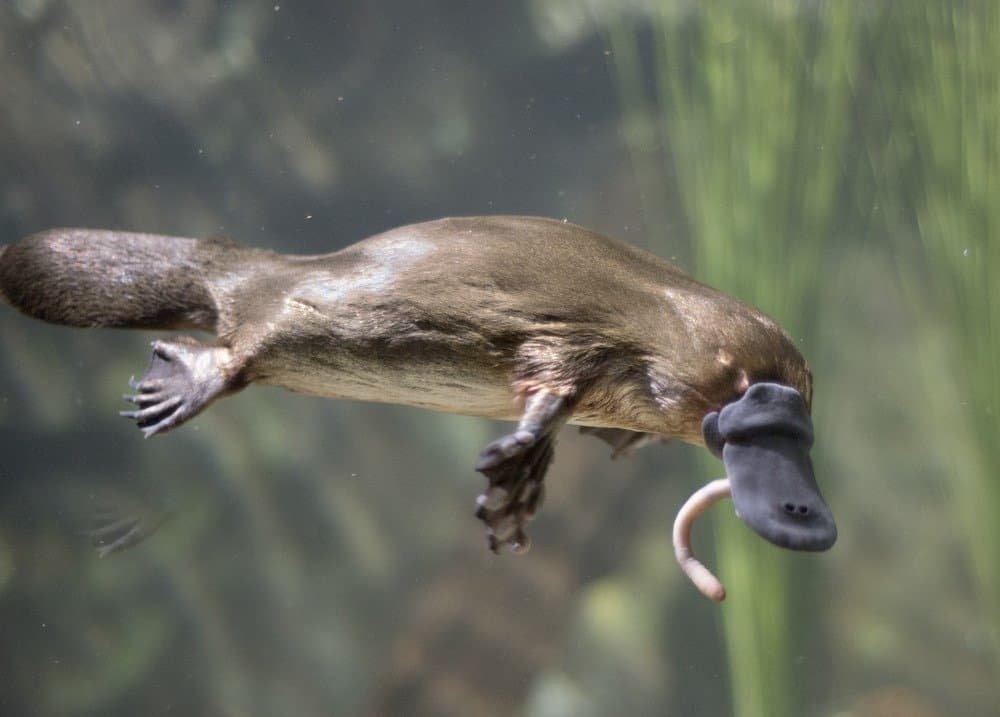
- The duck-billed platypus feeds mainly on aquatic invertebrates that it catches in the water.
- It carries them back to the surface using cheek pouches, and grit may be collected at the same time, but it is not essential for digestion.
- They do not have a typical stomach with glands producing enzymes and acid, but do have a pouch that produces mucus-rich fluid.
Just when you thought you knew how mammalian digestion works, you come across an animal that breaks all the rules. Meet the duck-billed platypus, a unique creature described as a ‘living fossil’ by Charles Darwin because they seem to be living beyond their time. As this Instagram post shows, they have an unusual way of digesting their food. However, read on to see if the science backs up the claims.
What Do Platypuses Eat?
Duck-billed platypuses (Ornithorhynchus anatinus) live only in the wetter regions of eastern Australia and Tasmania. Here, they inhabit rivers, lagoons, and streams. They have a preference for areas with steep banks that have roots and overhanging vegetation.
Most of their diet is made up of aquatic invertebrates, including non-insect arthropods and molluscs. They feed on aquatic or marine worms, insect larvae, crustaceans such as shrimp and yabbies, molluscs, and occasionally fish eggs or very small fishat shrimp, fish eggs, and even small fish.
Does a Platypus Really Use Grit to Eat?
As their name suggests, the duck-billed platypus has a bill rather like a duck’s, which is not exactly designed for chewing! They have a set of teeth when they are very young, but shed them around the time they first leave the nesting burrow.
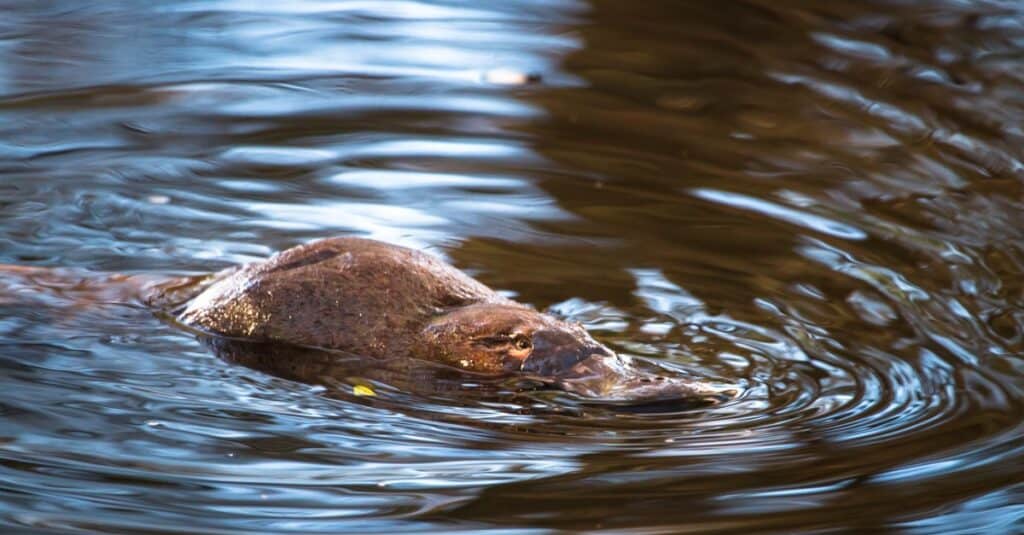
The platypus mashes up food with its thick pads.
©iStock.com/Kevin Wells
So, they use special grinding pads in their mouths to mash up their food into a paste. The pads are made of a tough material called keratin. They do not actually need to use grit for this process. However, they also have cheek pouches where they store the food they have collected at the riverbed to bring it back to the surface. Mud and sand have been found in the contents of their cheek pouches, but this likely means it was collected accidentally with the prey, rather than serving a crucial role in digestion.
Does the Platypus Have a Stomach?
That depends on how you define a stomach! It’s true that monotremes, like the platypus, do not have a stomach like most other mammals. They lack a true stomach with acid- and enzyme-secreting glands, instead possessing a simple, pouch-like section between the esophagus and intestine.
Also, a genetic study has shown that in the platypus, the genes involved in gastric functions have either become inactivated or completely disappeared. This may be because they don’t need a stomach. They masticate their food so thoroughly that little more needs to be done before it reaches the intestines.