
Quick Take
- Salamanders emerge from their underground homes to cross busy roads during the spring breeding migration season.
- Salamanders lay up to 450 eggs in vernal pools every spring.
- Volunteers help document the paths of salamanders and assist them in crossing busy roads to safety.
Spring is a season of new life, and with that comes animal behaviors that only happen at this time of year. One such example comes from salamanders, whose spring migration habits have them crossing busy roads at night. These nocturnal creatures come out in the open for an important reason, risking their lives in the process. Here’s what you need to know — and what you can do to help.
Why Are So Many Salamanders Out in Spring?
Flowers bloom, sunny days get longer, and salamanders cross the road every spring. According to the Virginia Department of Wildlife Resources (VDWR), mole salamanders will leave their underground homes for one main reason: breeding.
On rainy, warm nights (to avoid sunlight that could dry out their skin), salamanders slither out of their cozy dens beneath logs and leaves, or from underground, to find a vernal pool—a shallow wetland found in the woods or meadows. Often, they will have to cross busy roads to get there, but the end result is worth it to find a safe spot to lay their eggs.
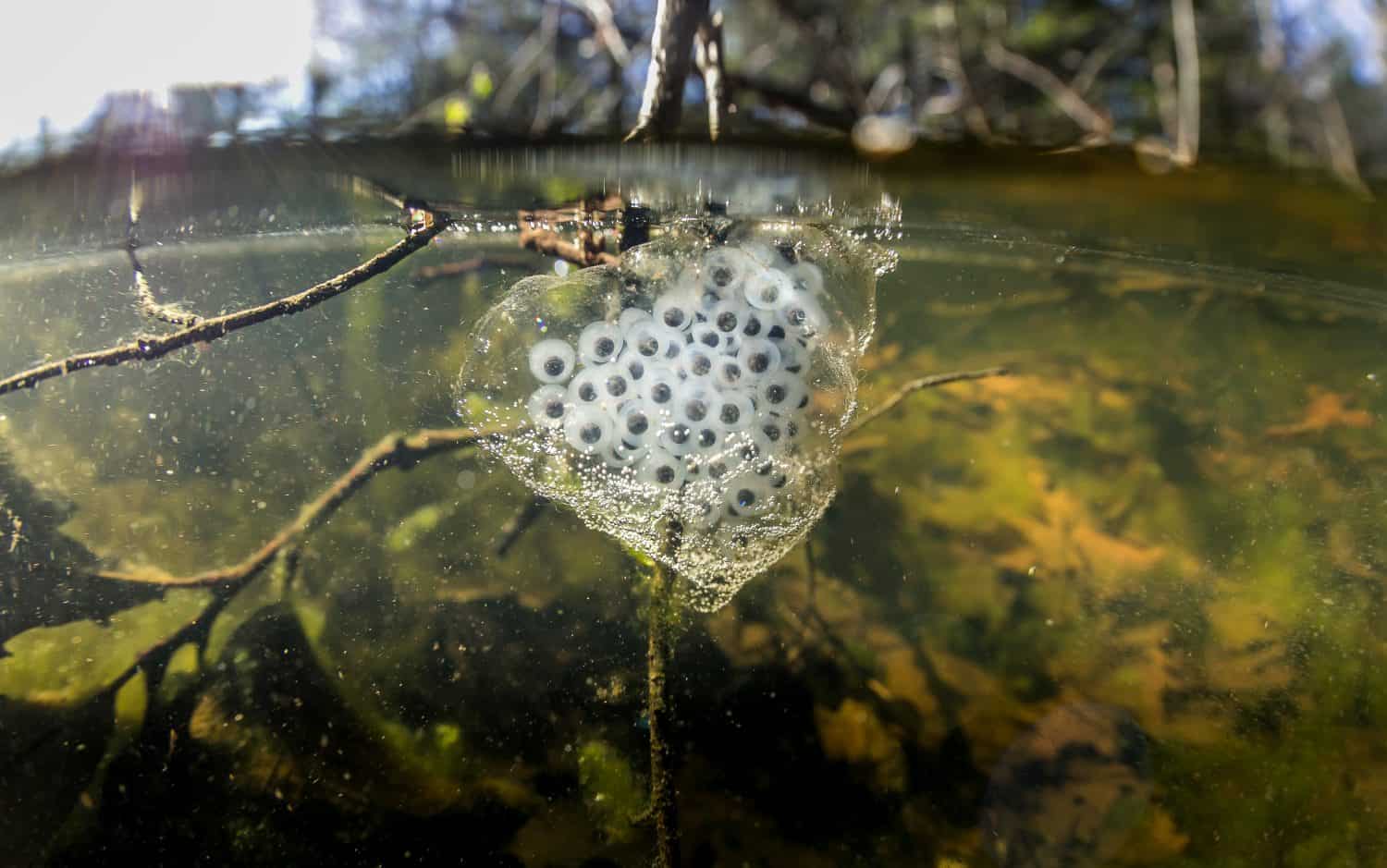
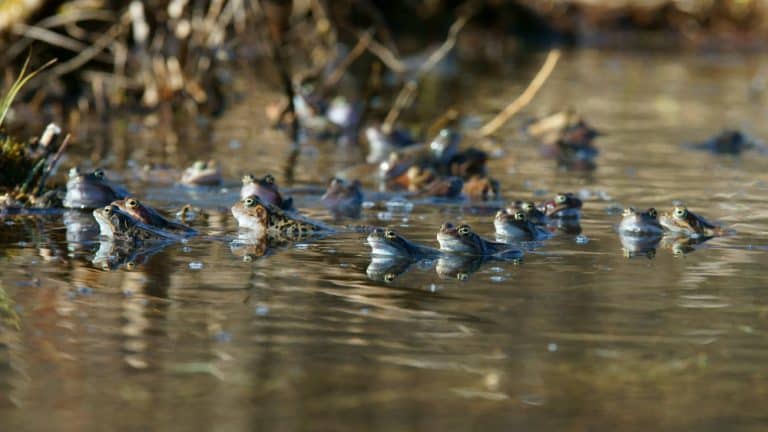
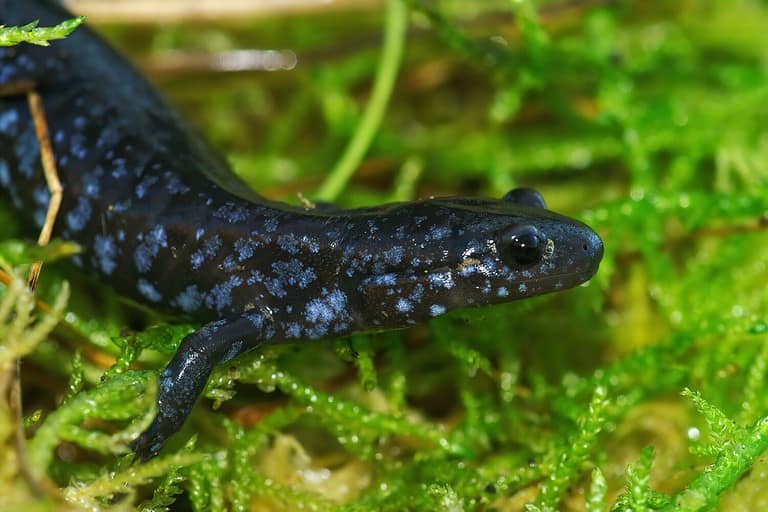
Salamanders lay up to hundreds of eggs in shallow vernal pools.
©Mark F Lotterhand/Shutterstock.com
Once they reach the shallow water, male salamanders release a scent to attract females for mating. Then, the female lays jelly-like eggs in the water — up to 450 at a time! — where they remain for 3 to 4 weeks until the baby salamanders hatch.
Salamander eggs are vulnerable to predators such as raccoons, skunks, fish, and snakes. The surviving eggs hatch into larvae, which breathe through gills and eat insects in the water for their first three months. At about 3 months old, the salamanders develop lungs and move onto land, where they will find a home close to water for their own future breeding season.
Why Roads Are So Hazardous for Salamanders
According to the Amphibian Migrations and Road Crossings (AM&RC) Project, led by the New York State Department of Environmental Conservation and Cornell University, salamanders are often found on roads because they must migrate anywhere from a few hundred feet to a quarter of a mile—distances that often require crossing roads.
“Unfortunately, because forest and wetland habitats are often disconnected by development, many migrating amphibians encounter roads and long driveways, leading to mortality of slow-moving wildlife, even in low traffic areas,” AM&RC stated on its website.
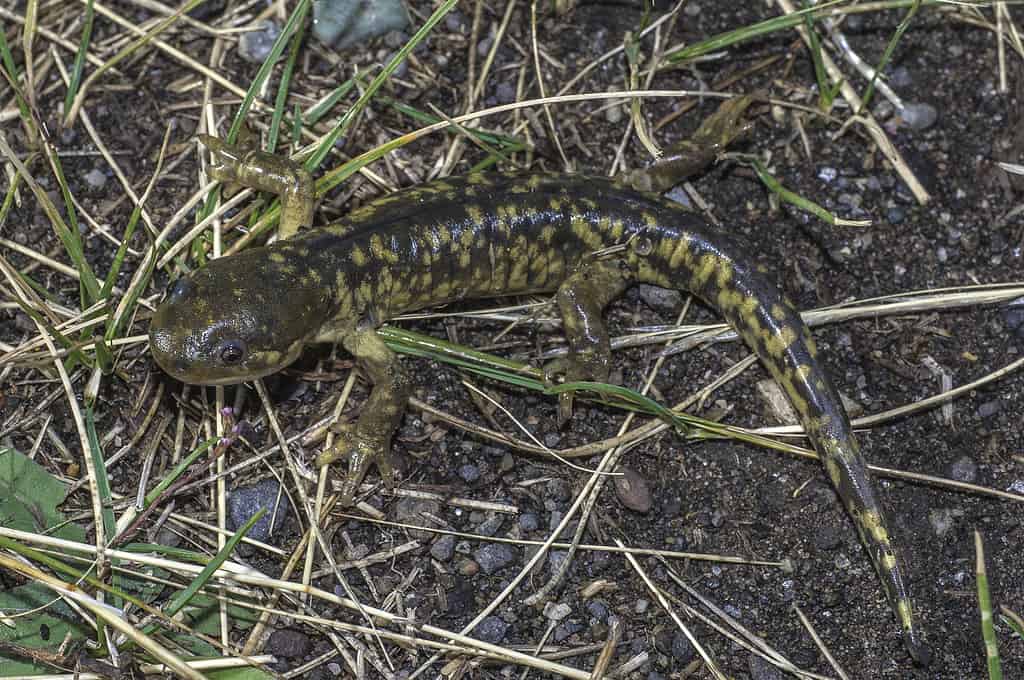
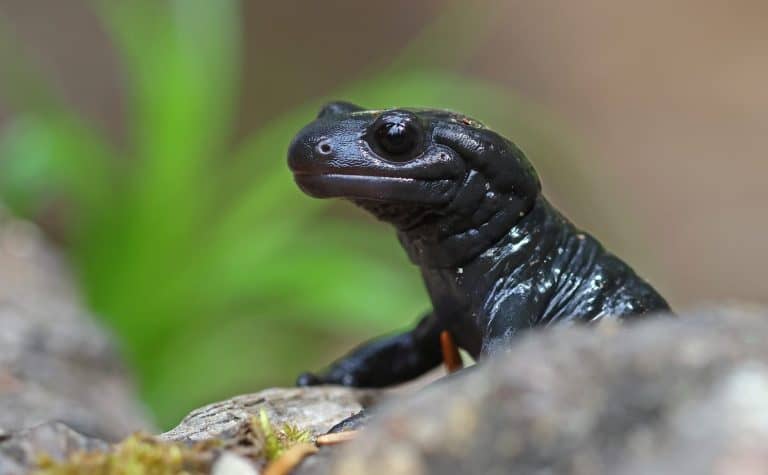
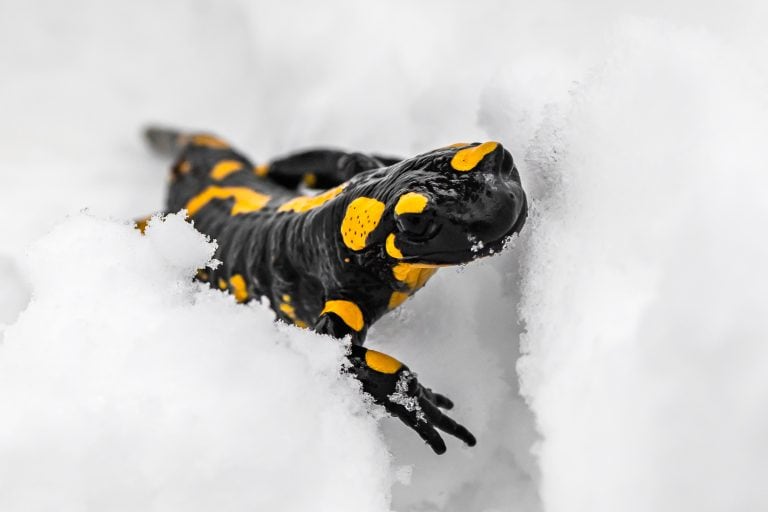
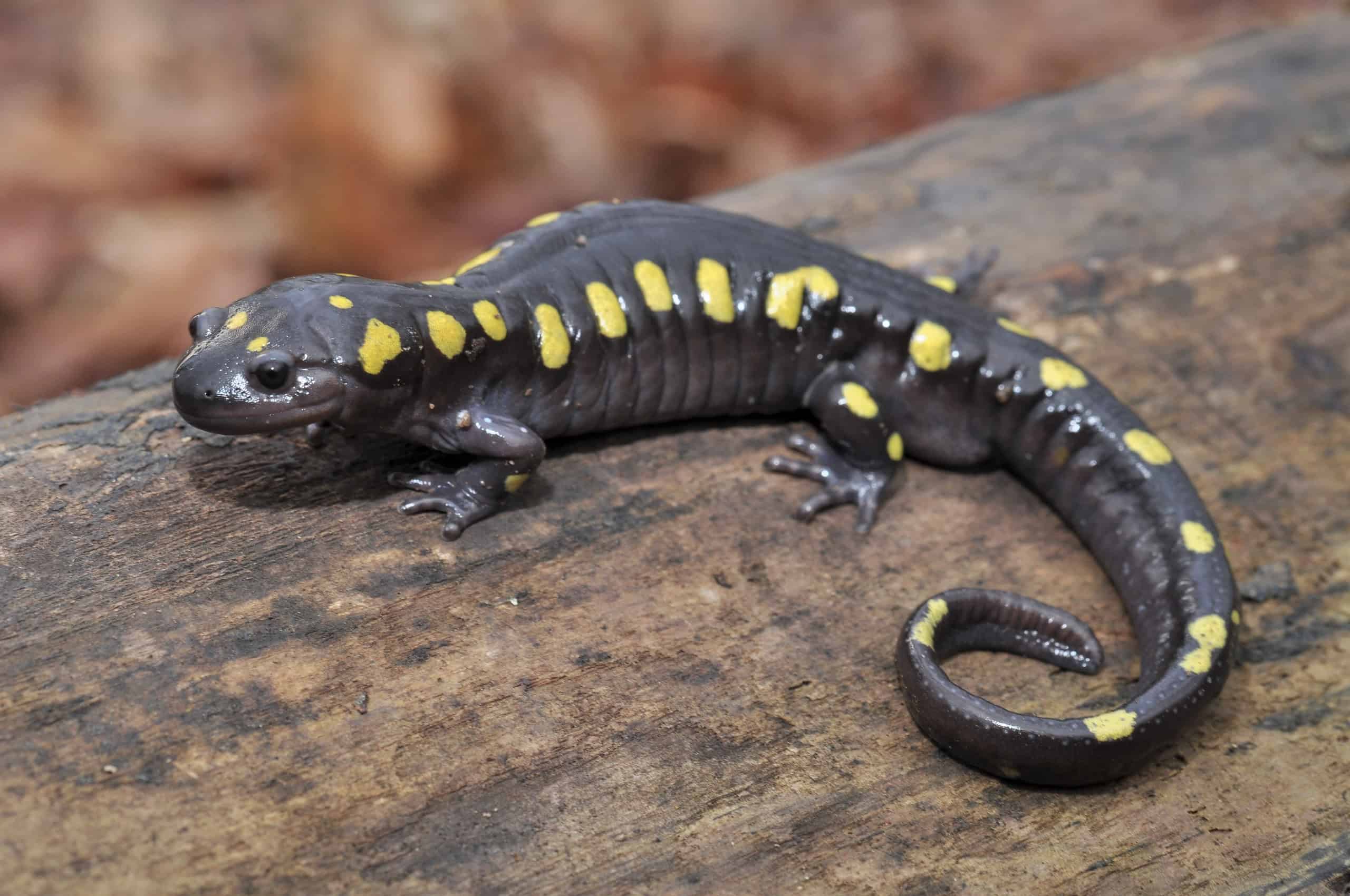
Salamanders tend to hide underground or beneath logs and leaves until mating season.
©Gerald Corsi/iStock via Getty Images
Because of this, AM&RC works with volunteers to record migrating amphibians, help them cross roads, and document the locations, weather, and traffic conditions where migrations occur.
How Citizen Volunteers Help Reduce Mortality
Since 2009, more than 1,000 AM&RC volunteers have counted at least 66,000 amphibians and assisted an estimated 51,000 amphibians across roads. Nearly 19,000 amphibians have been documented as killed by passing vehicles.
In Virginia, the Virginia Master Naturalists (VMN) are made up of volunteer educators, citizen scientists, and others who help to conserve and manage natural resources and public lands in Virginia. VMN collaborates with the VDWR, Virginia Commonwealth University’s Rice Rivers Center, and other local, state, and federal agencies to find, identify, and monitor vernal pools in order to protect salamander breeding grounds.
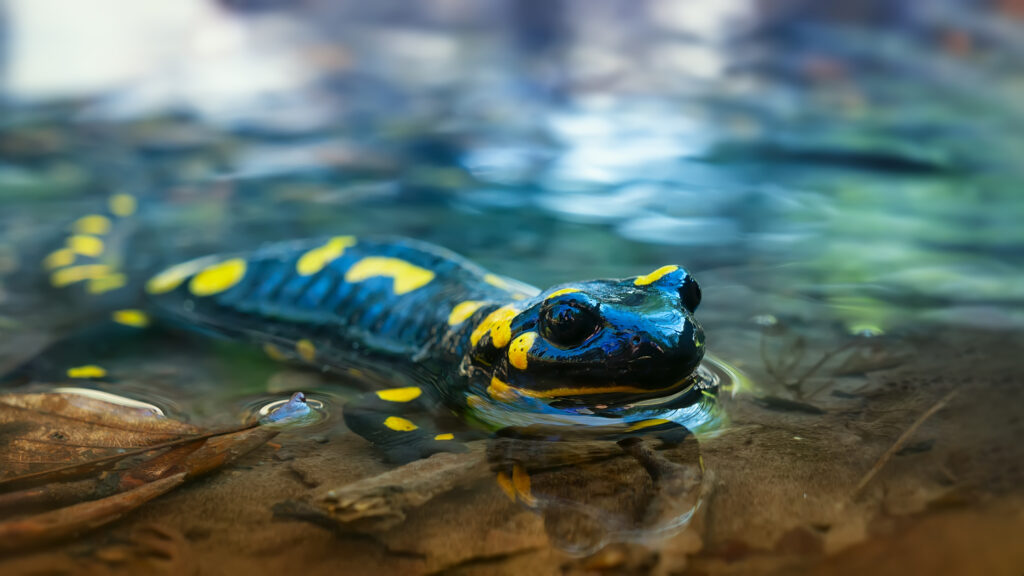
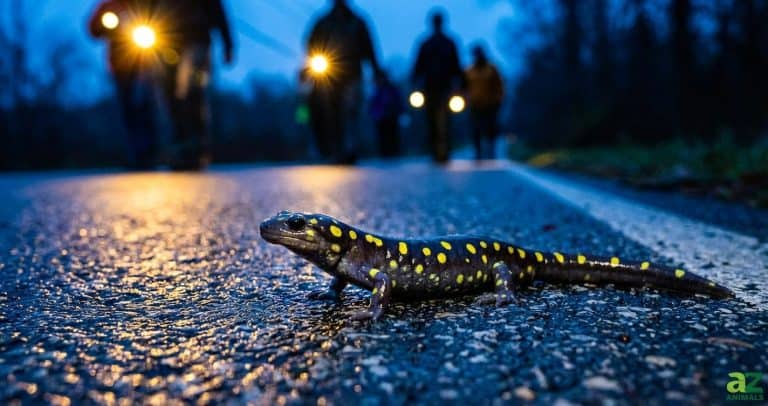
Volunteers help document vernal pools and assist salamanders in crossing the road during spring migration.
©Rejdan/Shutterstock.com
In New Hampshire, the Harris Center for Conservation Education trains volunteers to serve on Salamander Crossing Brigades at amphibian road crossings to count and assist salamanders and other amphibians crossing the roads. Since 2007, the Crossing Brigades have moved more than 97,000 amphibians out of harm’s way.
Laura Heady, biologist and director of the AM&RC Project, talked to Smithsonian Magazine about the joy volunteers get from helping salamanders in the spring. “Many volunteers have communicated the joy they feel getting to witness their first migration, seeing these beautiful amphibians that are typically quite elusive,” Heady told the outlet in April 2022. “When we get those first rainy nights of spring, and I know that residents are braving the cold, damp, uncomfortable conditions to help amphibians, my conservationist’s heart just sings.”
Even if you don’t volunteer, you can still help the salamanders on their journey this spring. Be careful where you step when walking or hiking through the woods, never step into a vernal pool, and consider staying home on rainy spring nights to avoid driving over salamanders in the road. Do your part to take care of these vulnerable creatures this spring, and you may just get a chance to watch these cool amphibians in action!