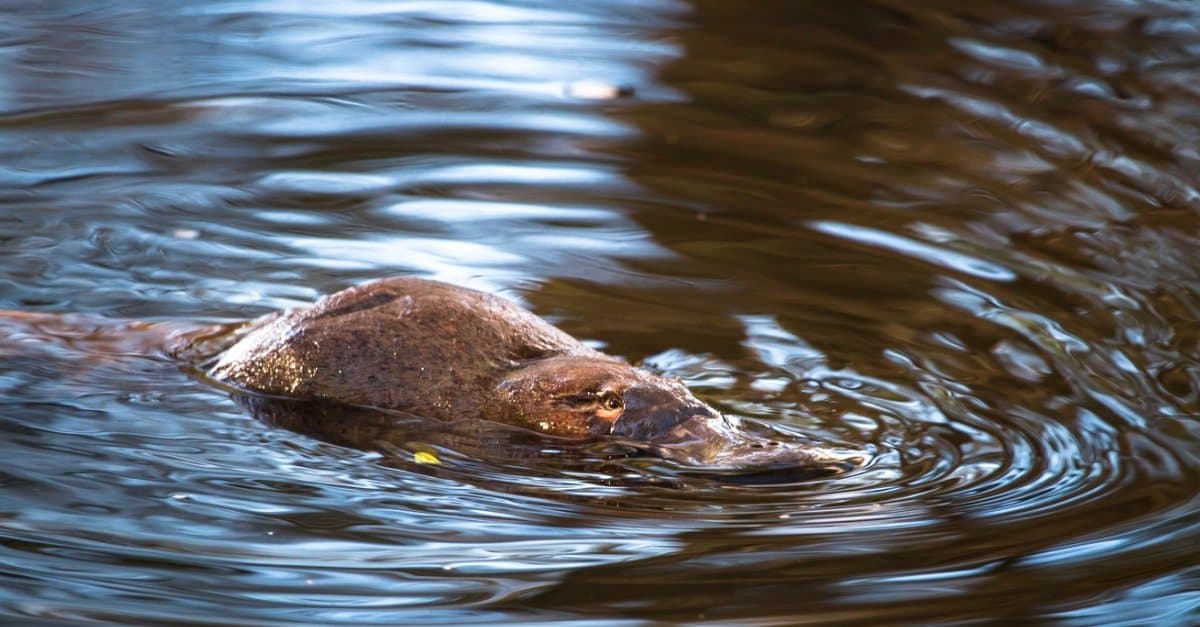

The platypus is one of the most mysterious members of the animal world. Even in the 21st century, there is still so much we don’t know about them. This “odd duck” was once so mysterious that it was thought to be a hoax. To this day, it is still one of the most utterly fascinating animals ever discovered! Everything about them is unique, especially when considering what this incredible mammal eats. So, let’s find out what is on the menu for this Australian native.
What Do Platypuses Eat?
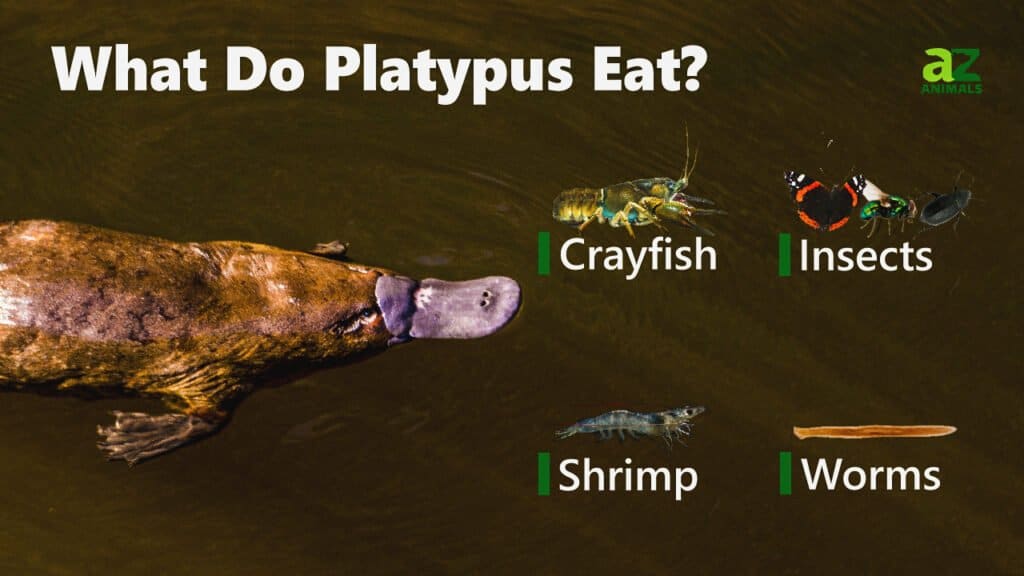
The platypus is carnivorous. Its prey are invertebrates such as the annelid worms and insect larvae, as well as freshwater shrimp and yabbies, a crustacean that resembles crayfish or lobster. This species also preys upon adult insects and freshwater shrimp, and anecdotal evidence suggests that it may also prey upon the occasional small frog. In captivity, the platypus is fed a primary diet of freshwater yabbies. Surprisingly, the platypus has no teeth, and instead, has two grinding plates and ridges on the upper and lower jaw that they use to “chew” their food.
How Much Food Do Platypuses Eat?
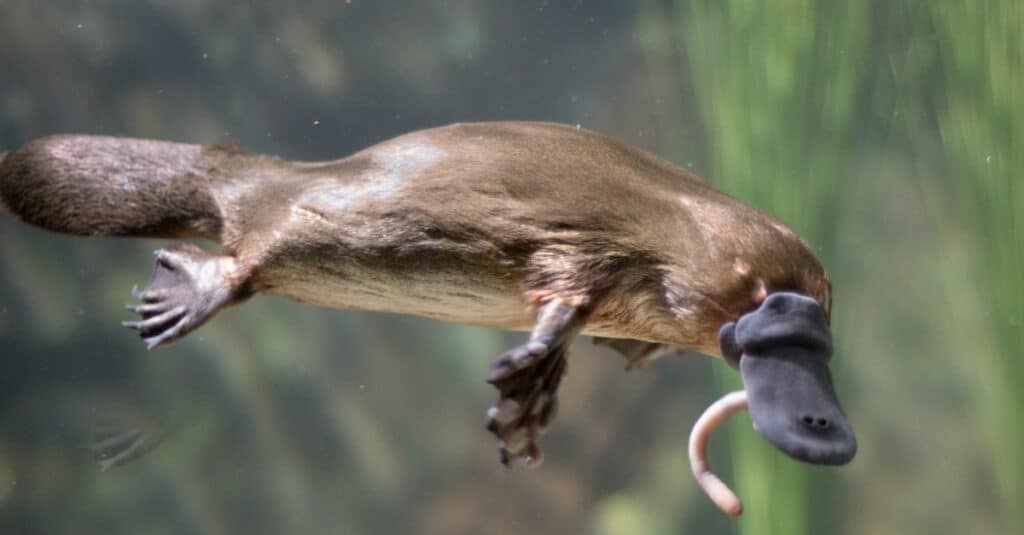
The platypus can eat up to one pound of food a day to stay healthy.
©iStock.com/JohnCarnemolla
The platypus typically eats up to 20% of its body weight each day, which is usually between 0.5 to 1 pound, depending on the individual’s size. This species eats while it hunts as well, storing smaller prey in its cheek pouches and consuming them around once an hour while seeking more food, while larger prey like the freshwater yabby is consumed right away.
What Does a Baby Platypus Eat?
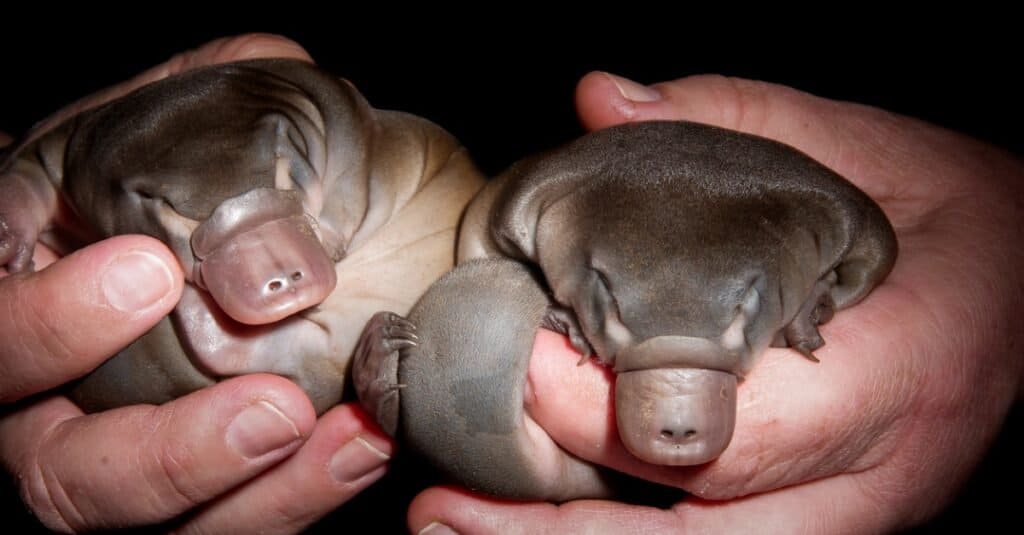
Baby platypuses are called puggles, and they need to feed on their mother’s milk until they can hunt on their own.
©iStock.com/IainStych
Though platypuses have a bird-like bill and lay eggs rather than give birth to live young, the platypus is a mammal. In fact, when debating whether the platypus was a member of the bird or mammal classifications, they were classified as mammals because their young nursed from two mammary patches located on the mother’s belly, often called mammary hairs because they are almost indistinguishable from the female’s fur.
Platypus young are called puggles, and the female platypus lays between one and three eggs at a time. While much is still unknown about how the platypus raises their young in the wild, researchers have learned quite a bit through select captive breeding programs.
The platypus eggs hatch after about ten days, after which the puggles nurse for up to five months and do not leave the underground burrow, and once they reach 80% of their adult body weight, the mother begins the weaning process and will leave the burrow to hunt. At this point, the puggles leave the burrow and will start learning how to hunt. The platypus reaches adult status after one year.
Does the Platypus Diet Change by Season?
The platypus consumes the same diet year-round, and their diet is not impacted by the season. This species can only be found in certain locations in Australia. While the temperature does change season to season, the platypus is highly adaptable to temperature changes. They rely on stored fat, and their dense fur is both warm and waterproof.
The platypus stores significant fat reserves in its tail, which helps it survive periods when food is scarce. This is especially true in the colder winter months when food sources may be hard to find.
Some researchers believe that these stored fat reserves may be an evolutionary trait. While the platypus does not hibernate, it can enter short periods of torpor to conserve energy.
What Animals Compete With The Platypus For Food?
Since the platypus diet consists of insect larvae, its main competitor for food is other aquatic carnivores. Their competition includes larger insects, fish, reptiles, and amphibians. While the platypus is a solitary species, multiple platypuses may share the same habitat. This causes the platypus to compete with its own species for food as well.
The platypus has quite a bit of competition for its favorite dish, the freshwater yabby. Natural competition for yabby is larger fish species like callops and the Murray cod. Water rats, tortoises, cormorants, white ibis, and other yabbies are all competitors for the platypus’ preferred food. This also includes humans, who enjoy the yabby, in the same manner we do lobsters and crayfish.
How Does The Platypus Hunt For Food?
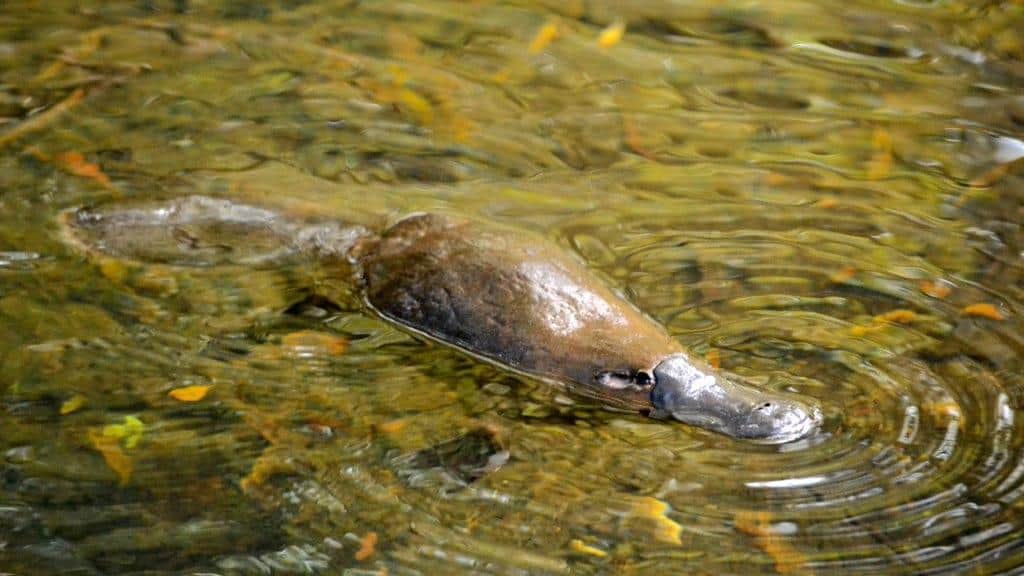
The platypus hunts up to 12 hours a day.
©Klaus / Flickr – Original
The platypus is nocturnal and is most active at dawn or dusk. It hunts for food for up to 12 hours a day, storing prey in its cheeks. It can continue to eat while actively hunting. Using receptors in its bill, the platypus can track the movement of prey by finding electrical currents in the water. This allows the platypus to hunt for food even though the platypus swims with its eyes, ears, and nose closed.
When the platypus detects prey, they use their bill and long nails to sort through gravel and vegetation. Additionally, the platypus’ bill is separate from its mouth. This bill allows it to take in prey and stay underwater for up to ten minutes at a time. Smaller prey, like insect larvae, are stored in the cheeks. Most larger prey, like the freshwater yabby, is often consumed right away.
Does the Platypus Have Any Predators?
Due to the platypus’ solitary lifestyle and low profile, most of what we know about their natural predators is anecdotal. Studies of the species have shown that the platypus is an efficient hunter. However, it is preyed upon by other carnivores due to its small size.
The platypus is remarkably suited to life in and near the water. But the species is awkward and extremely slow when on land. These factors make the platypus highly susceptible to predators. This is why this animal is rarely seen anywhere that is not in or near their preferred habitat.
The species has a few advantages that may assist them in avoiding predators. The platypus is nocturnal, spending the daylight hours within one or more underground burrows. These burrows are secluded with entrances set slightly higher than the water’s edge. The entrances are often obscured from view by vegetation or tree branches. This conceals the entrance and helps them avoid predators during resting periods or while nursing young.
The main predators of the platypus are believed to be other mammals like wild dogs, dingos, and wild cats. Tasmanian devils, birds of prey such as hawks and eagles, also prey on the platypus. Additionally, reptiles like snakes, crocodiles, and monitor lizards are also dangerous.
The platypus is also exposed to several ectoparasites, including the tick species Ixodes ornithothynchi. These parasites carry an amphibian fungal infection that primarily affects the Tasmanian platypus. These ticks are usually found around the hind limbs. They are also found in smaller numbers on the front limbs or scattered throughout the fur. This fungal infection results in painful skin ulcers and can cause death if the infection spreads to the animal’s lungs.
Is the Platypus Dangerous to Humans?
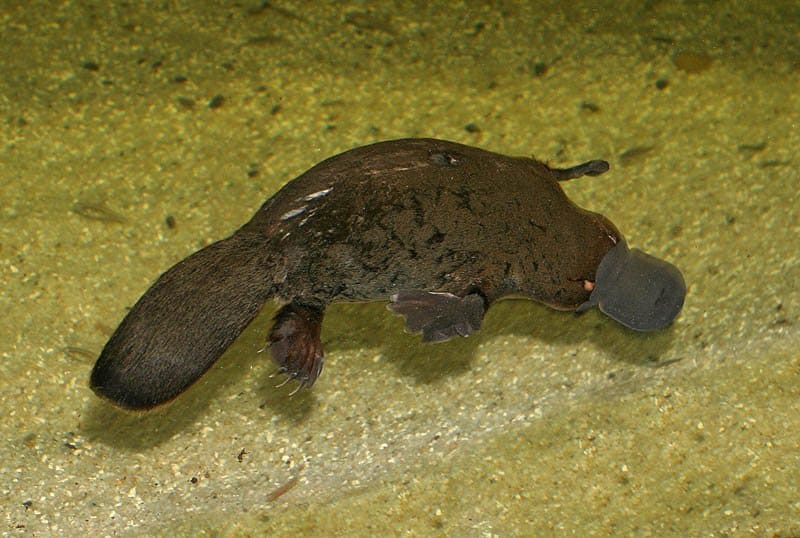
The platypus has long, sharp nails, and males also have venomous spurs on their hind legs. Messing with a platypus can end in injury and should be avoided.
©Stefan Kraft / Creative Commons – Original
The platypus is a small animal, but they can defend themselves if threatened, with males capable of delivering a painful sting with their venomous spurs. They have long, very sharp nails on each foot. The male of the species has spurs that look like small teeth. These spurs are on the ankles of their rear legs and contain a powerful venom.
Though the venom is not lethal to humans, the pain is excruciating. Acute swelling occurs, both around the wound site and throughout the entire affected limb, in many cases. In many documented case histories, individuals struck by a platypus spur often experience hyperalgesia. This condition causes a heightened sensitivity to pain that can persist for anywhere from a few days to several months.
As with all wild animals, the platypus should be observed at a distance. Experts advise that noninterference is in the best interest of both animals and humans. This is especially true for venomous species like the platypus. The platypus is also extremely sensitive to changes in its environment, and should not be disturbed.
Is the Platypus Endangered?
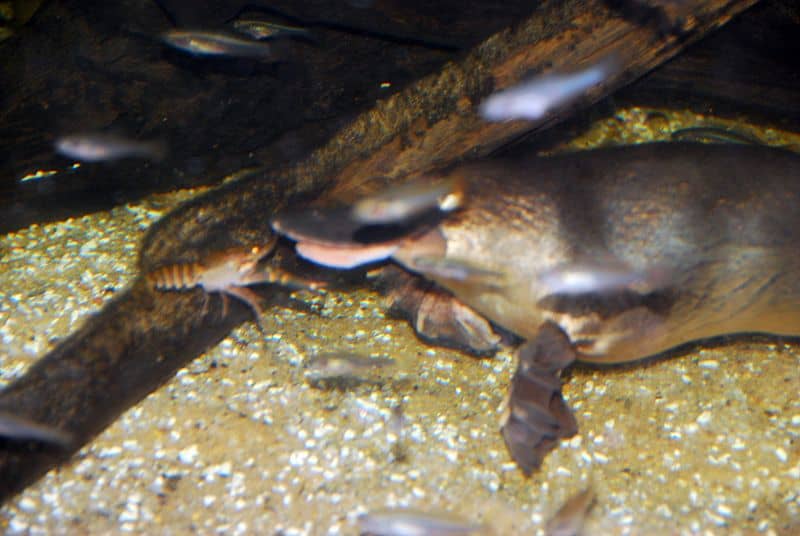
Although not endangered, the platypus population is declining.
©robertpaulyoung / Creative Commons – Original
Throughout the 18th century, European immigrants began to settle on Australia’s eastern coast. These settlements caused changes to the freshwater conditions, pollution, and a devastating loss of habitat. These factors have negatively impacted the platypus in certain locations.
Until the 1900s, the platypus was hunted extensively for their pelts. Their fur was highly sought after due to its high density and silk texture. However, in the year 1900, the practice of hunting the species was banned. The species began to increase in number again until the late 20th century. This is when factors such as pollution and other habitat changes caused their numbers to decline again.
Though the platypus was once classified as a species of Least Concern, its numbers have dwindled. Today, there are a mere 300,000 left in the wild. Their classification was changed to Near Threatened by the IUCN in 2016. Captive breeding programs have been established in specific areas to increase their numbers.