
Quick Take
- Beavers are the world’s second-largest rodents.
- Beavers eat a high-fiber diet of woody plant matter.
- Beaver poop is easy to recognize thanks to the beaver’s unique diet.
There are two extant species of beavers in the world: the Eurasian beaver (Castor fiber), native to Europe and Asia, and the North American beaver (Castor canadensis) found throughout Canada, the United States, and parts of Northern Mexico. Both species are large, semi-aquatic rodents that build extensive dams of wood, mud, and vegetation, which create wetland habitats, along with dome-shaped lodges used for shelter and protection from predators. Beavers are strict herbivores that consume bark, leaves, twigs, and aquatic plants. Because they eat woody plants, beaver feces are remarkably fibrous, resembling small, compressed balls of sawdust. Continue reading to learn everything you’ve ever wanted to know about beaver poop.
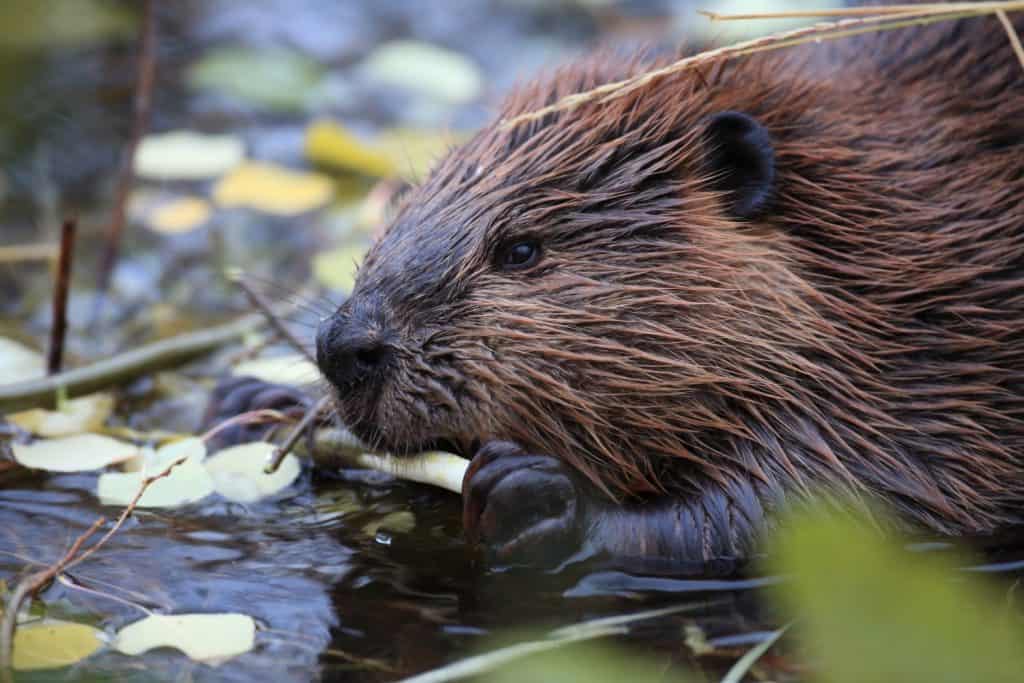
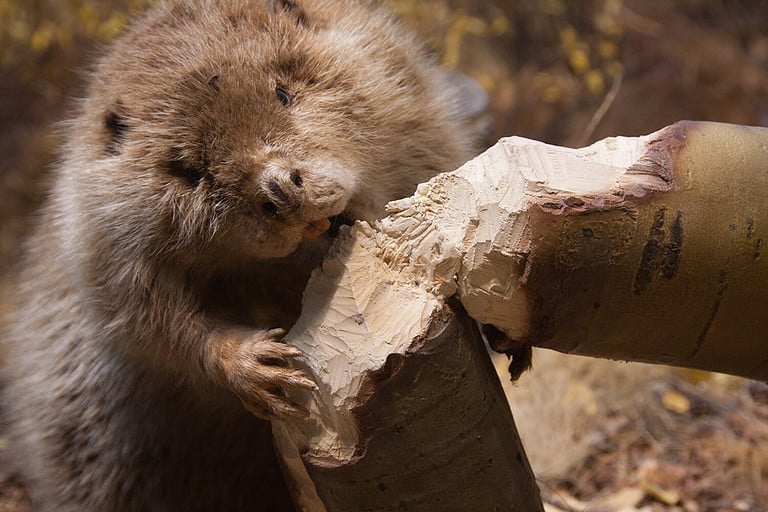
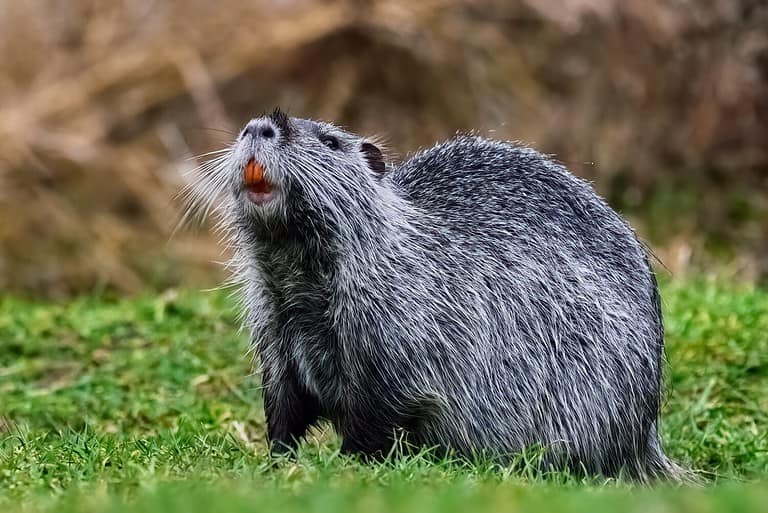
Beavers are the second-largest rodents, only smaller than capybaras.
©Frank Fichtmueller/Shutterstock.com
What Does Beaver Poop Look Like?
Due to their diet of woody plants and bark, beaver scat is easy to recognize. Their droppings look like compressed sawdust, wood chips, and plant fibers. Their feces are typically round or cylindrical, approximately 1.5 to 2.5 inches long and 0.75 to 1 inch in diameter.
Beaver scat can be light brown, tan, or green when fresh, often turning darker as it dries. Because beavers often defecate directly into the water, their scat is frequently seen floating in the ponds near their dams or lodges. When beavers defecate on land, it is almost always near water.
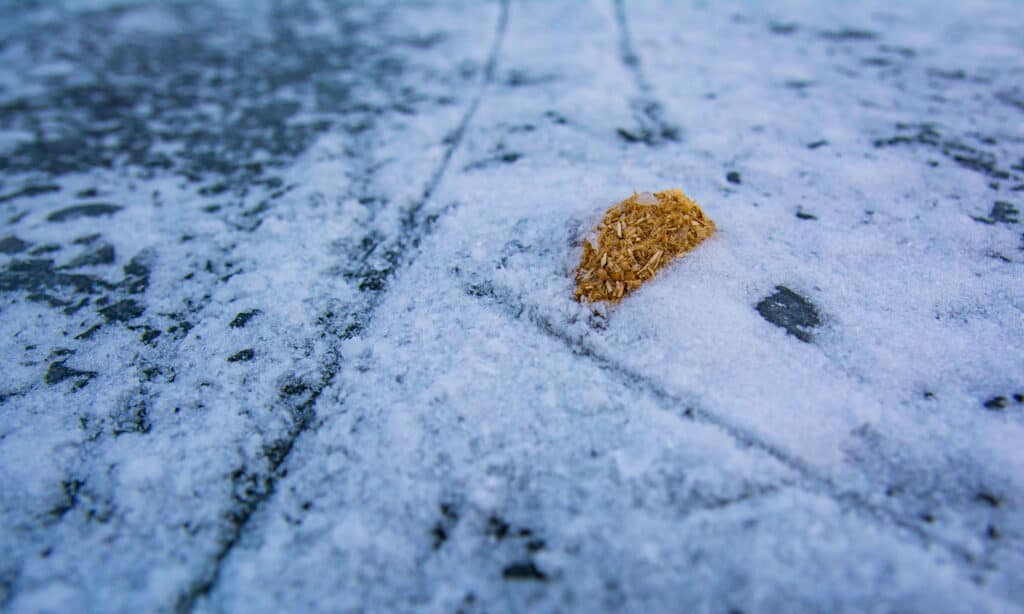
Beaver scat looks like a mix of sawdust and wood chips because that is essentially what it is.
©Aleksandra Proshina/Shutterstock.com
How Do Beavers Poop?
Beaver feces are expelled from the cloaca, a single multipurpose opening used for defecation, urination, and reproduction. While they do have an anal opening that leads into this cloacal chamber, they do not have a separate, external anus like most other mammals. This is an unusual trait and is believed to have evolved secondarily to help reduce the risk of infection while swimming in dirty water.
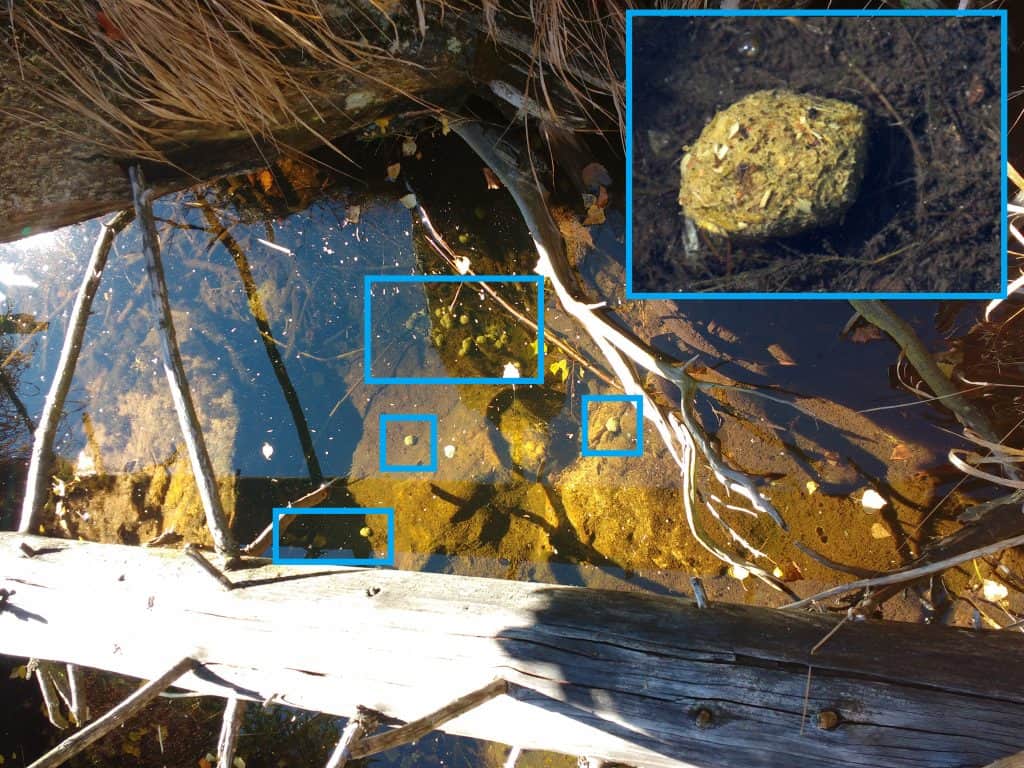
Beavers typically defecate in water, and because of the exceptionally fibrous nature of their feces, they float.
Beavers are not latrine animals, but they do have specific, localized defecation habits. They frequently defecate in the same areas of water, where the fibrous, sawdust-like pellets can easily disintegrate and disappear, helping to avoid fouling their living and feeding areas.
Do Beavers Eat Their Poop?
Beavers are coprophagous animals, which means they will eat their own feces. They do this to extract maximum nutrition from the high-fiber, woody feces pellets. Because beavers eat hard-to-digest plant matter like wood and bark, their food must pass through their digestive system more than once to be fully broken down and for nutrients to be absorbed. The re-ingested feces are rich in protein, bacteria, and vitamins, which are crucial to their survival and growth.
Is Beaver Poop Dangerous?
Handling or coming in contact with beaver poop can be dangerous to humans. Beaver feces present a significant health risk by transmitting the parasite Giardia duodenalis through water contamination. These pathogens cause severe gastrointestinal distress, including diarrhea, cramps, and dehydration. Beaver feces can also carry Cryptosporidium, a parasite that causes similar symptoms and is highly resistant to chlorine, posing a risk to municipal water supplies. Beavers can introduce these pathogens into lakes, ponds, and streams. Humans get infected by swallowing this untreated water while swimming, drinking from streams, or using contaminated water for food preparation. Pathogens from contaminated beaver feces can persist in water sources for months, increasing the risk of infection.