
Quick Take
- A husky that's perfectly gentle with your cat can still treat the neighbor's cat as prey, and the reason why reveals a dangerous assumption most owners make. Understand the prey drive →
- There's one critical mistake people make when introducing a husky and cat that almost guarantees triggering the prey drive. See the safe introduction steps →
- Most owners miss the warning signs that precede a husky attack on a cat, and those signs are not what you would expect. Spot the warning signs →
- Adopting a cat that's been around dogs actually matters, though probably not for the reason you think. See why prior experience matters →
Do you already have a husky or a cat, and want to add the other to your family? You might wonder, do huskies get along with cats, and can these two animals coexist in your household safely? In this article, we’ll discuss whether huskies and cats can get along and provide some tips to make keeping these pets together more successful.
Huskies Have Strong Prey Drives
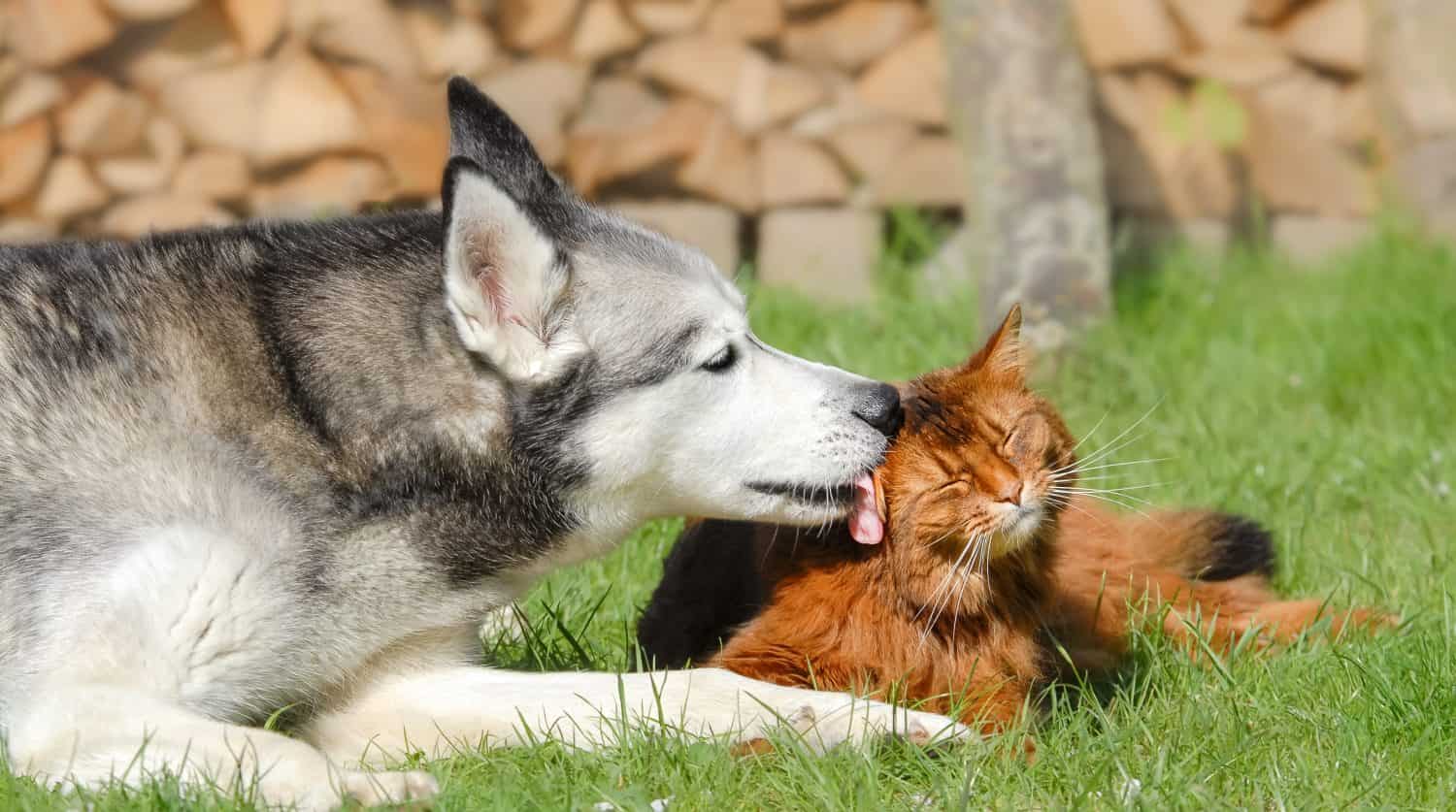
As a breed, huskies have high prey drives. This stems from their history as sled dogs in the Arctic, when they often had to hunt for food. These instincts can make them unsafe around cats and other small animals. While many people keep both safely, every animal has its own personality, so there is no guarantee. It’s a risk to leave your husky and cat together unsupervised. Some huskies do befriend cats, but this is viewed as the exception rather than the rule.
Keep in mind that just because a husky gets along with one cat, or even several, doesn’t mean they’ll get along with all cats. A dog raised with indoor cats may chase cats outdoors, or they may see strange cats as prey even while seeing known cats as friends. A husky’s size is another thing to consider, as they can hurt cats even when trying to play.

Some huskies can never live with cats safely due to their strong prey drives.
©Konstantin Zaykov/Shutterstock.com
Husky and Cat Adoption Tips
There are several things to consider when adopting either a husky or a cat, depending on which animal you are adding to the household. First, consider raising the animals together if possible. Owners who have both huskies and cats have noted that they can coexist if a husky is raised alongside the cat from a young age. However, supervision and escape routes for the cat are essential.
You may want to consider adopting an adult husky who’s been around cats previously. Adopting a husky from a foster carer who also has cats is a good bet. Or if you’re looking for a cat, adopt a cat who’s been raised around dogs. Though this isn’t as crucial, adopting a cat experienced with dogs makes for a more confident cat who is less likely to run from the dog, triggering that prey drive. You might also want to try fostering before committing to an adoption.
Tips for Introducing a Husky and a Cat
Following a structured introduction process gives your pets the best chance of developing a positive relationship. The following tips can help you keep both animals safe:
- Introduce the animals slowly. Putting two animals together immediately is always risky. Gradual and supervised introductions are vital. Start with scent swapping while they stay in different parts of the house. Do not let them see one another or interact with one another while they get used to each other’s scent.
- Keep your husky on a leash until you trust it around the cat. This way, no chasing can happen and the animals can be easily separated should something go wrong.
- Separate them when they are unattended. When the animals are first becoming acquainted, never leave them unattended when they are together. Even when your dog and cat are used to one another, it may be best to separate them when you’re not home to reduce risk.
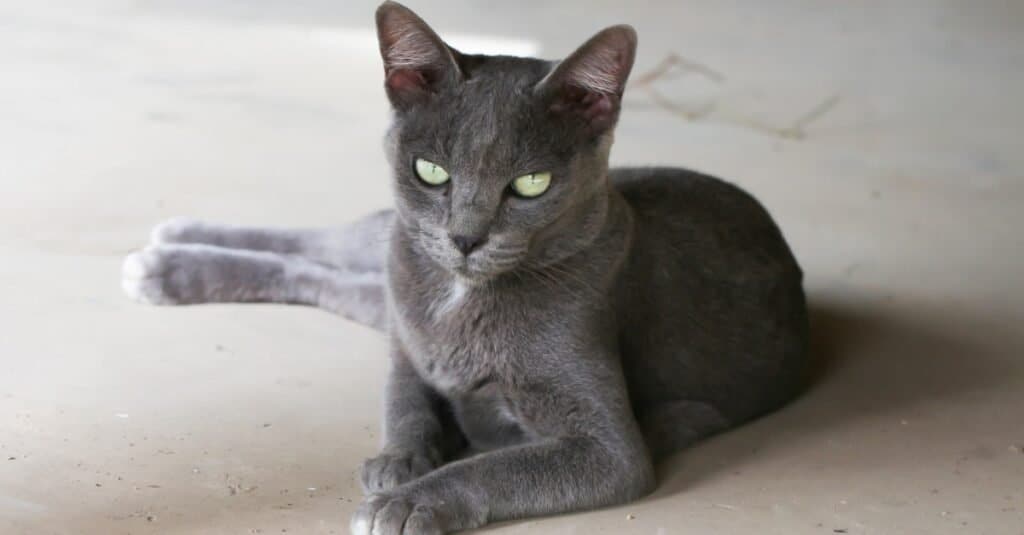
Narrowed eyes with dilated pupils and an unblinking stare can indicate aggression.
©Naviya/Shutterstock.com
Learn Canine and Feline Body Language
Learn canine and feline body language well. Most people don’t know their pets’ body language well enough, and this can lead to problems. For instance, in incidents where the family insists their dog snapped and hurt the cat out of nowhere, there are almost always warning signs that were missed.
In dogs, watch for body language such as yawning, lip-licking, showing the whites of the eyes (sometimes called “whale eye”), or turning their head or body away. Your husky may also try to withdraw from the situation by hiding or going into its crate. If this happens, leave your dog in peace, and keep the cat, and the kids, away.
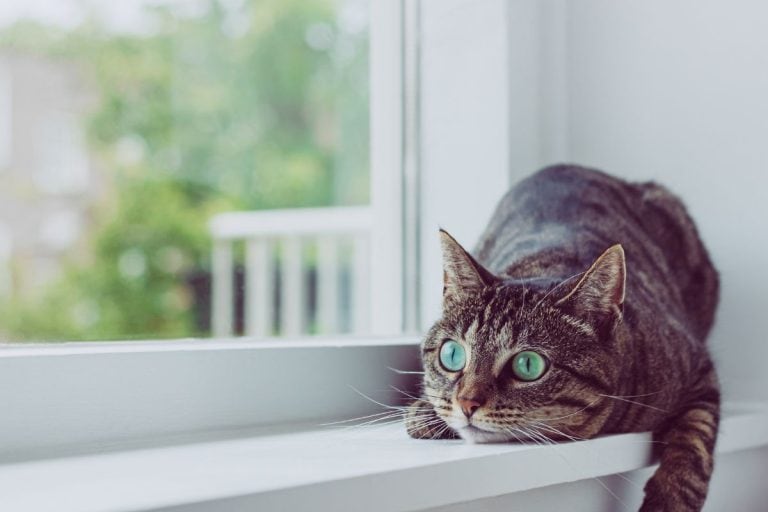
Cats may be smaller, but their teeth and claws can still hurt your dog. This is especially true if you have an adult cat and a puppy. Subtle signs that your cat is becoming agitated include a rapidly thumping tail, flattened ears, narrowed eyes with dilated pupils, and an unblinking stare. More aggressive signals include puffed-up fur, an arched back, and exposed teeth. Cats are likely to hiss or growl as well. Your cat may also try to withdraw to a high place or hide under furniture. If you see these signs, let your cat have its space.