


















Quick Take
- This breed's biggest hidden health risk has nothing to do with its body. It starts with something most owners never think to check. See the hidden health risks →
- Miniature bull terriers are marketed as family dogs, but there's a specific household situation where experts say they don't belong. Check household compatibility →
- Their energy is their greatest asset, but it is also the exact reason things can go wrong fast without one critical step. Why training is critical →
- Grooming this breed is almost nothing like you'd expect from a terrier, and the real effort goes somewhere else entirely. Explore the grooming reality →
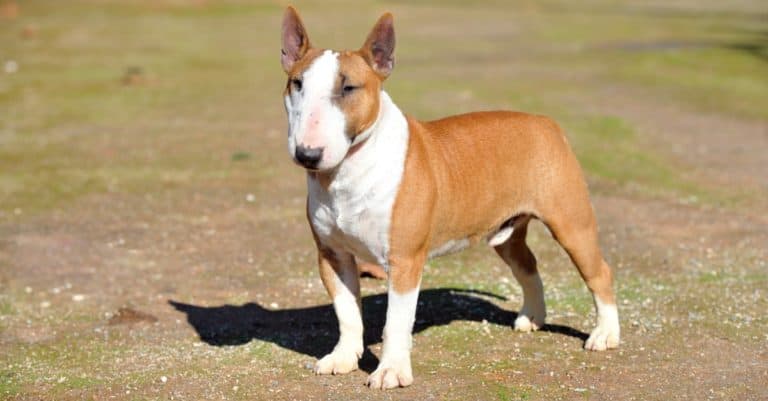
The miniature bull terrier is a friendly and active dog that stands between 10 and 14 inches tall as an adult. This breed likes to get plenty of exercise, but there’s always a chance that their playtime can become a little rambunctious. They have shiny coats, and they are rather easy to groom. Though they come with a few health concerns, they are still a great companion for owners who like to stay active.
Though the miniature bull terrier is a specialty breed, there are many rescues from which they can be adopted.

3 Pros and Cons of Owning a Miniature Bull Terrier
Keeping pets always comes with some caveats. This set of pros and cons could help you decide if it is the right animal for you.
| Pros | Cons |
|---|---|
| Beautiful coat: These miniature dogs come with beautiful and shiny coats, which can be their main point of attraction. | Prone to health problems: These dogs do suffer from a host of health problems that could be a problem for the owner in the long run. You should ask the breeders for the parents’ history to know about the health concerns in your miniature bull terriers. |
| Active: If you are looking for an active, energy-filled dog, this would be the right choice to make. | Can get aggressive: Since these dogs are continually active, they can sometimes become aggressive while playing. |
| Happy-go-lucky: These dogs are extremely happy-go-lucky and would instantly be able to lift your mood. | Unsafe around small children: While playing, miniature bull terriers can get rough and aggressive, which is why they are not recommended for homes with small children. |
Size and Weight
As the name suggests, these dogs are tiny or miniature in size. They are only 10 to 14 inches in height. They weigh in proportion to their height, averaging about 18 to 33 lbs (8.2 to 15 kg).
Common Health Issues
Before you adopt a miniature bull terrier from a rescue shelter, make sure you have adequate resources to take care of it and are equipped enough to handle all the health issues it might have. When purchasing this dog from breeders instead, it is much easier to understand the genetic risks of the pup. Miniature bull terrier dogs are prone to multiple health conditions.
Miniature bull terriers have a genetic predisposition to deafness, but that’s hardly their only problem with their ears. They can also deal with infections, which is why cleaning the ears is so important.
Some miniature bull terriers can develop lens luxation or entropion. Lens luxation is a painful inherited eye condition in which the zonular fibers that suspend the lens from the ciliary body rupture or degenerate, causing the lens to dislocate from its normal position. Entropion causes the eyelashes and hairs on the eyelid to rub against the cornea as the eyelid rolls inward. It causes incredible irritation and pain.
Temperament
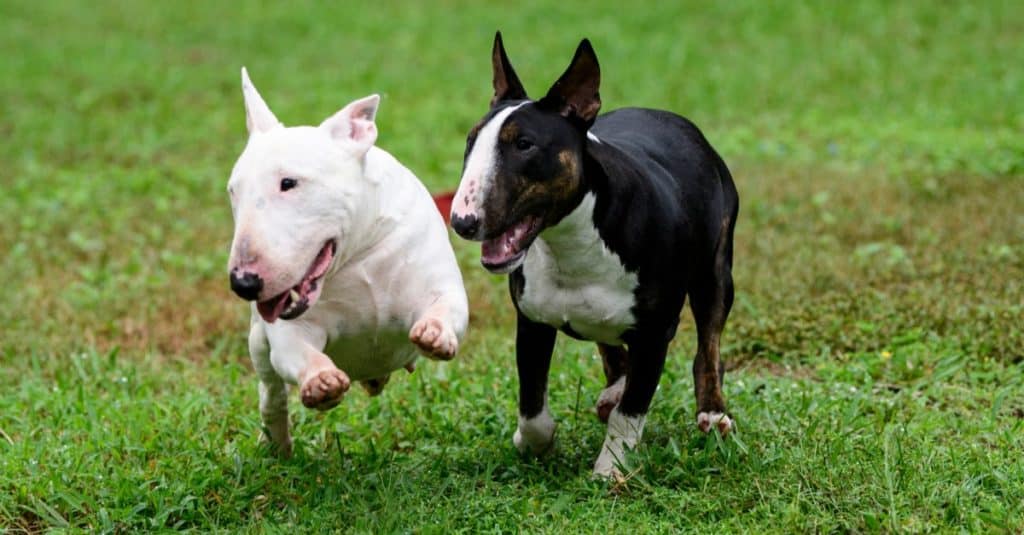
Miniature bull terriers are active, lively and playful and will keep the whole family busy.
©GoDog Photo/Shutterstock.com
Considering the personality of the miniature bull terrier, you can almost guarantee that nothing will be boring. Their active and playful demeanor keeps them (and you) quite busy. They are always looking for something to do.
Their energy must be directed to something productive. If it isn’t, they could create a huge mess. Luckily, the right redirection can be entertaining for everyone. These dogs love to be around their families, playing and engaging with them as much as possible.
These dogs want to be up and about on their feet, and they’ll use their quick movements to protect their family if threatened. Since they can be wary of others, giving them social interaction with other dogs and people prevents them from becoming aggressive with people who mean no harm. While that might not stop them from chasing other pets in the home, training them properly can prevent major behavioral problems later on.
How to Take Care of a Miniature Bull Terrier
Before you buy or adopt a miniature bull terrier from a rescue shelter, make sure that you have the resources to take care of it and that you have the compatibility to make it a part of your family. here are a few things to keep in mind when considering the miniature bull terrier for your family.
The Best Dog Food
It is best to feed your miniature bull terrier high-quality dog food once daily, choosing a dry dog food that can keep their teeth healthy. Avoid overfeeding your miniature bull terrier to prevent excessive weight gain or vomiting. If you’ve chosen a dog from breeders, speak with them to determine if the dog is used to any particular diet as well.
Maintenance and Grooming
It is quite easy to groom a miniature bull terrier, even if you decide to do it at home. They don’t have any substantial odor to them, and their coat is naturally clean. Most people bathe their dog every few months, and you only need a mild shampoo. Keep the fur detangled and smooth with weekly brushing, using a bristle brush or a rubber mitt. To brighten the look of its coat, you can use coat conditioner.
Generally, only basic care is needed. Trim the nails and brush their teeth so that their dental hygiene remains intact. Clean out the ears of the miniature bull terrier to maintain the pH levels inside its ears.
Training
Training miniature bull terriers is essential. Otherwise, they can turn into dogs that blatantly ignore the owner, allowing their behavior to get out of control. Proper training can turn these dogs into civilized members of your family. Train these dogs as early as their puppy years to establish healthy habits. Consistency is the key with them.
Exercise
Your miniature bull terrier requires daily exercise. It can be in the form of a walk, a short jog, and/or any kind of energetic game. Even though these dogs love being outside, their short coat makes outdoor living unsuitable for them year-round.
Puppies
You would need to take care of the miniature bull terrier puppies the same way you would take care of an adult one. Meals should be divided into smaller, more frequent portions to fit the small stomachs of puppies.
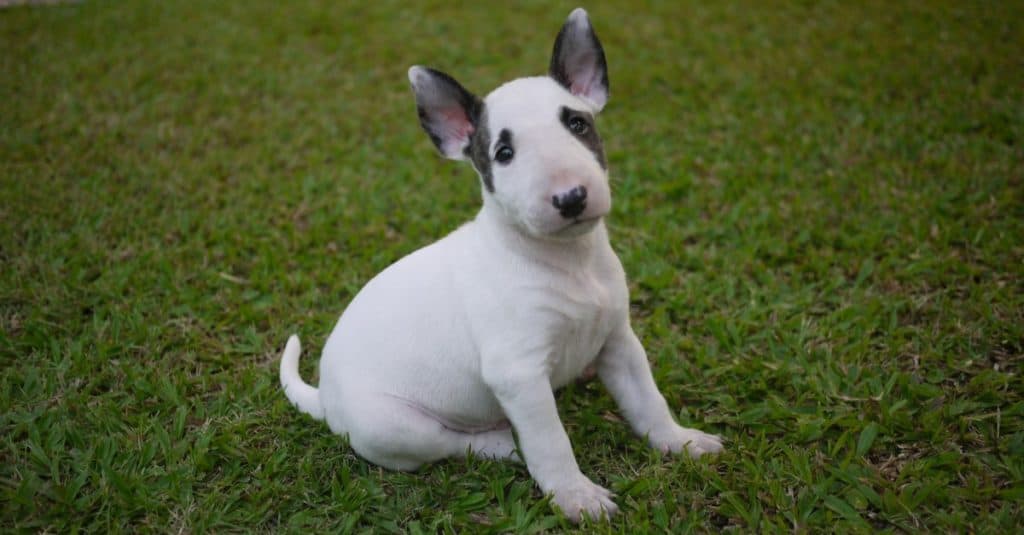
Puppies need early socialization and training to prevent problems later on.
©Nantasit Rungrattawatchai/Shutterstock.com
Miniature Bull Terriers and Children
While miniature bull terriers (like bull terriers) are good with children, they can get very rough while playing. Some experts say that they shouldn’t be brought into a home that has small children, but supervision during playtime is ideal for any new pet.
This breed can be a great playmate with plenty of energy to tire everyone out.
Dogs Similar to Miniature Bull Terriers
As fun and loving as the miniature bull terrier is, the breed isn’t the right match for every family. Here are a few similar breeds that may work better for your family.
- Bull terriers: These dogs are the same as miniature bull terriers except that they are larger.
- Kerry Blue Terrier: These dogs are known to have incredibly beautiful coats. However, they are pretty rowdy when they are young and are not kind towards other animals.
- Australian terrier: These dogs are known to be healthy and friendly with other pets. However, they might run after smaller pets in an attempt to catch them.
Miniature Bull Terrier Pictures
View all of our Miniature Bull Terrier pictures in the gallery.

Pointofviewtime/Shutterstock.com
Sources
- Wag Walking / Accessed March 31, 2021
- Dogtime / Accessed March 31, 2021
- Inside Dogs World / Accessed March 31, 2021
- Vetstreet / Accessed March 31, 2021
- American Kennel Club / Accessed March 31, 2021