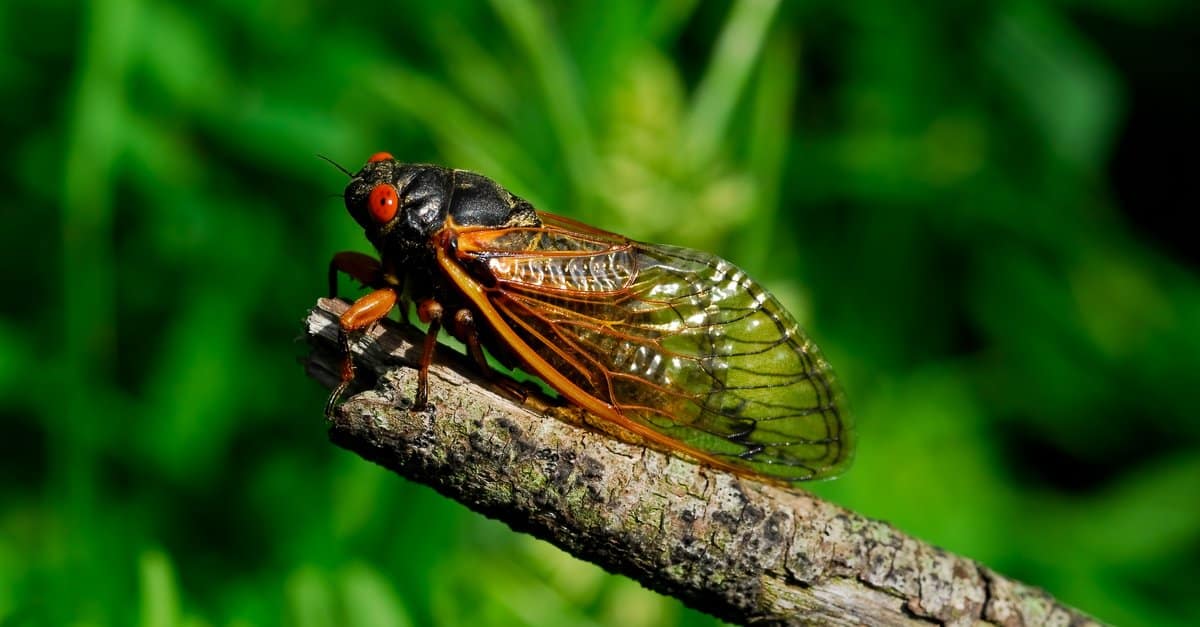

One of the most interesting bugs in the insect world, cicadas have a fascinating lifespan and lifecycle. But how long do cicadas live, and how does this lifespan differ from bugs that are similar to it, such as locusts?
There are a lot of questions to answer about this unique insect. Their lifecycles are studied around the world, and there are even broods that are observed for science, such as Brood XIV, which is emerging in 2025.
Let’s get started and learn more about these bugs now.
How Long Do Cicadas Live?
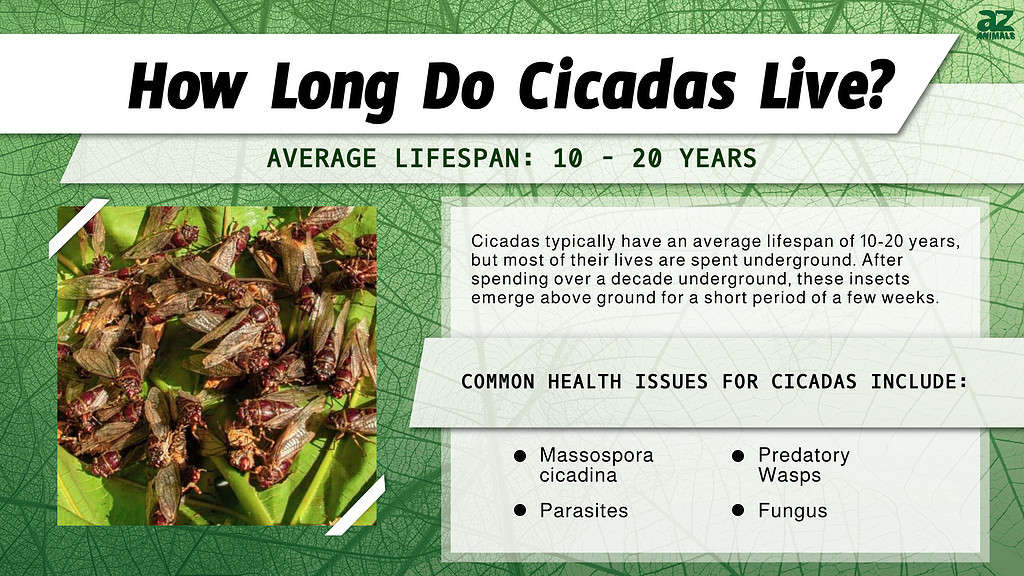
Some types of cicadas live an average of 10 to 20 years in total, with very little of their life spent above ground. After spending sometimes more than a decade underground, some cicadas live only a few weeks above ground. While this amount of time differs from species to species of cicada, most cicadas spend the majority of their lives beneath the earth’s surface.
There are around 3,000 species of cicadas. These different species have varying lifespans and spend different amounts of time above ground. However, some cicadas have a lifespan of well over ten years.
Some cicadas, known as periodical cicadas, only emerge every 17 years, spending most of their lives underground as nymphs before emerging as adults for a few weeks. They enjoy long and full life cycles beneath the earth’s surface, laying eggs and preparing to emerge whenever the time is right.
While 17 years seems like a long time, this is only the lifespan of one specific type of cicada. Many appear yearly, have a much shorter lifespan, and live their lives above ground for only a summer season. While this life may be brief, it is an exciting time, especially hearing so many cicadas calling on a hot summer night.
Speaking of time, let’s discuss the average cicada life cycle now, and the time that they spend both above and below ground.
The Average Cicada Life Cycle
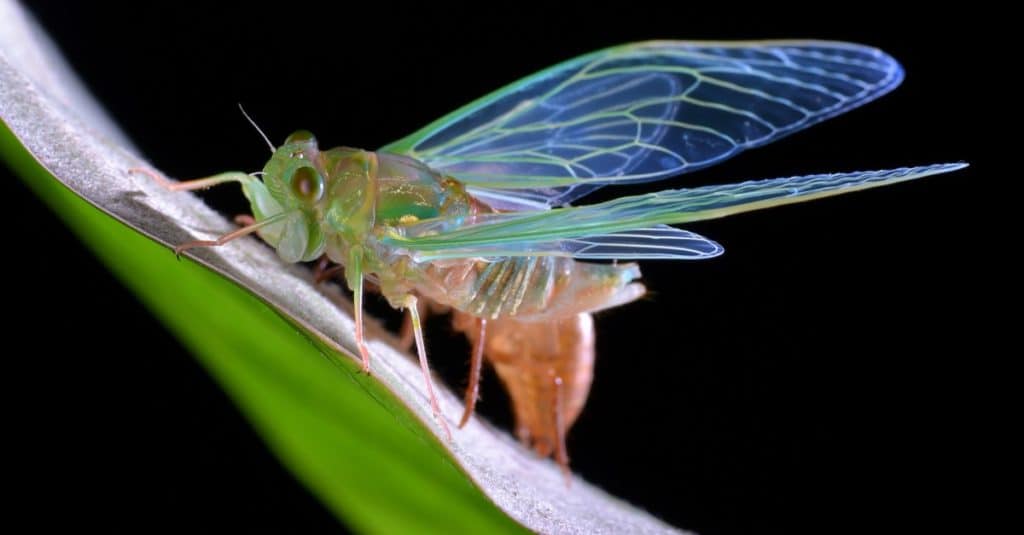
The lifespan of a cicada depends on the species.
©SIMON SHIM/Shutterstock.com
Cicadas are unique in many aspects. Cicadas lay their eggs in trees and branches before they hatch. There is much more to learn about this insect. Let’s dive in and learn more about this bug now.
Eggs
When cicada eggs hatch, they immediately seek life below the surface. They will have been incubating for roughly seven to 10 weeks, and they instinctively seek food below the ground. Their bodies are equipped with mouths that suck the liquid from plant roots and stems.
Depending on the species or variety of cicada, a mother cicada will lay roughly 500 eggs. They tend to spread the eggs out to avoid crowding. Male cicadas often live a much shorter life than female cicadas, sometimes living as little as two weeks.
Young Cicadas, or Nymphs
Young cicadas have a long way to go before they become the bugs we know and love (or hate). They begin as very small white larvae, almost flea-like in appearance (but not in size). They thrive under the soil, no more than two feet underground.
As they age, cicadas eat plant matter and moisture. They do not have wings yet, as they need to undergo a transformative process before this. This transformation happens on trees and branches, which is why you will often see cicada shells attached to trees. Once they harden their outer skin and emerge, they have metamorphosed into an adult cicada.
Cicadas live the majority of their lives as nymphs. This may surprise you, as the winged adult cicada is the one we so often see and hear. However, the nymphs are able to survive beneath the surface much longer than adult cicadas can.
Adult Cicadas, or Imagoes
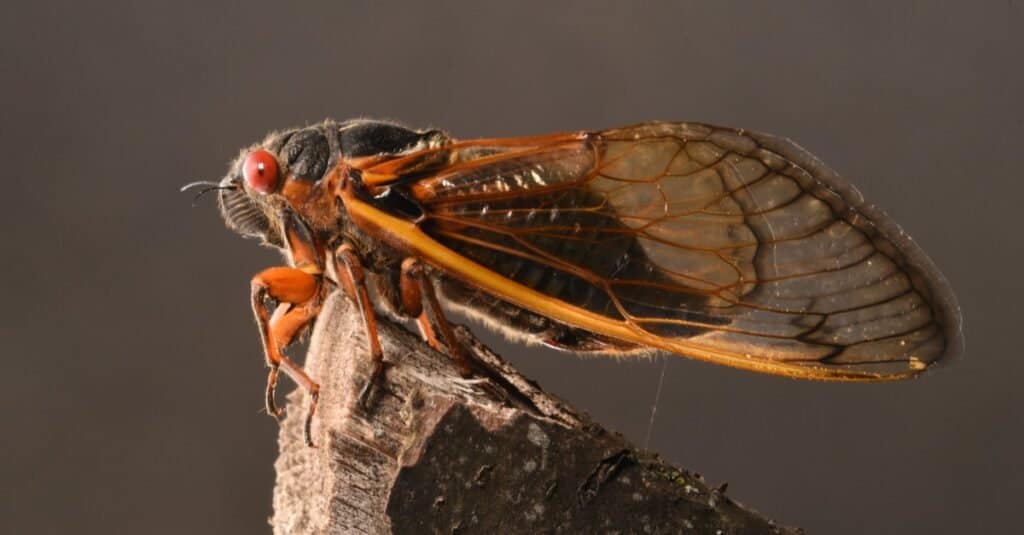
Depending on the species or variety of cicada, a mother cicada will lay roughly 500 eggs.
©1979825168/Shutterstock.com
Adult cicadas are fully formed after spending many years as nymphs. This will depend on the cicada species or variety, but some cicadas spend 10 to 15 years as nymphs before emerging from the earth’s soil to metamorphose into a fully formed adult.
Once grown, male cicadas have a very loud call that they use to attract mates. Adult cicadas only emerge from the earth once the soil has warmed up enough, signaling the beginning of summer and of their mating season.
Some cicadas are adults for only a few weeks, just enough time to lay more eggs and continue their species. Once the summer season ends, most adult cicadas will die. However, they live long lives underground before their transformative process.
How Does the Cicada Life Span Compare to Locusts?
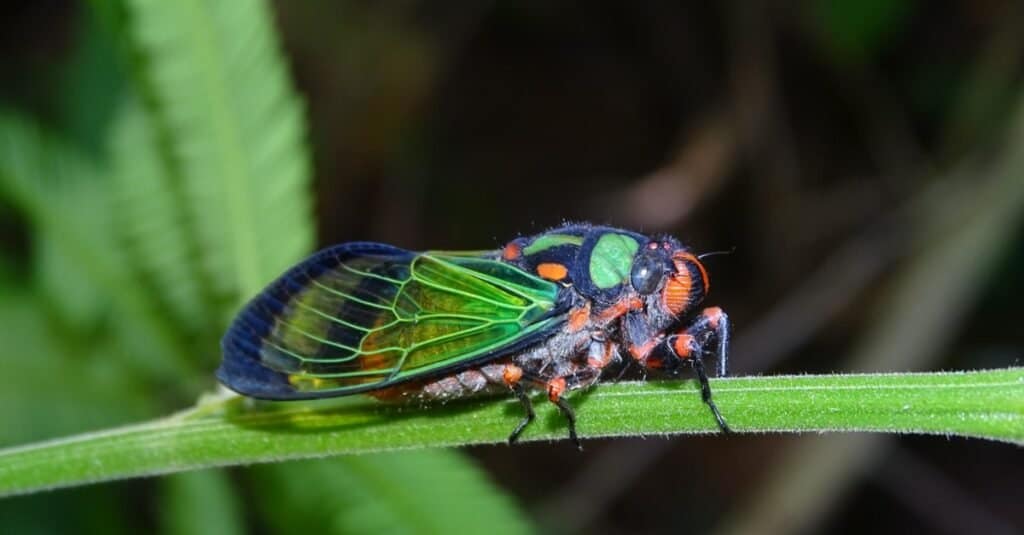
Some cicadas are only adults for a few weeks, enough time to lay more eggs and begin their species again.
©Marcos Cesar Campis/Shutterstock.com
Many people compare cicadas and locusts, given their ability to appear in large numbers and their many similarities in appearance. However, cicadas and locusts are very different insects, and their lifespans reflect that as well.
Cicadas are a unique insect capable of living for over a decade underground. That is unheard of for many insects, especially for bugs like locusts. While locusts may share some similarities to cicadas, their lifecycle is much shorter: they only live a matter of months!
Locusts are also more pesky than cicadas, given their ability to eat plant matter. While cicadas prefer to drink the liquid from plant roots and leaves, locusts consume entire plants.
This is why locusts are hated by many gardeners and farmers: their ability to feed in a large swarm leaves crops dead and eaten in a matter of minutes. Cicadas do not feed in this manner, preferring to eat below the surface.
While cicadas lay a decent number of eggs in their brief life, locusts lay even more. A female locust can lay between 50 and 200 eggs per batch and may lay several batches in her lifetime, totaling several hundred eggs, and they choose to keep their eggs on the ground rather than in the relative safety of the trees.