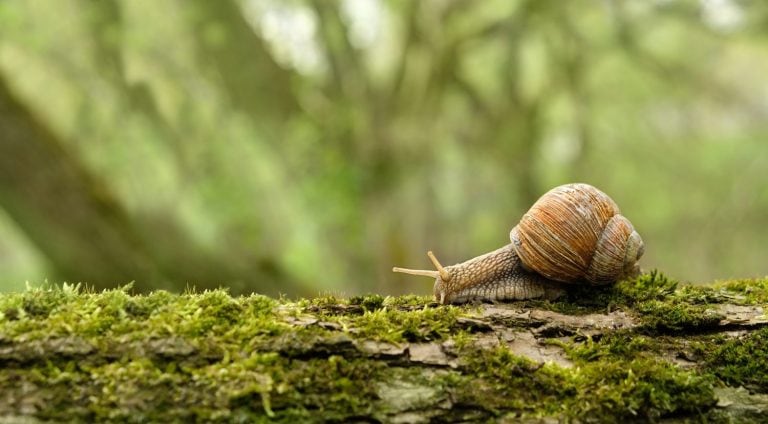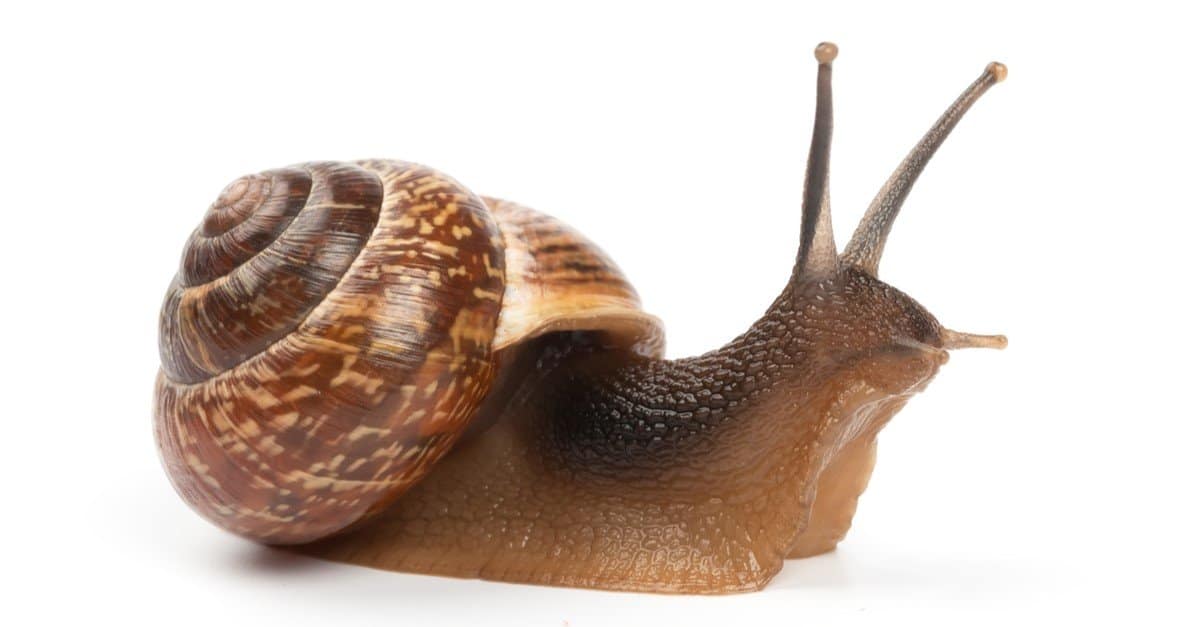

In this article, we delve into the world of snails. While many people assume that these tiny little guys are just slugs with shells, these creatures are actually quite fascinating. Snails come in a wide variety of sizes, shapes, and species, and they serve a key role in our environment. Not only do they act as natural fertilizers, but they also help maintain ecosystems for other animals. Their slime is also becoming increasingly popular in cosmetology, and it is used for both products and procedures. There are a lot more incredible facts about these slimy beauties. So, let’s learn more about these amazing creatures!
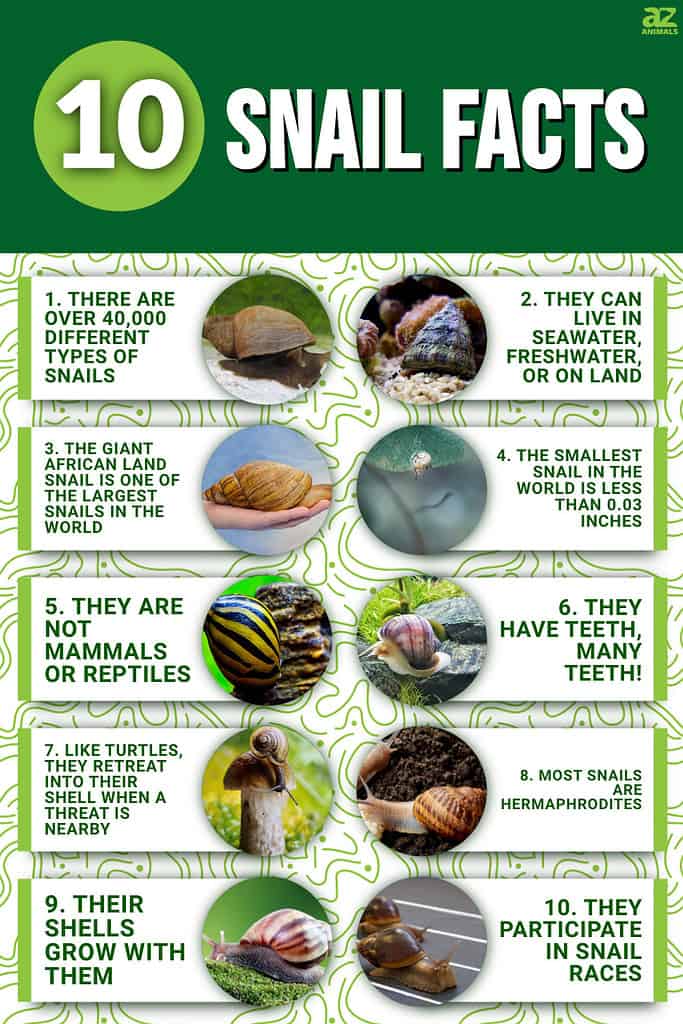
1. There Are Over 40,000 Different Types of Snails
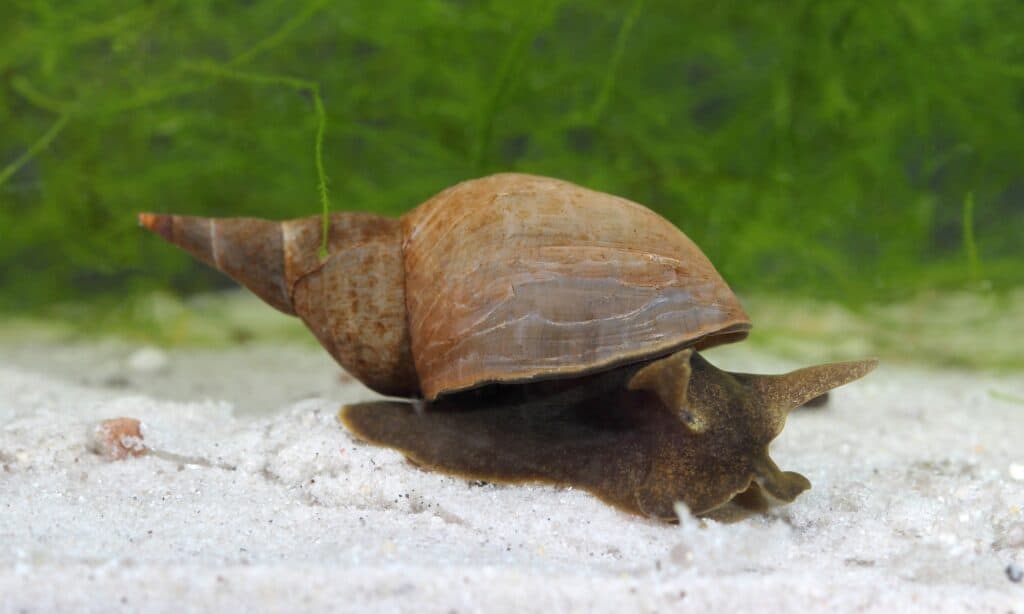
The pond snail is one of over 40,000 species of snails.
©iStock.com/VitalisG
Many people are familiar with garden snails. However, most of us don’t know that there are a ton of different snail species in the world. In fact, there are over 40,000 distinct species of snails. They vary in size, color, and even location. Snails can range anywhere from less than one inch in size to over 15 inches in size. They can also live in many different habitats, both on dry land and in water.
2. They Can Live in Seawater, Freshwater, or on Land
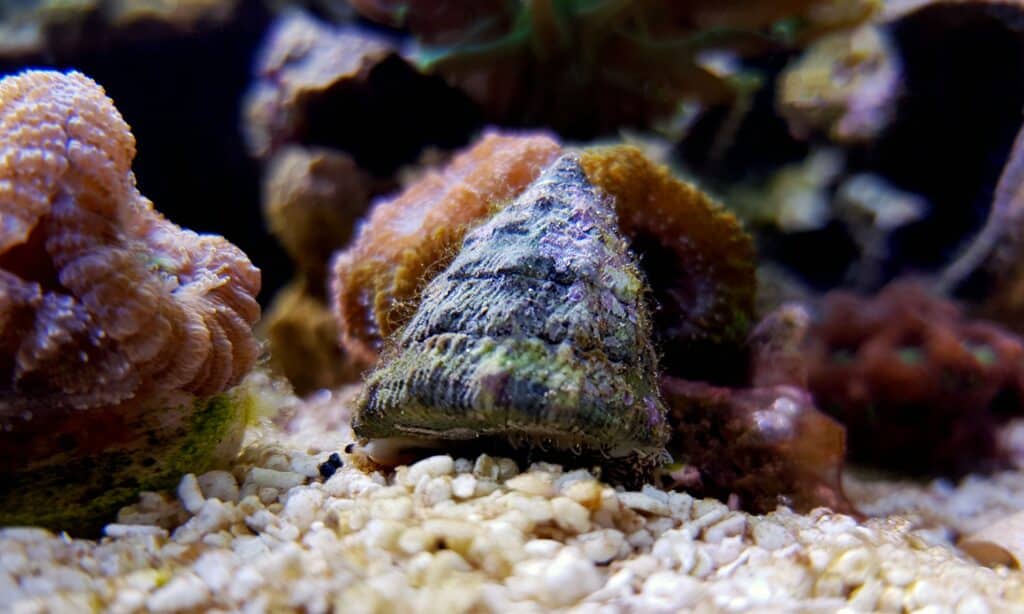
The Astrea snail is a saltwater species, but many species prefer land or freshwater.
©iStock.com/vojce
Both common snails and exotic species can be found on land. However, some snails can live in seawater and freshwater. Sea snails are composed of an exceptionally large group of snails that live in saltwater. These snails can also have very colorful shells, which are often disguised as rocks to deter predators. Freshwater snails are a large group of snails that live in ponds, lakes, and rivers. Not only do they have gills, but they also feature a range of sizes. There are roughly 4,000 distinct species of freshwater snails in the world. Land snails, on the other hand, have a much larger group.
3. The Giant African Land Snail is One of the Largest Snails in the World
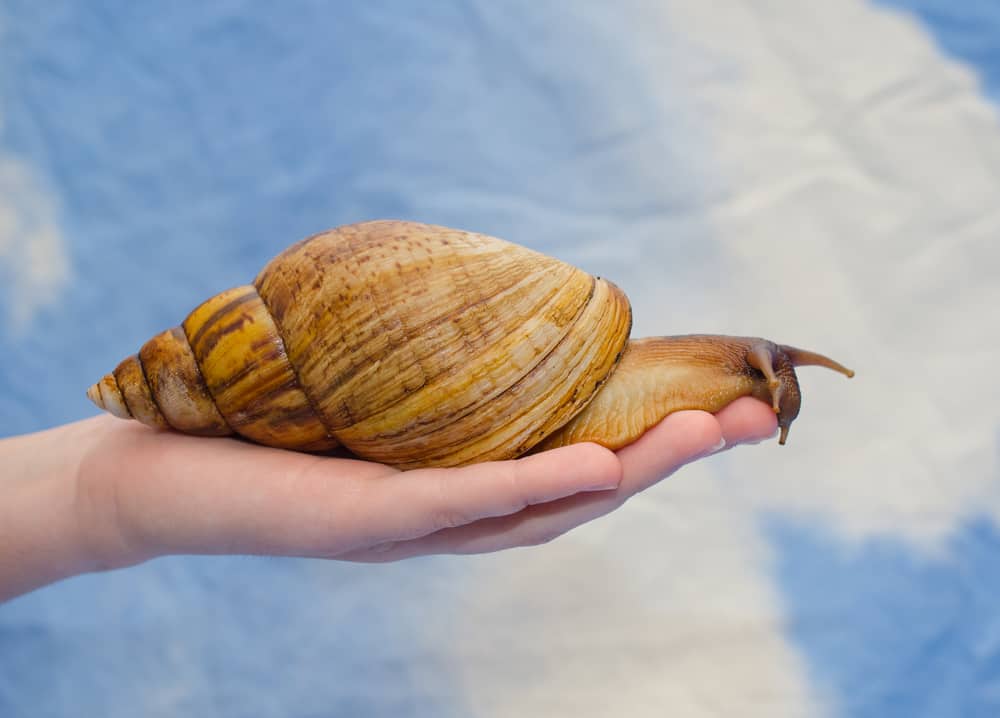
The largest giant African snail measured over 15 inches.
©Olena Kurashova/Shutterstock.com
The biggest snail in the world is a land snail. The giant African land snail can grow over seven inches long, with the largest recorded specimen measuring 15.5 inches (39.3 cm) from snout to tail when fully extended. They have large, light to dark shells with vertical dark stripes on them. These snails are considered an invasive species, feeding on at least 500 diverse types of plants. Unfortunately, these snails are carriers of a parasite that causes meningitis, posing a threat to both humans and other animals.
4. The Smallest Snail in The World is Less Than 0.03 Inches
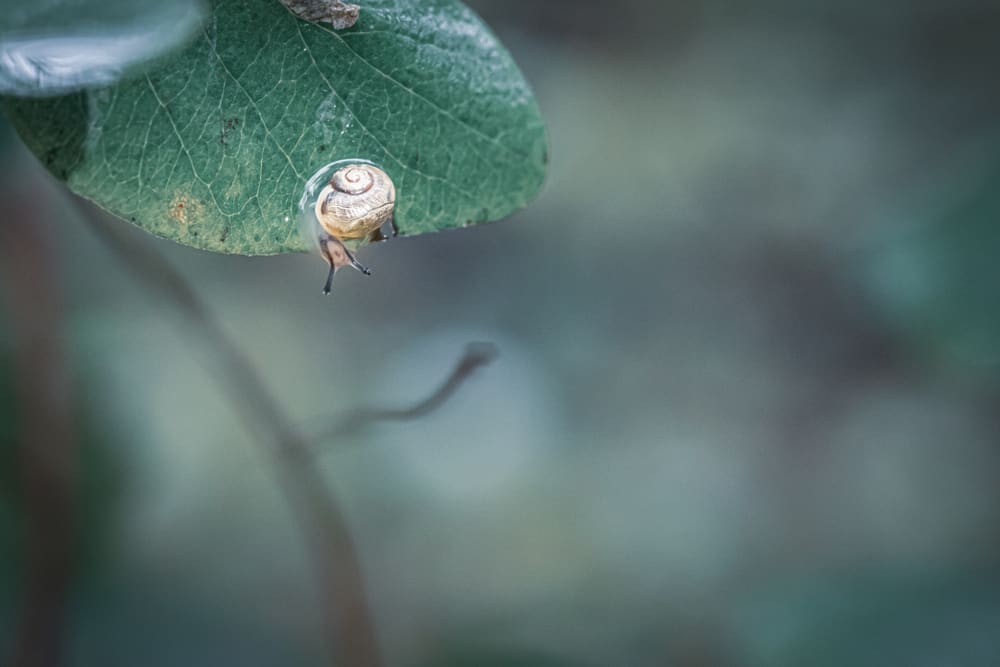
The smallest snail is even smaller than the one pictured here. It cannot be seen with the naked eye.
©karegg/Shutterstock.com
The smallest snail in the world is a micro mollusk. It is a tiny, translucent-shelled snail that has been measured at just under 0.03 inches in size. This snail was found in Borneo and has been named Acmella nana, which translates to dwarf in Latin. Because this snail is so incredibly small, scientists must observe it under a microscope. This species was found on a limestone hill.
5. They Are Not Mammals or Reptiles
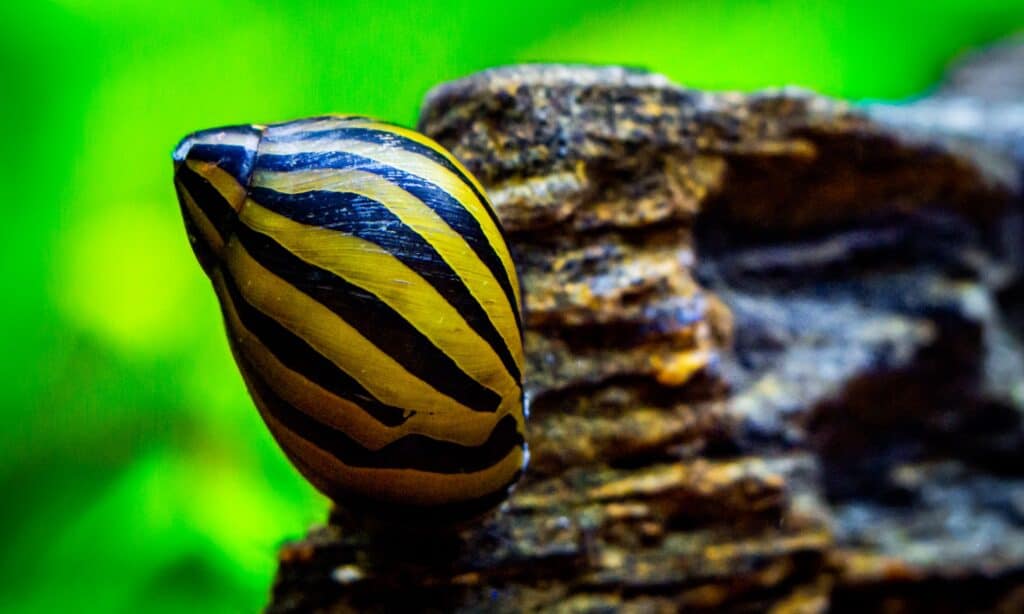
The spotted nerite snail features a striking shell.
©iStock.com/Juan Carlos Juarez Jaramillo
Snails are called gastropods. Gastropods are a form of mollusk that includes snails, slugs, and whelks. It is one of the most diverse groups of organisms. They also belong to the invertebrate class, a group of organisms that do not have a spine or skeletal system. Therefore, the shell of a snail is so important as it serves as a home, a defense mechanism, and a form of protection for their fragile body.
6. They Have Teeth, Many Teeth!
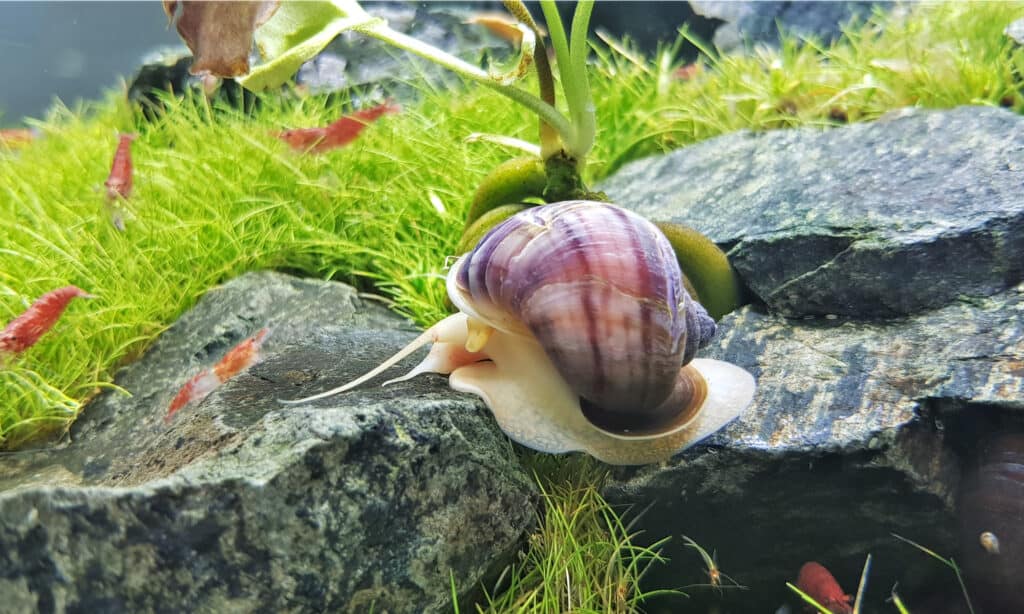
Snail teeth are tiny, but they have many of them, used to scrape and cut their food.
©Arunee Rodloy/Shutterstock.com
While snails have tiny mouths, they still have teeth — a lot of them. In fact, some snails have up to 14,000 teeth, though the number varies widely by species. These teeth are practically microscopic and obviously aren’t very sharp when compared to those of other animals. They are used for both scraping and cutting food. Their teeth are located on a structure in their mouths called a radula, an elongated ribbon-like organ.
7. They Retreat into Their Shell When a Threat is Nearby
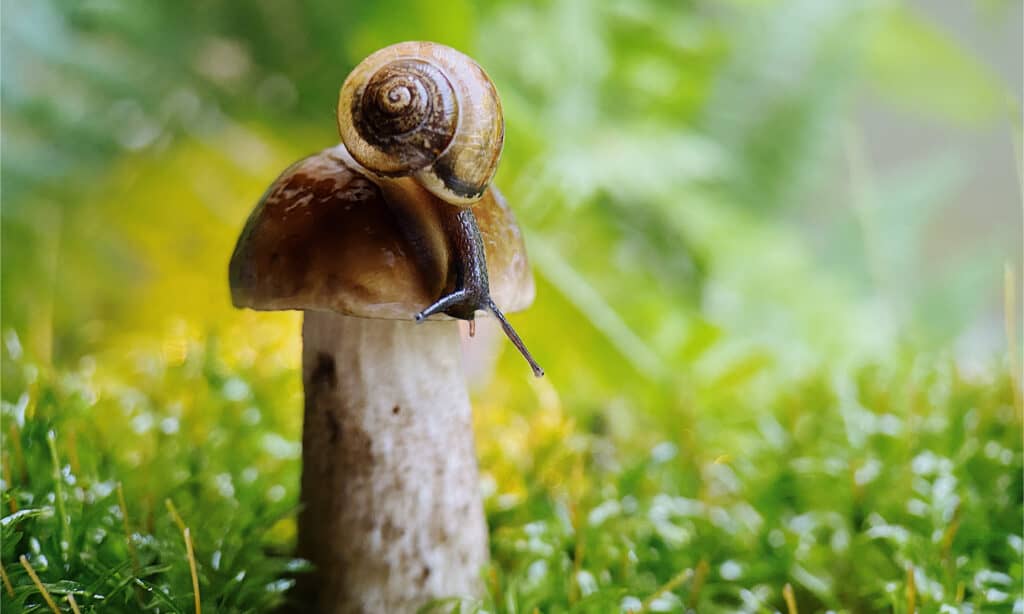
Snails extend out to explore their world, but quickly retreat into their shells’ safety if there is a threat.
©Anna Seliaeva/Shutterstock.com
Because snails do not have backbones or a skeletal system, they are obviously vulnerable to animals in the wild. Their shells are their greatest defense mechanisms. In fact, whenever a threat is posed nearby, they often retreat inside their shells for protection, much like a turtle. Their shells can also protect them from elevated temperatures.
8. Most Snails Are Hermaphrodites
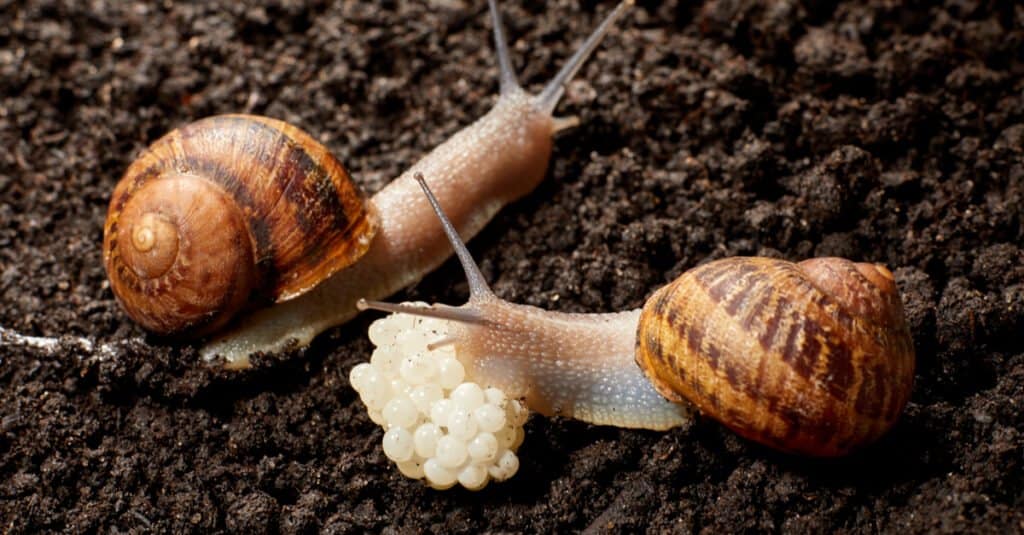
Many snail species are hermaphroditic and can reproduce on their own.
©Zebra-Studio/Shutterstock.com
Many species in the world can reproduce on their own and do not have genders, and snails are one of them. Most snails are not strictly male or female and can produce both eggs and sperm; however, some species have separate sexes. They can reproduce when they are sexually mature and their reproductive organs are fully developed. The time varies for all snails, mostly due to their location and environment.
9. Their Shells Grow with Them
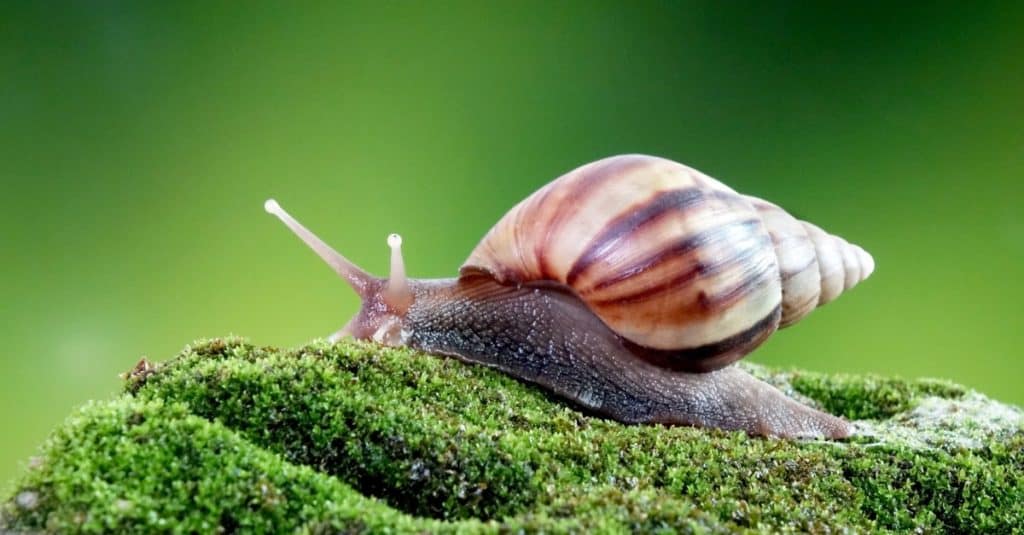
Snails don’t discard their shells when they outgrow them as hermit crabs do. Their shells grow with them!
©Mark Brandon/Shutterstock.com
Every snail has a shell, and unlike many other shelled creatures, snails do not discard their shells and form new ones. In fact, as snails grow, their shells grow with them. Their growth begins while they are still inside the egg, and when they hatch, they already have their shells. To make their shell strong, snails are constantly in search of calcium-rich food sources to produce a strong and sturdy shell for their fragile bodies to grow into.
10. They Participate in Snail Races

People often set up snail races for entertainment.
©iStock.com/Aleksandr Zyablitskiy
While snails are typically slow creatures, there are still snail races that are held everywhere in the world. Snail races are used as a humorous form of entertainment, obviously because these guys don’t move at a fast pace, and they are incredibly fun to watch. While it is possible for other species of snails to participate in these races, the garden snail is the most common snail used for snail races.