
Sightings of an invasive species, the elm zigzag sawfly, have occurred in the Midwest. Ohio officials are warning the public to be aware of the new species in the area. According to the Ohio Department of Natural Resources (ODNR), researchers have spotted elm zigzag sawflies (Aproceros leucopoda) in Franklin and Delaware counties. It’s the first time this invasive species has been seen in Ohio. Anyone spotting this insect should report the sighting to the ODNR.
“Elm zigzag sawfly is an invasive insect native to Asia that was first found in Canada in 2020 and in multiple eastern U.S. states in 2021 and 2022,” ODNR Division of Forestry, Forest Health Program Manager Tom Macy said in a press release. “This is the first detection of the species in Ohio.”
Officials are concerned because the insect can cause severe devastation to elm trees. Researchers don’t have enough information on the insects to know yet what the overall damage to urban landscapes and forested areas could be.
How Did the Elm Zigzag Sawfly Make Its Way to the Midwest?
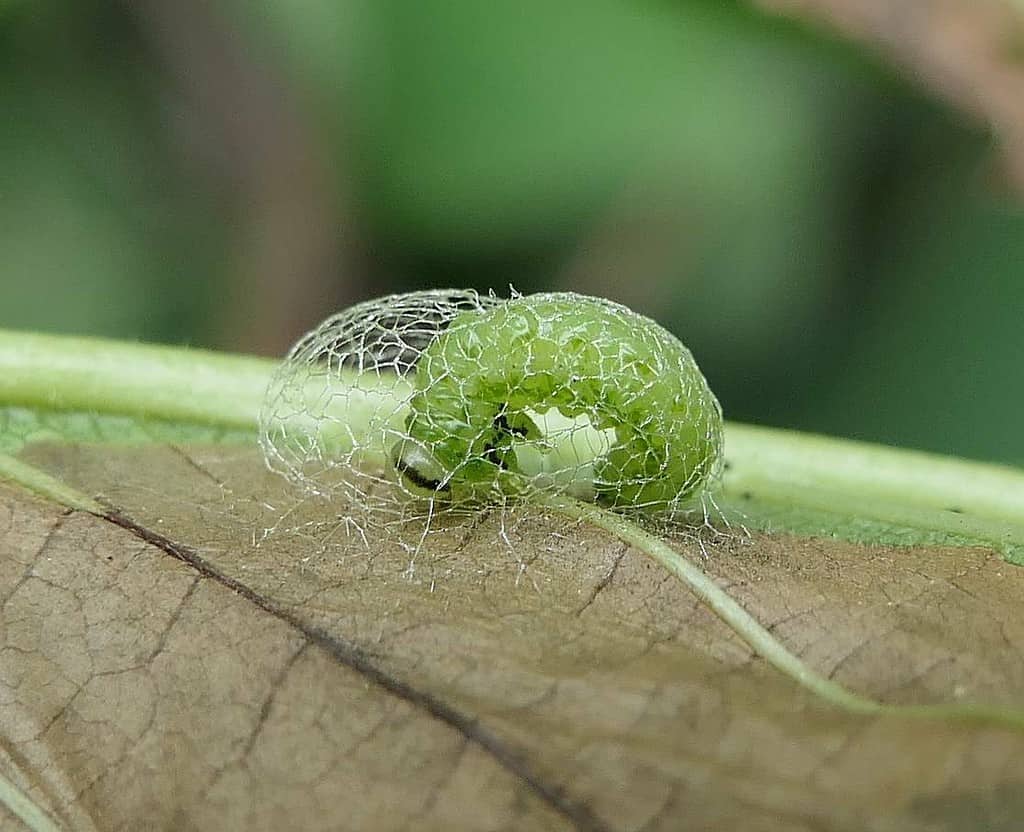
Elm zigzag sawfly larvae spin a net-like cocoon on elm leaves.
This species of sawfly is native to eastern Asia. Today it can be found across Europe and the United Kingdom. Researchers are not certain how it ended up in the United States. However, they believe it may have been brought from Europe to Canada. From there, it made its way to the U.S. and may have been transported inadvertently in its cocoon form.
What to Do if You See the Elm Zigzag Sawfly or Notice Signs of an Infestation?
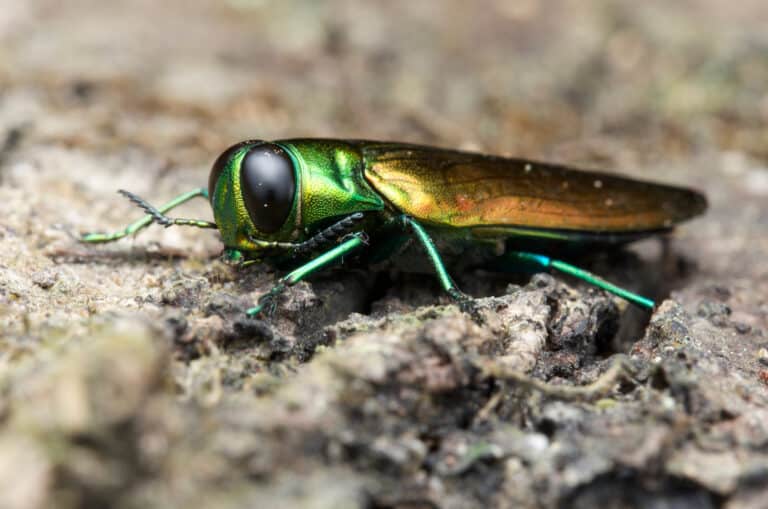
The adult elm zigzag sawfly is a small, shiny, black-winged insect. They can be hard to differentiate from other winged insects. They are not related to flies but are instead a type of stingless wasp that feeds on plants.
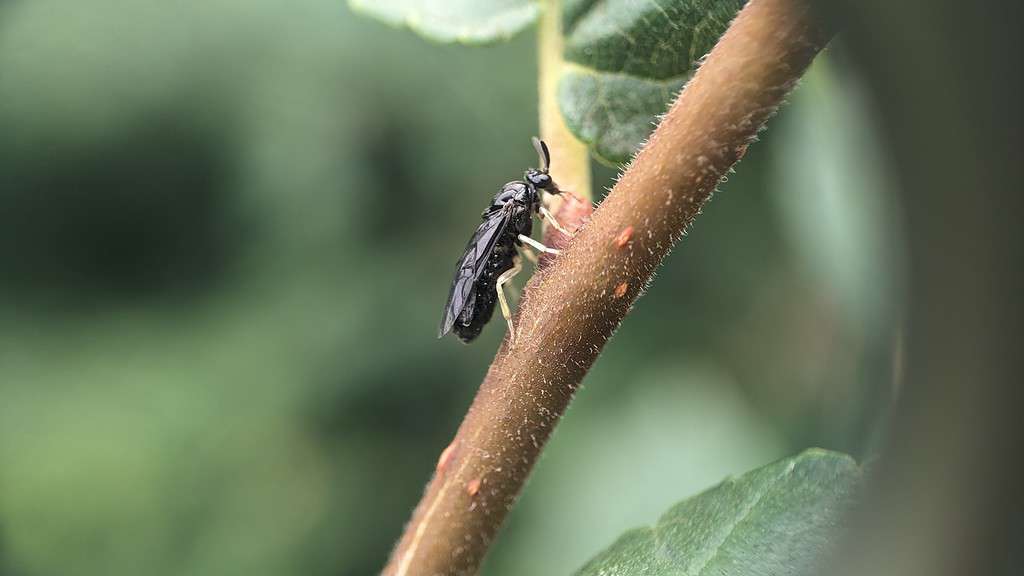
The elm zigzag sawfly is an invasive insect native to Asia.
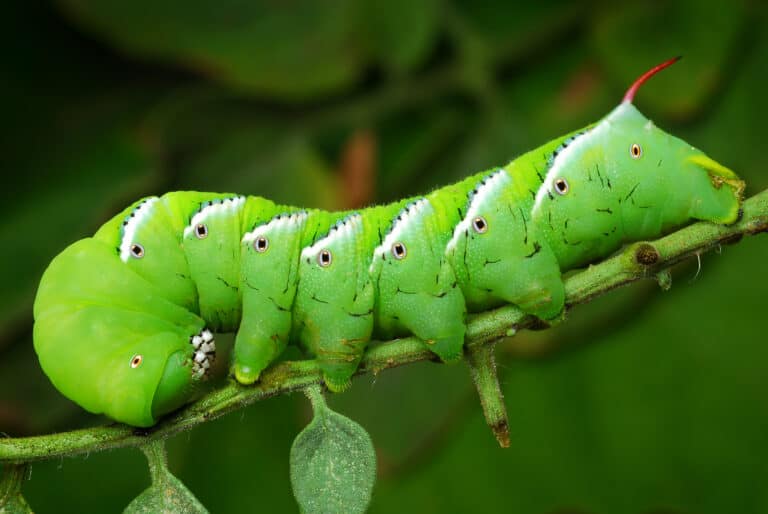
The larvae are half an inch long and look like light green caterpillars. They spin loose, net-like cocoons, which they attach to elm leaves.
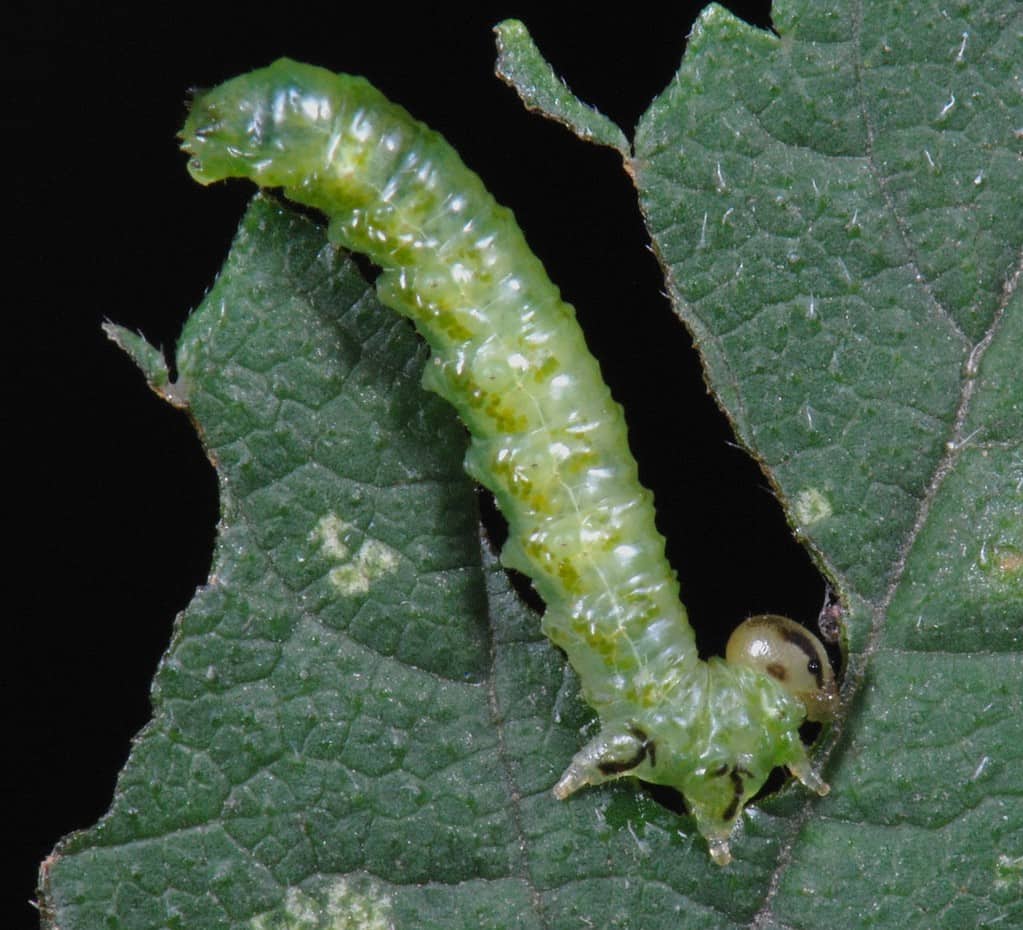
The elm zigzag sawfly larva is about half an inch long and light green in color.
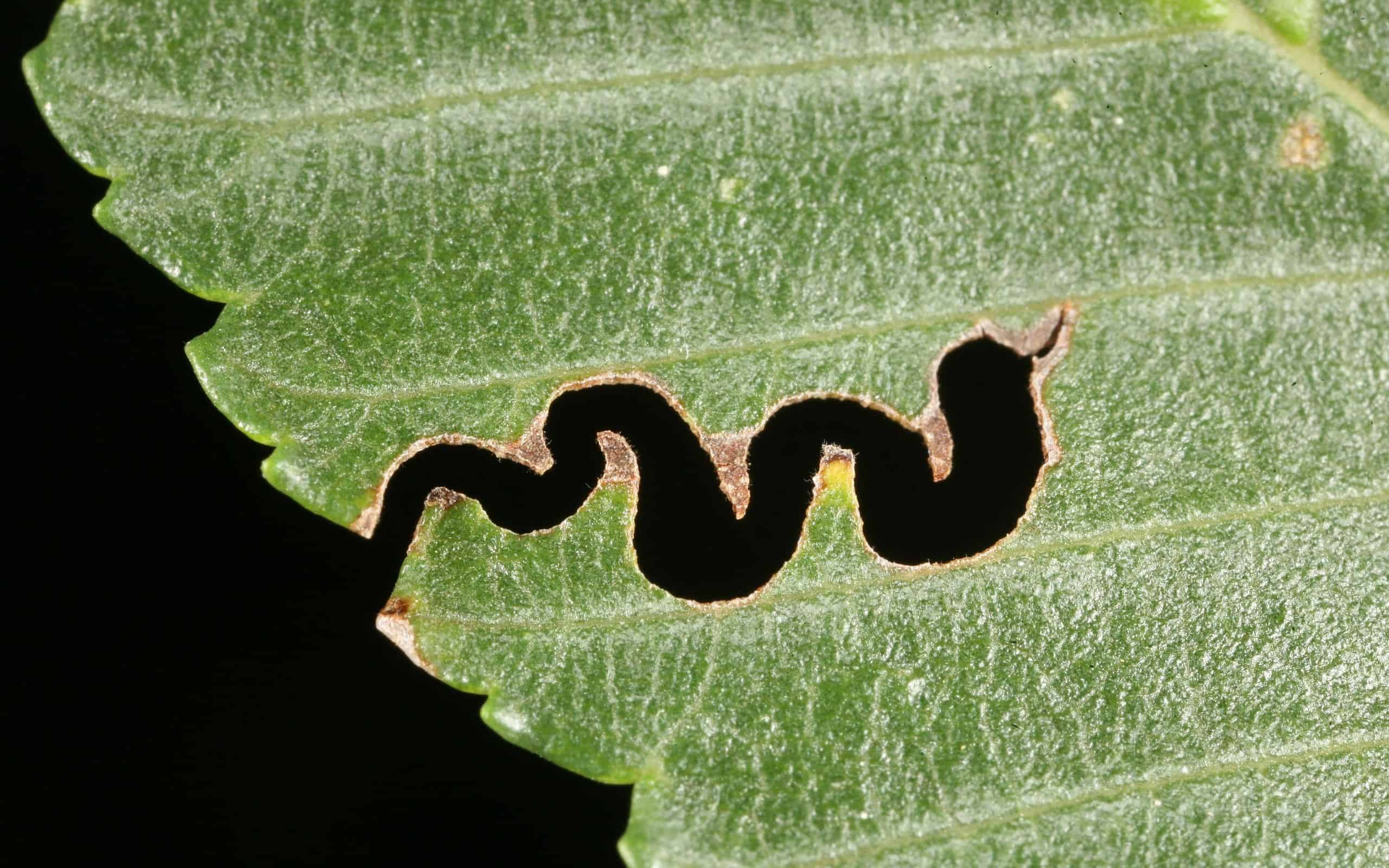
However, the easiest way to know if you are facing an infestation is by spotting the damage on tree leaves. The larvae feed on elm leaves in a zigzag manner. It creates a distinct pattern on the leaf, making it easy to identify.
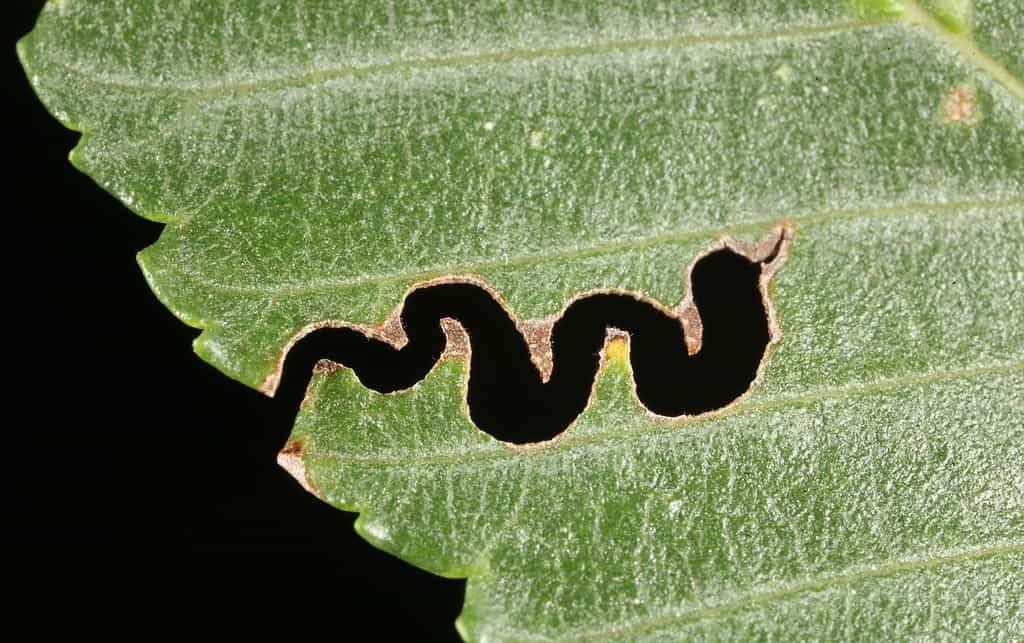
The larvae of the elm zigzag sawfly create a distinctive zigzag pattern on leaves as they feed.
©Gyorgy Csoka (Hungary Forest Research Institute) / CC BY 3.0
If you suspect you’ve seen the elm zigzag sawfly, its larva form, or have signs of infestation in your area, officials request that you report it by either method below:
- Use the free Great Lakes Early Detection Network mobile app.
- Get a good photo, or collect a specimen and call ODNR Division of Forestry at 614-265-6694.