
Quick Take
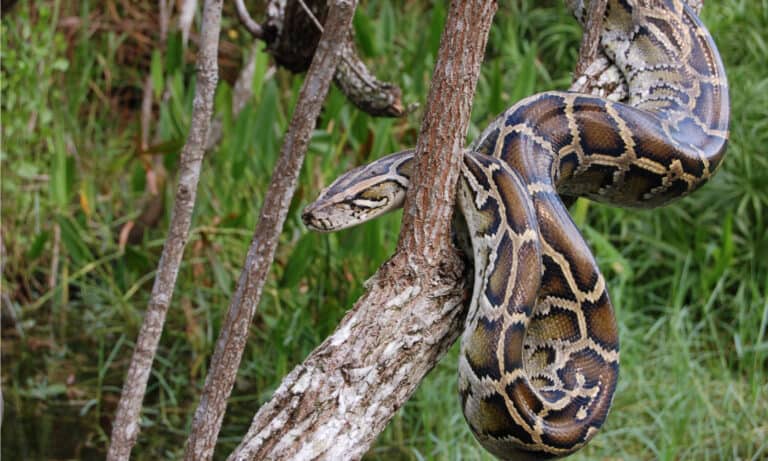
- The Burmese Python surge triggered a 90% decline in small-mammal populations across southern wetlands.
- Asian Carp are now found in 45 states across the U.S.
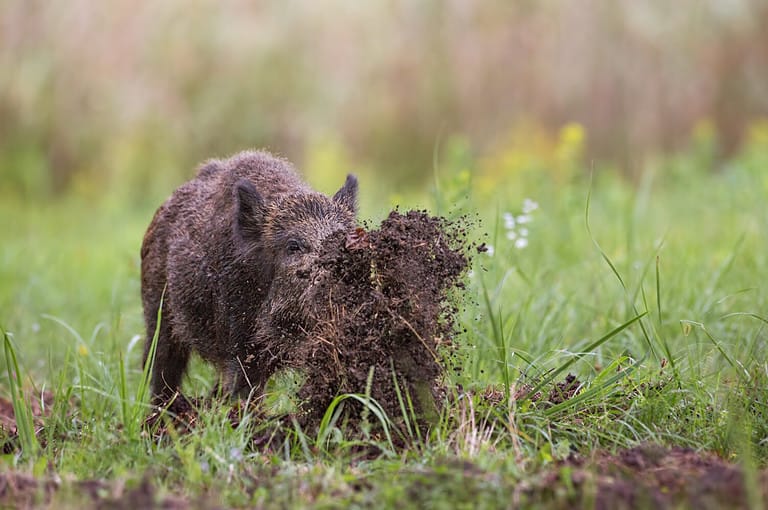
- The introduction of feral swine caused hybrids that continue to thrive in the southern U.S. to this day.
Invasive species are all over America, and it’s very likely you may have seen them in your own backyard. Some species are so common that we wouldn’t even think of them as being non-native. While others are more obvious, many remain hidden (and thriving) all around us. Here’s how the fastest-spreading invasive species in the U.S. got here, how they survived, and why their ongoing spread is such an issue.
Spotted Lanternfly
The spotted lanternfly was first identified in Pennsylvania in 2014. It was believed to hatch from egg masses that were found on a stone shipment arriving in the U.S. from China. However, due to significant sightings in the area, some believe the spotted lanternfly may have arrived as early as 2012.
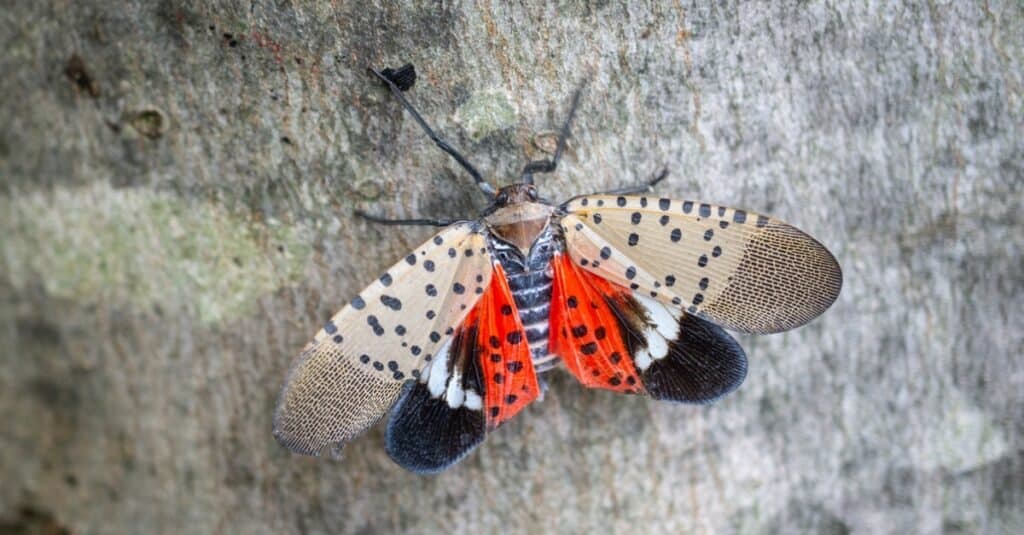
The spotted lanternfly has made headlines for its crop-damaging behavior.
©iStock.com/arlutz73
Its presence in the U.S. has caused issues due to its high reproductive rate and its ability to hitchhike. Unfortunately, the spotted lantern fly is not picky regarding its food source. It feeds on tree sap, which harms the tree and also jeopardizes food sources for native insects. As it feeds, it also excretes a type of honeydew that can further damage plant life by causing secondary fungal infections.
Joro Spider
Despite their helpful qualities, Joro spiders are the stuff of nightmares for some arachnophobes. These spiders use their silk to “balloon” as they catch the breeze, migrating from place to place. They were first recorded between 2010 and 2014 and likely arrived in the U.S. as stowaways from East Asia.
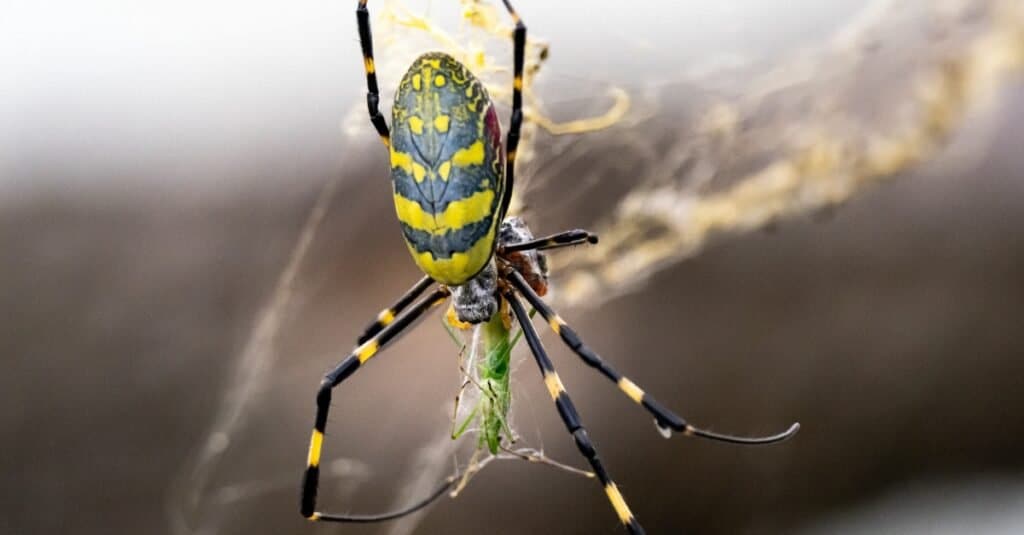
Joro spiders have exceptionally long legs and large abdomens.
©iStock.com/David Hansche
Now, their populations are primarily concentrated in northern Georgia, upstate South Carolina, and parts of Tennessee and North Carolina, with some sightings in neighboring states. Experts initially believed Joro spiders could not survive U.S. winters but have been proven wrong as the spiders continue to thrive. While they don’t harm the ecosystem around them, they may pose a threat to Southeastern native arachnid populations.
Golden Mussel
Ballast discharge was responsible for the golden mussel’s migration to the U.S in 2024. While it’s fairly recent, it’s not the first shellfish to make its way across the sea. The golden mussel migrated from Southeast Asia; however, because it’s so widespread, the exact origins of its ballast trip are unclear.
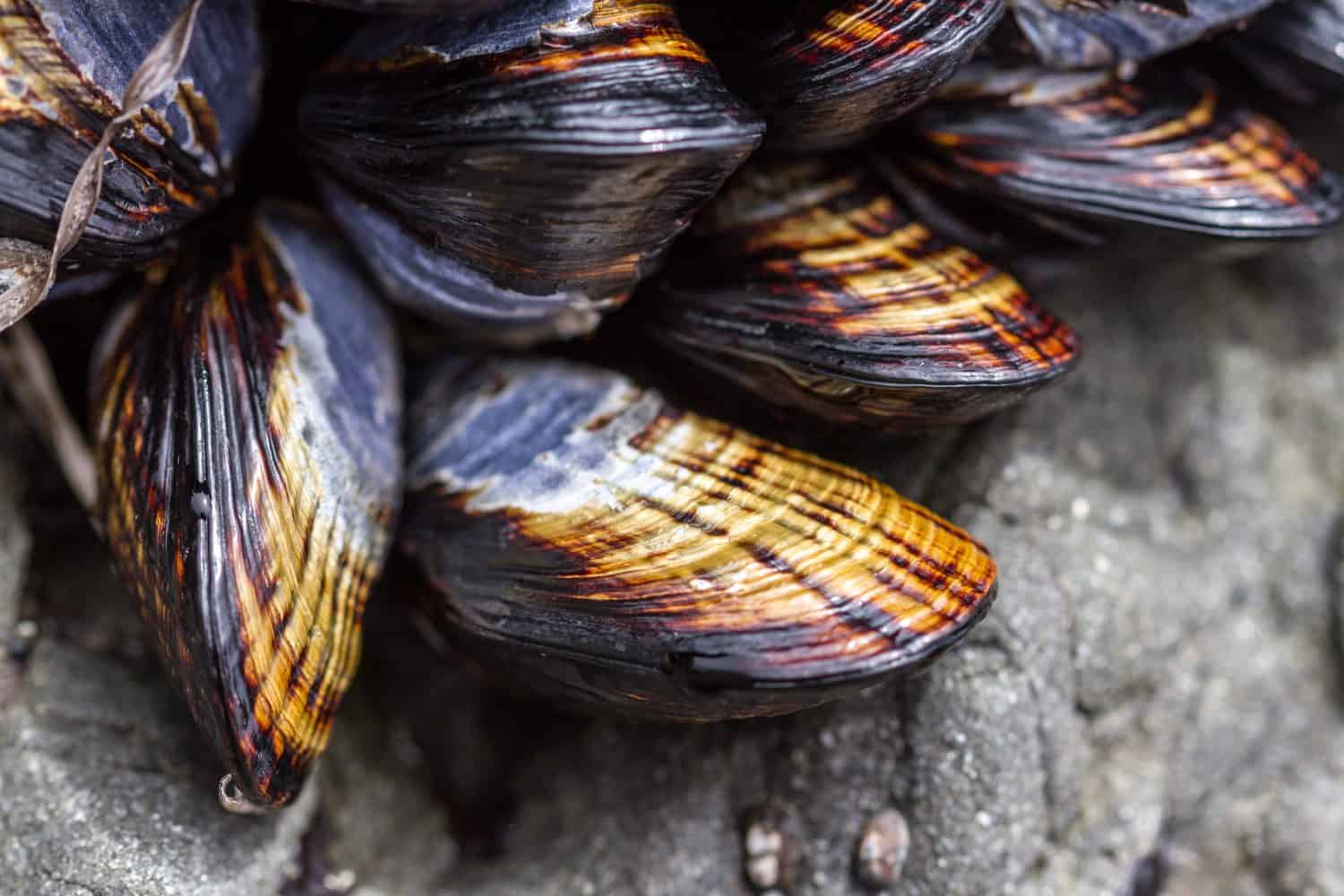
Golden mussels are a common sight in lakes, but are actually invasive.
©Ingmar Herz/Shutterstock.com
The first recorded finding was in California’s Sacramento–San Joaquin Delta and O’Neill Forebay in October of 2024. The problem they pose is the same as most mussels. Rapid reproduction rates, combined with their ability to cling to any solid surface, make them a threat to the ecosystem. Golden mussels also clog pipes, cling to passing ships, and lead to dock deterioration.
Nile Monitor
The Nile monitor has an unusual migration story. Rather than hopping aboard a trade ship, it was introduced to the U.S. via the exotic pet trade. There’s no exact date for when this species began to multiply throughout Florida, but it’s now an invasive species along its tropical coast.
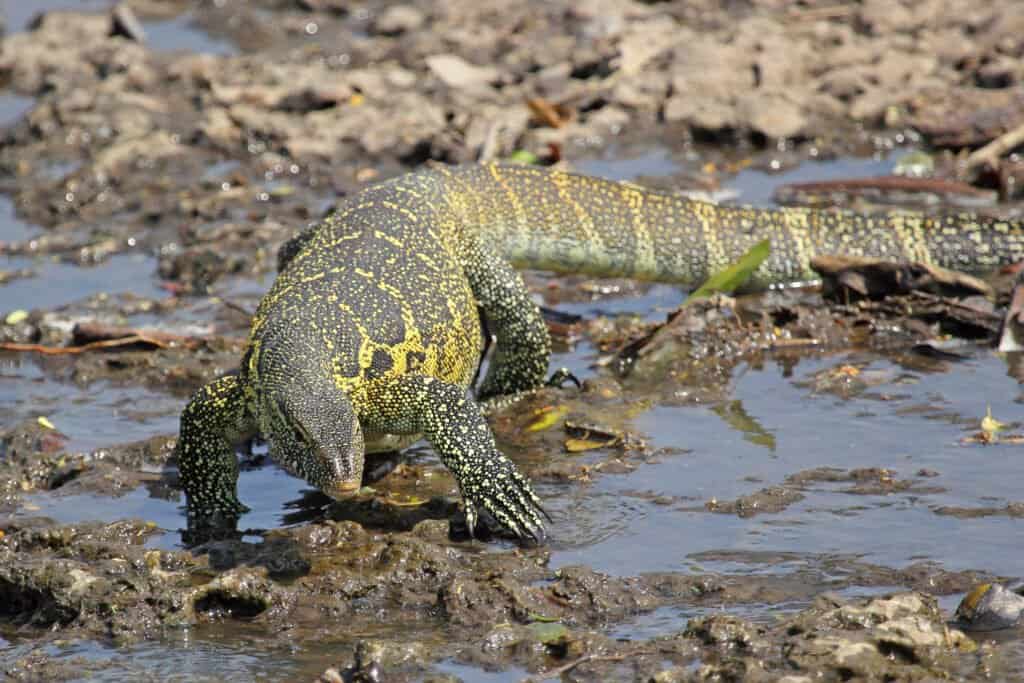
Once an exotic pet, Nile monitors are now wild Florida residents.
©MattiaATH/Shutterstock.com
The Nile monitor population likely resulted from an escaped or illegally released pet. They can grow up to six feet when fully mature, which causes many people to give them up. In the wild, they threaten Florida’s natural ecosystem by preying on small animals and also go after reptile eggs. They can be aggressive toward humans, which causes additional issues.
New Zealand Mudsnail
Ballast water is once again the main culprit in the case of the New Zealand mudsnail. This aquatic snail likely snuck into a tank and hitched a ride, where it was found in the Great Lakes during the 1980s. Since then, the snail population has grown rapidly as boat traffic continues to spread eggs.
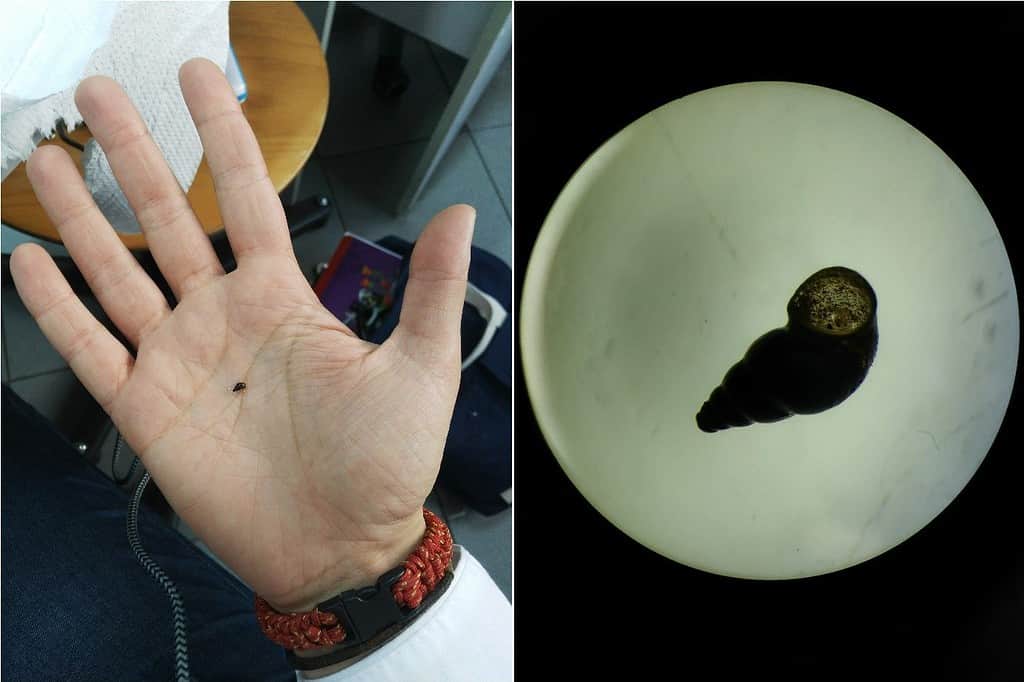
New Zealand mudsnails are extremely small, but reproduce quickly, leading to large, problematic populations.
© Sylwia10 / CC BY 4.0
New Zealand mudsnails are a hearty species that can withstand many harsh conditions. Their survival is a testament to this as they continue to thrive in parts of the western U.S., the Great Lakes, and Chesapeake Bay. This resilience is also why they’re such a threat to the ecosystem.
Invasive Carp
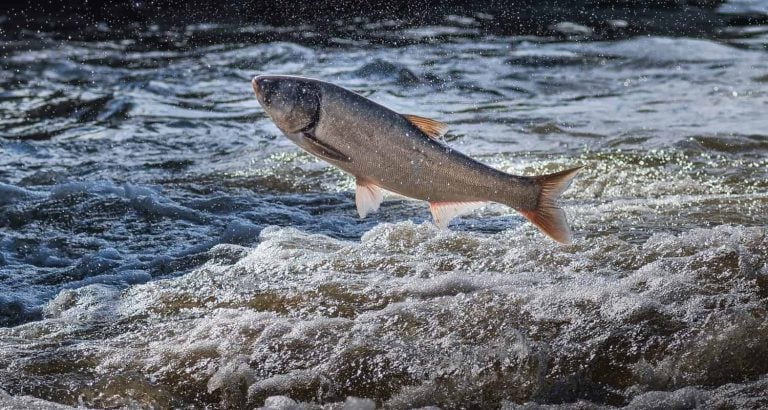
The invasive carp, also known as the Asian carp, were not brought to the U.S. unintentionally. Between the 1960s and 1970s, private fish farmers and government agencies introduced them to Arkansas. It was a classic case of solving one problem by introducing another, and soon enough, the invasive carp population took over local waterways.
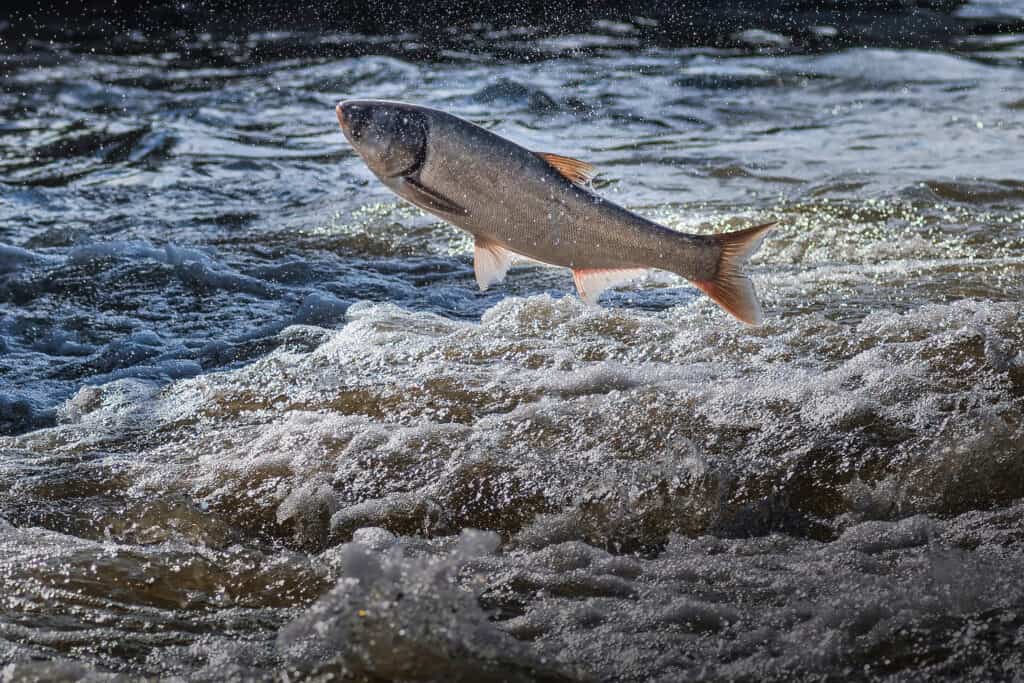
Asian carp can jump 10 feet high, helping them navigate Arkansas waterways.
©SandmanPhotography/Shutterstock.com
While the original intent was to control algae and parasites, the invasive carp thrived in Arkansas rivers. Flooding only worsened the issue, and the invasive carp soon spread to other nearby areas. They’re now present in at least 45 states, causing native fish populations to compete for food and shelter.
Emerald Ash Borer
The emerald ash borer has been in the U.S. since 2002. This unusual-looking beetle lives up to its name, but leaves havoc in its wake. Experts believe it burrowed into wood crating on a ship or plane bound for the U.S. in the 1990s. During that time, it reproduced and emerged, overwhelming the native beetle population throughout the country.
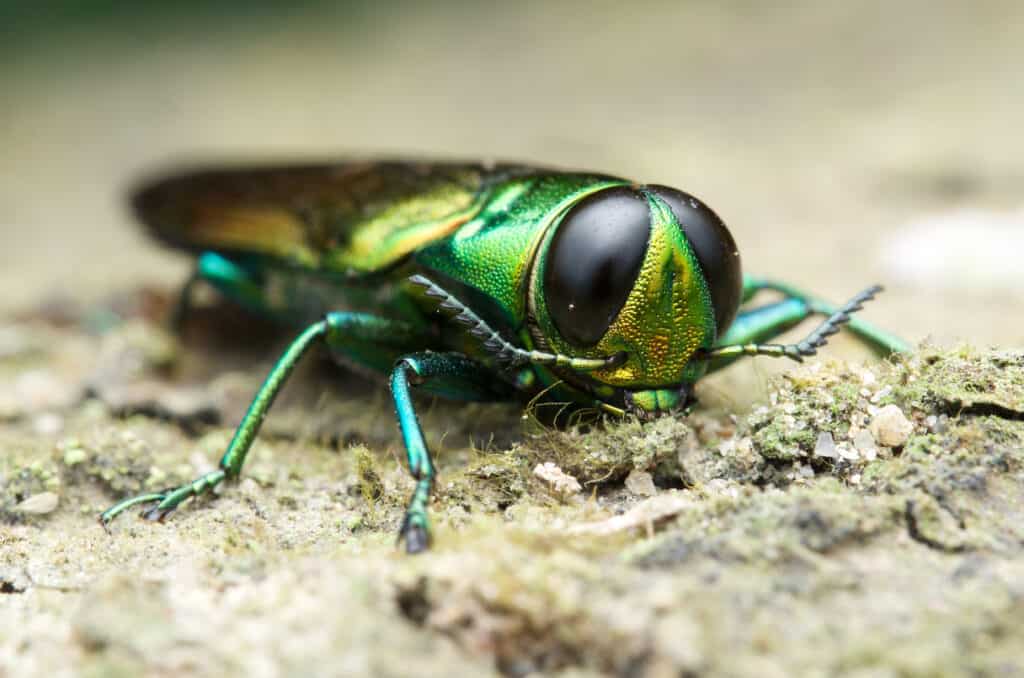
Emerald ash borers are responsible for damaging ash trees year after year.
©Herman Wong HM/Shutterstock.com
To date, the emerald ash borer has killed significant ash tree populations in 37 states. With no shortage of places for it to burrow, hide, and reproduce, it’s become nearly impossible to keep it from damaging tree groves.
Zebra Mussel
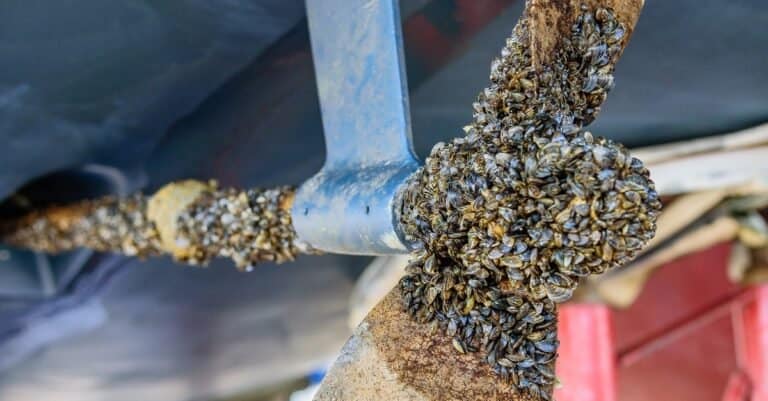
The zebra mussel is yet another invasive species that has made its new home in the Great Lakes. Similar to the golden mussel, this shellfish is also responsible for growing on pipelines, clinging to ship hulls, and reproducing at a rate faster than any exterminator can keep up with.
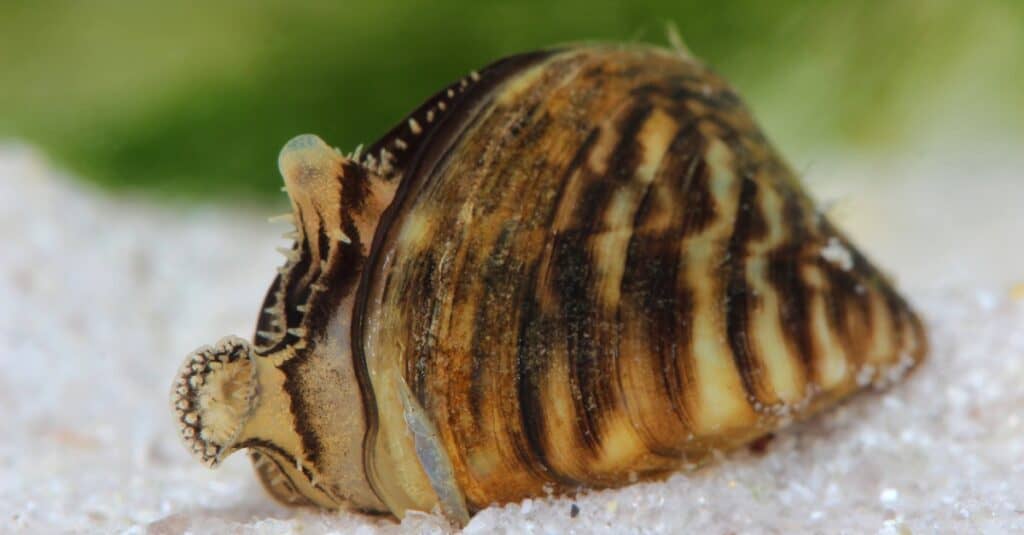
The zebra mussel was introduced into the United States via ships and continues to colonize new areas.
©iStock.com/VitalisG
It was first discovered in Lake St. Clair in 1988, before populations were found in Lake Huron and Lake Erie. Ballast ships were its primary means of transportation, allowing it to spread from lake to lake. Zebra mussels remain widespread and problematic in the Great Lakes, where they commonly grow on docks, ships, and other hard surfaces.
Brown Marmorated Stink Bug
The brown marmorated stink bug has been in the U.S. since the 1990s. While the first was discovered in Pennsylvania in 1998, it’s believed they were here years before that. Like many other insects, these bugs hitchhike on anything they land on.
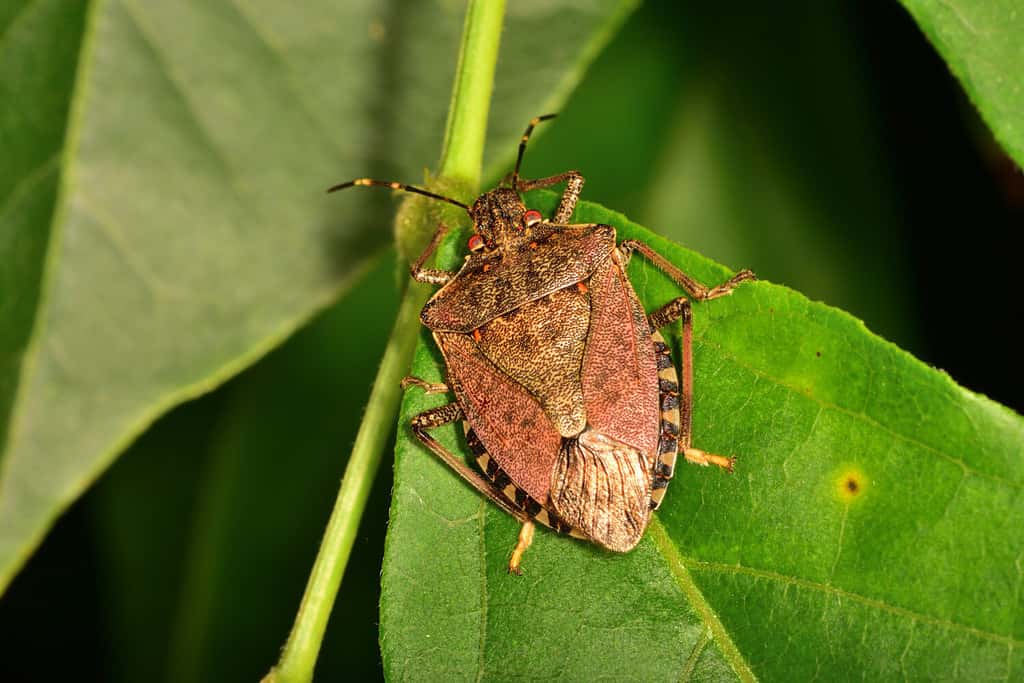
Stink bugs are in a smelly category of their own, but also cause significant damage to crops.
©Davide Bonora/Shutterstock.com
They now exist in 42 states, and their rapid reproduction rate makes them almost impossible to track. In the winter, they hibernate in warm places, such as houses, before emerging in the spring. They’re known to damage crops, making them a (smelly) nightmare for farmers and home gardeners.
Burmese Python
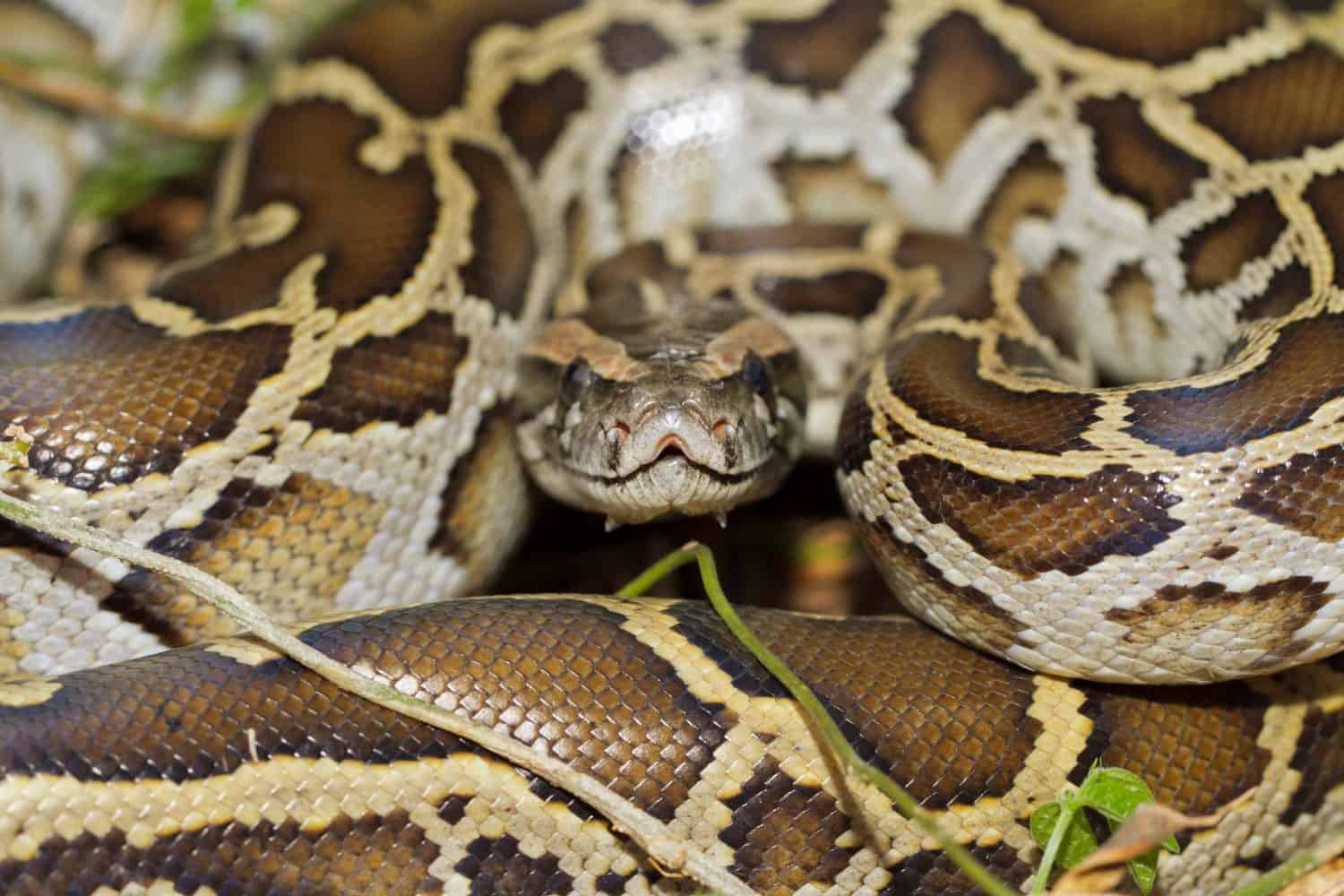
It’s surprising how many reptiles become non-native species in the U.S. due to the exotic pet trade. The Burmese python is another former pet that escaped into the wild, reproduced, and has since thrived. It now calls the Florida Everglades home, despite being a significant threat to the surrounding ecosystem.
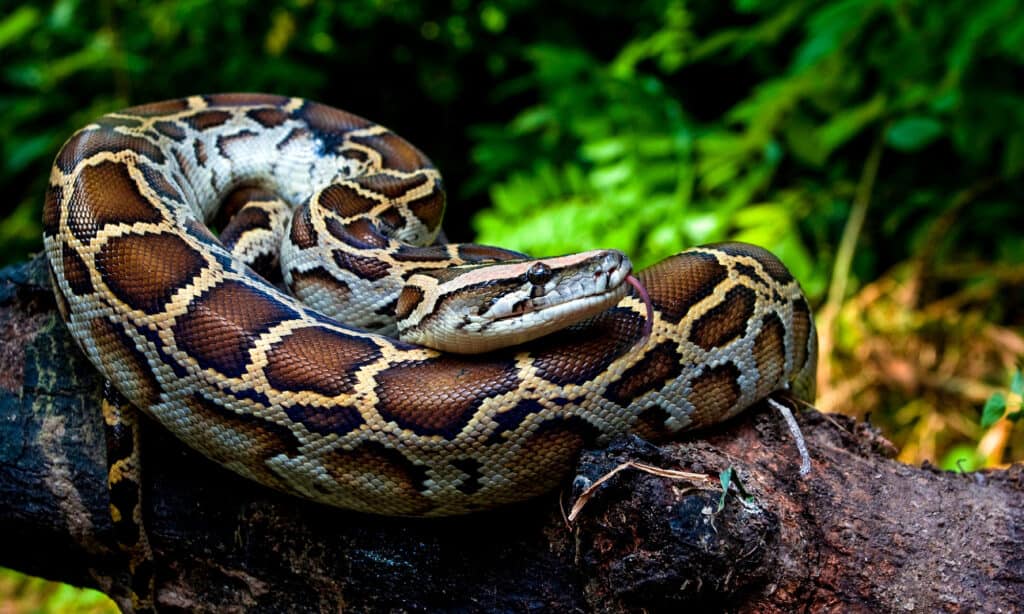
Burmese pythons have long been an issue in the Florida Everglades.
©dwi putra stock/Shutterstock.com
While the first sightings began in the 1970s, hurricanes have also contributed to the spread of Burmese pythons. When buildings were damaged during Hurricane Andrew in 1992, a significant number of snakes escaped damaged enclosures. Now, they negatively impact the Everglades’ food chain by consuming small mammals and decimating their populations.
Feral Swine
Feral swine are among the oldest invasive species in the U.S. They were first introduced in the 1500s, when European explorers brought them for sport hunting. What they didn’t anticipate was the population growing beyond their control. This led to a significant boom in feral swine, which has continued to thrive in the southern U.S.
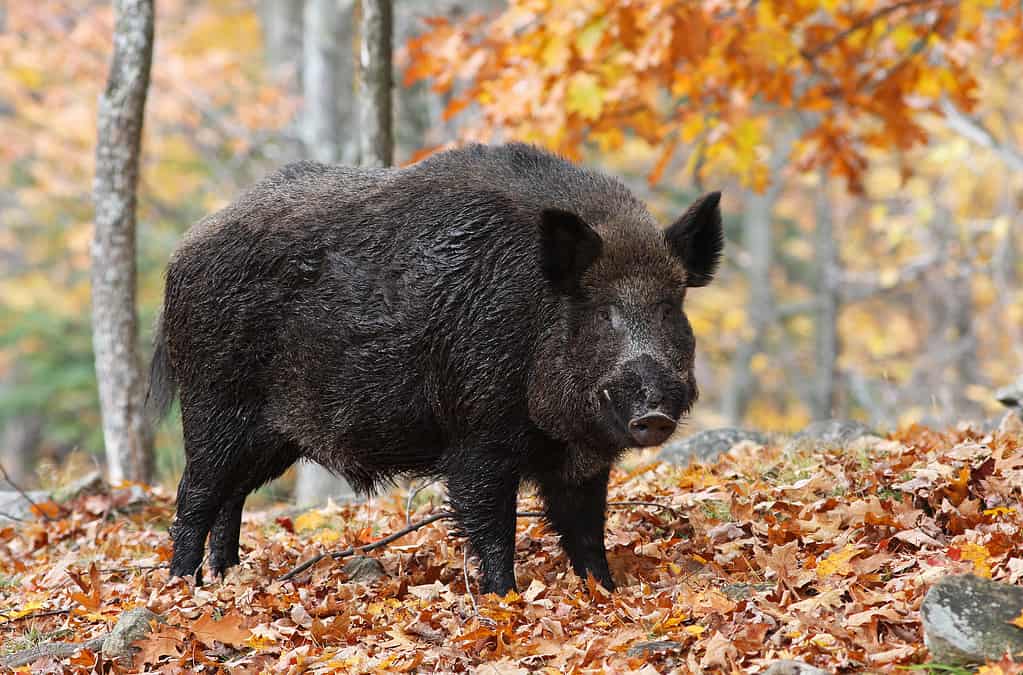
These omnivorous animals have a strong sense of smell and sharp tusks used for defense.
©Mircea Costina/Shutterstock.com
Over time, feral swine hybrids began to emerge. These became more resilient and less susceptible to disease and famine, which allowed them to survive into the modern day. While controlled hunting has reduced some populations throughout the South, feral swine remain problematic due to their rutting and digging habits.
Nutria
The nutria was once revered for its fur, which is how it came to the U.S. in the late 1800s. Originally from South America, these small mammals were raised for fur trading. However, once the industry declined in the 1940s, farmers were left with many nutrias but had nowhere to sell their pelts.

Nutria are infamous for causing extreme damage to lawns and backyards near waterways.
©Robert Adami/Shutterstock.com
They were released into the wild, where they began to thrive, especially in the Deep South. This is also when they began causing issues for homeowners. Nutrias are known for burrowing along waterways, which causes significant damage to yards and terrain. They’re difficult to trap and are also expensive to deal with.
Domestic Cats
Believe it or not, domestic cats are not actually native to the U.S. While they can be found in practically every other household in America, they’re non-native. They first came to the U.S. with European settlers, who brought cats aboard to control rodent populations. Prior to the domestication of cats, the only native cats in the U.S. were big cat breeds.
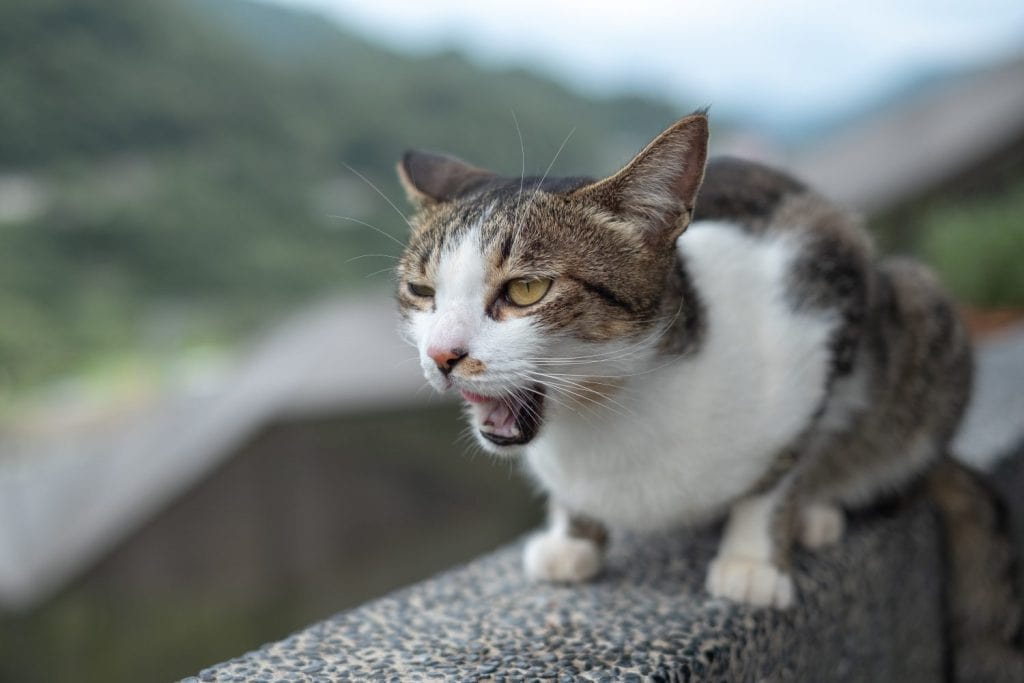
Domestic cats are not native to the U.S.
©Tao Jiang/Shutterstock.com
Now, domestic and feral cats are present in every state, with estimates suggesting there are between 60 and 100 million stray and feral cats in the U.S. While indoor cats pose little threat to their surroundings, feral cats are often responsible for killing local wildlife. Their reproduction rate creates additional problems, such as homeless cats facing starvation or exposure to the elements.
Asian Longhorned Beetle
The Asian longhorned beetle is a sneaky insect. It first appeared in the U.S. in 1996, in Brooklyn, New York. Experts believe it may have burrowed into wood packaging on a ship bound for the New York Harbor. Sightings were soon reported in other states, such as Illinois, Ohio, New Jersey, and Massachusetts.
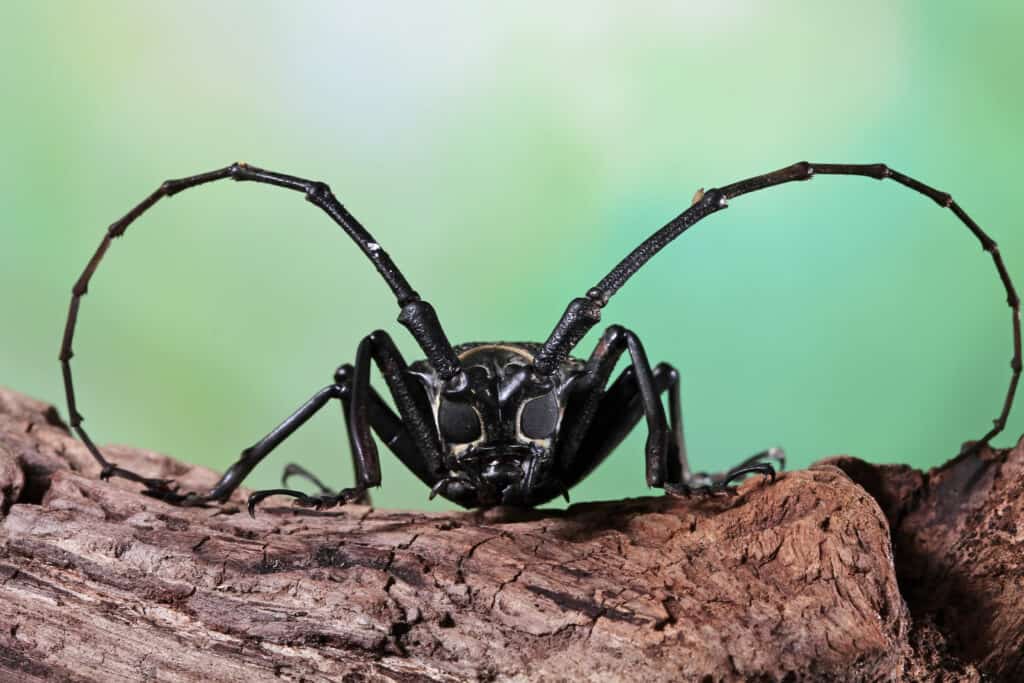
The Asian longhorn beetle is one of the most invasive beetle species in the world.
©Kurit afshen/Shutterstock.com
They’re difficult to find once they’ve made homes in wooden crates or boxes. They are currently contained in a few quarantined areas in the U.S. but pose a significant threat to hardwood tree groves where infestations occur. Unfortunately, their presence on these trees also means they’ve damaged them. Their wood-boring nature leaves tree bark vulnerable as they steal essential nutrients from the trees during feeding.
Imported Fire Ants
Some might not realize that the fire ants so infamously found throughout the southern U.S. are actually an invasive species. They first appeared in Alabama during the 1930s. It’s believed they traveled in the dirt used to stabilize cargo ship ballast, eventually emerging on American soil.
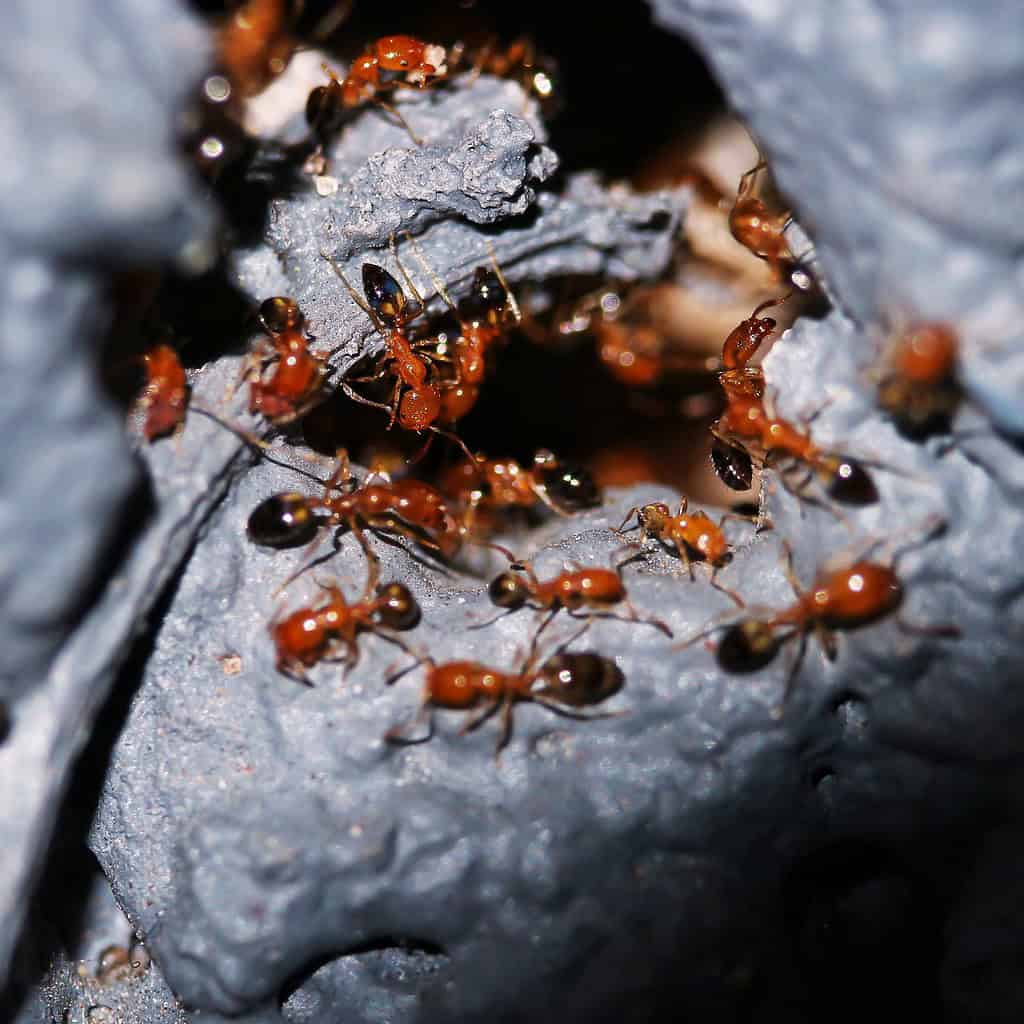
Fire ants are a painful reminder of how quickly invasive species can spread.
©Setiani Antari/Shutterstock.com
Fire ants are native to South America but have now thrived in the temperate climates of the Deep South. Human activity has only assisted their migration efforts as the ants hitch rides on farm equipment and vehicles. Today, they’re found in more than 13 states, as well as in parts of California and Puerto Rico. Their negative impact on local ant species is prevalent, but they also pose a risk to any human who accidentally steps on an anthill.