
Quick Take
- One common kitchen staple works as both a constipation remedy and a flea repellent, though get the dosage wrong and your dog will want nothing to do with it. Check pumpkin puree dosage →
- High-fiber foods and low-residue foods both appear on this list, though giving one at the wrong time can undermine the other entirely. See when low-residue helps →
- One remedy needs to be given in the morning specifically, because using it at night invites a very unpleasant surprise. See the morning timing tip →
- The fastest-acting option on this list requires a vet, and using it yourself without knowing one key detail could actually poison your dog. Understand the enema risks →
Looking for ways to unclog your dog is an exercise in anxiety. All you can do is watch as your best friend is clearly uncomfortable, circling the same spot repeatedly. Their appetite decreases. They squat and do nothing—sometimes even whining a little as they do so.
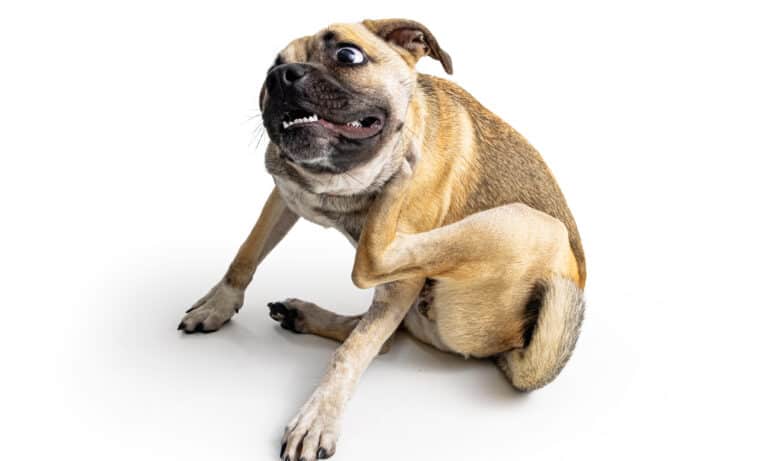
Vomiting, sudden weight loss, and dragging their bottom along the ground are signs of constipation as well. It’s painful to watch; even when you have the cure in your hands, it takes time before it has an effect. The good news is that there’s a cure, both from a prescription medicine and a home remedy standpoint.
Though it may be nearly as rough on you to watch your furry friend go through something it probably doesn’t understand, these eight remedies will help it get things moving again while providing you with some peace of mind.
1. Enemas
Surprise!
©Anton Zainchkovsky/iStock via Getty Images
We might as well start with the worst of the bunch, mostly because your dog won’t like it. Fortunately, an enema should be conducted by your veterinarian, since the solution used can be poisonous if not administered correctly.
There are plenty of DIY instructions throughout the internet but, if you feel even the slightest discomfort, don’t hesitate to take your dog to the vet to get it done. The vet will administer the Docusate Sodium Sulfosuccinate via tube syringe and the results are quick.
You can purchase Docusate Sodium Sulfosuccinate without a prescription but you will only find it in oral solutions, which is nowhere near as rapid as an enema.
2. Switch to a Low-Residue Diet
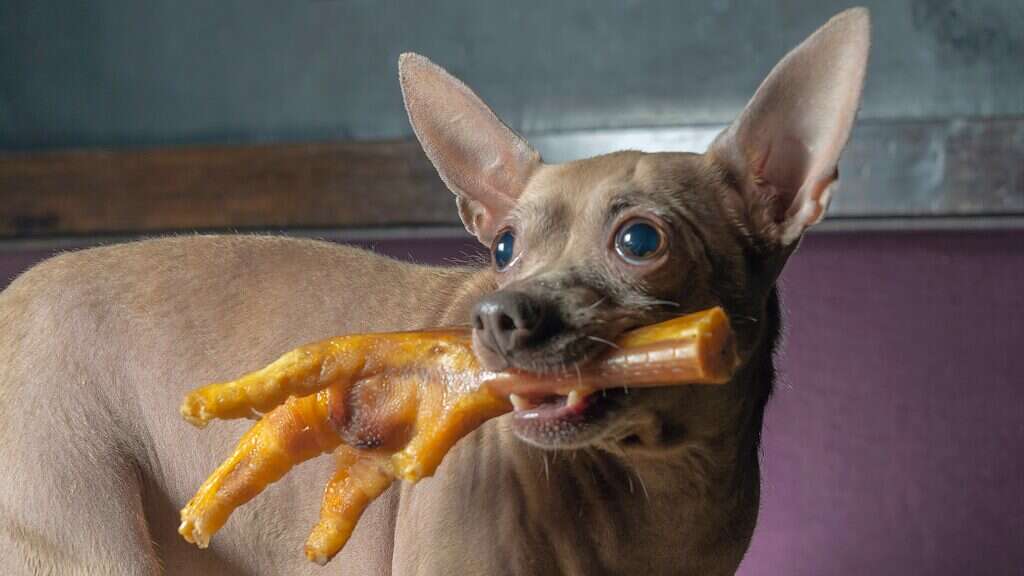
Dog eating chicken feet
©kalyanby/Shutterstock.com
Switching your pup to a low-residue diet is an option after your pup successfully has a bowel movement. For the most part, this is also a vet option if you don’t know much about the different types of foods and diets safe for a dog’s short-term and long-term health.
If you want to go it alone, avoid so-called low-residue dry dog foods. The purpose of low-residue foods is to get your dog the maximum amount of nutrition so the body absorbs far more nutrients and produces far less waste. This gives your dog’s digestive system time to regulate itself again.
Also, after clearing out constipation, your pup is likely to be a bit dehydrated, something that dry dog foods will only exacerbate. At the very least, you should talk to your vet and get a good idea of what to purchase. Low-residue foods typically include white rice, chicken and chicken fat, cooked carrots, cooked pasta, green beans, and sweet potatoes without the skin.
3. Coconut Oil
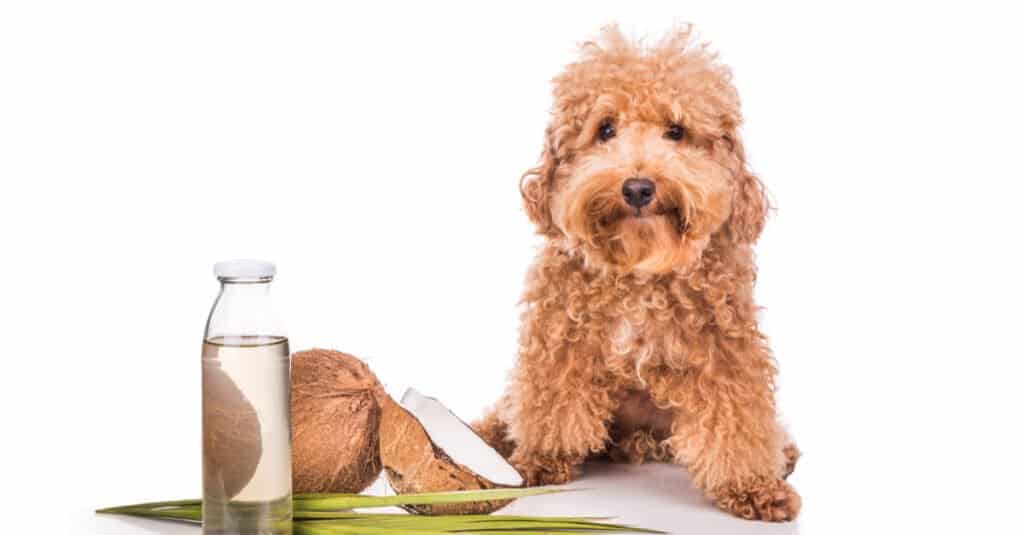
A small amount of coconut oil per day is an excellent canine laxative.
©ThamKC/Shutterstock.com
Coconut oil is one of the best natural ways to unclog your dog. Not only is it great for use as a natural laxative, but it’s also good as a skin protectant, supports dental health, has antimicrobial properties, and increases your dog’s good cholesterol.
It also has many additional uses in dogs, including improving their skin, eliminating dog odor, increasing their metabolic function, and helping older dogs deal with arthritis. As a stool softener, all you need to do is add a spoonful to your pup’s food bowl in the mornings.
Don’t administer in the evenings as it might expedite a bowel movement while you’re sleeping—not a good thing to wake up to. Since it has anti-inflammatory properties as well, it will help your pup with any bowel inflammation that’s resulting from constipation.
4. Apple Cider Vinegar
©focal point/Shutterstock.com
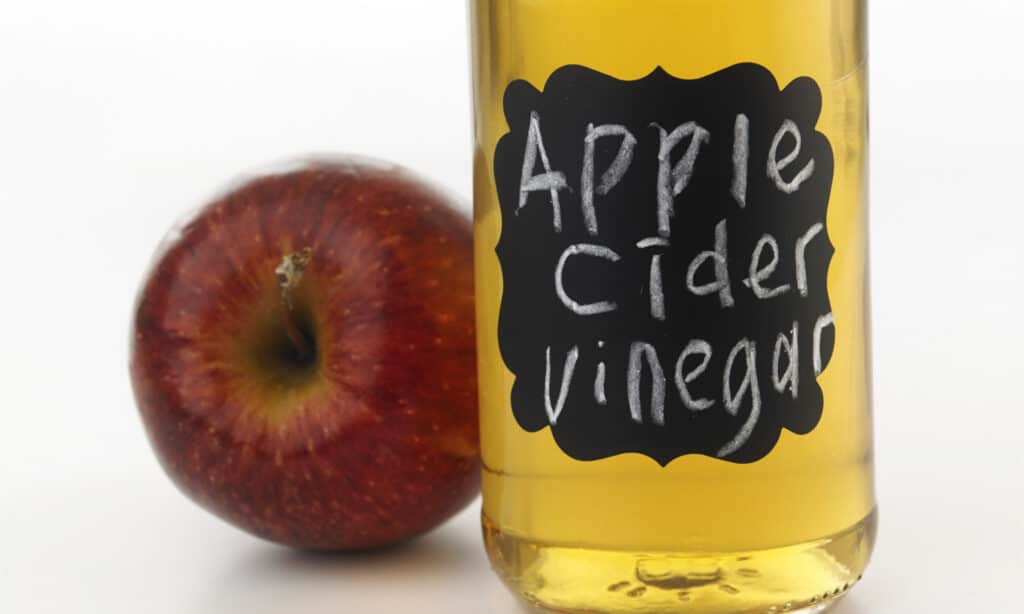
This is more of a helpful aid in the process of eliminating constipation in your dog. Apple cider vinegar acts as a probiotic, replacing the harmful bacteria in your pup’s gut with beneficial microorganisms. It’s also an effective way to remove and prevent fleas by spraying it on your dog’s coat.
The only problem with apple cider vinegar is its strong aroma and taste, both of which your dog will probably reject. While we can’t blame your furry friend for that, we can recommend putting a capful of apple cider vinegar in the water bowl.
It’s also good when mixed with yogurt. However, if you give your dog yogurt, avoid the highly processed nonsense that’s full of dyes and other additives. Stick with Seven Stars Yogurt, Happy Belly Greek Yogurt, or Chobani Non-Fat Greek Yogurt.
5. Leafy Greens
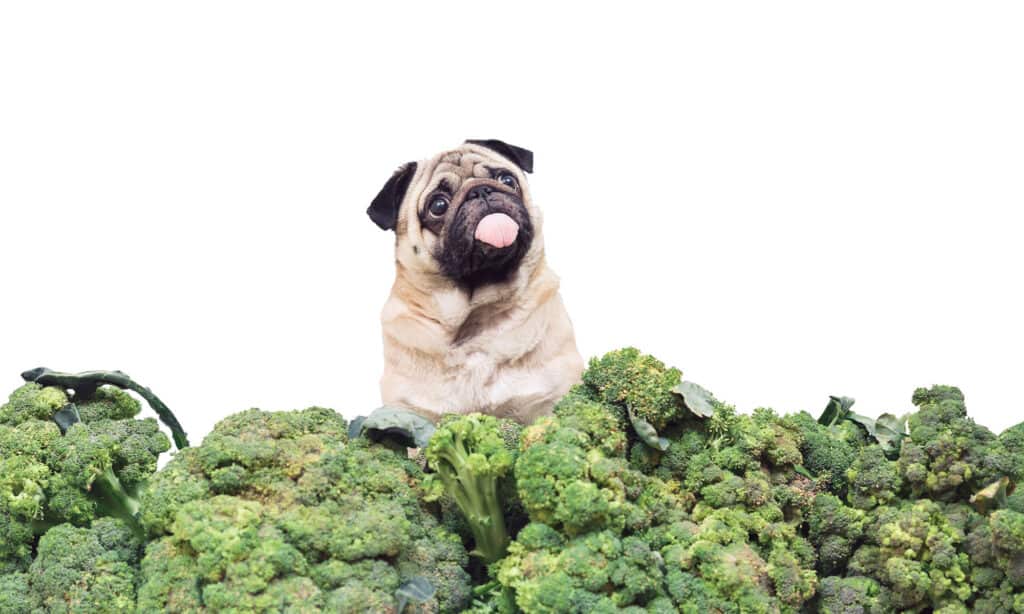
Broccoli is chock-full of vitamins and nutrients and is good for dogs in moderation.
©MarinaVarnava/Shutterstock.com
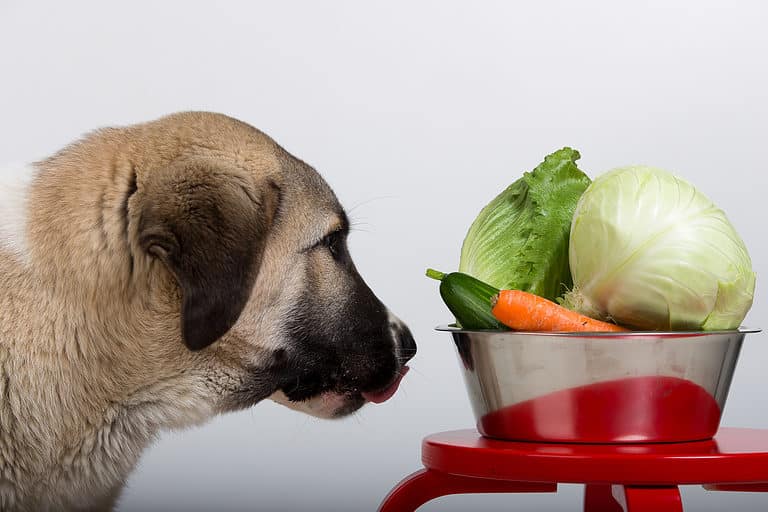
Yes, low-residue diets are the way to go if you want long-term success when treating your dog’s constipation issues. However, high-fiber leafy greens are the better bet in the middle of the battle, not long after the dust settles.
The leafy greens will help your four-legged companion get things moving while the low-residue diet will sustain it in the long run. On the bright side, there are a lot of leafy greens to choose from and some of the high-fiber choices below are not leafy or green.
- A handful of raspberries
- A can of green beans (preferably organic)
- Kelp
- A cup full of broccoli
- Sliced apples (skin on)
- Carrots finely sliced
- Half a cup of blueberries (save some for yourself too!)
6. Pumpkin Puree
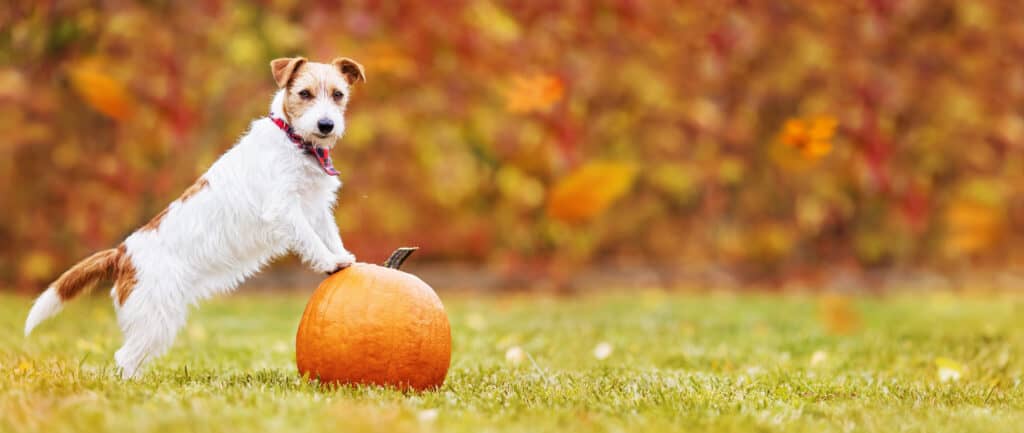
Puppy standing on a pumpkin in Autumn.
©iStock.com/wavetop
Pumpkin puree could also go in the leafy greens column; however, it’s more than enough all on its own. Depending on the size of your dog, one to four tablespoons in their daily food is sufficient. Pumpkin is one of the best, natural ways to unclog your dog, thanks to its dual purpose.
First, it’s very moist. The more water your puppy has, the more it will help soften their stool, making it easier to pass. Plus, moist food is just better for dogs in the long run. Second, the highly soluble fiber content gets things moving on its own.
It certainly helps that most dogs don’t mind the taste of pumpkin puree and will happily gobble it down along with the rest of their food.
7. Olive Oil
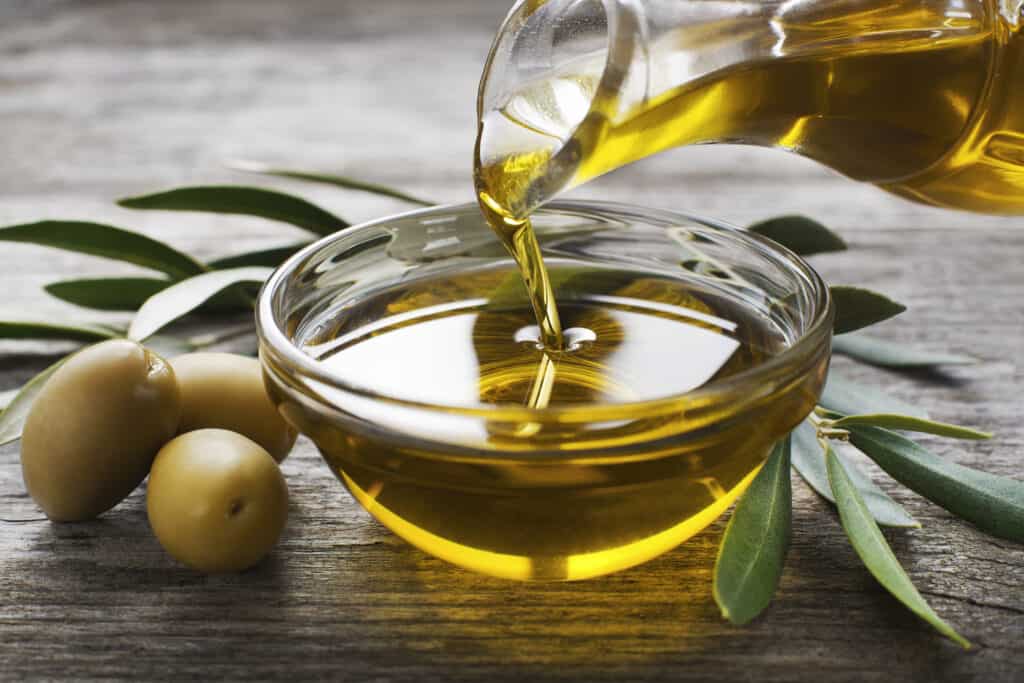
Olives and olive oil, in safe quantities, can provide Omega-3 oils to dogs.
©Dusan Zidar/Shutterstock.com
Olive oil is effective in its own right and sits on roughly the same level as coconut oil. As a natural laxative, it works well, but it also contributes to your pup’s health in several other ways. As an oil, it helps to lubricate the passages and soften the stool, making it easier for your dog to have a bowel movement and clean themselves out.
Olive oil is also very good for your dog’s skin. While it lacks some of the antimicrobial and odor-killing effects of coconut oil, it is also considered an effective cancer deterrent. Like coconut oil, simply add a tablespoon of olive oil to your dog’s food and it will do the rest.
8. Water, Water, and More Water
©Jaromir Chalabala/Shutterstock.com
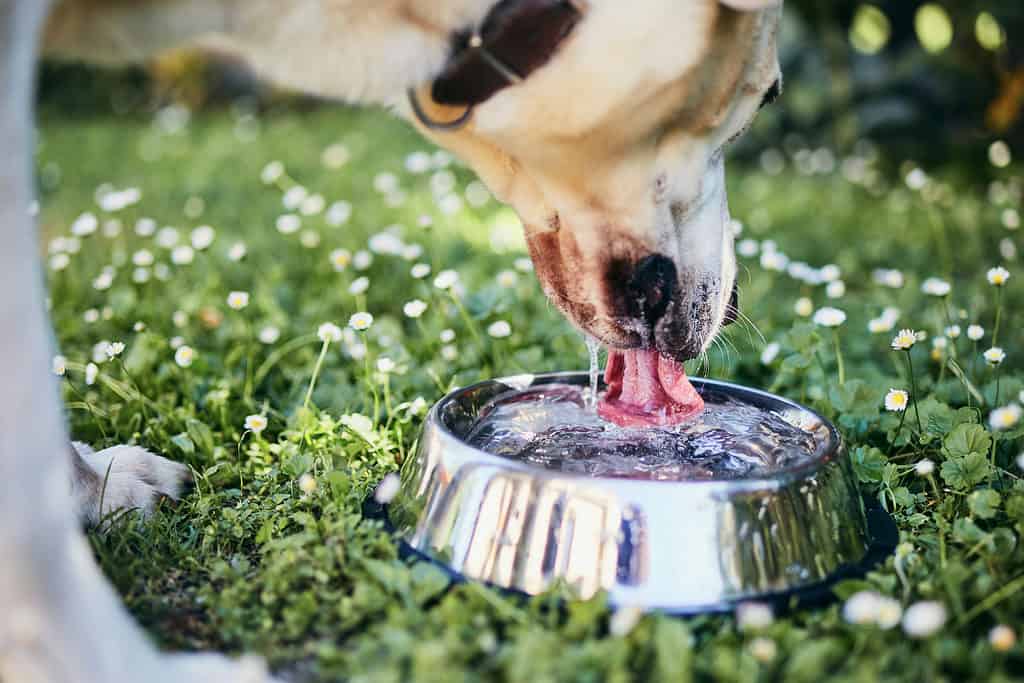
In many ways, dogs are no different than human beings. When people suffer from diarrhea and constipation, doctors always recommend more water. The body uses water to flush the colon and, as a happy side effect, it helps soften and loosen stool.
While water is not the end-all-be-all cure for constipation, it should coincide with every other treatment option on this list. Of course, you can’t make your poor puppy get up and drink water. Fortunately, you probably won’t have to. Dogs instinctively know what’s best for them when it comes to water, rest, and healing.
The only thing dogs can’t do is gather everything they need for themselves. That’s where you come in with your handy dandy dog bowl full of fresh, clean water.
Final Thoughts On Ways To Unclog Your Dog and Stop Constipation
One thing that never gets mentioned on lists of ways to unclog your dog is preventative maintenance. One way to help your puppy with constipation is to provide it with a diet that doesn’t lead to constipation in the first place. While all of the above are excellent natural and prescription methods for relieving constipation, some can also be used to prevent it.
If you feed your dog dry food, for instance, add a cup of water and allow it to get soggy. The more water the better. Make sure your puppy is getting the nutrition it needs on a daily basis and constipation will be the least of your concerns going forward.