
Dog breath does not have a reputation for being super fresh! But that does not mean that you (or your dog) have to put up with canine halitosis. There are simple and cheap ways to maintain your dog’s dental hygiene. Studies have shown that dental disease affects over 80% of dogs by the age of three. However, one large UK study found that 12.5% of dogs were diagnosed with dental disease within a single year. Your precious pooch, however, does not have to be one of them. We will recap why it is so important to prioritize your dog’s teeth and give you an easy recipe for homemade dog toothpaste.
Why Is Dog Dental Hygiene So Important?
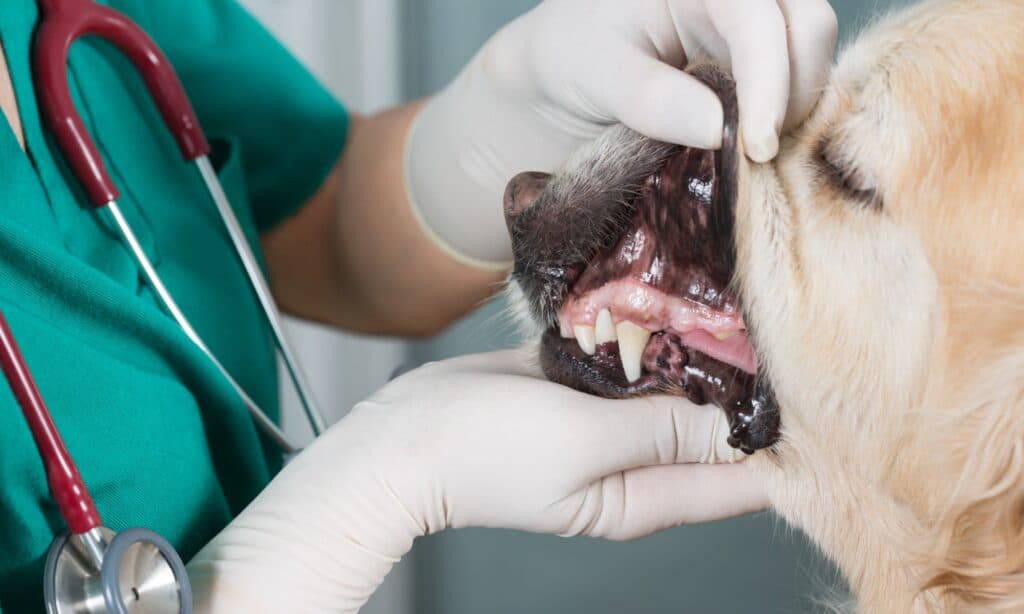
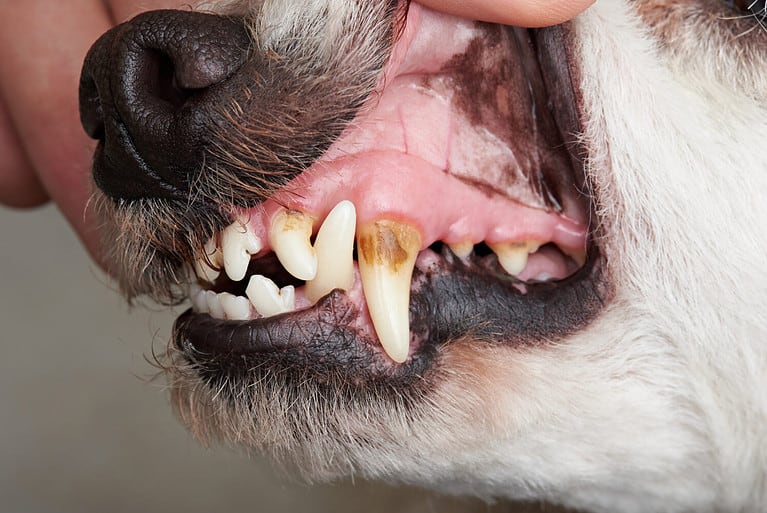
Poor dental hygiene can impact your dog’s health.
©iStock.com/fotoedu
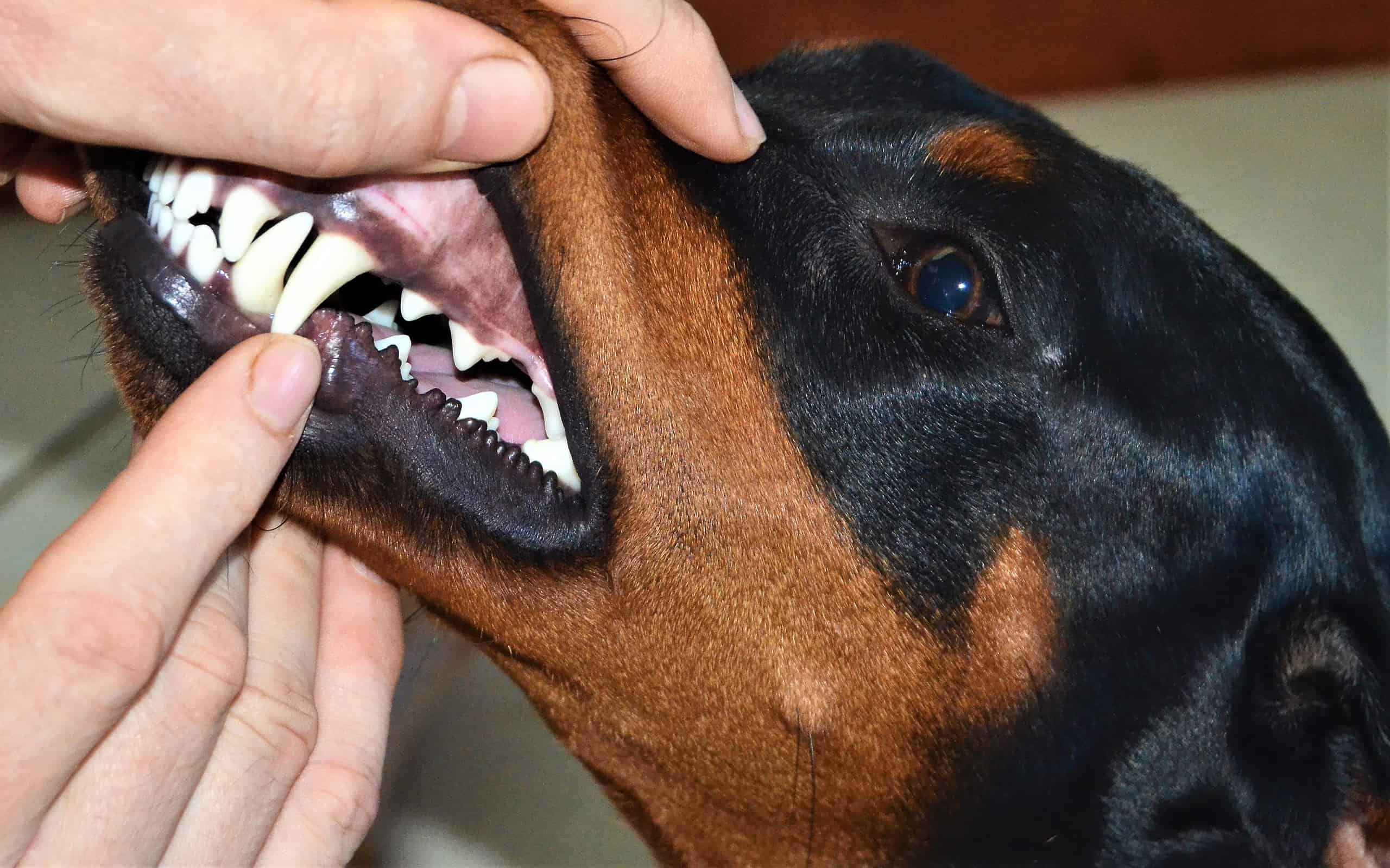
Dental plaque is a sticky biofilm of microorganisms (mostly bacteria, but also fungi) mixed with food particles that grows on the surfaces of your dog’s teeth. Over time, it hardens into tartar, which is easily visible if it is above the gumline. Unfortunately, it can also make its way below the gumline, where it cannot be seen. Once tartar is below the gumline, it causes inflammation, which damages the tissues and can lead to infections. At this stage, your dog may experience loose or broken teeth, excessive drooling, bleeding, and may refuse to eat due to pain and discomfort. It is much better not to let things get this far by maintaining good dental hygiene for your dog.
But the health problems do not stop there. The bacteria from plaque can enter the bloodstream and spread to organs such as the heart, kidneys, and liver. When bacteria are in the blood, it is called bacteremia, and it can cause serious damage to your dog’s organs.
Dog Tooth Brushing
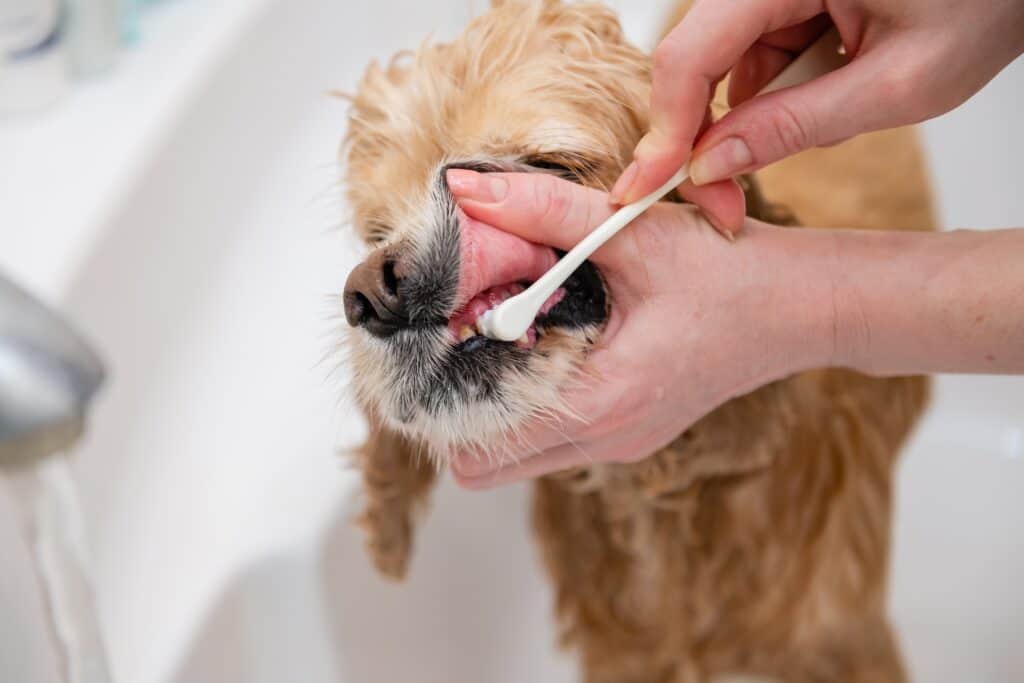
Brush your dog’s teeth from behind.
©O_Lypa/Shutterstock.com
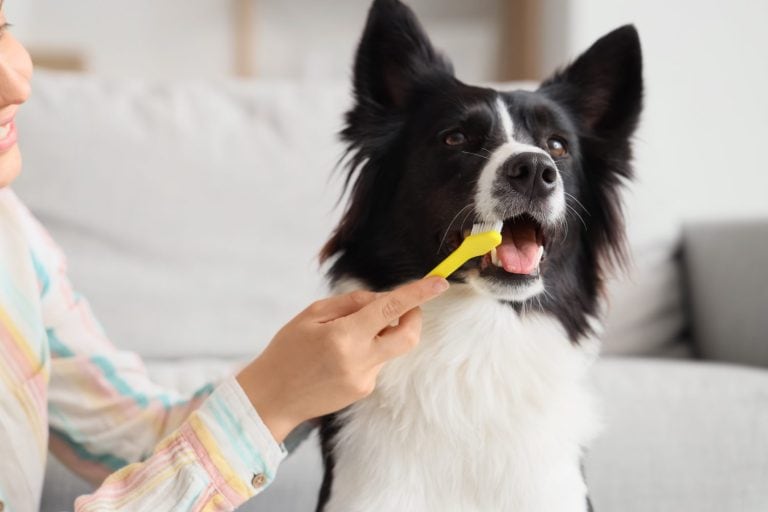
Regular at-home dental hygiene routines are important for your dog’s health. The sooner you get your dog used to having their teeth cleaned, the better. It is a good idea to start when they are puppies. However, it is never too late to get started on this. Brush your dog’s teeth a few times a week using a dog toothbrush. Giving your dog treats that help scrape plaque from their teeth can also be beneficial. Chew toys serve the same purpose, and your dog will enjoy the sensation of chewing. You can buy a commercial dog toothpaste (never use human toothpaste), but we have provided an effective recipe below.
Homemade Dog Toothpaste
This simple dog toothpaste recipe can be made at home from ingredients that you probably already have in your kitchen. Here are the ingredients with some information on why they have been included.
Ingredients
- 1 teaspoon of sodium-free broth – this will make the toothpaste palatable to your dog and make it more likely that they will let you put it in their mouth!
- 2 tablespoons baking soda – this softens any tartar that has already formed. Also, it changes the acid profile on the surface of the teeth, thereby preventing the formation of plaque. What’s more, it is mildly abrasive and scrapes off plaque and tartar.
- 6 mint leaves – fresh mint is safe for dogs and is a natural breath freshener. It can even aid digestion.
- ¼ cup coconut oil – this is antimicrobial and helps to control the buildup of bacteria and viruses in the mouth. It also helps to slow down the formation of plaque. Most dogs also love the flavor.
Method
All you have to do is tip all of the above ingredients into a food processor and blend them to create a paste. Then pop it into an airtight container where it will keep for two weeks. If you would prefer to keep things simple, this recipe will work with just 1 tablespoon of sodium-free broth and 1 tablespoon of baking soda. Alternatively, you can change the flavor by adding 1 teaspoon of cinnamon, 1 teaspoon of parsley flakes, or 1/2 teaspoon of peanut butter.
How to Brush Your Dog’s Teeth
Pick a time of day when your dog is calm—perhaps after a long walk or after you have finished scatter feeding them. Choose a quiet spot in the house where you will not be disturbed by sudden movements and loud noises. Position yourself behind your dog and reach over their shoulder to access their mouth.
The first time you do this, wrap a washcloth around your finger to help your dog get used to the sensation of having something in their mouth before moving on to a dog toothbrush. Let your dog have a taste of the paste—only a little one! Then try to wipe the cloth around their teeth in circular movements, just like you do when brushing your own teeth. Once your dog is comfortable with this, you can introduce the brush. Try to prevent your dog from biting down on the brush. This is not helpful for cleaning and could even break the brush.