
Quick Take
- Dogs’ allergies drive itch and often overlap, making diagnosis based on symptoms alone unreliable.
- A strict 6-8 week elimination diet is the only reliable method to diagnose a food allergy.
- Management starts with strict flea control, environmental clean-up, and diet changes; add medications and targeted supplements as needed.
If you live with a dog, how often do you hear them itch, or a constant, aggravating lick-lick-lick of their paws? For many dogs, itching and licking are the norm, but they really shouldn’t be. Environmental allergies exist in so many animals and are one of the most common reasons pets see a vet. However, pet owners often bounce from shampoo to supplement to new kibble without any real relief.
Part of the problem is that allergies in animals don’t look exactly the same as allergies in humans. Instead of sneezing, many allergic dogs chew on their feet, shake their ears, have reddened skin, rub their faces on the carpet, or even lose patches of fur. Plus, different allergies can look almost identical to each other, and several can show up in the same dog at once. How can you solve what’s going on with your pet?
Veterinary technician and animal behaviorist Teagan Coleman, owner of NLR Explore Dog Training, sees this frustrating scenario all of the time. In this piece, we’ll use current veterinary research and Coleman’s on-the-ground experience to unpack why allergies are so hard to solve, as well as what actually helps. Let’s dive into the details now.
The Big Three: Environmental, Flea, and Food Allergies

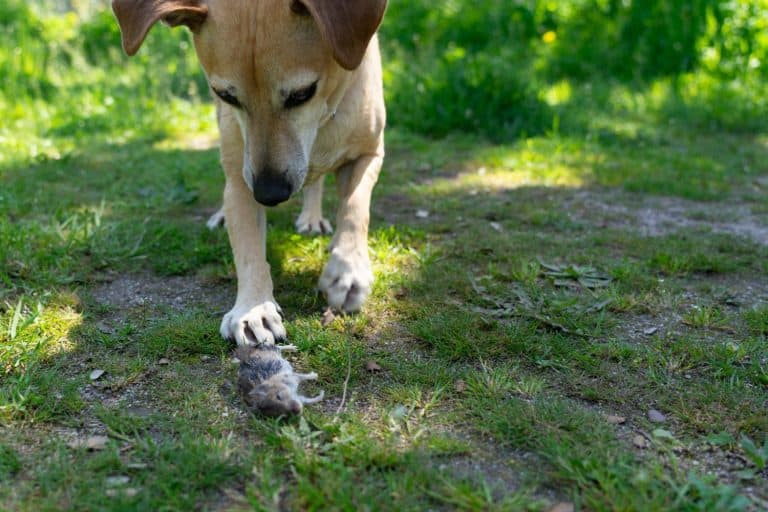
Dog allergies fall into three major buckets.
©Rattanapon Ninlapoom/Shutterstock.com
Coleman tells us about how widespread the problem is. “Allergies plague most dogs, even when we don’t realize it,” she says. “Cats are also affected, but dogs are often more prone to them, given that they’re more likely to be outside daily.”
Veterinary dermatology resources group most itchy dogs into three overlapping buckets. Here are the details and how dogs are affected.
Environmental Allergies

Some allergies are an overreaction to environmental substances.
©olgagorovenko/Shutterstock.com
Also known as atopic dermatitis, environmental allergies are an immune system’s overreaction to things in the environment, such as pollen, dust mites, and molds. The Riney Canine Health Center at Cornell University states that atopic dermatitis affects 10–15% of all dogs and is a lifelong condition driven by environmental allergens, much like human allergies.
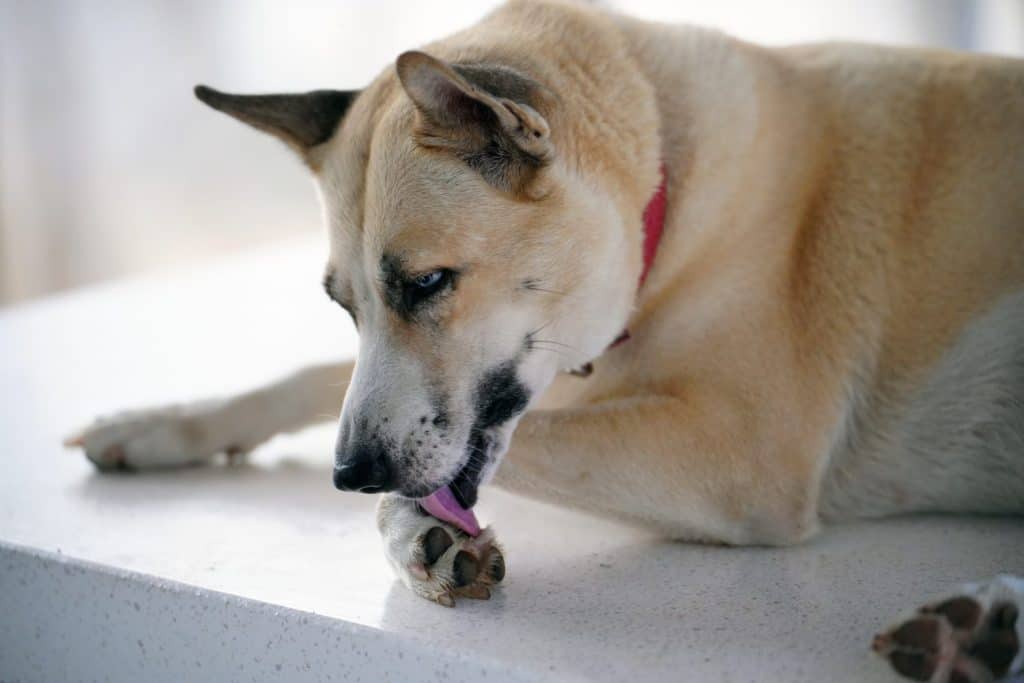
Common signs include red, itchy skin, constant licking of the paws, rubbing their face, and recurrent ear infections. A general allergy overview from VCA Animal Hospitals lists tree, grass, and weed pollens, molds, and dust mites as common triggers, with many dogs experiencing worse symptoms during certain seasons.
“Dogs can be allergic to grass and certain proteins found in their food,” Coleman says. “Their skin dries out, their ears and paw pads get red. They can get pretty miserable in the spring and fall, especially.”
Flea Allergy Dermatitis

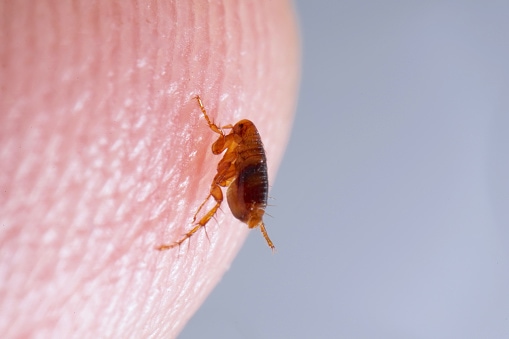
Flea allergies are a reaction to proteins in flea saliva.
©kobkik/Shutterstock.com
Flea allergy dermatitis is actually an allergic reaction to proteins in flea saliva, not just a standard side effect of flea bites. The Merck Veterinary Manual describes FAD as the most common dermatologic disease of domestic dogs in the U.S., dubbed a leading cause of allergic reactions in cats as well. A single flea bite can set off days of intense itching along the back, tail, and hind legs.
Because even one flea can trigger a major flare in allergic dogs, this type of allergy is impossible to manage without strict, year-round flea control and dedicated effort.
Food Allergies and Adverse Food Reactions

Food allergies can leave dogs itchy, gassy, or scabby.
©Laura Beach/Shutterstock.com
Food allergies are less common than environmental allergies, but they’re still a major player in itchy, gassy, or chronically scabby dogs. A 2023 review in the Journal of the American Veterinary Medical Association on food allergy in dogs and cats mentions that food allergies usually involve immune reactions to proteins like chicken, beef, dairy, or egg, and GI tract issues.
Coleman has lived that reality firsthand. “My pit bulls are allergic to chicken, which is a more common allergy than pet parents realize,” she says. Her experience and understanding of her own dog’s allergies came over time, as it’s often impossible to guess the offending protein without a structured diet trial.
Allergies plague most dogs, even when we don’t realize it.
Teagan Coleman, owner of NLR Explore Dog Training
Why Allergies Are So Hard to Diagnose
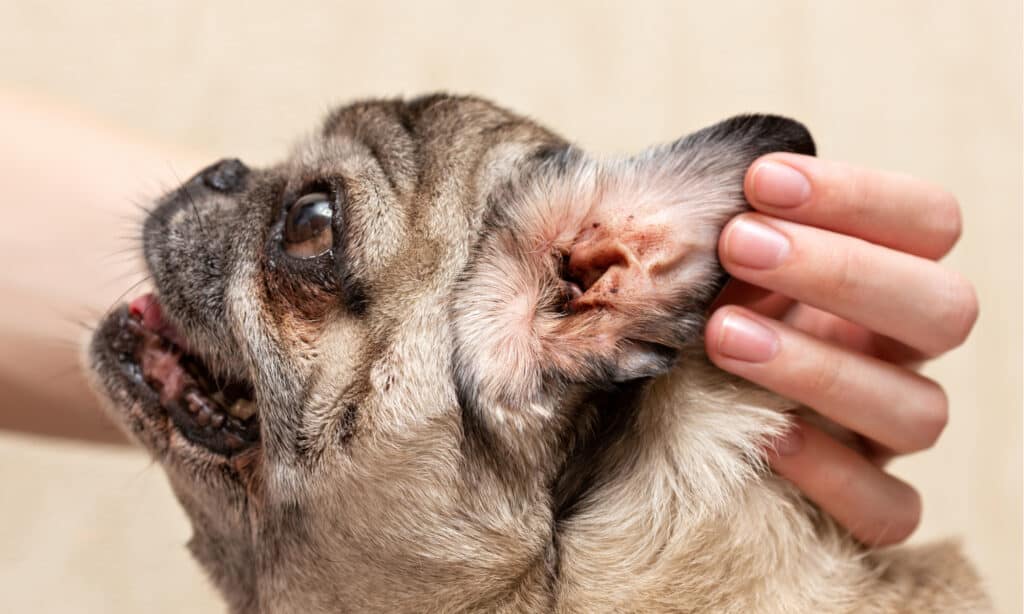
Diagnosing allergies can take some time.
©Glikiri/Shutterstock.com
From the outside, all pet allergies tend to manifest in the same ways: itching, licking, hair loss, or ear infections. That overlap is the first reason allergies are so frustrating and difficult to diagnose.
Veterinary dermatology guidelines often diagnose environmental allergies based on a pet’s history, their pattern of lesions, and through eliminating potential causes; there’s no single, quick test to get the job done, as dogs frequently have more than one allergy at once.
Food allergies are especially tricky to solve. The Canadian Academy of Veterinary Dermatology’s illustrated diet trial handout and the Purina Institute’s explanation of elimination diet trials both state that the only reliable way to diagnose food allergy is a strict 6–8 week elimination diet, followed by reintroducing the suspected allergen to see if symptoms return.
Just like people, dogs can have a variety of allergy triggers and, unfortunately, the best way to figure them out is by removing certain things from their environments and diets,” Coleman says. Owners may want fast answers, but true allergy solutions are slow and systematic by design.
Do Some Breeds Itch More Than Others?
Some dogs are more prone to allergies than others.
©KPhrom/Shutterstock.com
Allergies can actually plague some breeds more than others. The Merck Veterinary Manual’s overview of canine atopic dermatitis lists breeds with documented predispositions, including Golden Retrievers, Labrador Retrievers, Boxers, Dalmatians, West Highland White Terriers, and Chinese Shar-Peis.
What Actually Helps Allergies: Real-World Treatment Strategies

There are multiple methods you can employ to reduce allergies in dogs.
©Valeriy_G/iStock via Getty Images
There’s no single “allergy pill” that fixes everything, but there are solutions out there. These are the options to consider if your pet is itchy and suffering from allergies, especially if that suffering is year-round.
1. Use Proper Flea Control
Because flea allergy dermatitis is such a common driver of itchy skin in pets, most vets insist on strict flea prevention as step one. Modern flea products are highly effective, and your vet can recommend a brand and schedule suited to your pet’s health and climate. Even if you aren’t actively seeing fleas, this step is non-negotiable for any itchy pet.
2. Clean Up Your Home and Pet
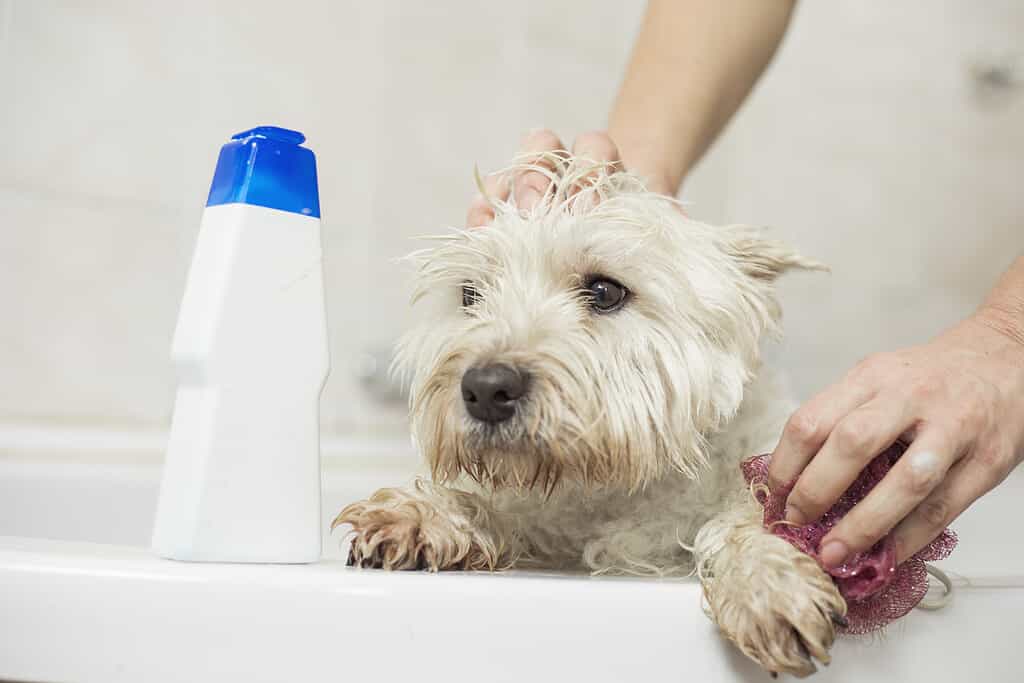
Good hygiene practices can curb allergies.
©Sladic/iStock via Getty Images
For environmental allergies, you’ll never eliminate every pollen or bit of dust, but you can reduce them by consistently trying the following:
- Keep bedding and soft toys washed weekly, and in hot water
- Run HEPA filters or air purifiers where your dog sleeps
- Rinse or wipe dogs down after outdoor time, focusing on paws and bellies
“Start wiping them down after playing outside, especially between their toes,” Coleman advises. “Yeast development can be a real problem and lead to chronic licking for dogs.” Dermatology advice states that damp, warm areas, like between toes, are prime real estate for yeast overgrowth when the skin barrier is disrupted.
Bathing is far trickier. Used correctly, medicated baths can help wash off allergens and soothe inflamed skin. But general guides like PetMD’s article on dry, flaky skin and allergy-focused grooming tips from MedVet’s bathing recommendations warn that over-bathing strips dogs of their natural oils.
“Bathing can harm just as much as it can help. Every time you give your pup a bath, it has a chance of drying out their skin and making them itch even more,” Coleman says. Using gentle or medicated shampoos at an appropriate frequency is what’s recommended most, not scrubbing them down every time they look itchy.
3. Change Diet Strategically

Sometimes a change in diet is what your allergy-prone dog needs.
©Vadzim Mashkou/Shutterstock.com
Altering your pet’s diet is where many owners want to start, and it’s often exactly the right call, especially if warning signs include both skin and stomach issues.
“There are warming and cooling proteins; anything more likely to make your dog hot is one you should avoid if they’re struggling with allergies,” Coleman states.
Traditional Chinese veterinary medicine classifies proteins as ‘warming’ or ‘cooling.’ While conventional dermatology does not use these terms, it does agree that switching to a novel or hydrolyzed protein diet is important when a food allergy is suspected.
Coleman highlights one protein in particular for itchy dogs: “Salmon-based foods are one of my favorites to recommend if your pup has bad allergies.” That preference complies with nutrition research showing that omega-3 fatty acids from fish (EPA and DHA) can reduce inflammation and itch.
If you suspect food plays a role in your pet’s allergies, it’s worth designing any protein change as a true elimination trial with your vet, rather than hopping randomly between sensitive food formulas. While it will take more time and effort, the effort will be worth it in the long run.
4. Medications Can Help

There are many pharmaceutical options to tackle dog allergies.
©VP Photo Studio/Shutterstock.com
When dogs are miserable, diet and supplements alone are rarely enough. Medications may be the best option if your dog is suffering and needs immediate relief. While their effectiveness can vary between individual dogs, many experience significant long-term improvement with these solutions:
- Anti-itch drugs like oclacitinib (Apoquel) or lokivetmab injections (Cytopoint) target specific itch pathways and are widely used for atopic dermatitis
- Short steroid courses may be used to break severe flare-ups, though long-term use has side effects
- Antibiotics or antifungals are added when secondary infections (like staph or yeast) complicate things
- Allergen-specific immunotherapy, such as allergy shots or drops, is based on intradermal or blood testing, retraining the immune system over time
5. Other Supplements Can Help
Coconut oil should be used sparingly to address dog allergies.
©iStock.com/Irina Vasilevskaia
Coleman suggests supplements as a possible solution: “Coconut oil can be a great addition to any dog’s diet, if used properly. It helps with skin and coat health, as well as certain digestive issues that may be at the root of your dog’s allergies.”
However, all supplements, including coconut oil, should be used with caution. 2024 review on coconut oil for dogs from PetMD notes that, while coconut oil is popular and may offer theoretical antibacterial and moisturizing benefits, there’s no strong scientific evidence that it helps, and consistent use can raise dietary fat in ways that are risky for pets with certain conditions.
There are many supplements available that can help with both skin and coat conditions, so be sure to do your research and consult your vet for possible options.
Why the Itch Never Fully Goes Away

Allergies are usually a chronic health concern.
©Mary Swift/Shutterstock.com
Perhaps the most important mindset shift is accepting that allergies are typically chronic and not completely curable. The goal should be to manage allergies and improve your pet’s quality of life, rather than expecting to eliminate them completely.
The best advice remains this: recognize patterns, expect flare seasons, and work in tandem with these times instead of being blindsided every year. “Just remember that certain seasons may make your dog itchier than others. Try to go easy on them and have solutions in place for these times,” Coleman adds.
At the end of the day, allergies are hard to solve because they’re not a single problem. However, with a thoughtful plan and realistic expectations, most dogs go from a frantic licking habit to simply scratching their ears now and then.