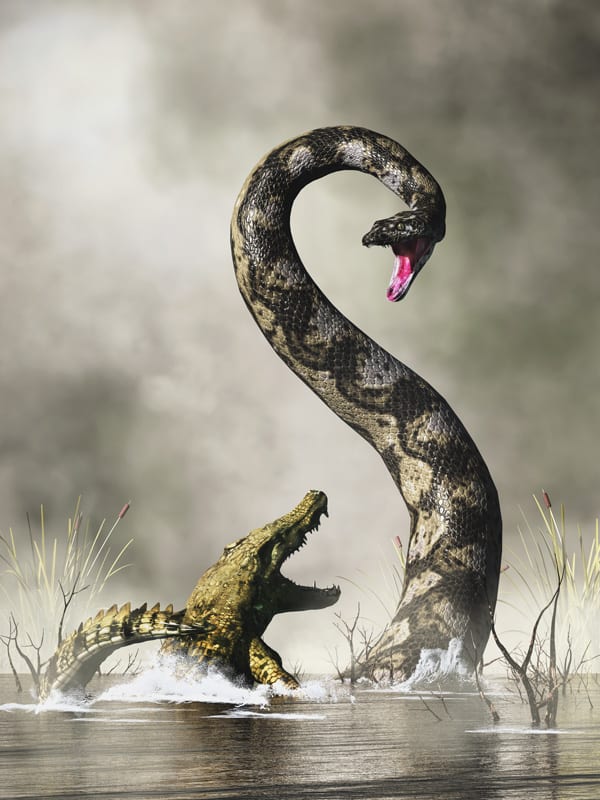
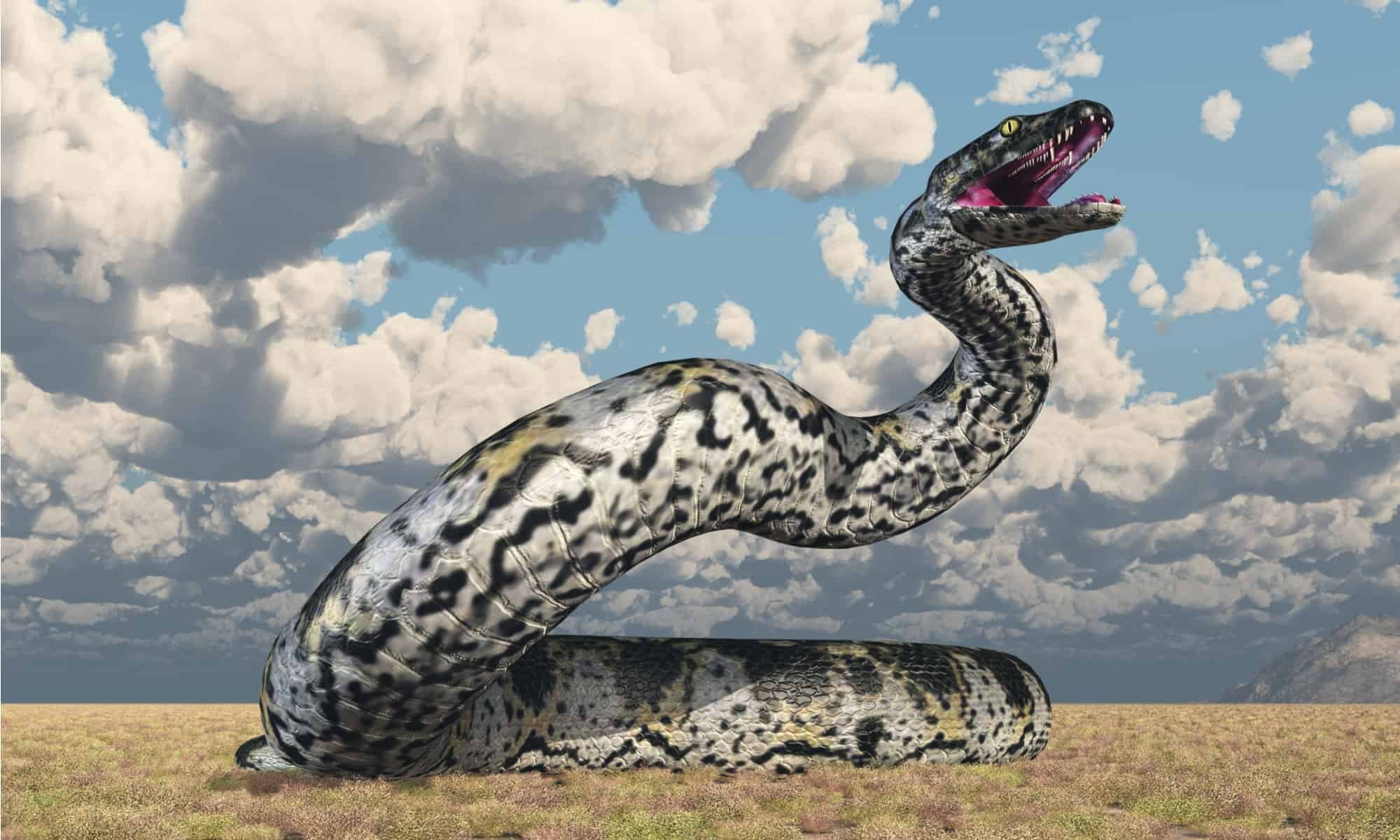
Titanoboa was an ancient, down-right massive snake. Measuring 40 feet long and weighing over a ton, the great Titanoboa was known as the biggest snake to ever exist. However, in June 2025 researchers in Gujarat, India made a surprising discovery: the remains of another prehistoric reptile. This snake, named Vasuki indicus, may have been as long as 49 feet!
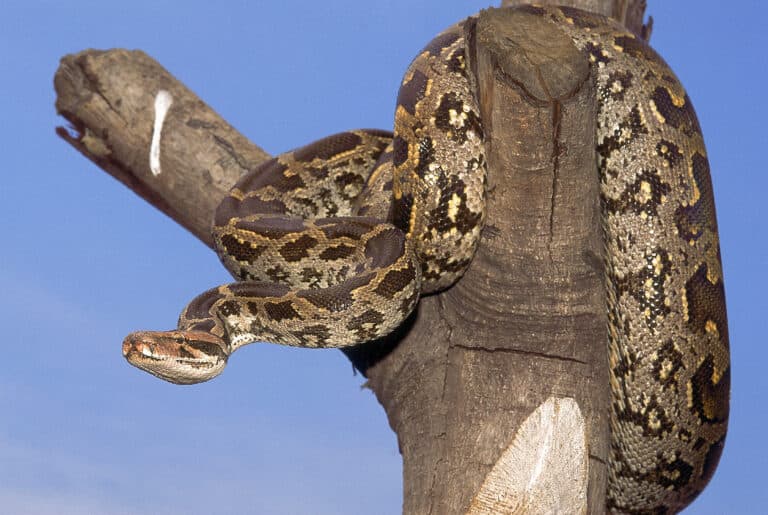
Both of these huge specimens highlight the incredible changes that have taken place over millions of years. By analyzing these ancient serpents, paleontologists are just beginning to understand how the massive reptiles influenced their environment. These snakes once inhabited swampy, tropical rainforests and survived by hunting large prey. Scientists describe them as much larger versions of modern-day anacondas and pythons.
In this slideshow, we cover everything you could want to know about the Titanoboa, including its mind-blowing size and how it compares to today’s largest snake species. We’ll also cover the newly discovered Vasuki indicus and how it matches up to the Titanoboa. Take a journey through the spans of time by learning about these fascinating mega-creatures.
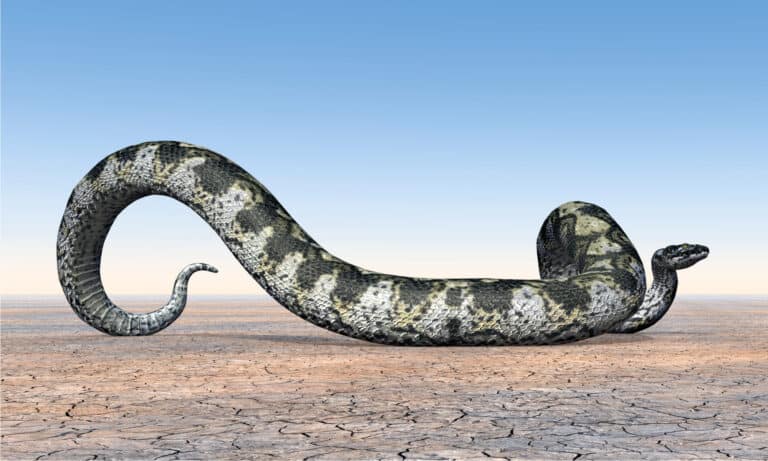
Titanoboa and Vasuki indicus
©Michael Rosskothen/Shutterstock.com
- Titanoboa is known for being the largest snake to have ever lived.
- Recent fossil discoveries in India suggest Vasuki indicus may rival Titanoboa in size.
- These ancient snakes help scientists understand prehistoric ecosystems and evolutionary history.
Discovery of Vasuki indicus

©SNEHIT PHOTO/Shutterstock.com
- Paleontologists found the fossils of Vasuki indicus in a lignite mine in Gujarat, India.
- The snake was between 36 and 49 feet long, possibly longer than Titanoboa.
- It lived around 47 million years ago and likely hunted like an anaconda.
Size of Titanoboa
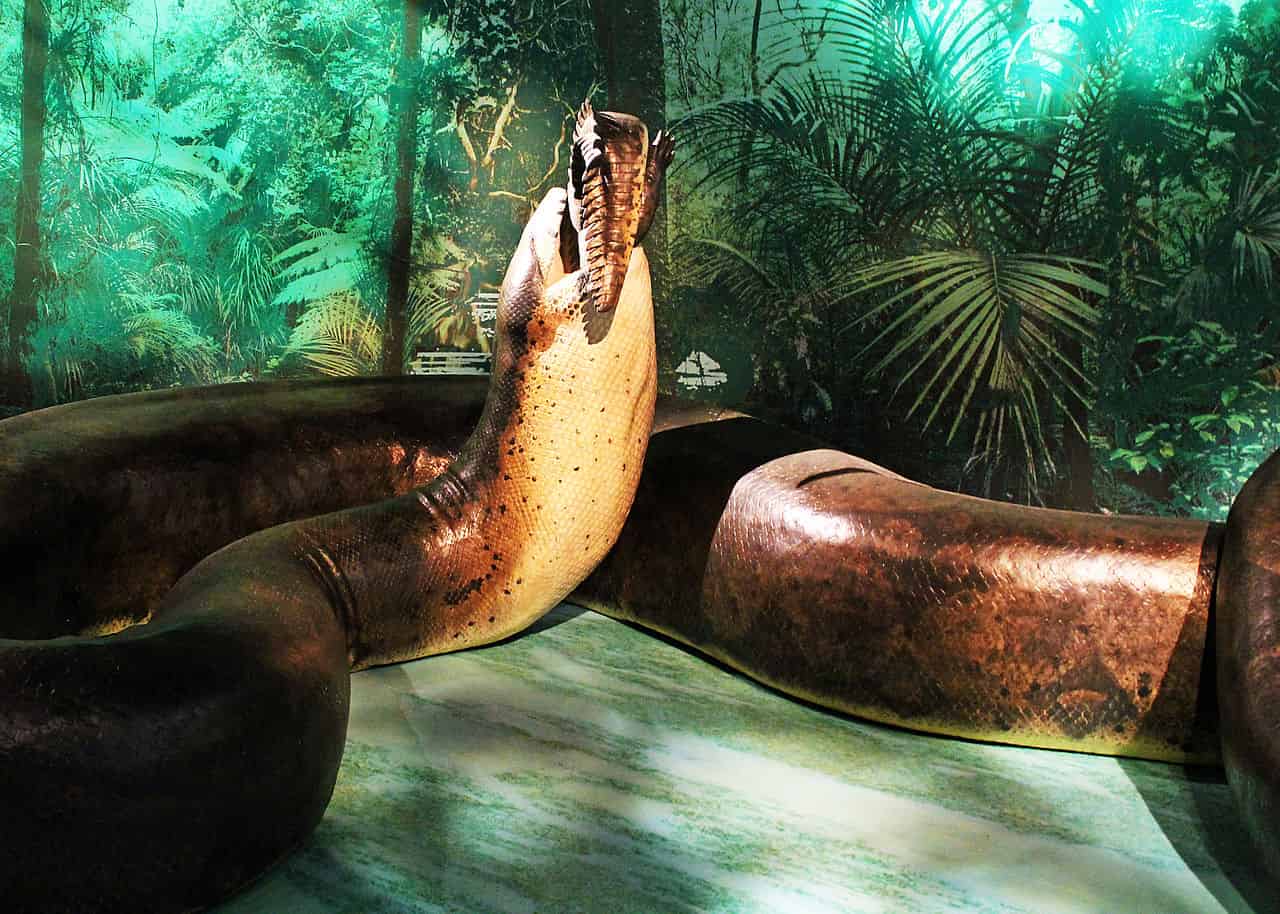
©Ryan Quick from Greenbelt, MD, USA, CC BY 2.0, via Wikimedia Commons - Original / License
- Titanoboa reached lengths of 42–47 feet and weighed up to 2,500 pounds.
- It was significantly larger than any modern snake.
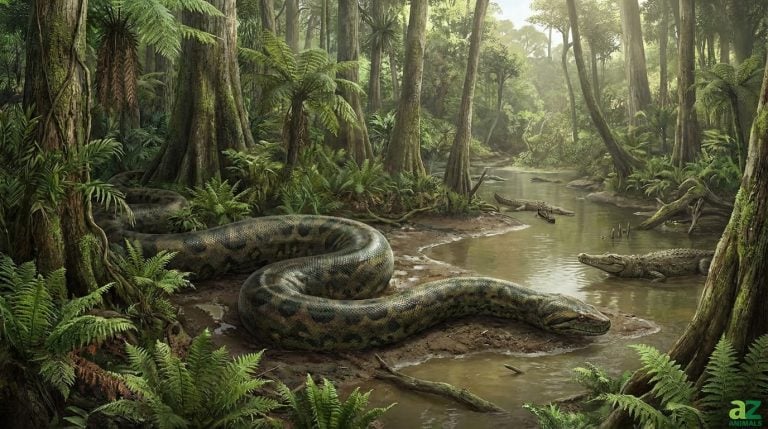
- The snake lived in ancient tropical rainforests in what is now Colombia.
Titanoboa’s Diet

©Dotted Yeti/Shutterstock.com
- Titanoboa primarily ate fish, thriving in a coastal environment.
- Its diet reflects adaptation to an aquatic lifestyle.
- Fossils support piscivorous feeding behavior.
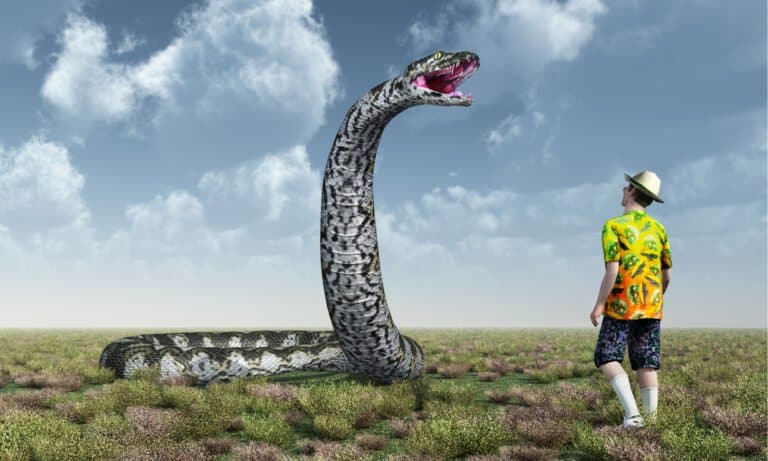
Human vs. Titanoboa
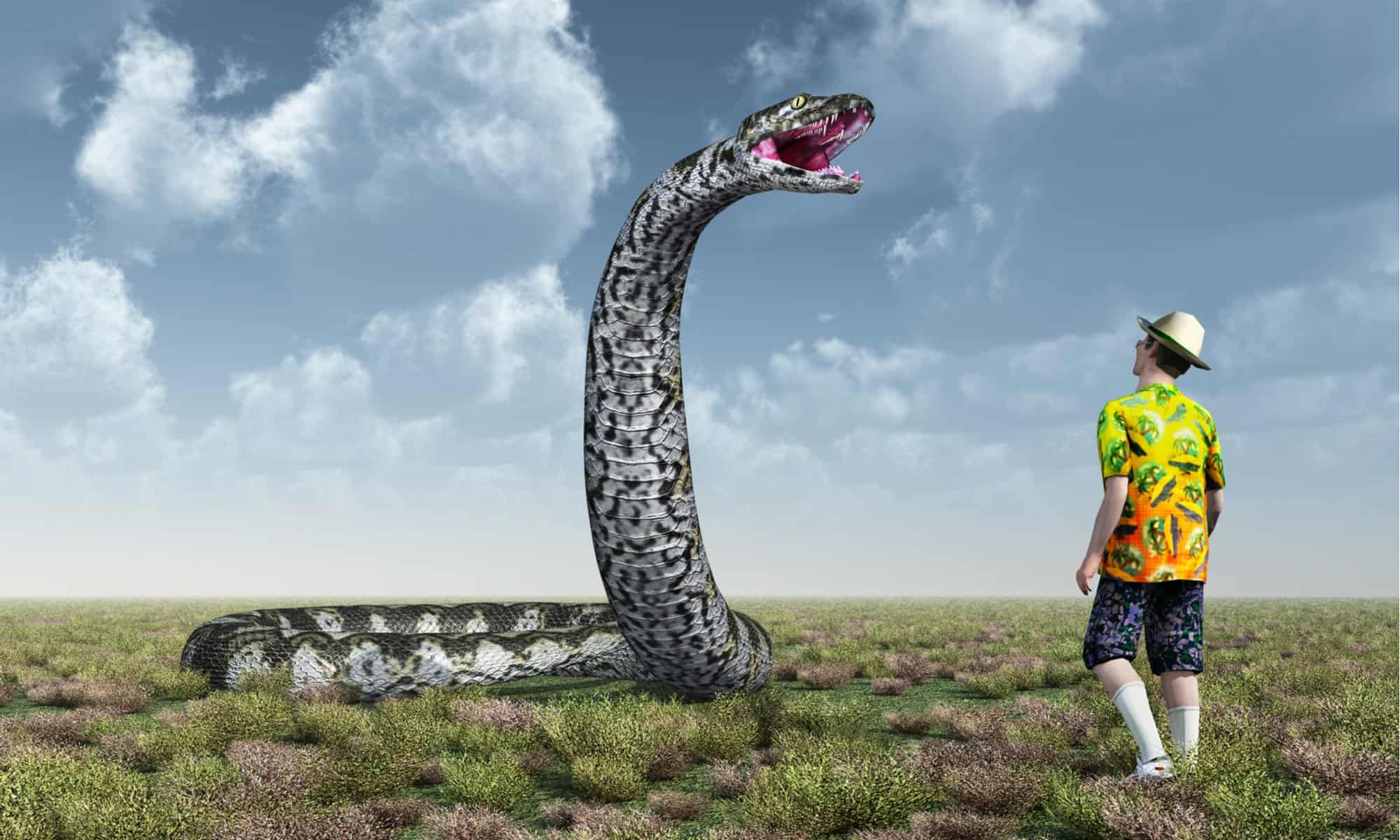
©Michael Rosskothen/Shutterstock.com
- Titanoboa was about 8 times the size of an average human.
- The massive serpent was school bus sized.
- The human-to-Titanoboa comparison offers a striking visualization of prehistoric scale.
Anaconda vs. Titanoboa

©Patrick K. Campbell/Shutterstock.com
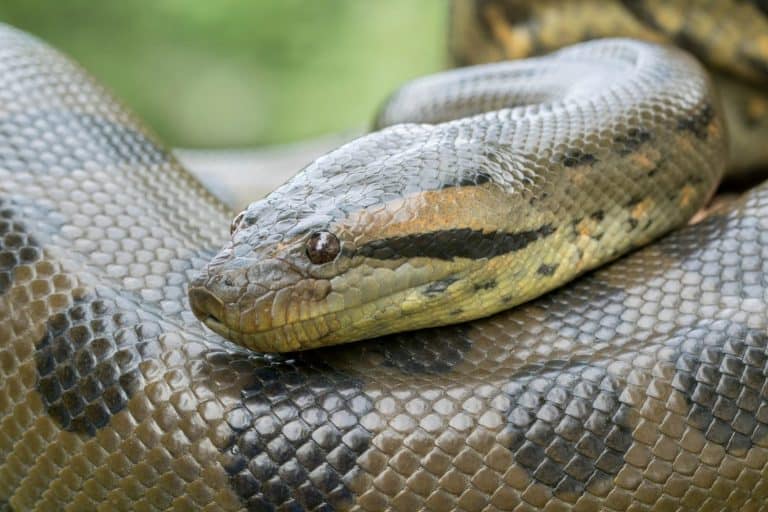
- Green anacondas grow up to 15 feet and weigh 150–500 pounds.
- Titanoboa dwarfs them in both length and weight.
- Both snakes preferred aquatic environments.
Reticulated Python Comparison
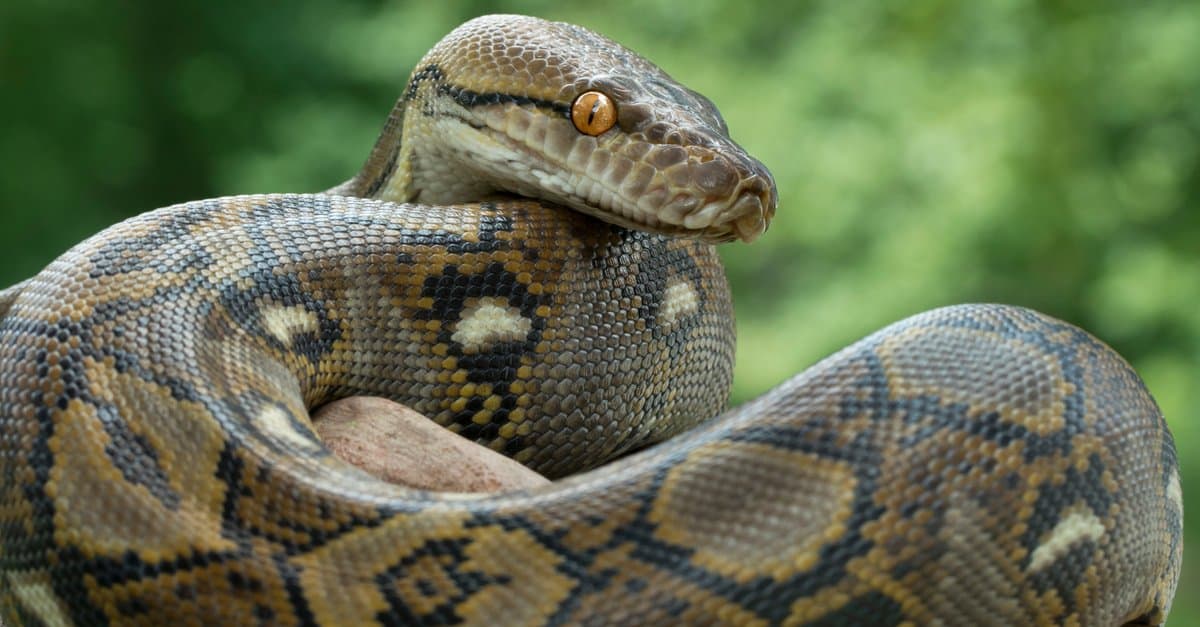
©Mark_Kostich/Shutterstock.com
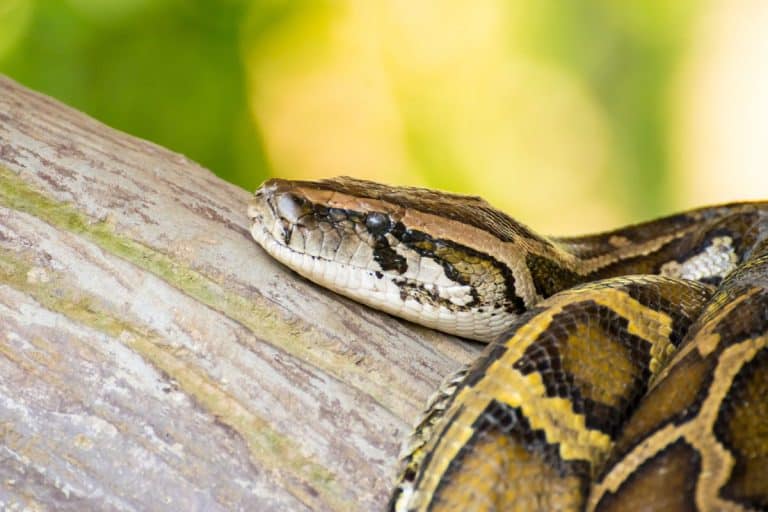
- Reticulated pythons reach 10–20 feet and weigh up to 386 pounds.
- Despite being the world’s longest modern snake, they are significantly smaller than Titanoboa.
- Both snakes inhabit rainforests.
Habitat Similarities

©streetflash/Shutterstock.com
- Titanoboa, anacondas, and reticulated pythons all favor wet, tropical climates.
- These environments support aquatic prey and offer camouflage.
- Shared habitats indicate similar ecological roles.
Visualizing the Titanoboa

©Michael O'Keene/Shutterstock.com
- Titanoboa was longer than a school bus.
- A full-grown specimen could have weighed more than a ton.
- Its fossil record offers insights into ancient biodiversity.
Titanoboa’s Legacy
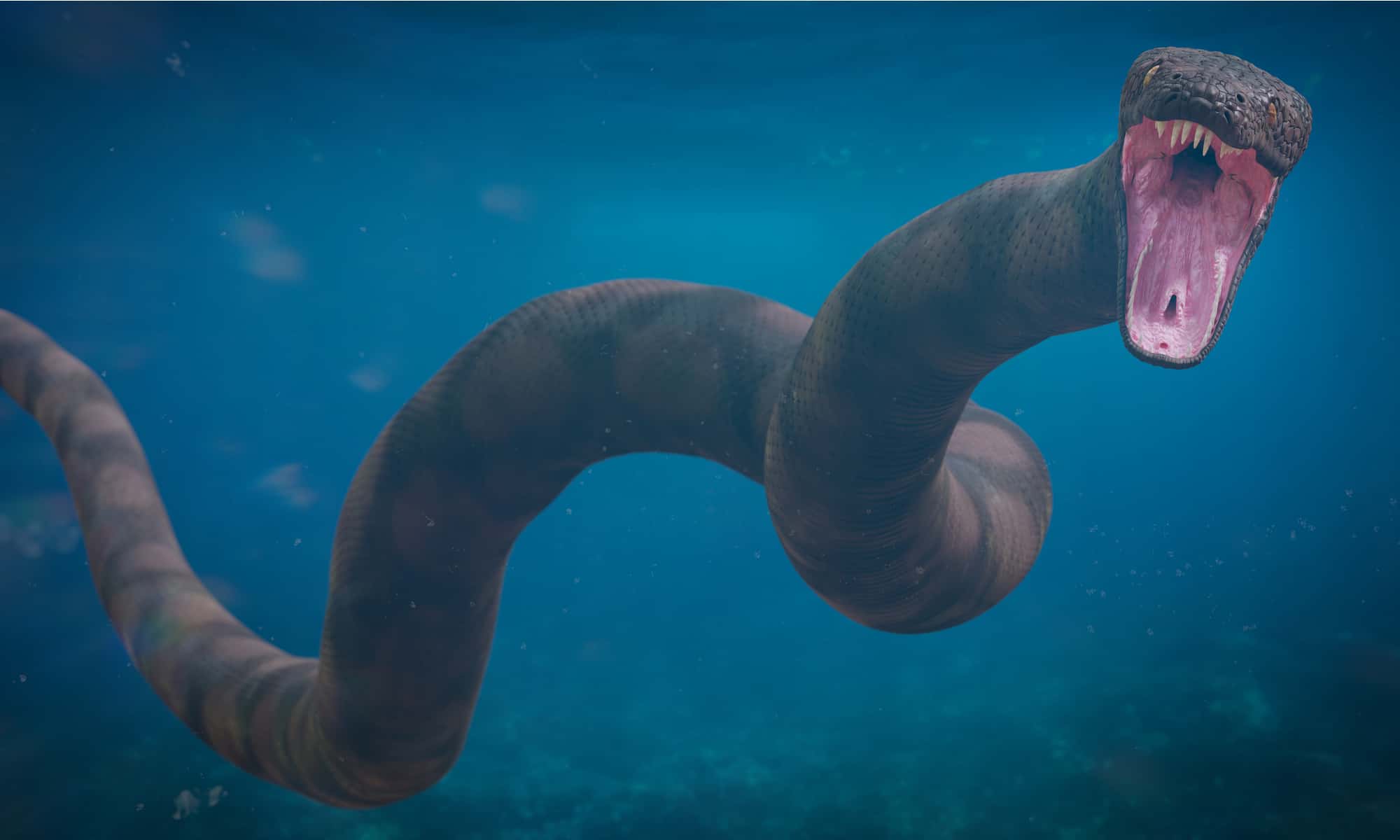
©Dotted Yeti/Shutterstock.com
- Titanoboa remains a symbol of prehistoric gigantism.
- Vasuki indicus may add to our understanding of ancient mega-snakes.
- Study of these animals continues to shape our view of the ancient world.