
Quick Take
- Anacondas are among the largest snakes, reaching up to 30 feet long. The green anaconda is the largest species.
- Fossils show anacondas reached their full size early in their history and have changed little since.
- Stable wetlands and a semi-aquatic lifestyle kept anacondas large despite climate shifts.
- Other large reptiles couldn’t cope with a rapidly changing environment.
Anacondas are some of the largest snakes in the world, reaching impressive sizes which have earned them a fearsome reputation. Millions of years ago, massive reptiles weren’t uncommon at all, with animals such as 40-foot caimans and 10-foot turtles roaming the Earth. Fascinatingly, anacondas have managed to both survive and retain their huge size while other giant reptiles went extinct. Keep reading to discover how they managed this evolutionary feat!
Living Giants

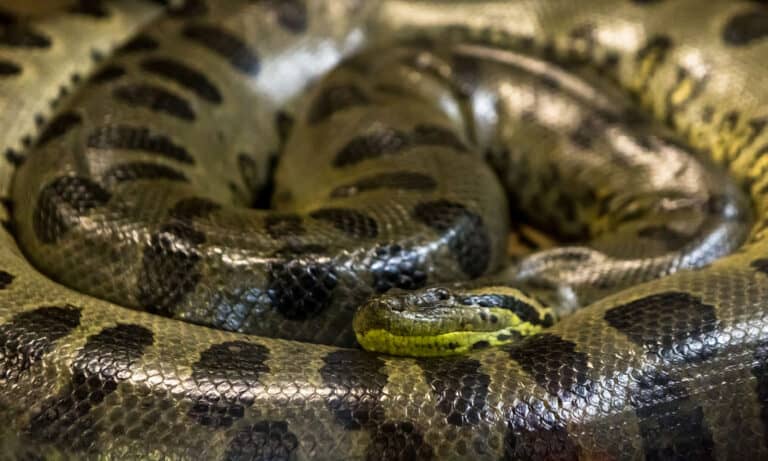
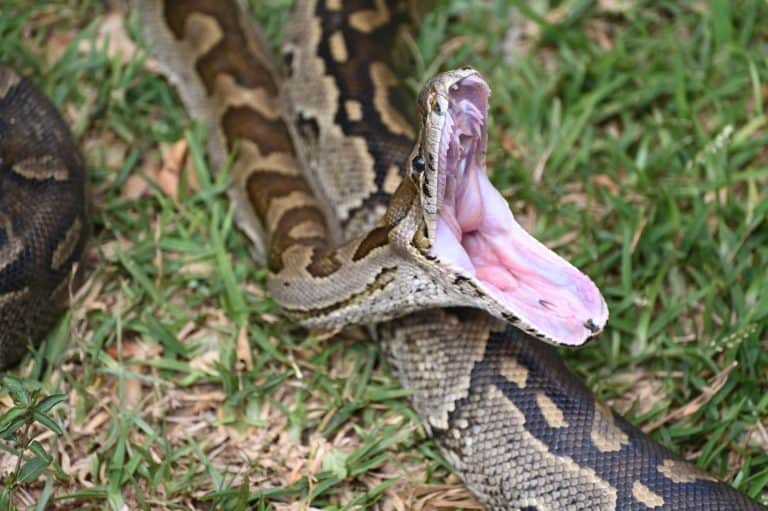
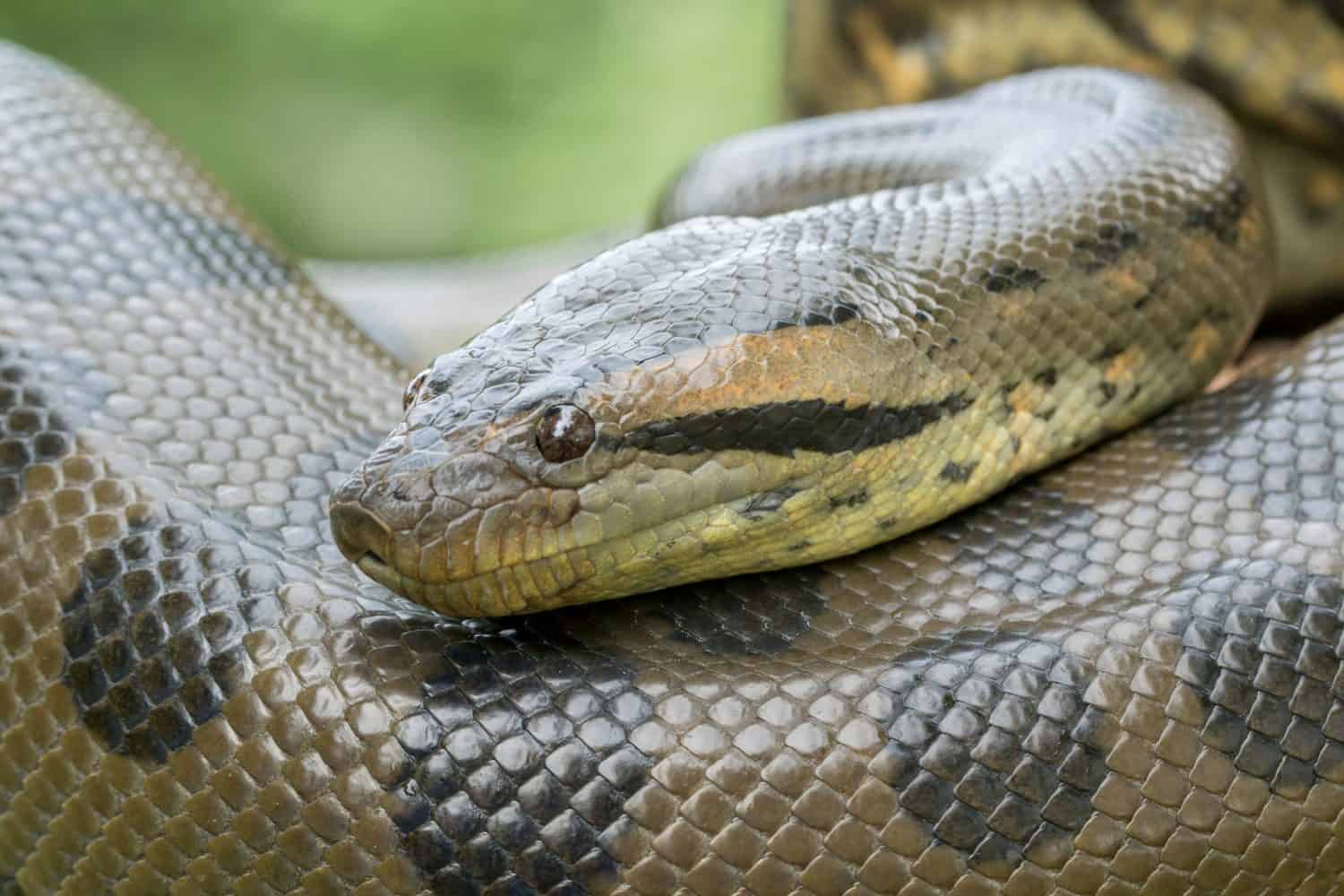
Anacondas are huge, thick-bodied snakes with a maximum length of 30 feet.
©slowmotiongli/Shutterstock.com
Anacondas are some of the largest snakes around, reaching lengths of up to 30 feet and weighing as much as 550 pounds. There are four living species of anacondas, with the green anaconda being the largest. Anacondas inhabit the rivers and swamps of South America. They are powerful ambush predators, capable of taking down prey such as deer and caiman. They kill by constriction, coiling their body around their prey until it is dead, before they then swallow it whole. Anacondas can often go for weeks or even months between meals due to their slow metabolism, which allows them to digest meals over a long period of time.
Fossil evidence suggests that these snakes evolved approximately 12 million years ago, during the Miocene Epoch. Anacondas weren’t the only massive reptiles alive in that period, though, as the Miocene is famous for its myriad giant reptiles. Other species in the same time period include huge crocodilians such as Purussaurus and Mourasuchus, as well as large freshwater turtles such as Stupendemys. Most of these species eventually disappeared, yet anacondas didn’t.
Anacondas Reached Maximum Size Early
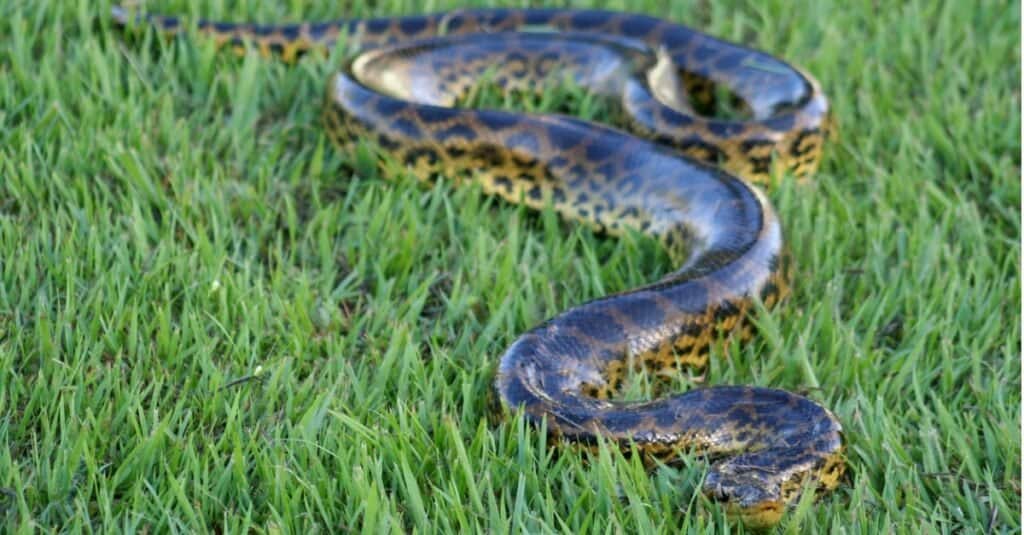
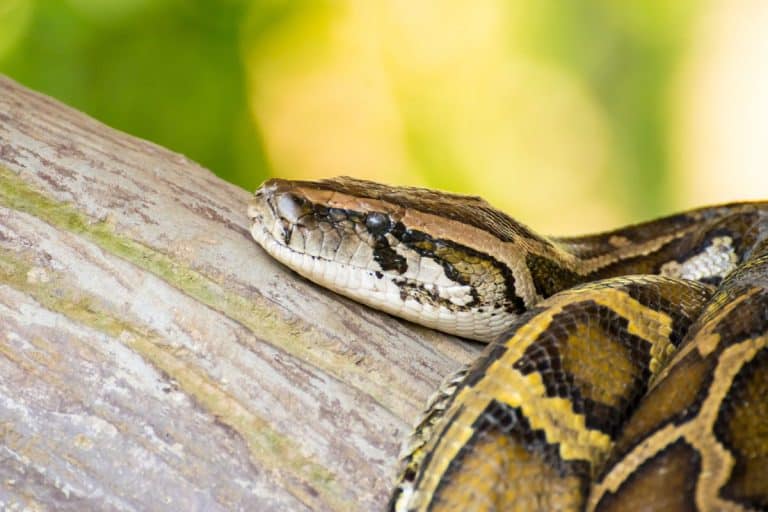
Anacondas reached their large size around 12 million years ago.
©iStock.com/Schumaher
The Miocene was subject to warmer temperatures and was home to reptiles that were much larger than their modern counterparts. Therefore, it would be easy to assume that ancient anacondas were even larger than they are today. However, fossil evidence proves this assumption to be wrong. Instead, the evidence shows that they were actually of a comparable size to their modern counterparts.
A research study by the University of Cambridge examined anaconda fossils dating back to the Miocene era, comparing fossilized vertebrae with those of modern anacondas. The results show that the snakes were of a similar size to the anaconda species that we know today. This means that anacondas actually reached their full body size early on in their evolutionary history and have changed very little since. What makes this particularly unusual is that most of the large reptiles of the same era either shrank significantly or disappeared entirely.
Why Did Anacondas Stay Massive?
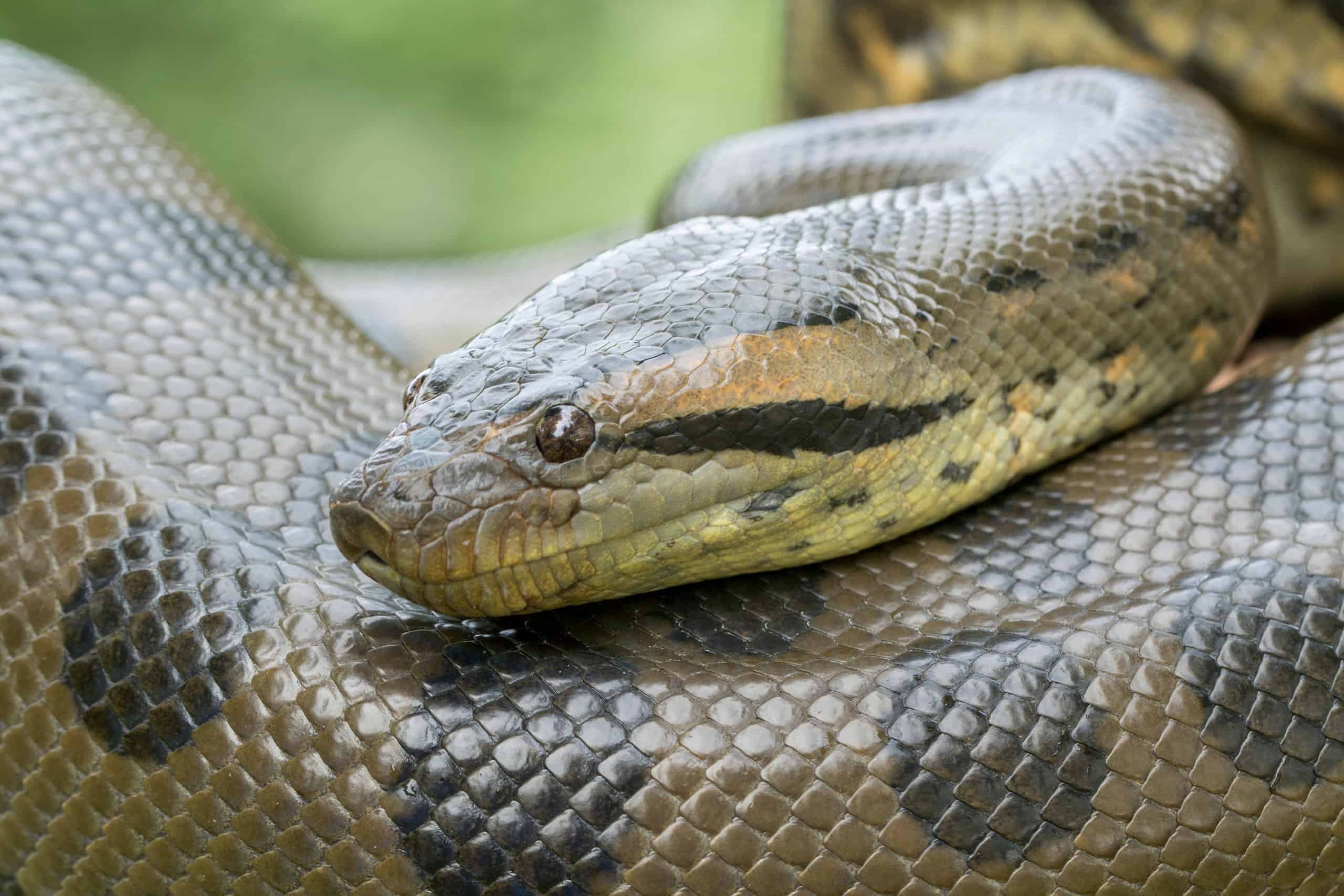
Anacondas survived because their habitat remained largely the same.
©Mark_Kostich/Shutterstock.com
As other Miocene reptiles didn’t manage to retain their large size, it poses the question of just how the anacondas achieved this remarkable feat. Simply put, anacondas managed to retain their size due to their habitat. Although their range was much broader than it is today, their habitat has remained much the same. Swamps, wetlands, and flooded forests covered large parts of what is now South America. Enough suitable habitat has remained over the last 12 million years to continually support their large size. This was not the case for many other species, which had to deal with changing habitats.
Additionally, although cooling temperatures became a factor in the reduction of other species, anacondas remained largely unaffected due to their semi-aquatic lifestyle in slow-moving wetland habitats, where water temperatures changed more slowly than temperatures on the land or in the air. Anacondas proved to be extremely resilient even in the face of a changing climate.
Along with a stable habitat, large prey has continually been available to support anacondas. Their ability to prey on a variety of animals also put them in a prime position, as they weren’t reliant on the health of only one or two species. However, scientists believe the main contributing factor was the continued availability of suitable habitats.
Why Other Giant Reptiles Went Extinct
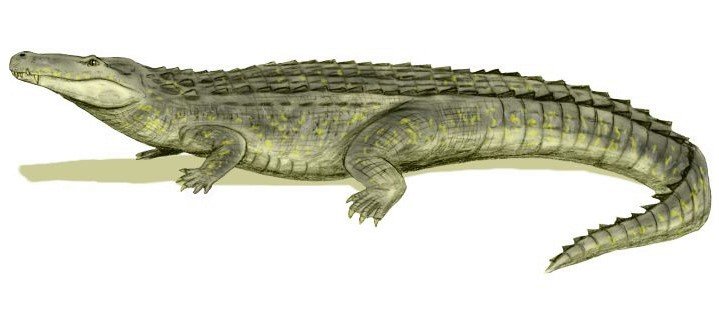
Animals such as Purussaurus couldn’t cope with the changing habitats.
©Nobu Tamura (http://spinops.blogspot.com) / CC BY 3.0 – Original / License
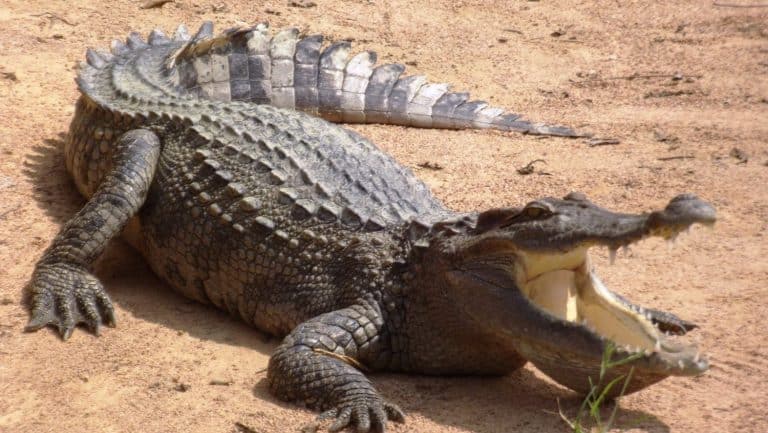
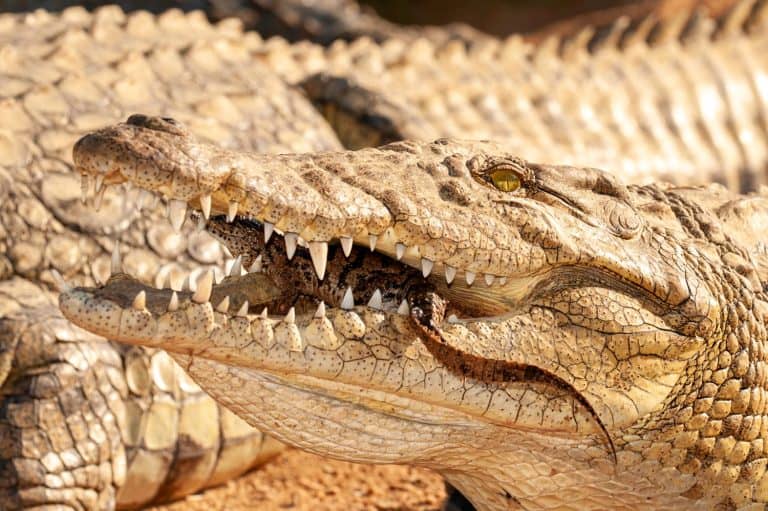
Although anacondas managed to thrive due to the stability and suitability of their habitat, other large reptiles were not so lucky. The temperatures began to drop after the Miocene, leading to cooler and drier habitats. It also caused vast wetlands that had covered the region to shrink. The cooling temperatures and habitat loss had a negative effect on reptiles such as large caiman and crocodiles. They began to find themselves without the habitats to sustain their large body sizes. Unlike anacondas, these animals were more dependent on large, permanent river systems. This left them vulnerable as the waterways began to dry up or become fragmented. Anacondas, in contrast, were able to utilize shallow or seasonal wetland areas and a wide range of prey.
Shrinking habitats also caused a reduction in the amount and size of available prey. Prey animals suddenly became harder to find in places where they once lived in abundance. Also, the emerging carnivorous mammals of the Pliocene created additional competition for the available prey. Ultimately, whether a species survived or not depended on their ability to cope with a rapidly changing environment.