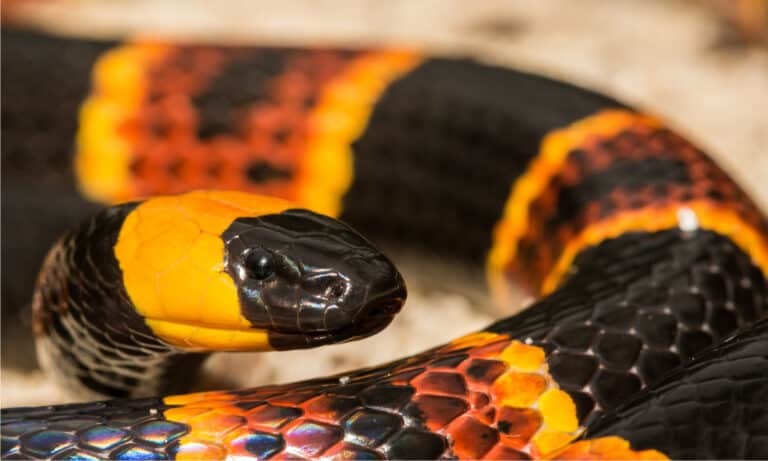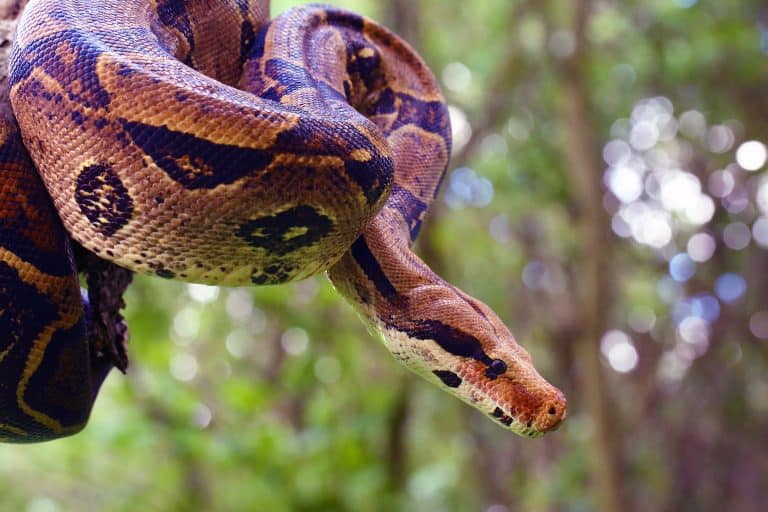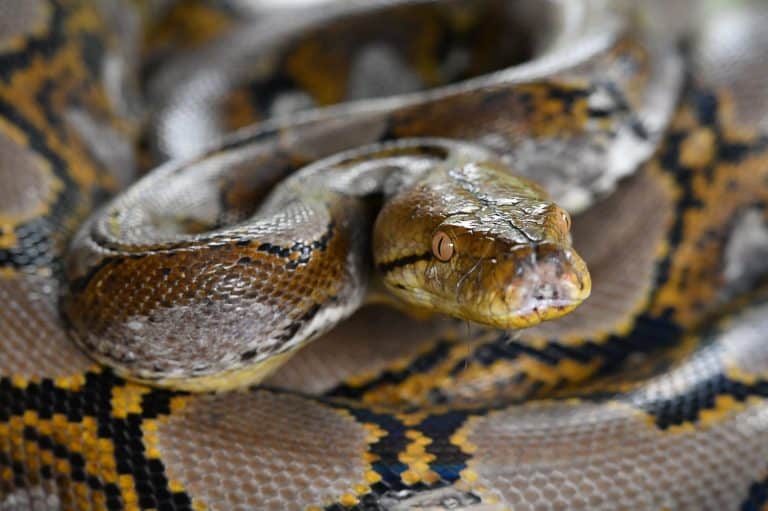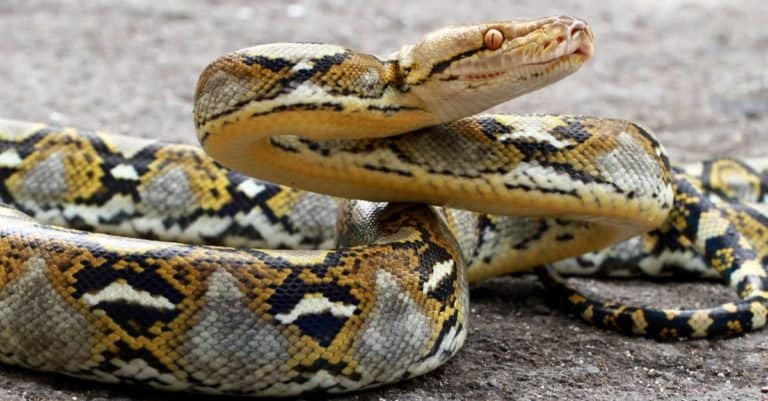

Titanoboa is regarded as being the largest snake to have ever lived, reaching 42 to 47 feet long and with an estimated weight of up to 2,500 pounds. These huge snakes lived in the tropical rainforests of South America approximately 60 million years ago and would have been one of the top predators at the time. Although there’s no snake alive today that reaches such sizes, you might still be wondering how big they can get. So, let’s take a look at the largest snakes in the world today, ranked by length.
10. Indian Python
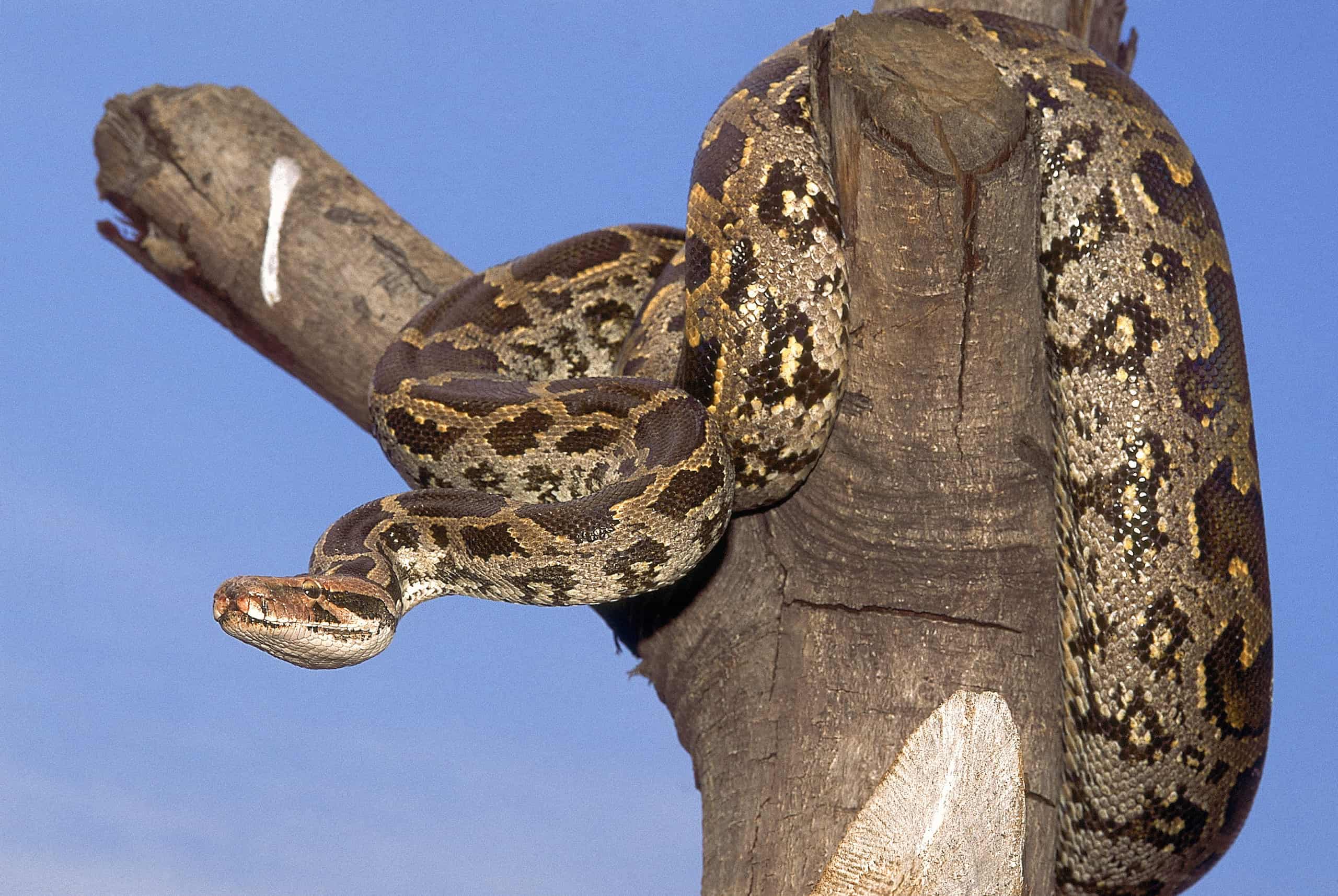
The largest recorded Indian python was 15 feet long.
©slowmotiongli/Shutterstock.com
Although there are reports of the Indian python (Python molurus) reaching 20 feet long, the largest recorded specimen was 15 feet and weighed almost 115 pounds. Indian pythons have stocky bodies with a yellowish appearance and dark brown blotches. They are native to several countries in Asia, including India, Nepal, Bangladesh, Pakistan, Sri Lanka, and Bhutan, where they can be found in grasslands, forests, foothills, and swamps. Indian pythons are ambush predators and kill their prey by constriction. They have a varied diet but often prefer eating mammals. Depending on the size of their prey, they can go weeks or even months between meals. Despite their large size, they are relatively calm snakes and don’t usually attack humans.
9. Yellow Anaconda
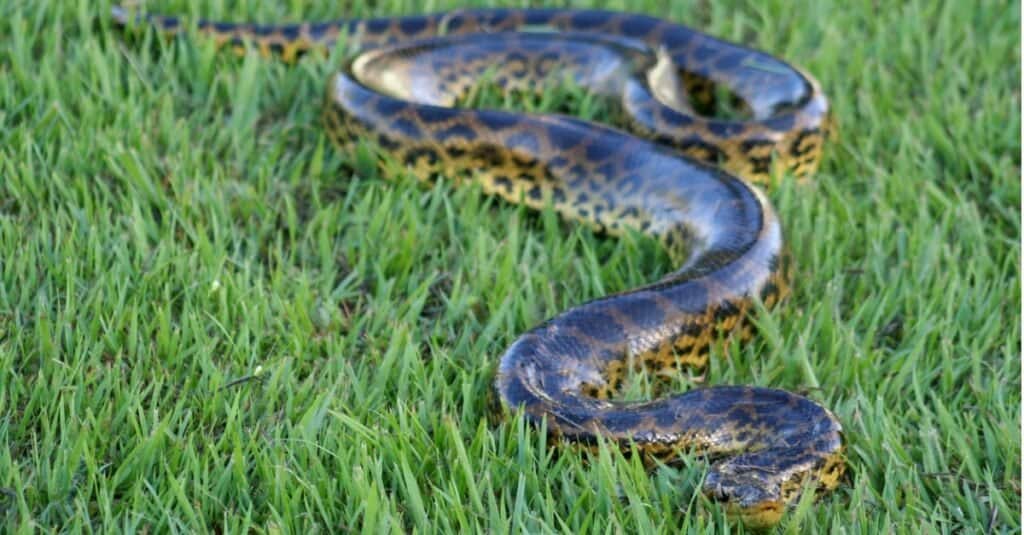
Yellow anacondas live in wetland habitats in South America.
©iStock.com/Schumaher
The next snake on the list is the yellow anaconda (Eunectes notaeus), which reaches lengths of up to 15 feet and weighs up to 121 pounds. They have a distinctive yellowish-colored body, which is overlaid with black or dark brown markings. Yellow anacondas inhabit the southern region of South America, where they prefer wetland habitats, such as swamps and marshes. They are not venomous and instead kill their prey by constriction. They hunt both in and out of the water and can eat anything that they are able to swallow, including caiman and small to medium-sized mammals.
8. Boa Constrictor
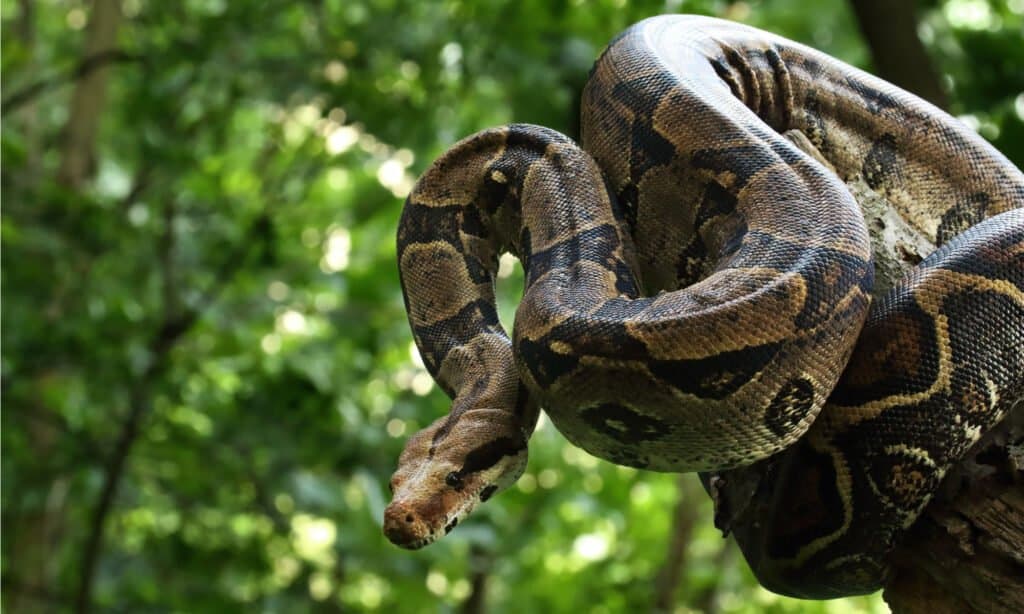
Boa constrictors live in rainforests in South America and Florida.
©Jan Hejda/Shutterstock.com
Another powerful constrictor is the famous boa constrictor, which reaches 10 to 16 feet long and weighs up to 60 pounds. Boa constrictors are typically brown, with reddish-brown markings. As their name suggests, they are constrictors and kill by coiling their body around their prey until it dies. The size of the snake determines the prey that they eat, with large boas eating larger prey such as monkeys, while smaller ones eat prey such as amphibians and birds. Boa constrictors mainly inhabit rainforests in South America, although they also live in the southern region of Florida. They are viviparous, meaning that they give birth to live young, with juveniles usually being born between April and August.
7. Central African Rock Python
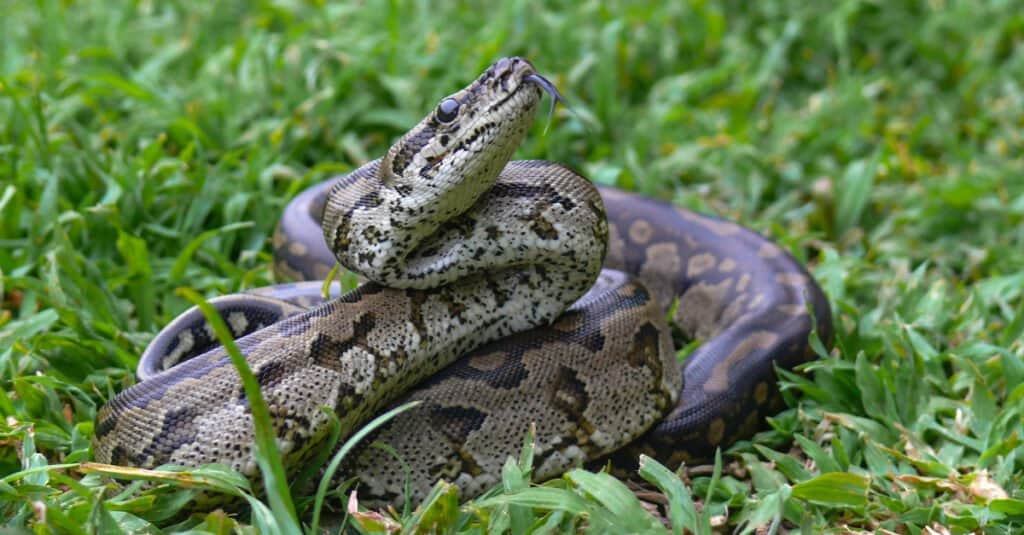
Central African rock pythons lay eggs, which hatch after approximately 90 days.
©Chris Graf/Shutterstock.com
Although of a similar length to boa constrictors — reaching 10 to 16 feet — Central African rock pythons (Python sebae) are much heavier, as they weigh between 120 and 200 pounds. Central African rock pythons are the largest snakes in Africa and have thick, powerful bodies. They are tan with dark brown blotches that often join together to form a long stripe. Central African rock pythons are native to sub-Saharan Africa, but there’s also a small, invasive population in Florida. They are highly adaptive animals and live in forests, grasslands, and near wetlands. Central African rock pythons are oviparous, which means that they lay eggs that hatch outside the mother’s body. They can lay up to 100 eggs per clutch, and the eggs hatch around 90 days later, with juveniles being approximately 18 to 24 inches long.
6. Burmese Python
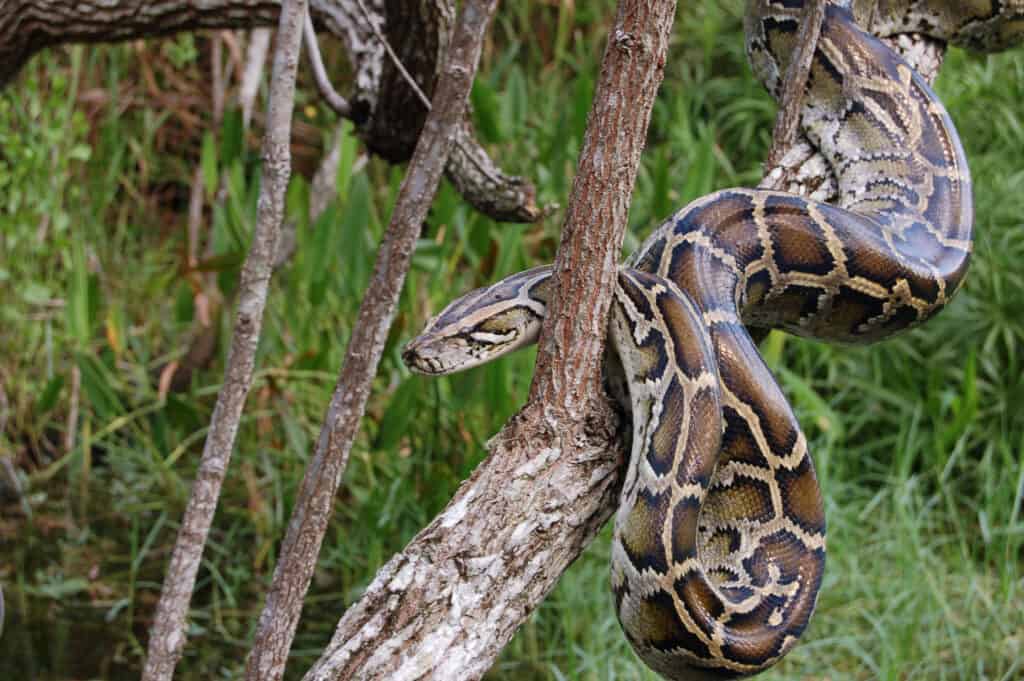
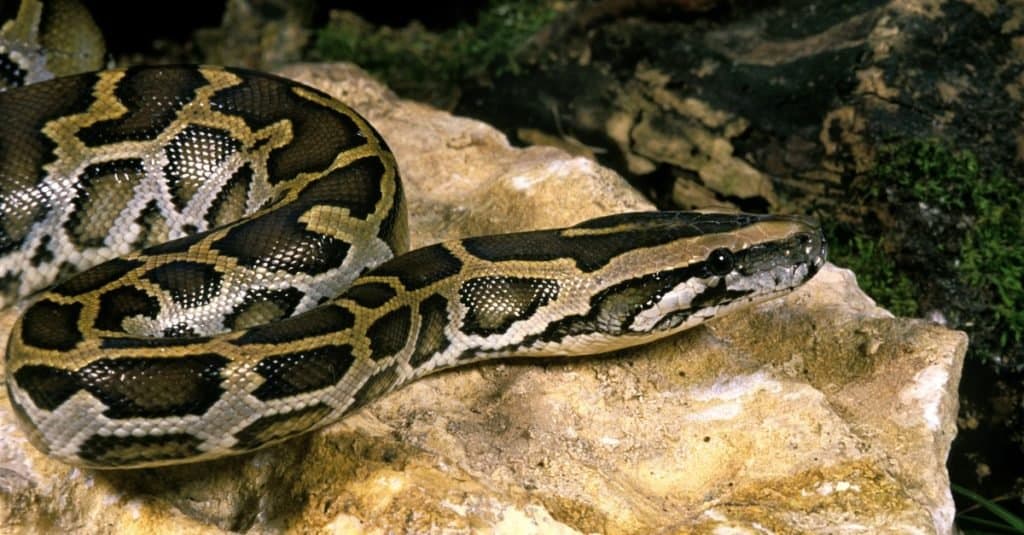
The Burmese python is an invasive species in the Everglades.
©Heiko Kiera/Shutterstock.com
Another python that is approximately 10 to 16 feet long is the Burmese python (Python bivittatus). Burmese pythons can weigh up to 200 pounds, with females typically being heavier than males. They are typically brown with dark brown blotches along their sides. Burmese pythons are native to the south and south-eastern regions of Asia, where they typically live in habitats close to water. They also inhabit Florida, where there’s now an established population in the Everglades. Burmese pythons were introduced through the pet trade in the 1990s and are considered an invasive species in the state due to their predation of native wildlife. However, they are classified as a vulnerable species in Asia due to declining populations. One of the reasons for their decline is habitat loss as forests are cleared to make way for advancing agriculture.
5. Cuban Boa
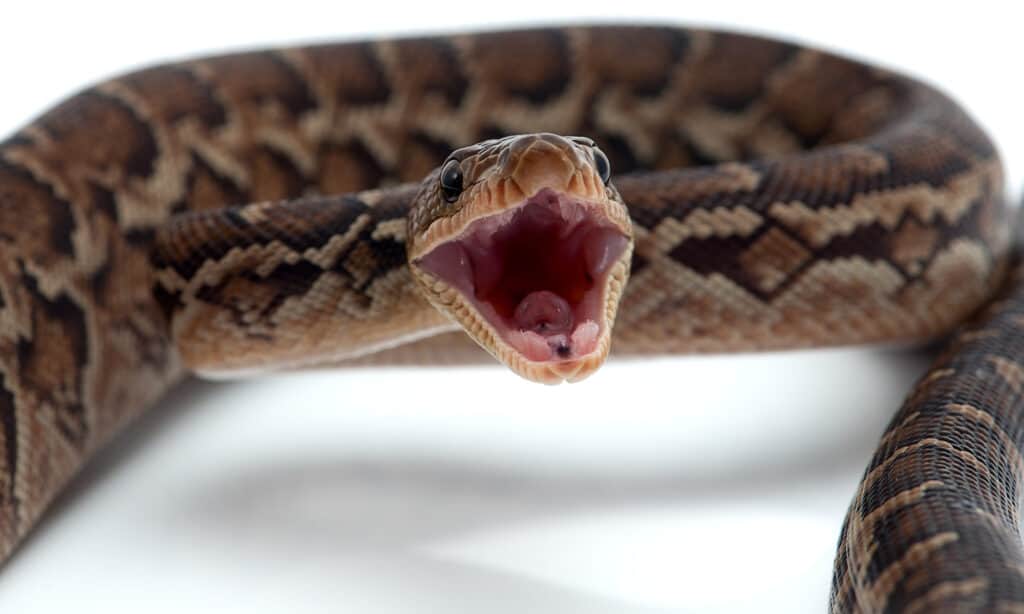
Cuban boas are powerful apex predators.
©PetlinDmitry/Shutterstock.com
A little larger than the boa constrictor is the Cuban boa (Chilabothrus angulifer), which typically reaches 16 feet long, with a maximum recorded length of 18.5 feet, and weighs around 66 pounds. These snakes are native to Cuba and the surrounding islands, where they prefer to live in forest regions. Cuban boas are tan to yellowish-brown, with dark brown to black blotches and spots. They are apex predators in their natural habitat and prey on a variety of animals, such as bats, rodents, and birds, which they kill by constriction. Cuban boas do not begin to reproduce until they are around five years old for females, and they can live for more than 30 years.
4. King Cobra
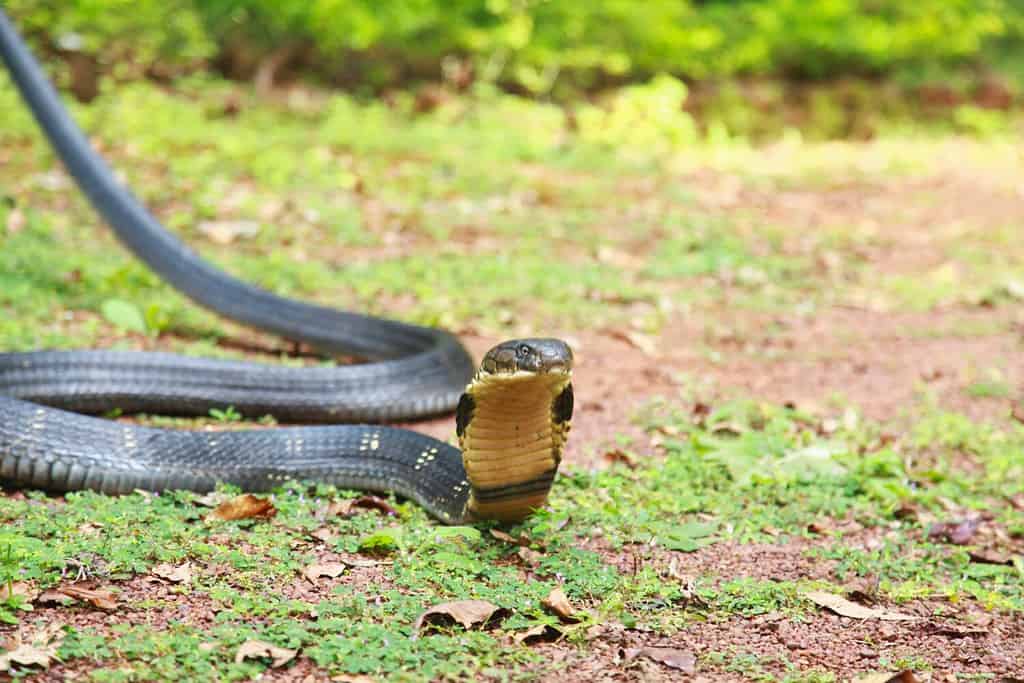
King cobras are the longest venomous snakes in the world and can reach 18 feet long.
©RealityImages/Shutterstock.com
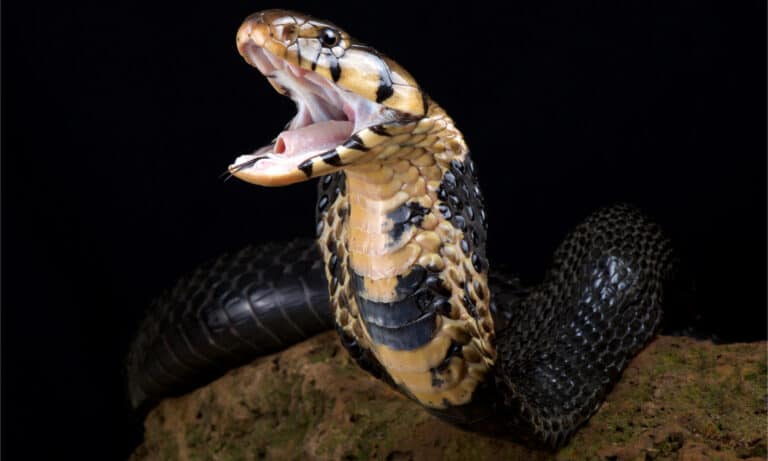
The only venomous snake on the list is the king cobra (Ophiophagus hannah). This also makes it the largest venomous snake in the world, with a typical length of 12 to 18 feet. Males are larger than females, and their maximum reported weight is 22 pounds. King cobras are dark olive green with a series of yellow to white bands across their bodies. They are widespread across Southeast Asia and inhabit areas such as forests, swamps, and grasslands. They possess potent venom, which they use to kill a variety of other snakes, including other cobras and kraits. Despite being venomous, king cobras are not usually aggressive and tend to avoid confrontation with humans, although they will rear up, flatten their hood, and hiss when alarmed. However, females will fiercely defend their clutch of eggs.
3. Amethystine Python
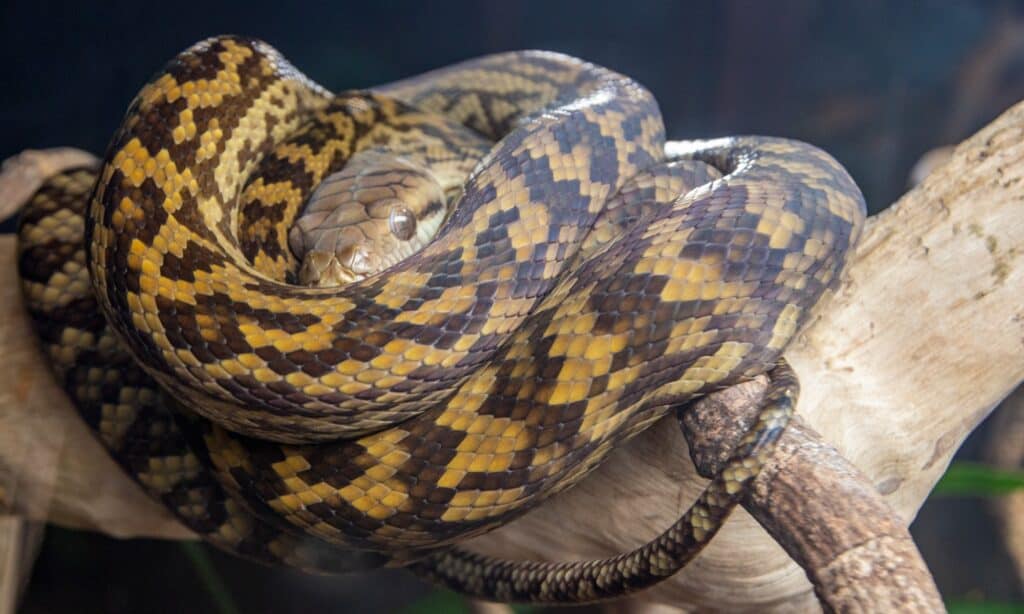
Large amethystine pythons can eat wallabies.
©iStock.com/Brooke Ottley
In the third spot is the amethystine python (Simalia amethistina), which is 13 to 18 feet long. 18 feet is considered to be the maximum possible length, but they are heavier than king cobras, as they can weigh up to 66 pounds. Amethystine pythons are usually light brown with dark brown to black markings. They are also known as scrub pythons, as they are often found in scrubland. However, they are native to Australia, Indonesia, and New Guinea and are also found in rainforests and grasslands. Like the other pythons we’ve mentioned, amethystine pythons are constrictors and eat a range of birds and mammals, with the largest individuals capable of eating animals such as wallabies.
2. Green Anacona
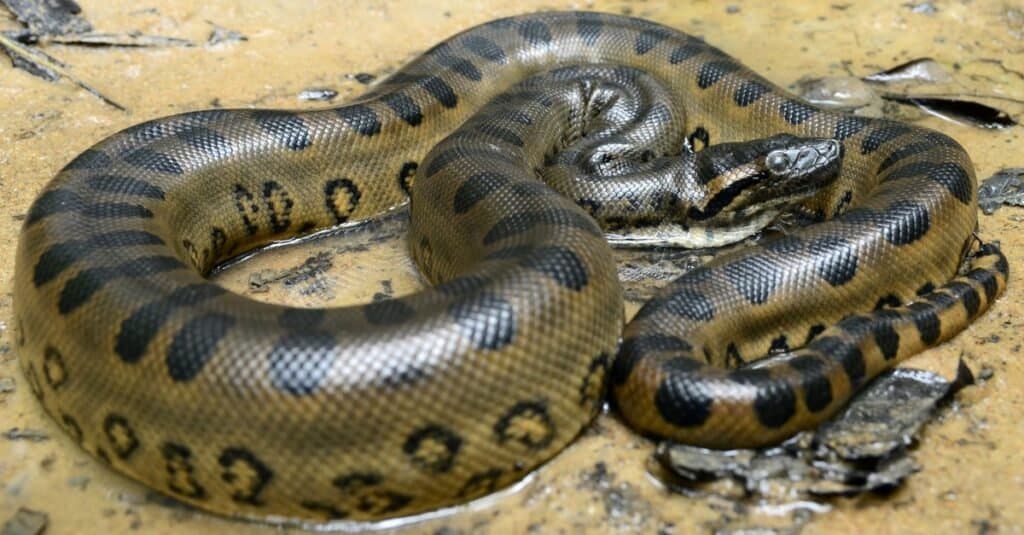
A Green anaconda (Eunectes murinus), which is especially partial to flooded grassland.
©Patrick K. Campbell/Shutterstock.com
The heaviest snake in the world is the green anaconda (Eunectes murinus), which weighs up to 550 pounds. Despite their weight, they’re not the longest snake, although they do still reach the impressive length of 30 feet. Green anacondas have a distinctive olive green body, which is overlaid with black blotches. They are native to the tropical rainforests of South America. However, there’s also an increasing number of sightings of them in Florida, where they were introduced through the pet trade. Unsurprisingly, given their large size, green anacondas are powerful apex predators. They kill by constriction and can eat any animal that they are large enough to swallow, with the largest individuals capable of swallowing cows and deer.
1. Reticulated Python
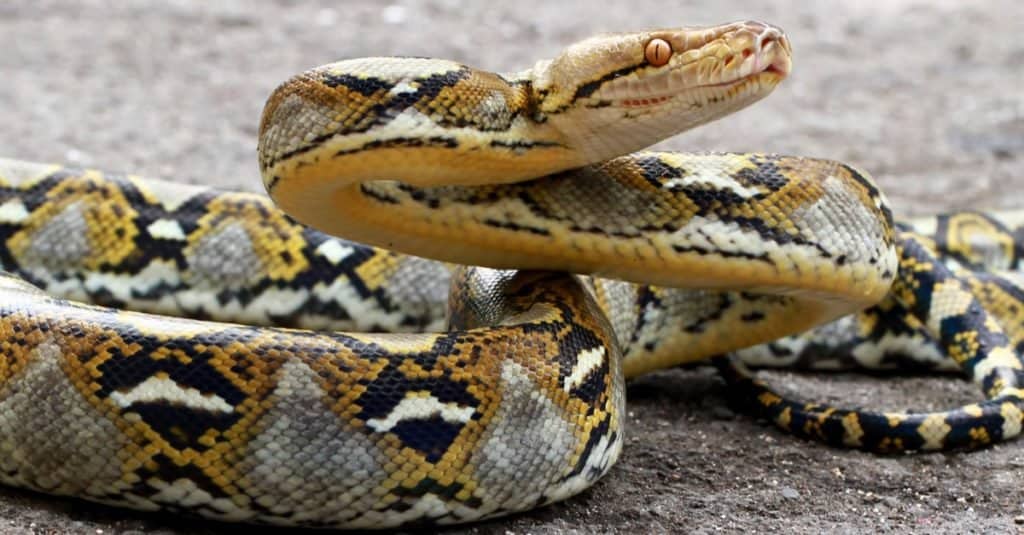
Reticulated pythons can exceed 30 feet long.
©Opayaza12/Shutterstock.com
The largest snake in the world by length is the reticulated python (Malayopython reticulatus), which usually reaches around 20 to 25 feet long but has a maximum reported length of 32 feet. This maximum length makes them almost as long as a school bus. However, despite their length, reticulated pythons are not as heavy as green anacondas, having a much slimmer build and weighing only up to 350 pounds. Reticulated pythons are native to Asia, where they inhabit forests and grasslands. They are not venomous, but they are powerful constrictors and prey on a variety of small to medium-sized mammals as well as birds. Reticulated pythons are one of the few species of snakes that actually prey on people, with there being several reports of snakes being found with the intact bodies of humans inside them.