
The largest animal on Earth today is the blue whale (Balaenoptera musculus), which can be 98 feet long, and the largest recorded blue whale was 110 feet in length. But some of the largest animals to exist have tragically become extinct. These animals include not only dinosaurs, but also sloths and snakes. Continue reading to learn about eight of the biggest animals to have gone extinct.
1. Megalodon
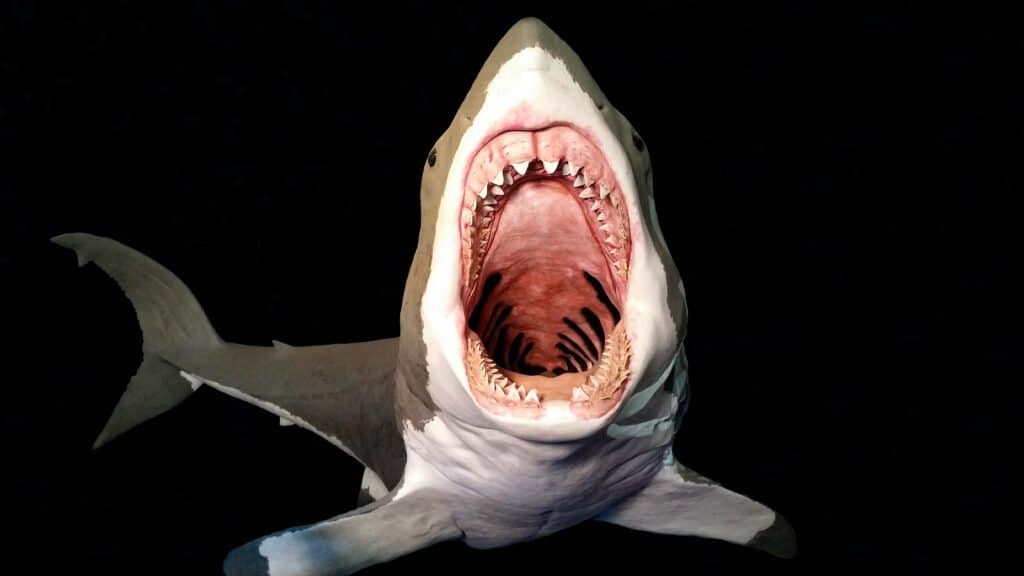
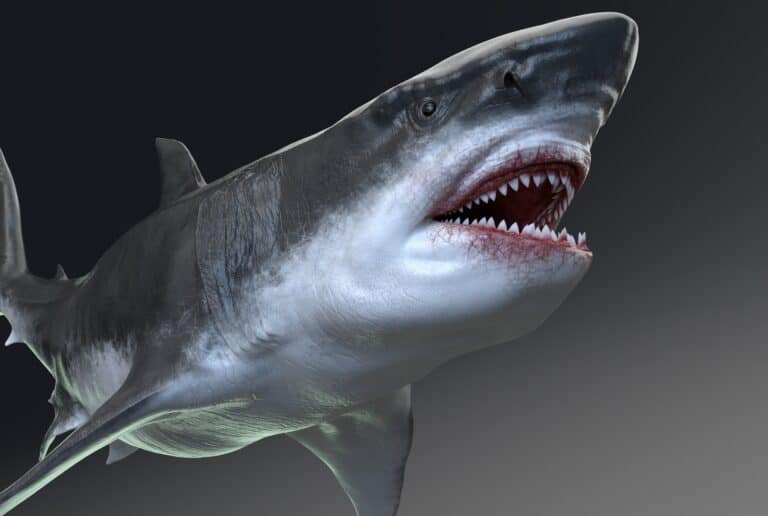
Extinct sharks, megalodons could be up to 60 feet long.
©Gil Cohiba/Shutterstock.com
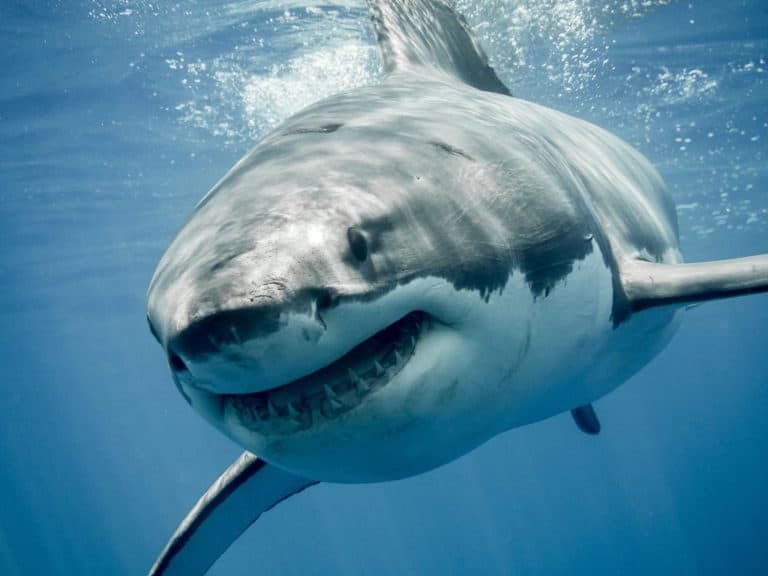
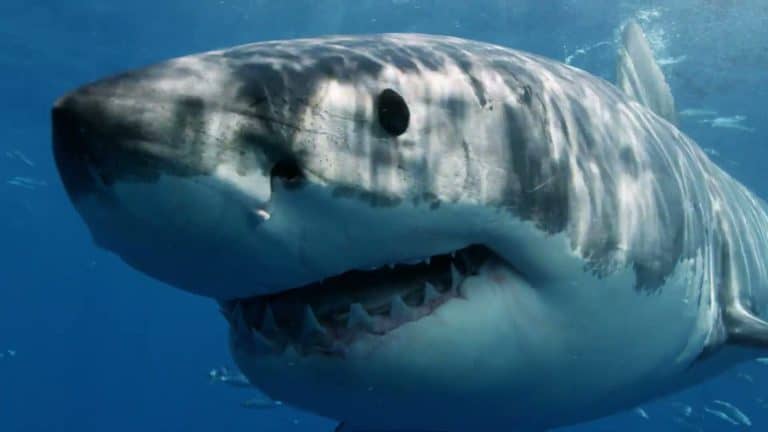
Megalodons (Otodus megalodon) are an extinct species of mackerel sharks. Experts estimate an adult megalodon was 20 to 50 times larger than a standard 15 to 20-foot-long great white shark (Carcharodon carcharias). Megalodons may have measured 50 to 60 feet in length and weighed up to 113 tons, approximately half the size of a blue whale. They sustained their size by eating small sharks and whales during the Neogene era, 23.3 to 2.6 million years ago.
The megalodon was an apex predator as an adult, but young megalodons were prey to other sharks. Paleontologists believe great white sharks contributed to their extinction by eating the young. According to PLOS One journal, megalodons used nurseries to protect their young.
This, coupled with a cooling climate, resulted in the biggest shark that ever lived becoming extinct. The exact date is unknown, though experts long believed megalodons had been extinct for 2.6 million years; recent research suggests their extinction could have occurred one million years earlier.
2. Ground Sloth
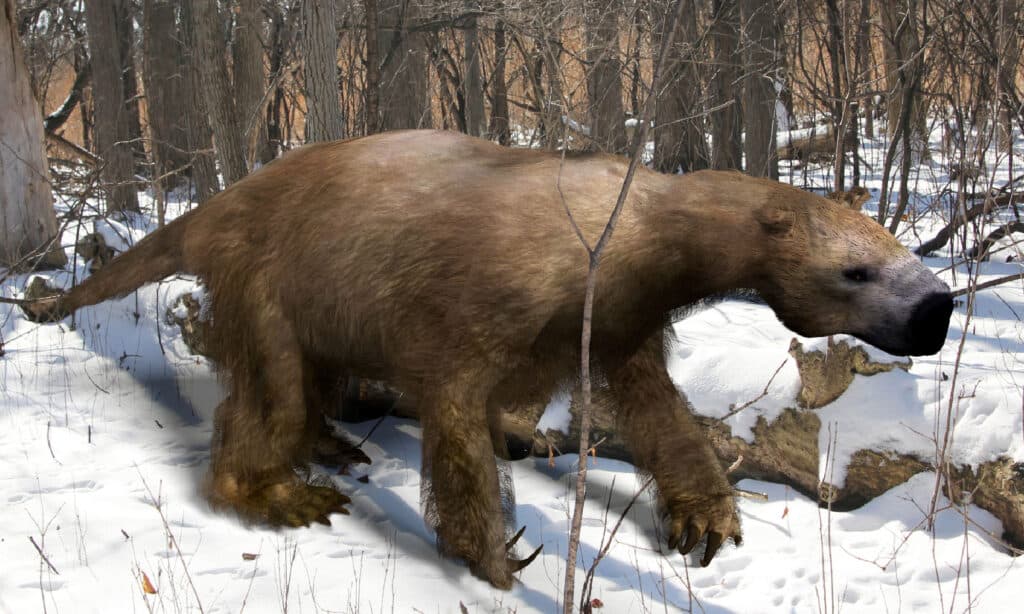
Unlike modern tree-dwelling sloths, ground sloths roamed the ground.
©iStock.com/Aunt_Spray
Ground sloths are extinct sloths of the superorder Xenarthra. The largest species, such as Megatherium americanum, could weigh up to four tons and reach 20 feet in length, though most ground sloths were much smaller. This is enormous compared to today’s tree-dwelling sloths, which measure up to 29 inches long and weigh up to 17 pounds.
Megatherium americanum is the largest of the superorder. They roamed South America, and their fossils are regularly excavated in Uruguay, Bolivia, and Argentina. They were most likely herbivores that used their seven-inch claws to dig up roots and pull down tall branches. Packs of dire wolves (Aenocyon dirus) may have preyed on giant sloths, but not many creatures could have taken down such an enormous animal.
Ground sloths appear in early human cave art, suggesting they were important to humans for their meat and skin. Some researchers believe that cave art in the Colombian Amazon may depict a giant sloth and dates to between 11,880 and 12,600 years ago, though this interpretation is debated.
3. Titanosaur Dreadnoughtus
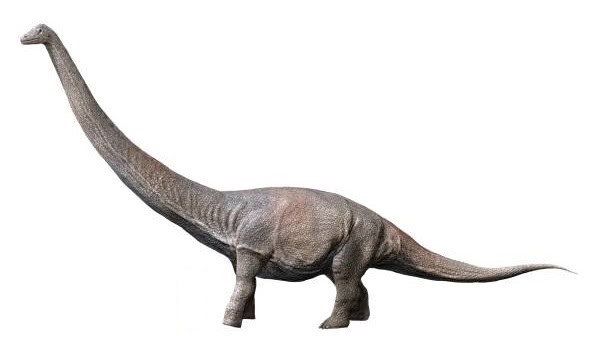
A rendering of how Dreadnoughtus schrani is believed to have looked.
Titanosaurs are the biggest land animals to have become extinct. These massive dinosaurs were huge, and Dreadnoughtus is possibly the largest of them all. There is only one known species of the Dreadnoughtus genus, Dreadnoughtus schrani. It was discovered by American paleontologist Kenneth Lacovara in 2005. Its fossils have been excavated in Argentinian Patagonia and are around 77 million years old.
This titanosaur was approximately 85 feet long, and paleontologists still debate its weight. Estimates range from 30 to 65 tons. Dreadnoughtus means dread naught or fear nothing. Dreadnoughtus was a herbivore that grazed on tall trees and likely ate stones to help grind up fibrous plant matter.
4. Deinosuchus
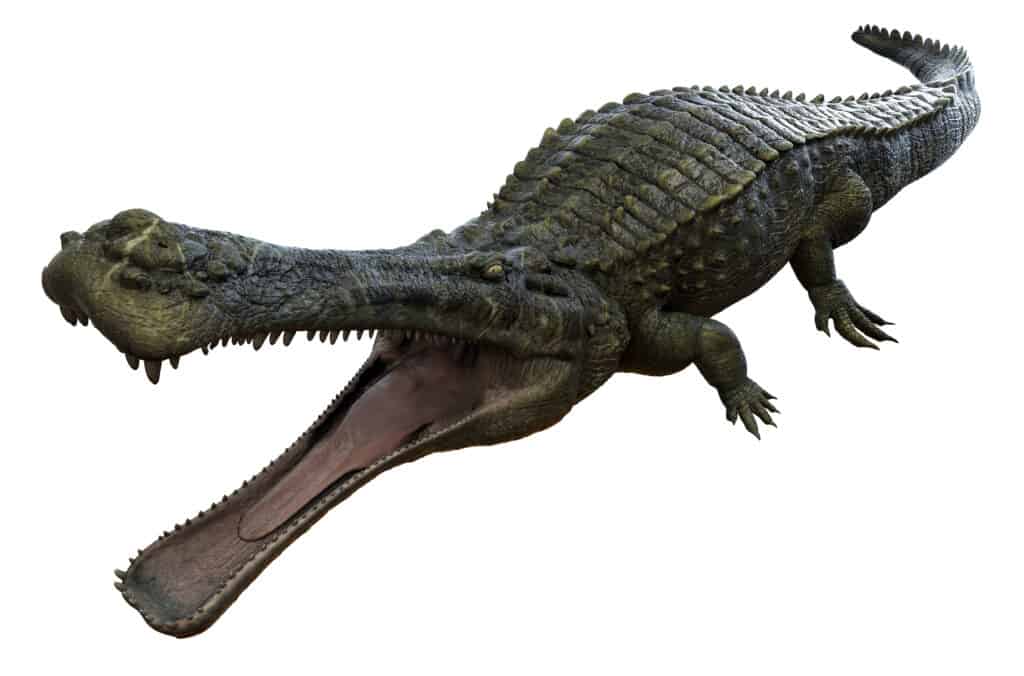
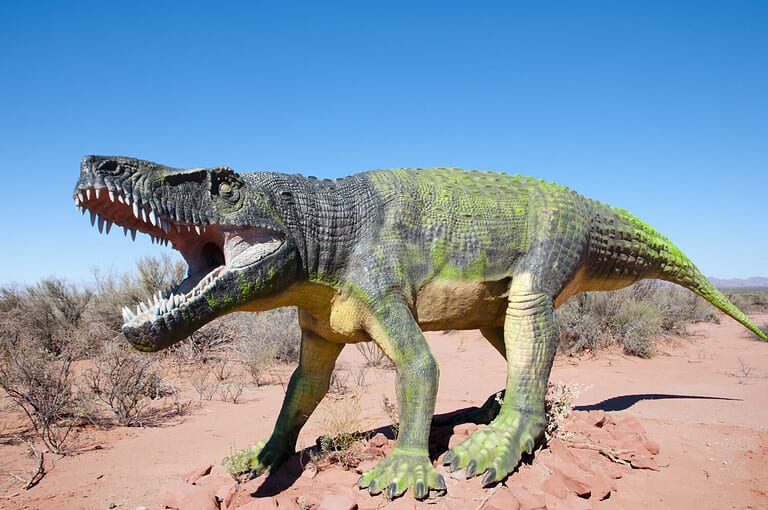
It is estimated that Deinosuchus was about 39 feet long.
©Herschel Hoffmeyer/Shutterstock.com
Deinosuchus is a genus of extinct crocodiles with two species, Deinosuchus riograndensis and Deinosuchus schwimmeri.
They lived 82-73 million years ago in the late Cretaceous period. Fossilized remains have been found in North Carolina, Montana, Texas, and northern Mexico. It was named Deinosuchus in the 1850s, meaning terrible crocodile. This massive apex predator opportunistically hunted fish, sea turtles, and even unsuspecting dinosaurs. Studies estimate it had a bite force of 20,000 pounds per square inch, significantly greater than that of a T. rex, which is estimated to be up to 12,800 psi.
Paleontologists debate why Deinosuchus became extinct before the meteor impact that eradicated the dinosaurs. Many believe their habitat shrank as the climate changed, making prey harder to find. Without enough food, they could not survive.
5. Titanoboa
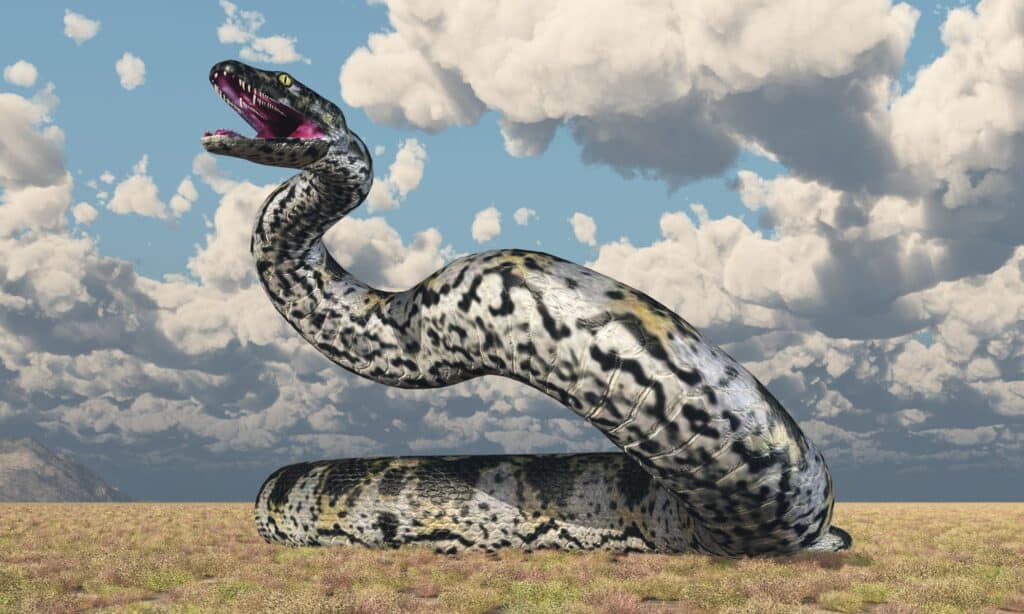
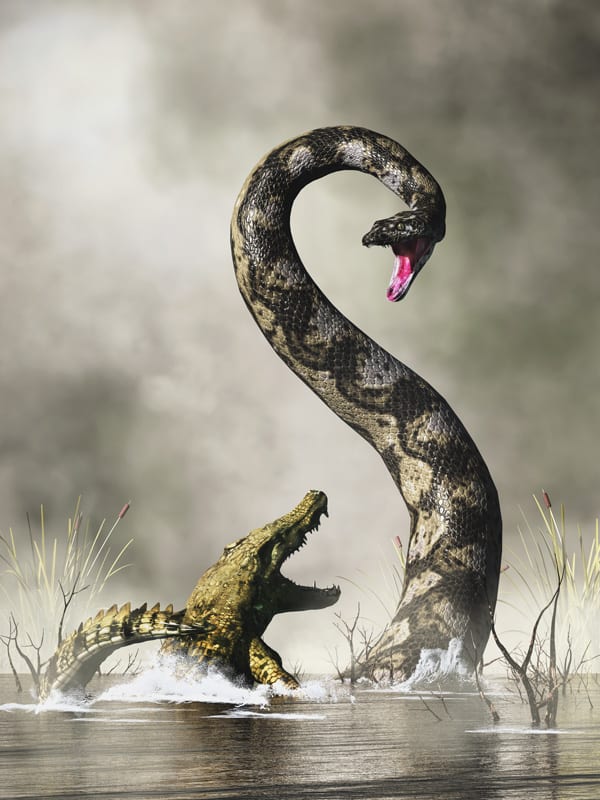
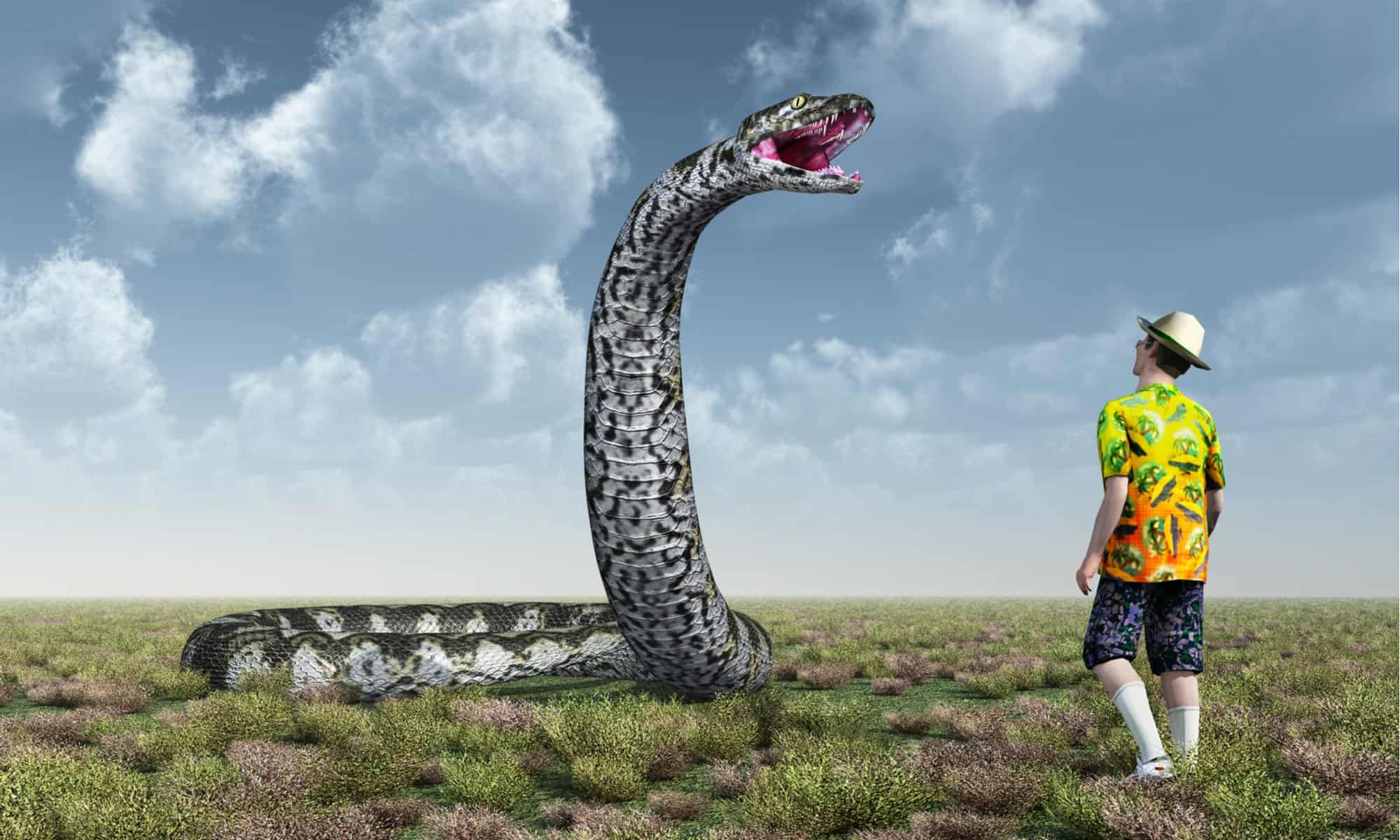
Scientists have discovered parts of the snake’s backbone and skull, which helped them estimate their massive size.
©Michael Rosskothen/Shutterstock.com
Titanoboa cerrejonensis is the largest snake to ever inhabit the Earth and one of the biggest animals to have become extinct. This mega snake belonged to the Titanoboa genus and lived in La Guajira, northeastern Colombia. It was a constrictor that weighed 2,500 pounds and, with its 250 individual vertebrae, reached 42 feet in length. A fossilized skull measures 16 inches long. Today’s green anaconda (Eunectes murinus) cannot compare, reaching a maximum size of 550 pounds and 30 feet.
This terrifying snake lived in rivers and tropical rainforests and likely ate fish, although paleontologists debate its diet. However, its teeth indicate a primarily piscivorous diet. It is believed that Titanoboas grew to gigantic proportions because the tropical climate was extremely warm. When the climate cooled, Titanoboas became extinct.
6. Basilosaurus
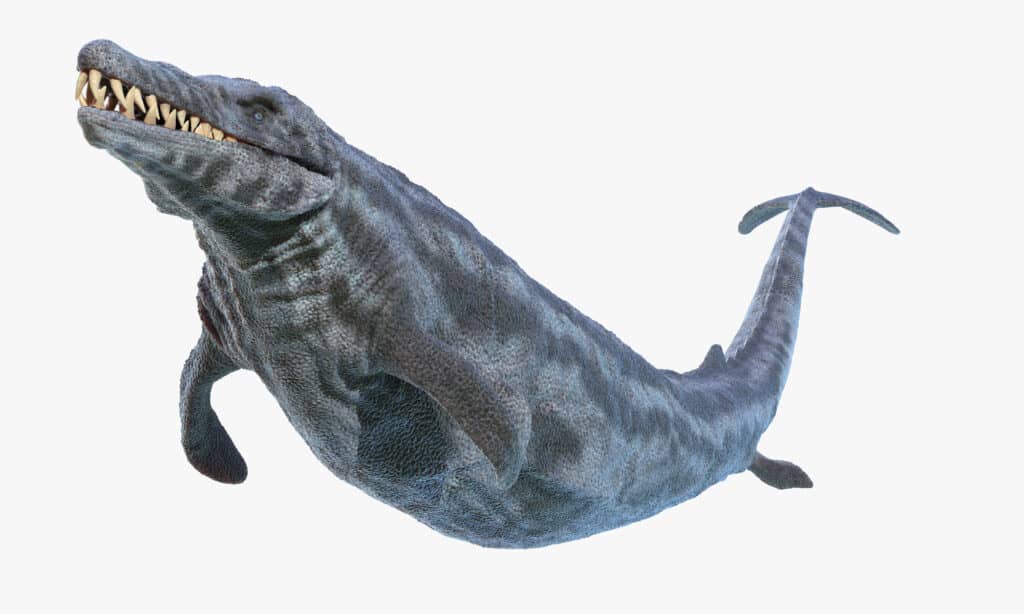
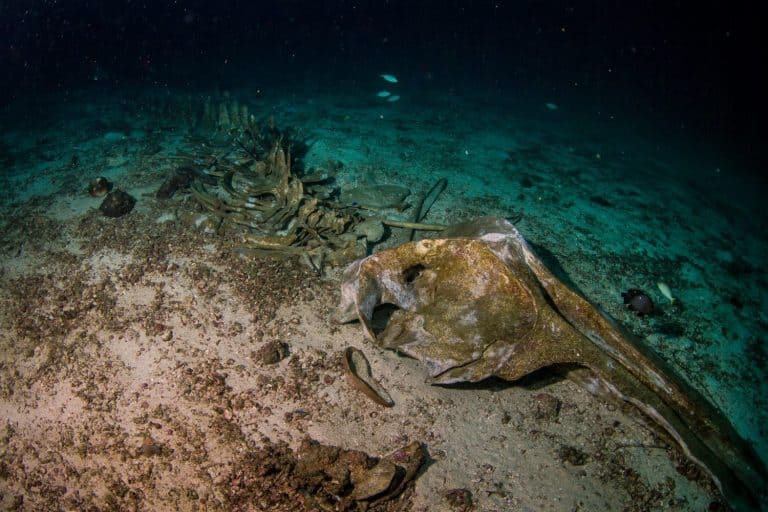
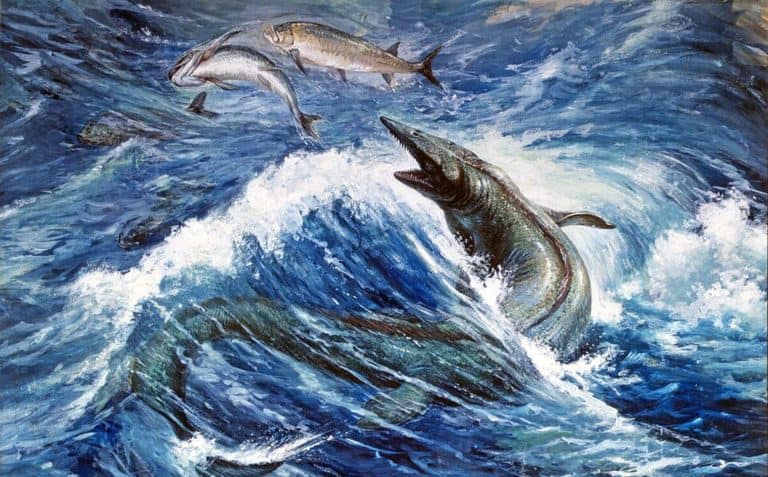
The Basilosaurus was a carnivorous whale that ate sharks and measured 66 feet long.
©SciePro/Shutterstock.com
Basilosaurus is a genus of predatory whales, reaching up to 66 feet long, that hunted sharks in the Tethys Sea, a prehistoric ocean that existed between ancient continents and is now represented by parts of the Mediterranean, Black, and Caspian Seas. Studies show it had a bite force of 3,600 pounds per square inch, about the same as a saltwater crocodile.
Whale ancestors started life on land and moved into the ocean, which is why they are air-breathing mammals. It is believed Basilosaurus was among the genera that transitioned from land to ocean. There, it was an apex predator able to grow to enormous sizes.
These huge whales became extinct between 35 and 33.9 million years ago. Their fossilized skeletons are found throughout the Americas. It is thought they went extinct due to volcanic activity and climate change. While Basilosaurus itself has no direct descendants, it is part of the evolutionary lineage that led to modern whales.
7. Elephant Birds
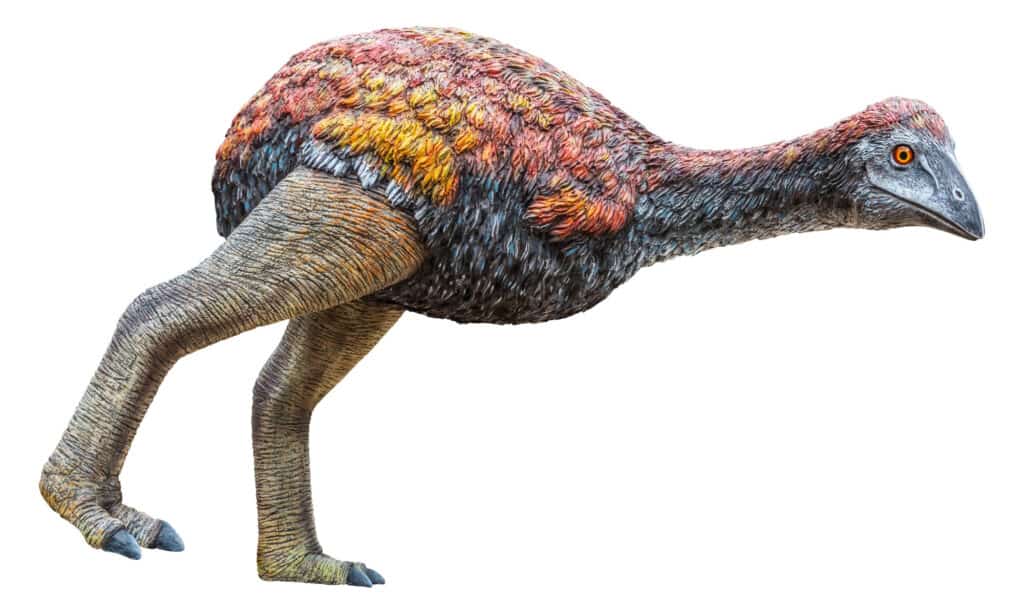
Incredibly, elephant birds only went extinct about 1,000 years ago.
©YuRi Photolife/Shutterstock.com
Elephant birds are flightless ratites of the Aepyornithiformes order that went extinct only 1,000 years ago. The largest found is Vorombe titan, which surpassed Aepyornis maximus in size. This massive bird lived in Madagascar, towering almost 10 feet tall and weighing up to 1,600 pounds, five times the weight of today’s ostriches. Although huge, their closest living relative is the New Zealand kiwi bird.
They ate seeds, nuts, and low-hanging tropical fruits from their rainforest environment. No juvenile specimens have been found, but fossilized egg fragments show that females laid eggs measuring 10 by 13 inches. Elephant birds became extinct due to human activity. As humans cleared forests for farmland, their habitat shrank. Humans also hunted them for their meat and took their eggs.
8. Siberian Unicorn
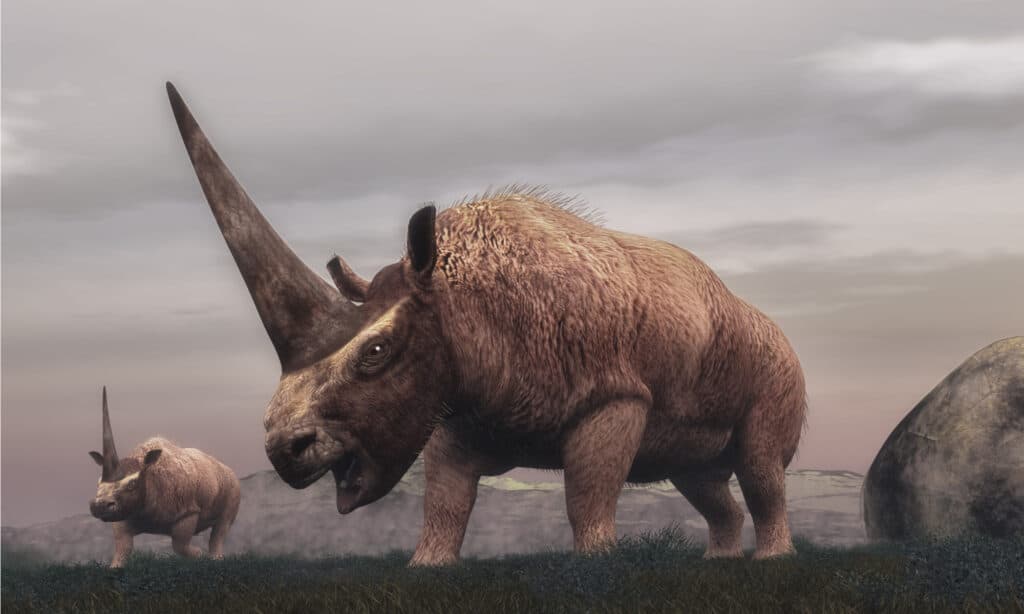
The Elasmotherium sibiricum is famous for its monstrous, 3-meter horn.
©Elenarts/Shutterstock.com
Elasmotherium sibiricum is a giant rhinoceros that lived from the late Miocene to the Pleistocene era and went extinct approximately 39,000 to 36,000 years ago.. This occurred at the same time that other massive megafauna began to die out. It is sometimes called the steppe rhino because it lived in the vast steppe grasslands of modern-day Russia, Siberia, and Ukraine. They reached an impressive 20 feet in length, nearly 7 feet in height, and weighed 4.5 tons. It was enormous, and few predators could take down an adult or even pierce its leathery skin.
The Siberian unicorn was mammoth-sized, with a horn on its forehead. No horn has been discovered, but a hole in the skull of a fossilized specimen indicates it had one. This horn was likely used to attract mates, fight predators, and sweep away snow to access moss and grasses, which made up the majority of their herbivorous diet. Climate change and dwindling grasslands contributed to its decline and eventual extinction.