
Quick Take
- One rare pug color comes with a hidden health warning, something that even expert breeders struggle to spot by sight alone.
- Several of these pug colors only exist because of secret ancestry most owners never suspect.
- One color gives some pugs a physical trait that almost no other breed variation produces, and it is immediately visible.
- The AKC only recognizes two pug colors, but two other major kennel clubs draw the line somewhere different, and that gap matters if you're buying or showing.
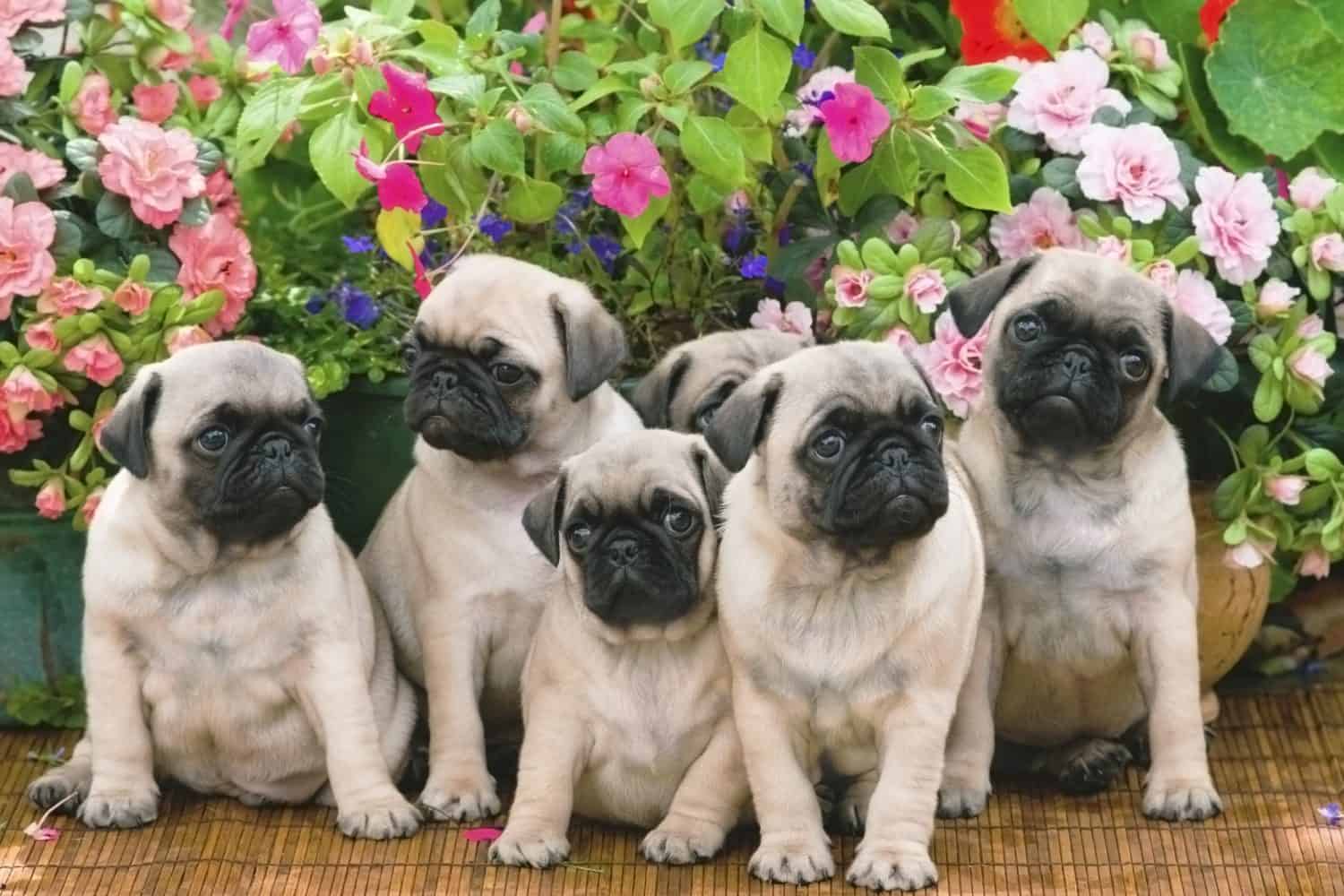
The pug is an old breed, believed to date back to Imperial China some 2,000 years ago. These small, compact pups are known for their round heads with flat faces, big eyes, and wrinkled brows. They are loving companions, happy to be wherever their owners are. Although Pugs only come in two colors according to the American Kennel Club (AKC), there are a number of rare and unique pug colors. In this article, we’ll discuss uncommon pug colors, which colors are accepted under AKC breed standard, and more.
AKC Accepted Pug Colors
As mentioned above, the AKC accepts only two colors as standard. These are fawn and black. Fawn pugs may also have black masks on their faces and black ears, as well as a few other black markings. Of course, these are the most common pug colors. Most breeders will try to adhere to breed standards set by the AKC and the official breed club, so any deviations from these standards are uncommon. however, the United Kennel Club (UKC) and the Fédération Cynologique Internationale (FCI) also accept apricot and silver in addition to fawn and black.
Rare and Unique Pug Colors
1. Brindle
Brindle, or striped, pugs are fawn with black stripes in their fur. They also typically have a black mask, meaning the fur around their eyes and nose is black. Their ears may also be black, though not always. Some pug fanciers believe the brindle color is due to a recessive gene in the breed’s history, but others argue that the color was developed via crossbreeding with French bulldogs or Boston terriers.

Brindle pugs have fawn with black striped coats.
©iStock.com/adogslifephoto
2. Platinum
Platinum pugs are a silvery-grey. The color is sometimes referred to as silver fawn. It is believed to be a genetic variation of the standard fawn color. Platinum pugs typically have darker black markings on their face, ears, and down the center of their backs.
3. White
White pugs are either leucistic or albino pugs. Leucistic pugs are the result of a genetic mutation that causes a reduction in pigment in affected cells. However, leucistic pugs have normal colored eyes and their skin is a bit darker than that of an albino pug. Leucistic pugs have fewer health problems than true albinos. For a pug to be an albino, both parents must carry the recessive albinism gene, even if they are not albinos. Albino pugs have blue, white, or translucent eyes.
4. Merle
Merle pugs are fawn with black and darker tan or brown patches throughout their fur. They often have heterochromia, or two different eye colors. Usually, they have one blue eye and one brown eye. The merle gene is not naturally present in a pug’s DNA, so experts believe most merle pugs have some Chihuahua or French bulldog ancestry, although it might be far back in their lineage.
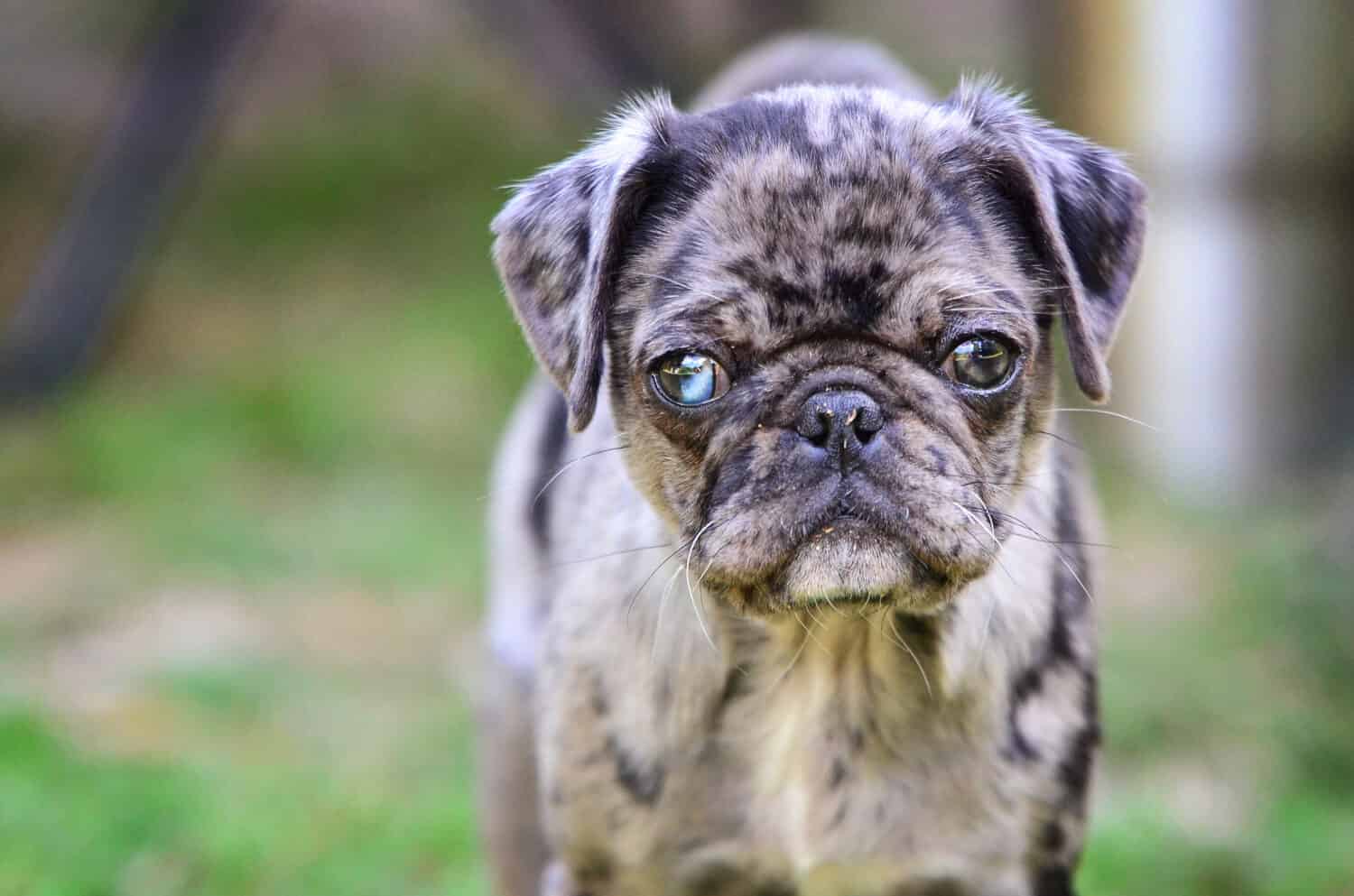
Merle pugs are fawn with dark patches throughout their fur.
©Virginia Blount/Shutterstock.com
5. Pied
Pied pugs have a light-colored base coat with patches of black or brown fur. The colors are typically evenly spread throughout the coat. These dogs may have French bulldog or standard bulldog in their lineage.
6. Black and White
Black and white pugs, sometimes called panda pugs, have light-colored bodies with black, panda-like markings primarily on their faces and ears. They frequently have blue or two different colored eyes. The coloring is believed to be due to crossbreeding with other breeds, such as Boston terriers.
7. Black and Tan
Black and tan pugs are mostly black with tan markings, similar to Rottweiler coloring. The tan markings are darker and more brown than their usual fawn color. These markings are commonly above the eyes, on the ears, legs, paws, chest, and neck. Pugs may have been crossbred with French bulldogs or Miniature Pinschers to achieve this coloration.
8. Chocolate
Chocolate pugs are dark brown in color. They sometimes have white markings on their chests or tan points. Breeders develop chocolate pugs by pairing dogs that carry the recessive “b,” or brown, gene.