
Quick Take
- Achieving the full long-haired coat requires a strict 2-year developmental commitment from the owner.
- A cranial molera in the apple-head variety presents a permanent skull vulnerability for the animal.
- Contrary to popular belief, the teacup variation causes critical internal structure failures rather than simple miniaturization.
- Targeted scouting for pure white specimens is necessary due to the rarity of specific genetic markers.
The official AKC breed standard states that Chihuahuas should not exceed 6 pounds, standing between 5 to 8 inches. However, many healthy “pet quality” Chihuahuas naturally weigh between 7 to 10 pounds. They’re known for their independent nature and “big dog attitude” — despite being the smallest dog in the world. Their lively nature makes them interesting companion animals, and they may even be suitable alert dogs.

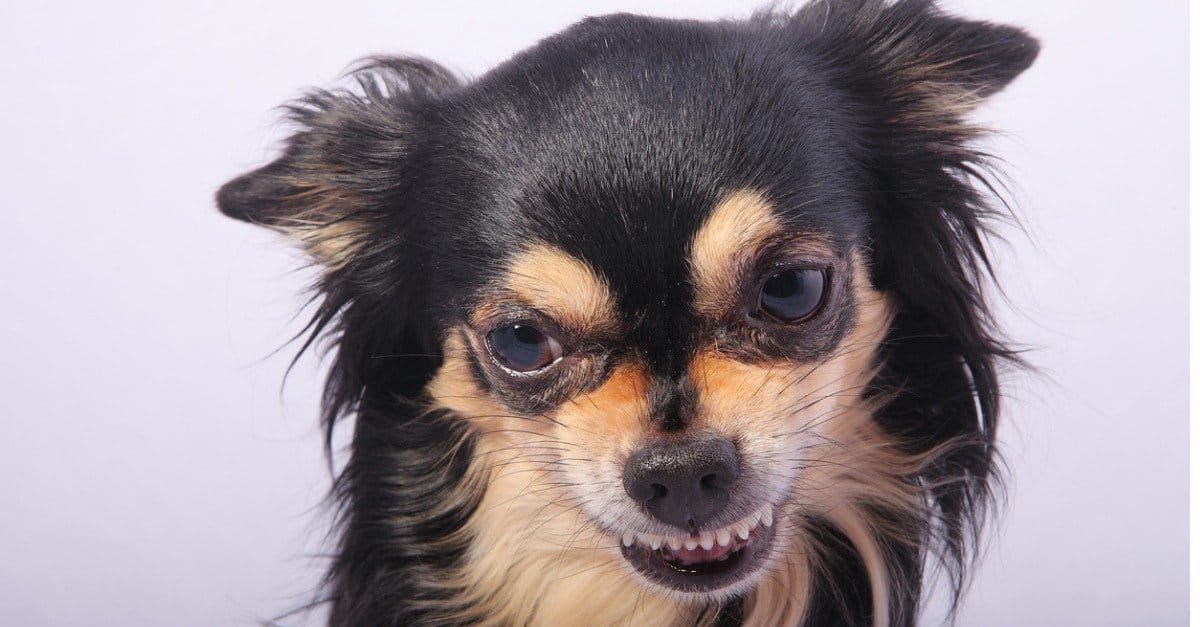
However, Chihuahuas often get “small dog syndrome.” Simply put, this occurs when a smaller dog is a bit sensitive about its size and overcompensates by becoming aggressive. Often, this causes the dog to act like they are much larger than they are, and not in a good way. Luckily, consistent training and treating them like a “big dog” with firm boundaries can prevent these problems.
Technically, there are only two officially recognized varieties: the long coat and the smooth coat. However, many breeders categorize them by head shape and size. There are seven common categories in total; let’s look at them.
1. Short-Haired Chihuahua
Most Chihuahuas have shorter hair. This type is considered the “typical” Chihuahua.
©iStock.com/Arthur Lookyanov
Most Chihuahuas have shorter hair. This type is considered the “typical” Chihuahua. This type fits the breed standard, so it is easy to find puppies at breeders. This variation is called “smooth-coat” Chihuahuas, as their short hair gives them a smooth appearance. Their shorter hair helps reduce their grooming needs. You only have to brush these dogs about once a week – or more if you want to reduce the amount of fur to pick up around your house. Beyond that, these Chihuahuas are pretty average.
2. Long-Haired Chihuahuas
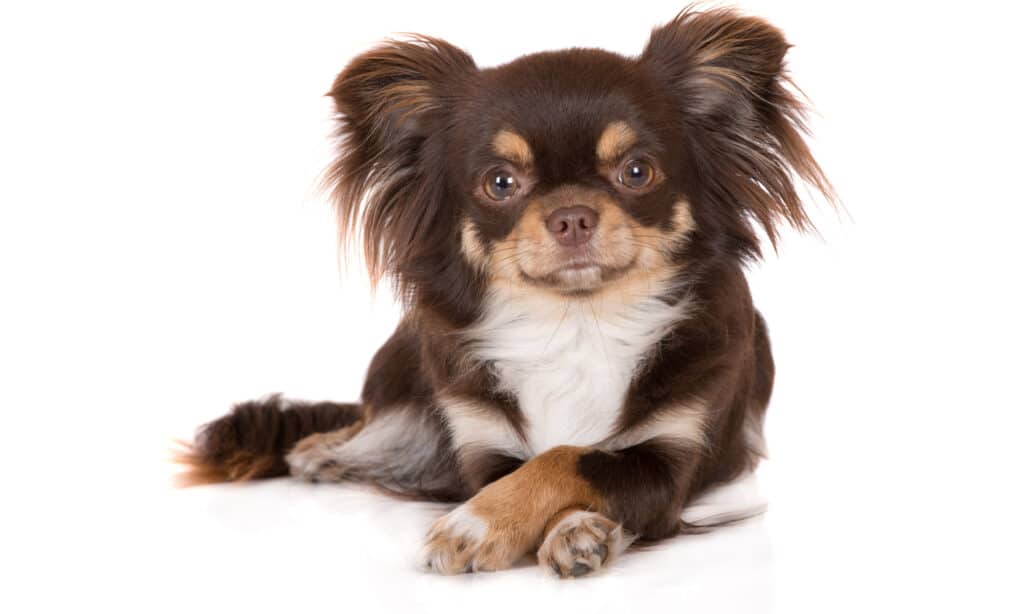
All Chihuahua puppies are born with short hair, and it takes about two years to grow out ultimately. When it does, these dogs require more extensive grooming.
©otsphoto/Shutterstock.com
Long-haired Chihuahuas are the same as short-haired Chihuahuas; however, they have longer fur. It reaches at least medium length. All Chihuahua puppies are born with short hair, and it can take up to three years for the coat to reach its full length and thickness. When it does, these dogs require more extensive grooming. You will need to brush these dogs every other day to prevent matting. These dogs are the same as other Chihuahuas temperament-wise.
3. The Deer-Headed Chihuahua
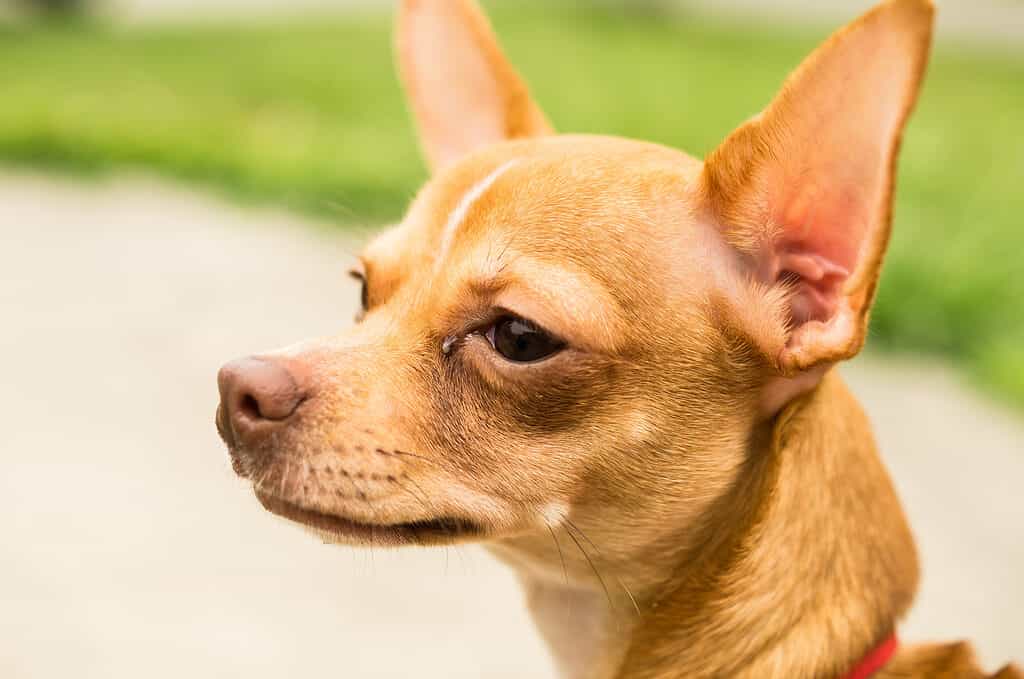
The deer-headed Chihuahua also exists. They have slightly longer heads and no slope in their nose. Furthermore, these dogs tend to be a bit larger.
©Toro_The_Bull – Arturelia/Shutterstock.com
Most Chihuahuas have an apple-shaped head, which is the standard for dog shows. However, the deer-headed Chihuahua also exists. They have slightly longer heads, a more sloped “stop” (the bridge where the nose meets the forehead), and longer legs. Furthermore, these dogs tend to be larger and often less prone to certain respiratory issues. Because they do not meet the strict show standard, they are primarily bred as pets.
4. Apple-Head Chihuahuas
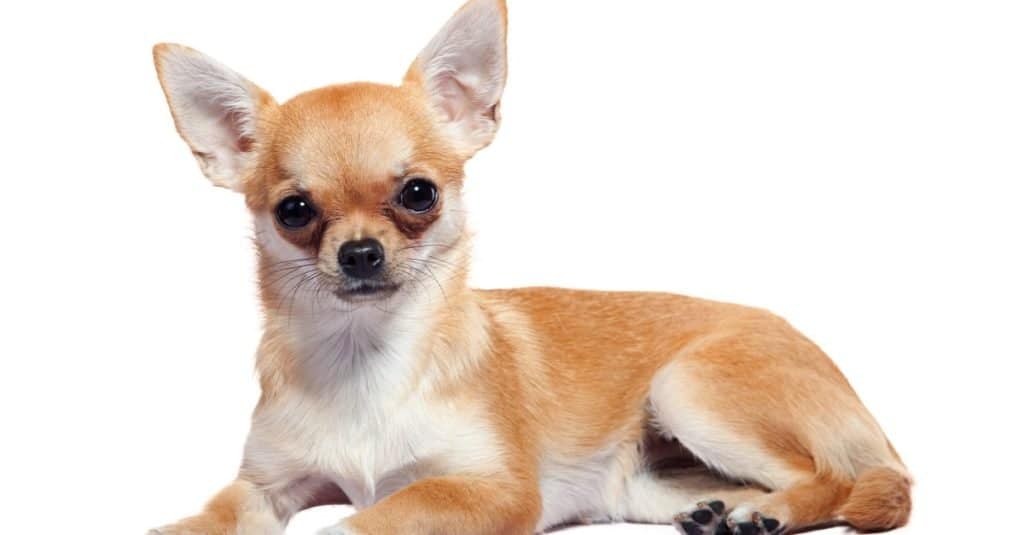
The apple-head Chihuahua has a somewhat apple-shaped head. It is rounded with a very sloped nose. Today, they are widespread. Most Chihuahua puppies will fit into this category.
©Alexia Khruscheva/Shutterstock.com
The apple-headed Chihuahua is the officially recognized silhouette for the breed. Most Chihuahua puppies from show-line breeders will fit into this category. It is rounded with a very pronounced 90-degree angle where the muzzle meets the forehead. This head shape comes with a shorter muzzle. Many canines also end up with a molera, a soft spot on their skull. This hole may or may not close completely as the dog grows. While the molera is a breed trait, the extreme “apple” shape can sometimes be linked to dental issues or hydrocephalus due to the skull shape.
5. The Teacup Chihuahua
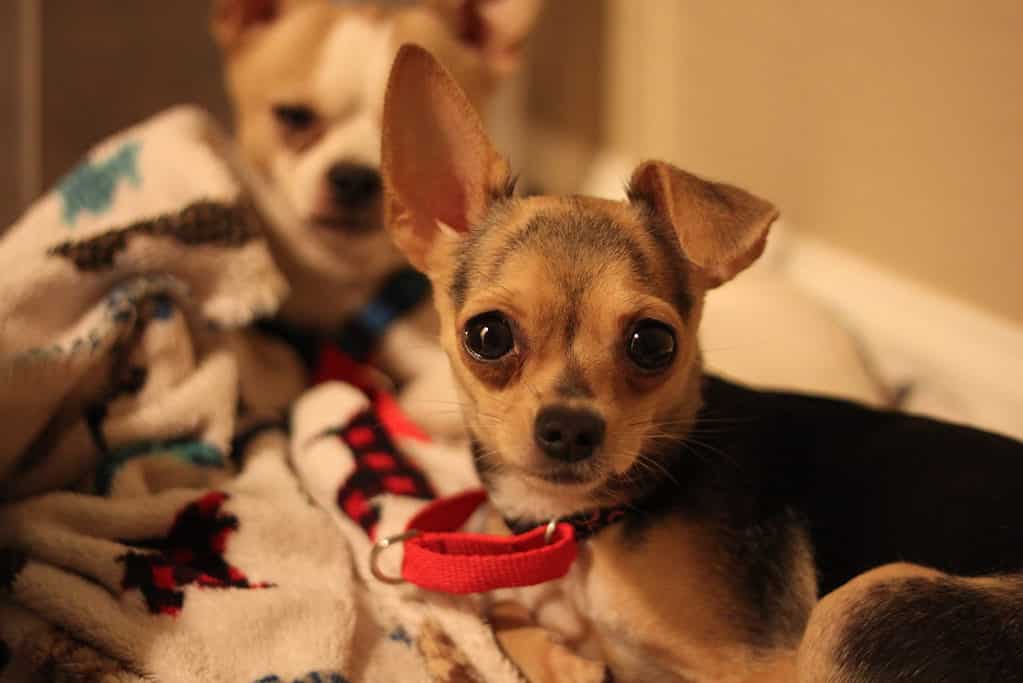
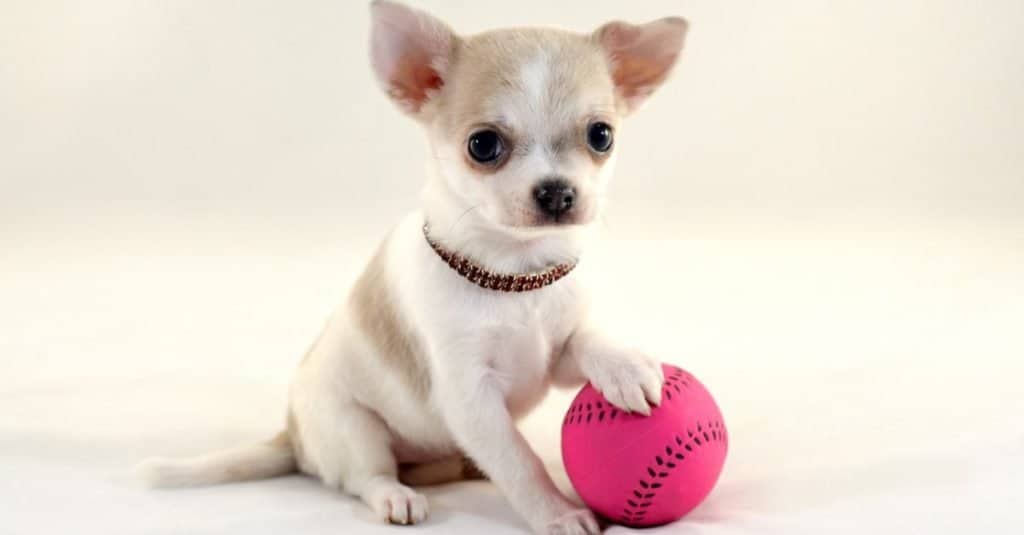
These canines may have long or short fur and any head shape. However, they’re set apart from other Chihuahuas due to their smaller size.
©Rebekah Zemansky/Shutterstock.com
“Teacup” is a marketing term used by breeders and is not an official breed type. These canines may have long or short fur and any head shape; however, they’re set apart due to their artificially small size (usually under 3 pounds). The problem with “teacup” Chihuahuas is that they’re prone to severe health problems, including chronic hypoglycemia (low blood sugar), heart defects, and fragile bones. Because they are often the “runts” of the litter, many breeders argue that intentionally breeding for this size is unethical.
6. The Pear-Headed Chihuahua
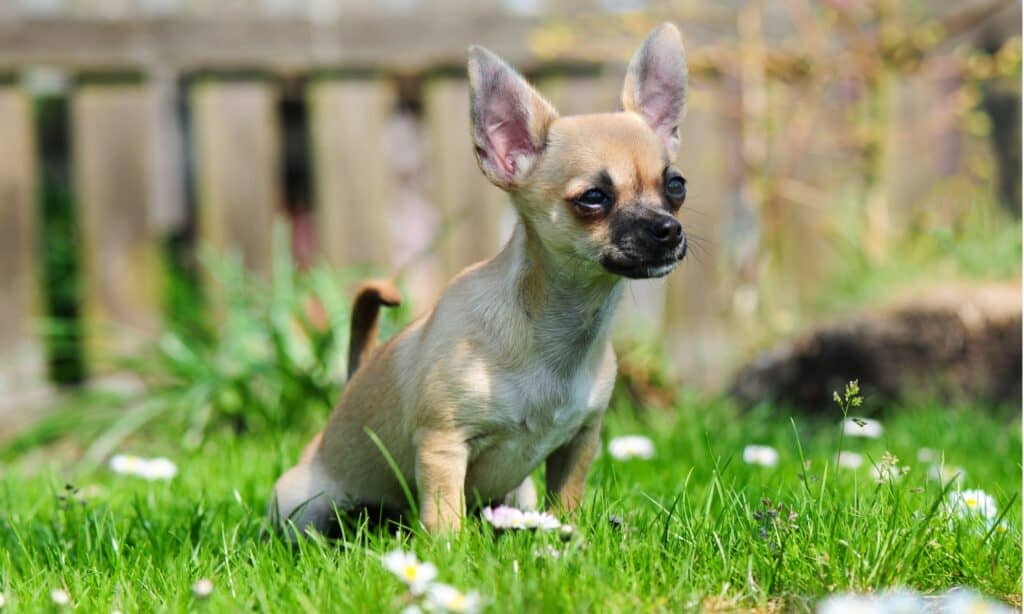
A pear-headed Chihuahua has a flatter head and a longer muzzle, similar to the dog shown here.
©iStock.com/schulzie
Sometimes, apple-headed and deer-headed traits appear in the same dog, resulting in the “pear-headed” Chihuahua. This is considered a significant fault by kennel clubs rather than a distinct type. Often, these dogs are taller and heavier, exceeding the breed standard. Their skull is broader at the top and narrows into a longer, deer-like muzzle.
Unique Coat Colors
The American Kennel Club recognizes various colors, including chocolate, tan, black, and others. The breed standard allows for almost any color, including solid, marked, or splashed. However, some colors like merle (a mottled patch pattern) are controversial because the genes required to produce them can be linked to deafness or blindness if the dog is bred improperly. Often, rare patterns like merle result from historical cross-breeding.
What is the Rarest Type of Chihuahua?
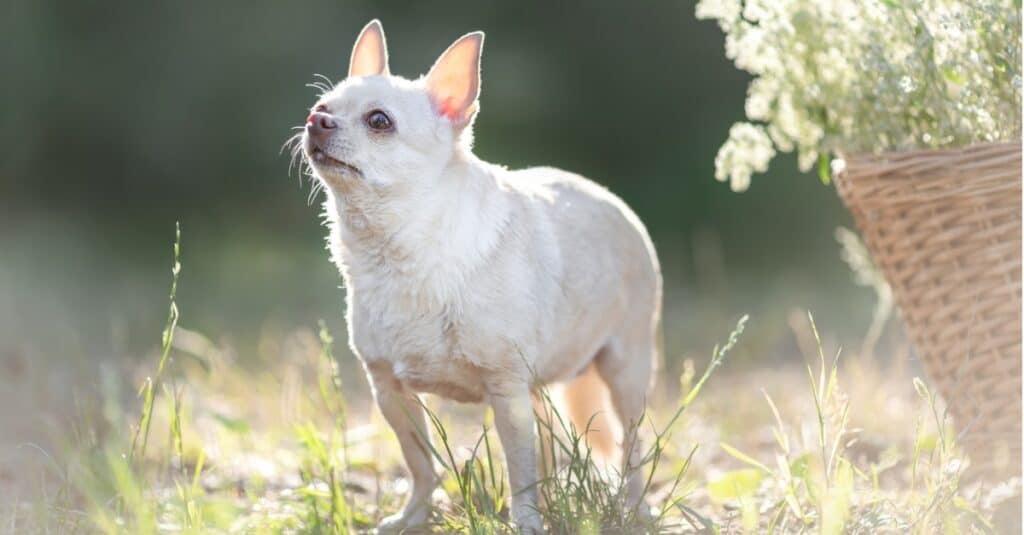
Chihuahuas weigh five pounds, on average.
©iStock.com/Irina Nedikova
Pure white Chihuahuas are perhaps the rarest color of the breed. While many Chihuahuas have white patches, a solid white dog without any cream or tan shading is uncommon. Genetically, a solid white coat is usually the result of “extreme white spotting” genes that prevent pigment from appearing in the fur. Unlike albino dogs, a white Chihuahua will still have dark pigmentation on its nose and around its eyes. White Chihuahuas shouldn’t be confused with albino Chihuahuas, which are extremely rare. Albino pups have a complete lack of melanin; they will have no pigment whatsoever, resulting in pink skin, pink noses, and very pale, translucent eyes that may appear red or pinkish in certain light.