

Quick Take
- Shed-free dogs trap loose hair in their coats, reducing visible shedding but requiring hands-on care.
- Regular brushing prevents tangles and painful mats that can form close to the skin.
- Professional grooming every 4–8 weeks keeps coats trimmed, clean, and manageable.
- Overall, less shedding means more maintenance, trading household cleanup for consistent grooming responsibility.
For many people, the dream of owning a large dog runs straight into one practical concern: shedding. Big dogs often mean big coats and even bigger messes. But not all large breeds leave fur on every surface. Some dogs are considered hypoallergenic, or low-shedding, meaning they produce far less loose hair and dander than typical breeds.
It’s important to be clear about one thing: no dog is completely shed-free. However, certain breeds have hair instead of traditional fur, or coats that trap loose strands rather than releasing them into your home. These dogs often require more grooming, but they are far easier to live with if you want to keep your floors, clothes, and furniture relatively free of hair. Here are 10 large dog breeds that don’t shed much, along with what makes them unique. And at the end, we have some reminders of the special care these dog’s coats need to keep them low-shedding, clean, and nice-looking.
1. Standard Poodle
Size: 45 to 70 pounds, 18 to 24 inches tall
Coat type: Dense, curly hair
Colors: black, white, apricot, cream, brown, silver, gray, blue, café-au-lait
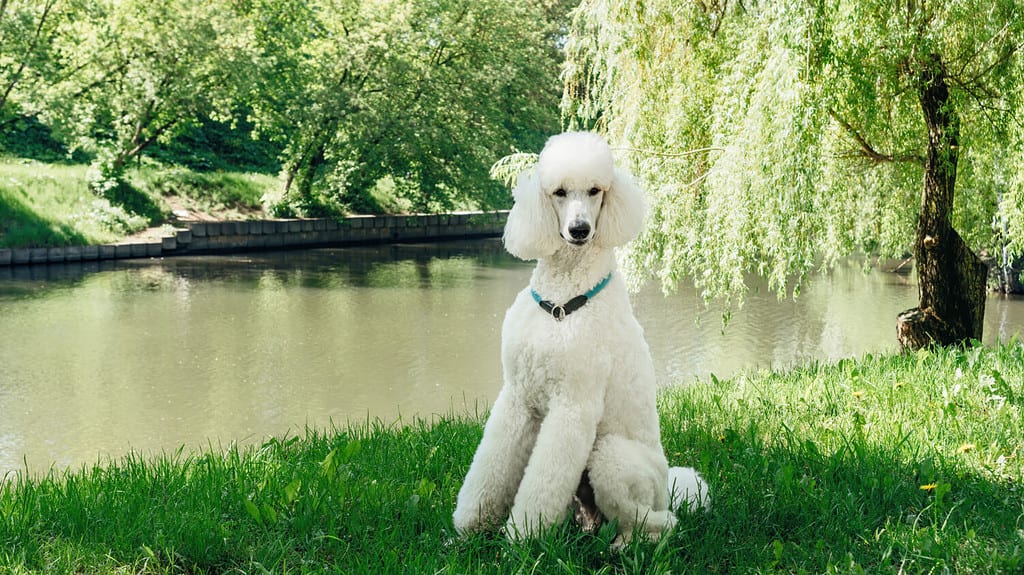
Standard poodles have a reputation of high intelligence and trainability.
©nieriss/Shutterstock.com
The standard poodle is one of the most well-known low-shedding large breeds. Their tightly curled coat traps loose hair instead of letting it fall out, which significantly reduces shedding. Despite their refined reputation, standard poodles are athletic, intelligent, and highly trainable. They were originally bred as water retrievers and still enjoy physical activity and mental challenges.
Care needs: Their coat requires regular grooming. Without brushing and professional trims every four to six weeks, their hair can mat quickly.
2. Portuguese Water Dog
Size: 35 to 60 pounds, 17 to 23 inches tall
Coat type: Wavy or curly
Colors: black, white, brown, black and white, brown and white
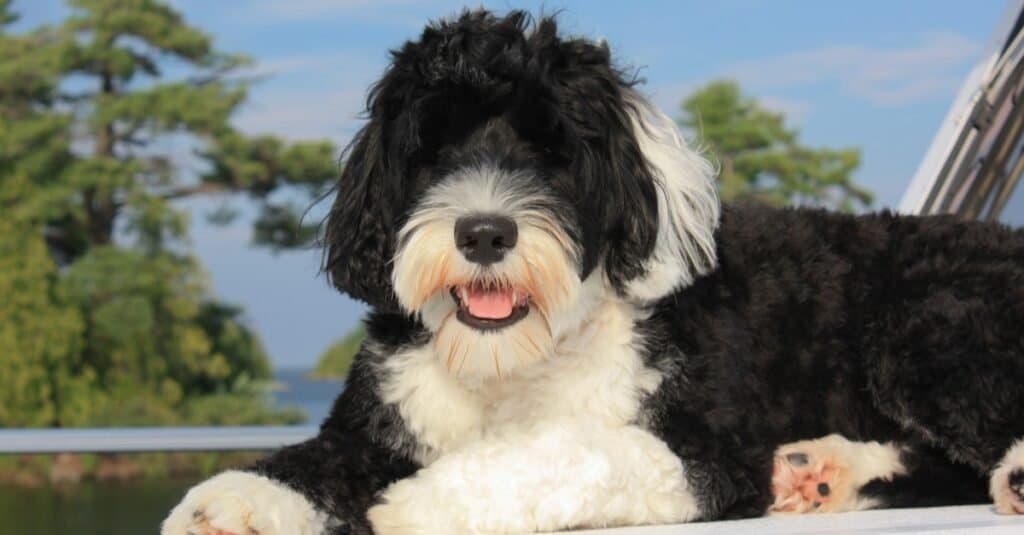
Portuguese water dogs were used as fishermen’s helpers to act as couriers from ship to shore or ship to ship.
©Lynda McFaul/Shutterstock.com
Bred to assist fishermen, the Portuguese water dog has a water-resistant coat that sheds very little. Like the poodle, their hair tends to stay in place rather than falling out. These dogs are energetic, loyal, and thrive in active households. They especially enjoy swimming and outdoor play.
Care needs: Routine brushing and trimming are necessary to prevent matting. Many owners keep the coat shorter for easier maintenance.
3. Giant Schnauzer
Size: 55 to 85 pounds, 23 to 28 inches tall
Coat type: Wiry double coat
Colors: solid black, salt and pepper
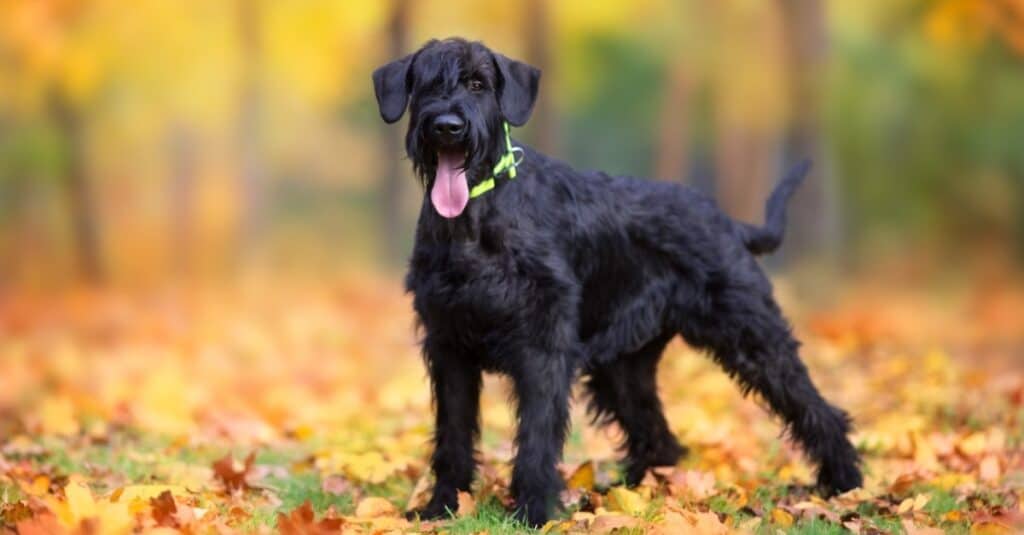
The origin of the giant schnauzer can be traced back to 15th century Germany.
©iStock.com/Nemyrivskyi Viacheslav
The giant schnauzer has a coarse, wiry coat that sheds minimally. Instead of dropping hair, their coat grows continuously and needs trimming. They are strong, protective, and highly intelligent. This breed often does best with experienced owners who can provide consistent training and structure.
Care needs: Regular brushing and professional grooming are important. Their facial hair also requires cleaning to keep it tidy.
4. Afghan Hound
Size: 50 to 60 pounds, 25 to 27 inches tall
Coat type: Long, silky hair
Colors: cream, red, black, blue, brindle, black and tan, white
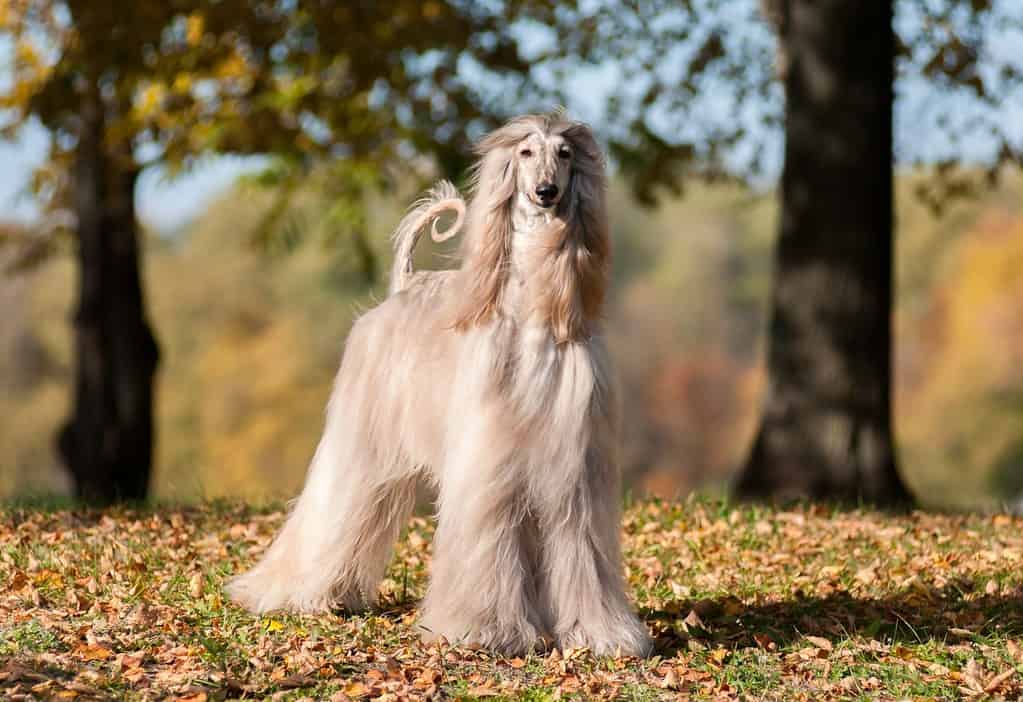
Remarkably, despite this breed’s long silky fur, it doesn’t shed very much.
©David Raihelgauz/Shutterstock.com
The Afghan hound’s long, flowing coat may look like it would shed heavily, but it actually sheds very little. Their hair grows continuously and behaves more like human hair than typical dog fur. These dogs are independent and somewhat aloof, though they can be affectionate with their families.
Care needs: High grooming commitment. Their coat requires frequent brushing and regular bathing to prevent tangles.
5. Bouvier des Flandres
Size: 70 to 110 pounds, 23 to 27 inches tall
Coat type: Thick, shaggy coat
Colors: fawn, brindle, black, gray, salt and pepper
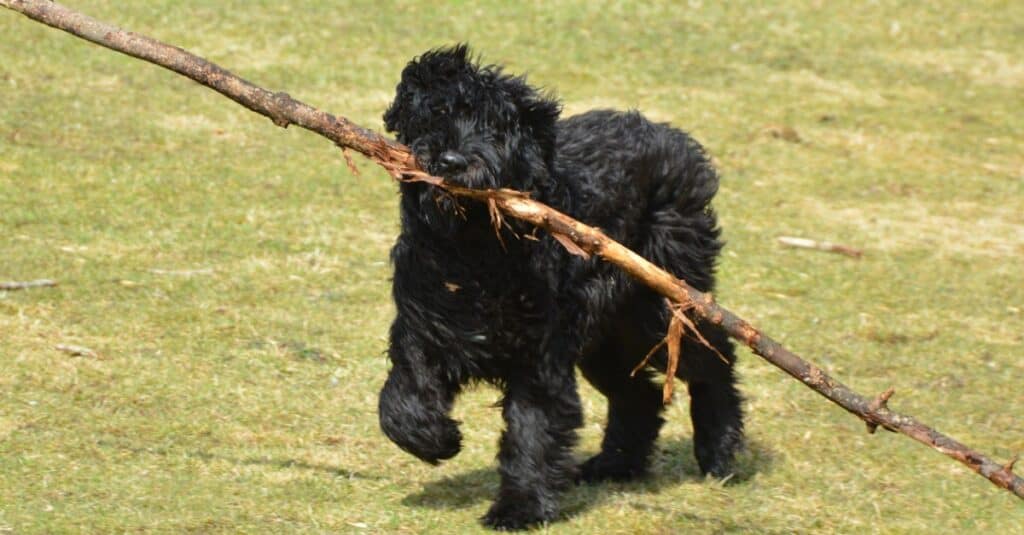
Bouvier des Flandres playing with a stick.
©iStock.com/Carol Hamilton
This large, powerful breed has a dense coat that sheds very little. The rough outer coat and thick undercoat tend to hold loose hair in place. Bouviers are calm, loyal, and make excellent family dogs when properly trained. They were originally used as herding and farm dogs.
Care needs: Frequent brushing is necessary to prevent matting. Professional grooming is often required due to the thickness of the coat.
6. Irish Water Spaniel
Size: 45 to 65 pounds, 21 to 24 inches tall
Coat type: Tight curls
Colors: liver (rich brown)
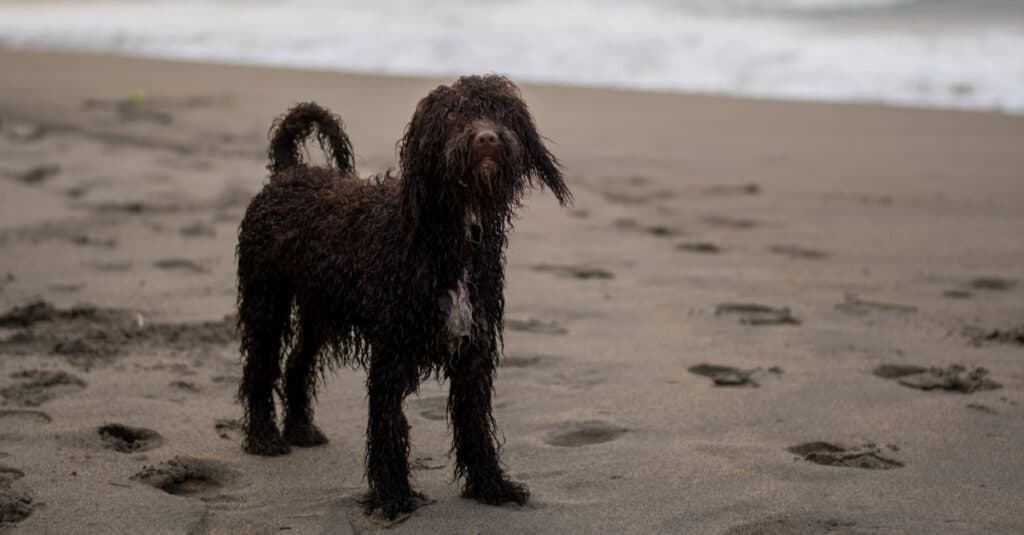
An Irish water spaniel living up to its name.
©Wirestock Creators/Shutterstock.com
The Irish water spaniel has a dense, curly coat that sheds very little. Loose hairs are caught within the curls rather than falling out. They are energetic, playful, and intelligent, making them great companions for active families.
Care needs: Regular brushing and trimming are needed to maintain their coat. Without care, the curls can mat.
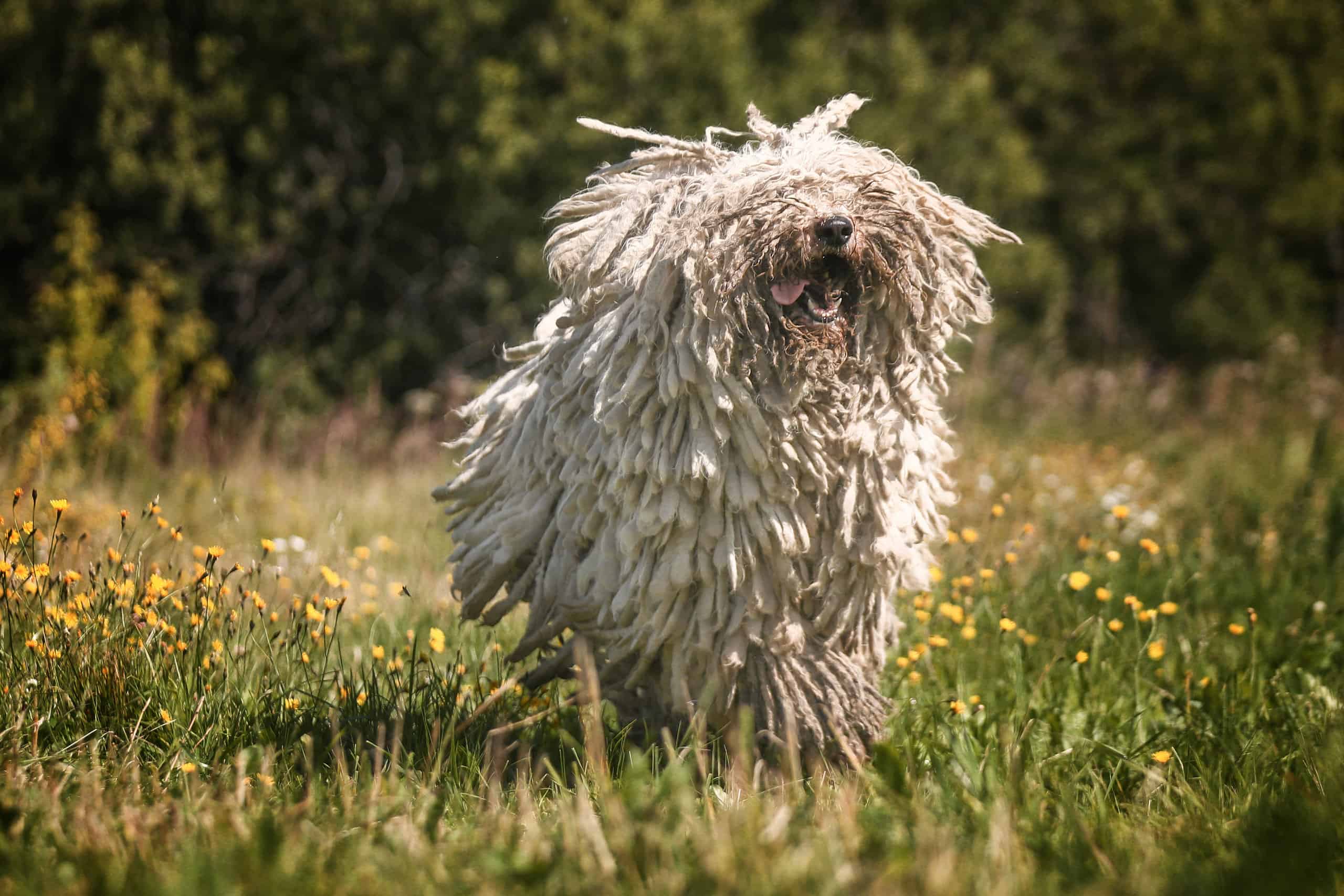
7. Komondor
Size: 80 to 100 pounds, 25 to 31 inches tall
Coat type: Corded (dreadlock-like)
Colors: white (may appear ivory or cream with age)
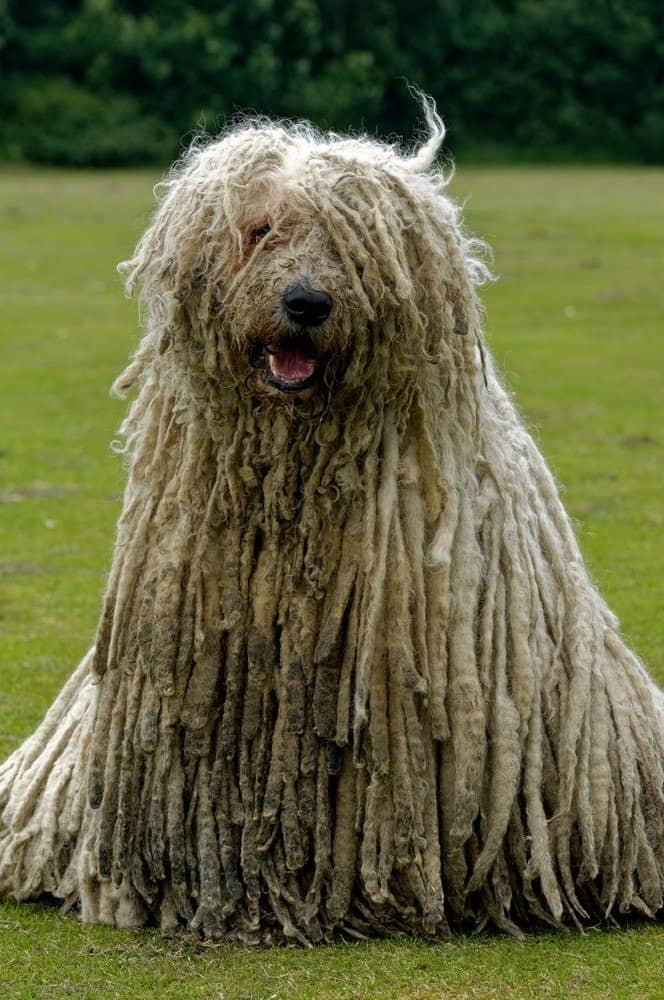
It takes a lot of time and effort to maintain the dreadlocks of a Komondor.
©Colin Seddon/Shutterstock.com
The Komondor is known for its distinctive corded coat. This unique structure traps hair completely, making shedding nearly nonexistent. Originally bred to guard livestock, they are protective, independent, and confident.
Care needs: Their cords require specialized maintenance to keep them clean and properly separated. Grooming is time-intensive, even though shedding is minimal.
8. Bergamasco Sheepdog
Size: 57 to 84 pounds, 22 to 24 inches tall
Coat type: Flocked (matted layers)
Colors: gray, black, fawn, merle, combinations of these
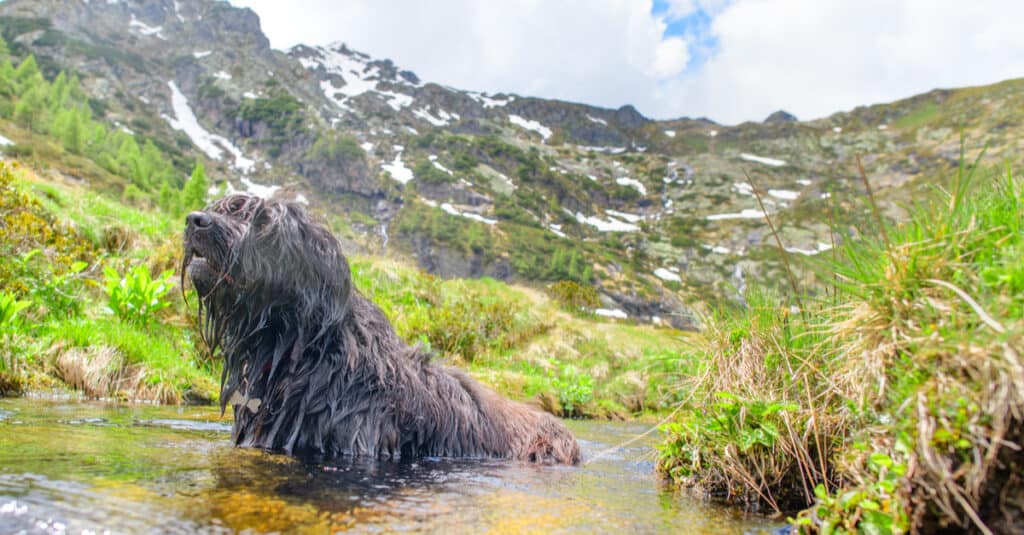
This breed is at home in rugged environments.
©michelangeloop/Shutterstock.com
Bergamasco sheepdogs have coats that form natural mats or “flocks,” which trap hair and prevent shedding. They are calm, patient, and known for being excellent with families. Historically, they worked as herding dogs in rugged environments.
Care needs: Once the coat forms, it requires less brushing but still needs regular care to keep the flocks clean and healthy.
9. Airedale Terrier
Size: 50 to 70 pounds, 21 to 23 inches tall
Coat type: Wiry
Colors: tan with black or grizzle saddle
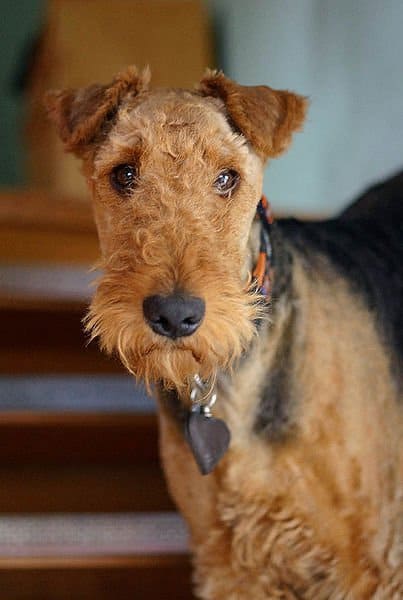
Airedale terriers have a great personality, intelligence, and athleticism.
©Angela Montillon, CC BY-SA 2.0, via Wikimedia Commons – Original / License
Known as the “King of Terriers,” the Airedale has a wiry coat that sheds minimally. Instead of shedding, their coat grows and must be trimmed. Airedales are confident, intelligent, and energetic dogs that need both physical activity and mental stimulation.
Care needs: Regular brushing and trimming or hand-stripping are needed to maintain the coat and keep it healthy.
10. Goldendoodle (Standard)
Size: 50 to 90 pounds, 20 to 26 inches tall
Coat type: Wavy to curly
Colors: cream, apricot, red, gold, black, chocolate, parti (two-color), merle
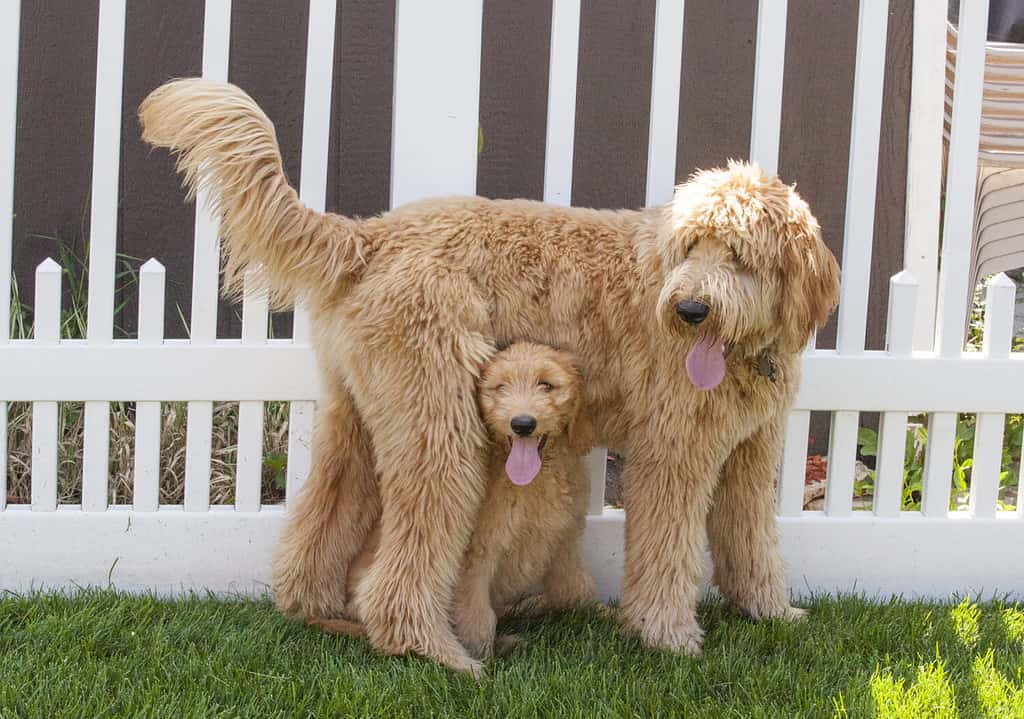
Goldendoodles can have different hair textures. Those with curlier coats are more hypoallergenic.
©Deanna Oliva Kelly/Shutterstock.com
The standard goldendoodle, a mix between a golden retriever and a standard poodle, is often bred for low shedding. Shedding levels can vary depending on the individual dog’s coat type. Dogs with curlier coats tend to shed less. This breed is friendly, social, and known for being an excellent family pet with an easygoing nature.
Care needs: Regular grooming is essential, especially for curlier coats. Without brushing, matting can occur quickly.
What Coat Care Does a “Low-Shedding” Dog Need?
Shed-free, or low-shedding, dogs require a different kind of coat care than typical breeds. Instead of hair falling out naturally and ending up on your floors and furniture, loose hair tends to stay trapped in the coat. That means owners need to take a more active role in maintaining it. The result is less shedding around the home, but more hands-on grooming.
The type of coat affects how much care is needed. Curly coats, like those of Poodles and doodles, are especially prone to matting and require frequent brushing. Wiry coats, such as those of Schnauzers and Airedales, are less likely to tangle but still need trimming. Long, silky coats can tangle easily and require regular upkeep, while corded or flocked coats, like those of Komondors and Bergamascos, need specialized care to maintain their unique structure.
Brushing
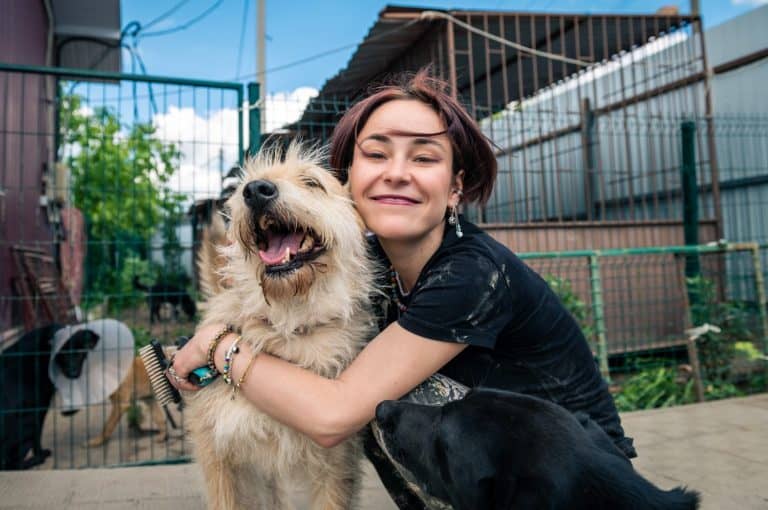
Regular brushing is one of the most important parts of caring for these dogs. Because loose hair stays in the coat, it can quickly tangle and form mats if it is not removed. Brushing several times a week, and in some cases daily, helps keep the coat smooth and prevents painful knots from forming close to the skin. Without consistent brushing, mats can become so tight that they need to be shaved out.
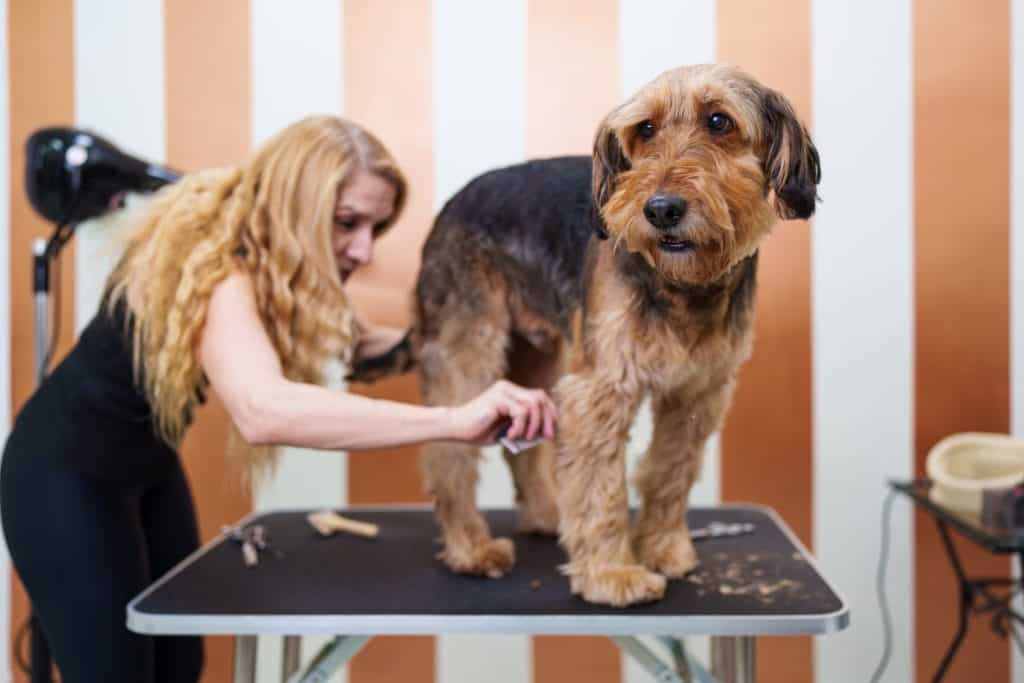
Large non-shedding breeds like airedales still need regular grooming.
©DuxX/Shutterstock.com
Grooming
Professional grooming is also a routine part of life with a low-shedding dog. Many of these breeds have coats that grow continuously, similar to human hair. As a result, they need regular trims every four to eight weeks to keep their coat manageable. Groomers also take care of areas that are harder to maintain at home, such as trimming around the eyes and paws, as well as cleaning ears and clipping nails.
Groomers can also deal with mats. Matting is the biggest challenge with shed-free dogs. Mats form when loose hairs twist together and tighten over time, especially in areas where there is friction, such as behind the ears, under the legs, or around the collar. If left untreated, mats can pull on the skin and even lead to irritation or infection. Preventing mats through consistent care is much easier than trying to remove them later.
Bathing
Bathing is another important aspect of coat care. Since these dogs do not shed as much, their coats can hold onto dirt and oils more easily. Regular baths, usually every few weeks, help keep the coat clean and healthy. It is important to brush the dog before bathing, since water can tighten existing tangles and make them worse. Using conditioner can also help keep the coat soft and easier to manage.
Many low-shedding breeds also require attention to their ears. Some grow hair inside the ear canal, which can trap moisture and increase the risk of infection. Regular cleaning, and sometimes professional maintenance, helps keep the ears healthy.
A Tradeoff
In the end, the tradeoff is simple: dogs that shed more tend to require less grooming but more cleanup around the home; dogs that shed less require more grooming effort but keep your living space much cleaner. With consistent care, low-shedding dogs are very manageable, but they do rely on their owners to stay on top of their grooming needs. Choosing the right breed comes down to your lifestyle, grooming commitment, and personal preference. With the right fit, you can enjoy all the benefits of a large dog without dealing with constant shedding.