
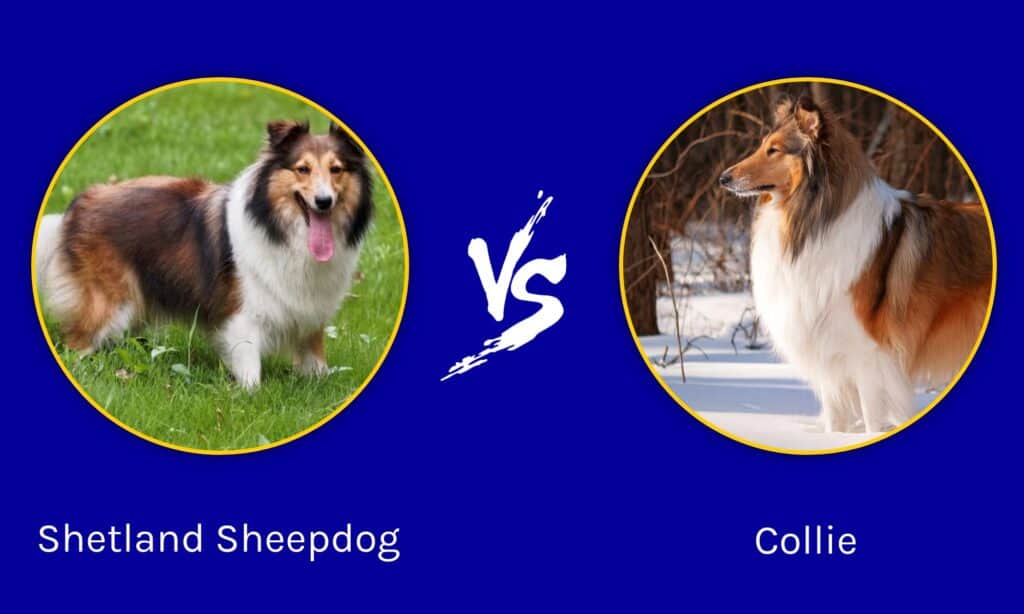
Shetland Sheepdogs and Collies may look similar, but they have a few key differences that make it easy to distinguish between them.
Collies are much larger dogs, and their coats come in a wider variety of colors. They also tend to drool more than Shelties and may have lower grooming requirements depending on their coat type. Shelties tend to have stronger guarding tendencies and higher energy levels.
Keep reading to learn more about these herding breeds and how they’re different from each other.
Comparing Shetland Sheepdogs vs Collies
| Shetland Sheepdog | Collie | |
|---|---|---|
| Size | 13-16 inches, 15-25 pounds | 22-26 inches, 50-75 pounds |
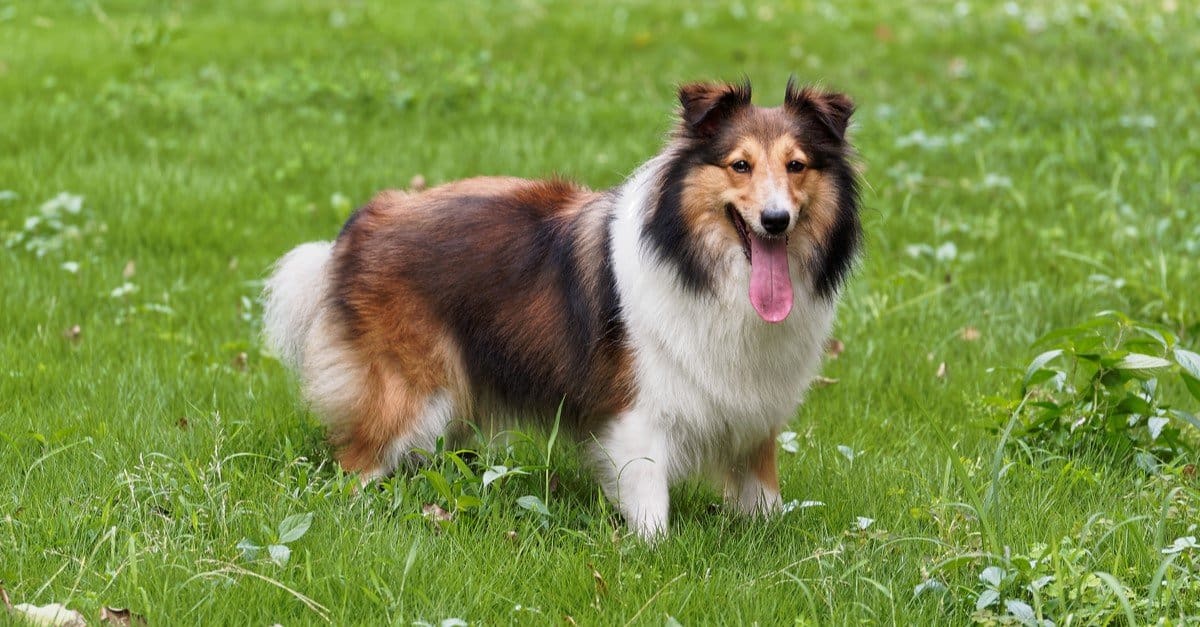
| Appearance | Long double coat in a variety of colors | Coat can be long or short, smooth or rough; wide range of coat colors and markings. |
| Drooling Tendency | Very low | Low |
| Temperament | Very affectionate, great with other dogs, strong guarding tendencies, very adaptable | Affectionate, some guarding tendencies, adaptable |
| Energy Level | High | Moderate |
| Grooming Needs | Weekly | Depends on the coat type |
The Key Differences Between Shetland Sheepdogs and Collies
The key differences between Shelties and Collies are size, coat color, drooling tendency, temperament, energy level, and grooming needs.
Let’s take a deeper look below!
Shetland Sheepdog vs Collie: Size
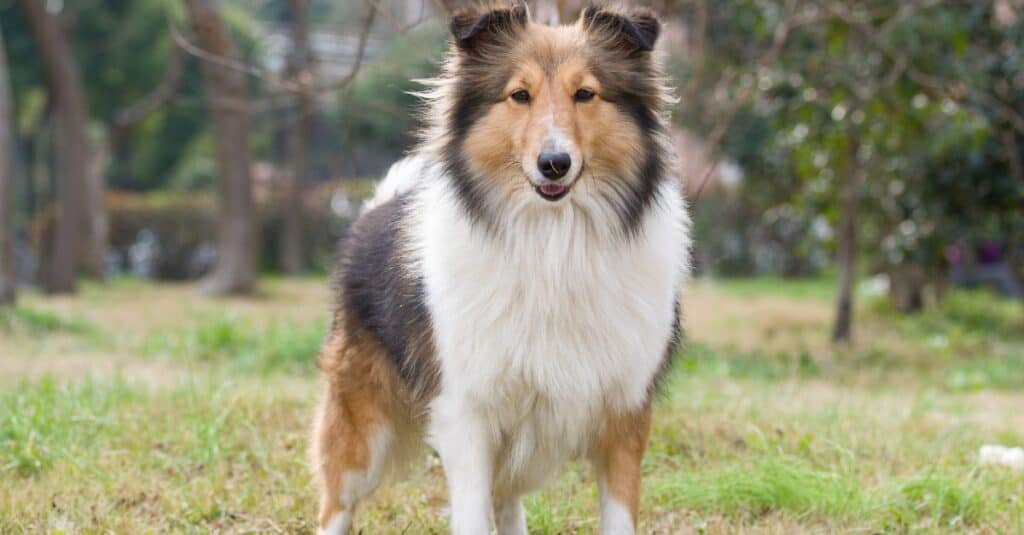
Shelties stand just 13-16 inches in height.
©iStock.com/yanjf
Though these dogs look very similar, you’d instantly see the difference if you put them side by side. Shelties are small, standing at 13-16 inches and weighing 15-25 pounds. Collies are medium to large dogs that grow 22-26 inches tall and weigh 50-75 pounds.
When looking for a pet, consider size due to the following factors: cost, handling, and protection.
Large dogs cost more and are heavier—making them more difficult to pick up or control on a leash. However, they’re more likely to scare away a threat than smaller dogs.
Shetland Sheepdog vs Collie: Coat Color
Shetland Sheepdogs always have long, double coats. According to the AKC breed standard, the following colors are accepted:
- Black and white
- Black, white, and tan
- Blue merle and white
- Blue merle, white, and tan
- Sable merle and white
Collies can have short or long coats. Rough Collies have long fur, while smooth Collies have short fur. They come in more color variations than Shelties, including:
- Black, white, and tan
- Blue merle
- Blue merle and white
- Blue merle, white, and tan
- Sable
- Sable and white
- Sable merle
- White
- Sable merle and white
- White merle
Collies can also have the following markings: sable, black and tan, blue merle, and sable merle.
Shetland Sheepdog vs Collie: Drooling Tendency
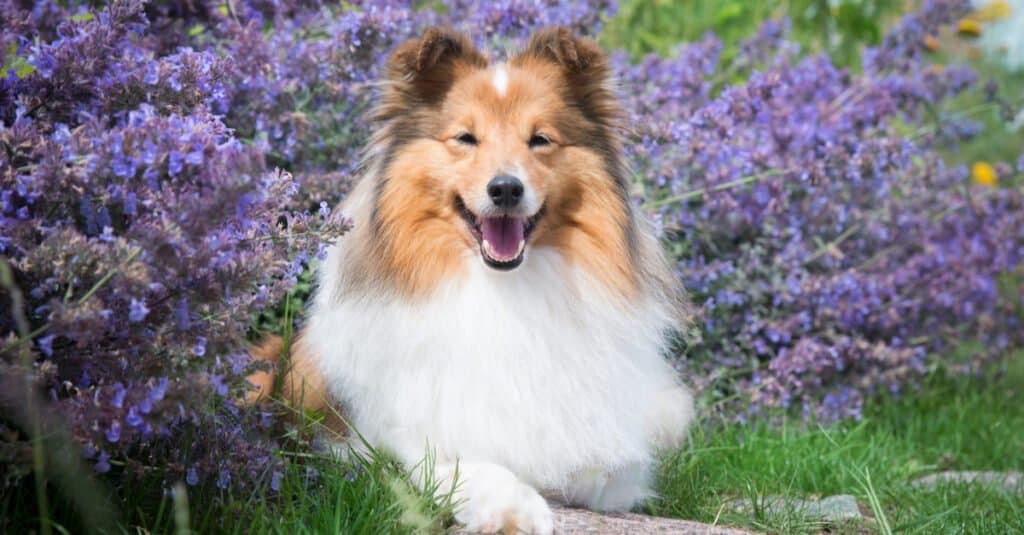
Collies drool slightly more than Shelties.
©Lisjatina/Shutterstock.com
Shelties seldom drool, though, of course, every dog will drool some—especially when it’s hot or they want food.
Collies drool slightly more than Shelties. You might notice a bit more mess around the water dish or on the floors.
Shetland Sheepdog vs Collie: Temperament
Shelties tend to be incredibly affectionate with their families, have extremely strong guarding tendencies, and can be wary of strange people. However, they get on well with other dogs.
Collies may be warier of other dogs, and their guarding instincts are less strong, though still prevalent. They’re affectionate but not quite as clingy as Shelties on average. Though, of course, every dog has their own personality!
Both dogs are adaptable to new situations, but Collies might have a slightly more difficult time adjusting to life changes—from moving home to welcoming a new family member.
Shetland Sheepdog vs Collie: Energy Level
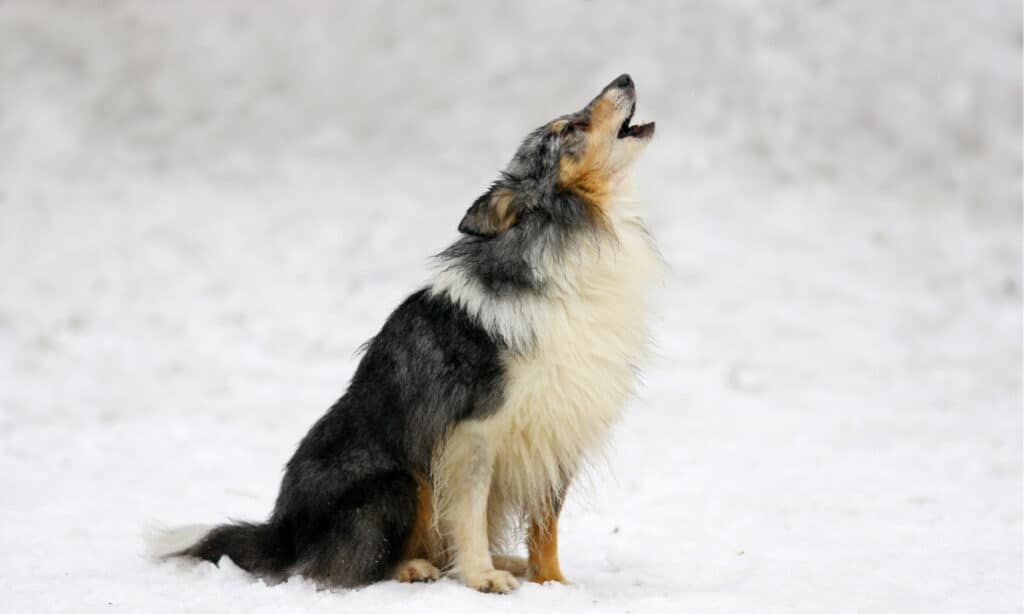
Shetland Sheepdogs are more energetic than Collies.
©Utekhina Anna/Shutterstock.com
Both breeds require plenty of daily exercises, but Shelties tend to be more energetic. While these dogs will adapt to your lifestyle within reason, they need plenty of playtime and at least one daily walk.
They won’t fend for themselves, either. While most dogs won’t play alone in the backyard, Shelties and Collies are both likely to grow bored and bark excessively.
Hands-on activities like fetch are recommended to work their bodies and minds, tiring them out fully.
Shetland Sheepdog vs Collie: Grooming Needs
Neither of these dogs is incredibly high-maintenance, but they do shed. Their double coats need to be raked out routinely, no matter which breed you adopt.
Long-haired Collies and Shelties both require weekly combing to prevent mats. During the shedding season, you might need to comb them every other day.
Smooth, or short-haired, Collies should also be brushed weekly to distribute oils, promoting a healthy, shiny coat. This will also reduce the amount they shed.
However, you don’t have to worry about matting with these pups, making it less of a big deal if you skip a week of brushing.