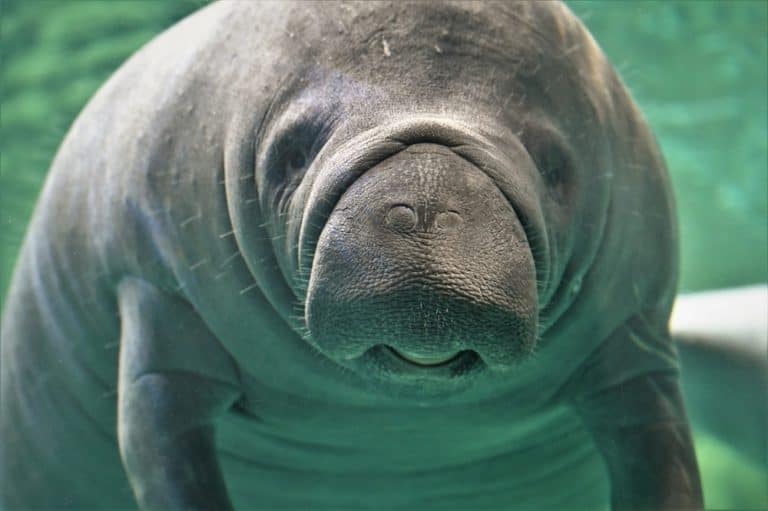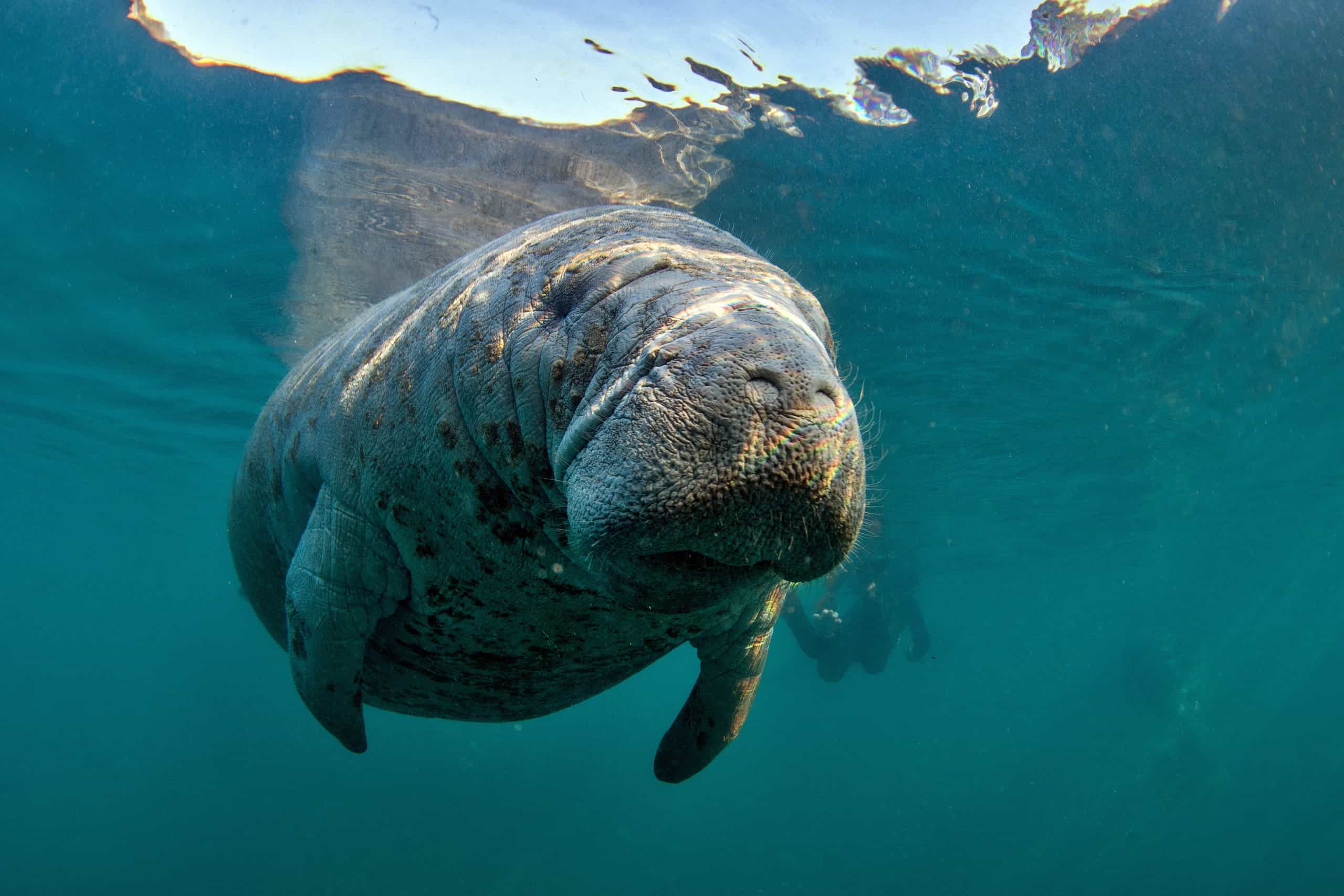

If you think you’ve seen a big manatee before, think again. Meet Sara, the heavyweight queen of Florida’s gentle giants. Weighing in at a whopping 3,170 pounds and stretching 12.4 feet long, Sara currently holds the record as the largest manatee on file with the Florida Fish and Wildlife Conservation Commission (FWC). For perspective, Sara is roughly the same size as your average Toyota Corolla … except with flippers, whiskers, and an appetite for leafy greens.
“Sara was rescued on October 14, 1986, in Venice Beach, Florida, and measured 4.3 feet at the time,” says Kelly Richmond, Communications Program Manager for FWC. She also notes that there are reports of a larger manatee that has since died. However, those records aren’t available.
“Sara is currently at SeaWorld Orlando and has been there since 1986 (39 years),” Kelly confirms.
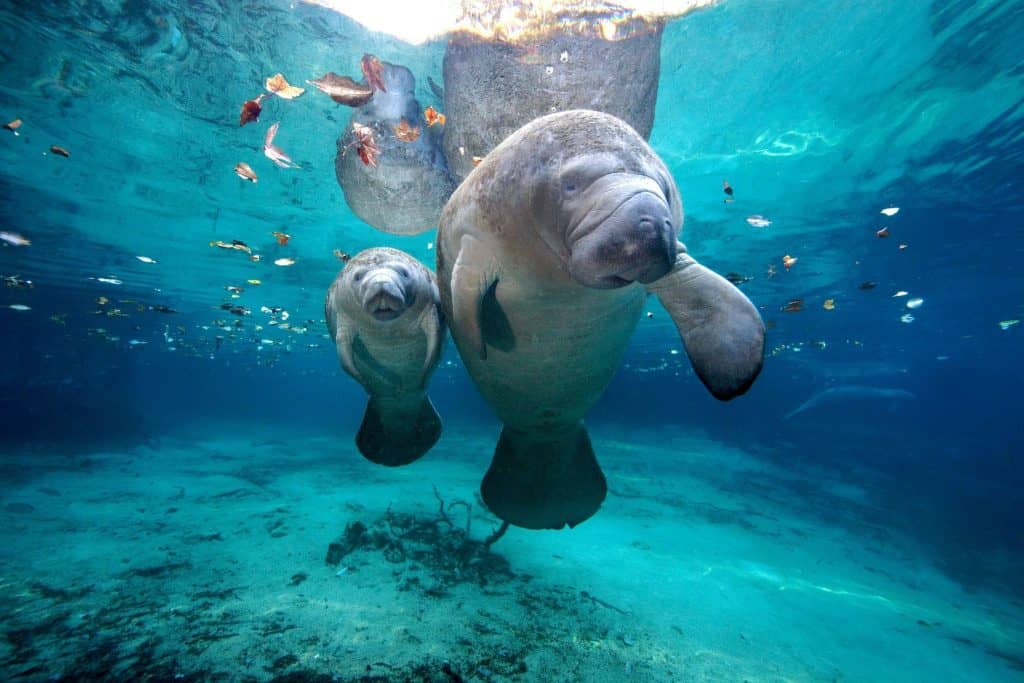
Florida manatees can grow up to 10 feet long and weigh more than 1,000 pounds — yet they move through the water with quiet ease.
©Facebook – Original
A Crucial Clarification About Captive Manatees
Before we go any further, Kelly makes one key clarification about manatees like Sara. “Just a quick point of clarification. Manatees are not bred in captivity. They are long-term residents that have a condition or injury that prevents them from being released into the wild. They remain under the care of our partners at permitted facilities.”
That means Sara isn’t a zoo attraction or breeding project. She’s a permanent rescue who can’t safely survive on her own. Thankfully, she’s thriving under expert care.
The future resiliency of the species depends on population size, distribution, health, and habitat quality all central to ongoing conservation work.
Kelly Richmond, Communications Program Manager for Florida’s Fish and Wildlife Conservation Commission
How Did Sara Get So Big?
Sara’s record-breaking size isn’t typical, but it’s also not entirely unusual for manatees in long-term care. “Manatees that remain in managed care as permanent residents tend to be larger than those found in the wild,” says Kelly.
“While wild manatees typically measure nine to 10 feet in length and weigh around 1,200 pounds, individuals exceeding 3,000 pounds have occasionally been documented,” says Kelly. “Though this is not typical.”
The reason, Kelly explains, comes down to a consistent, safe environment. “Manatees in managed care settings often grow larger because they have reliable access to resources, a steady supply of nutritious food, clean water maintained at ideal temperatures, and routine veterinary care,” she says. “They also don’t have to contend with the everyday threats faced by wild manatees, such as boat strikes, cold stress, harmful algal blooms, or limited forage during winter months. Together, these conditions allow animals in care to maintain excellent health and reach their full growth potential.”
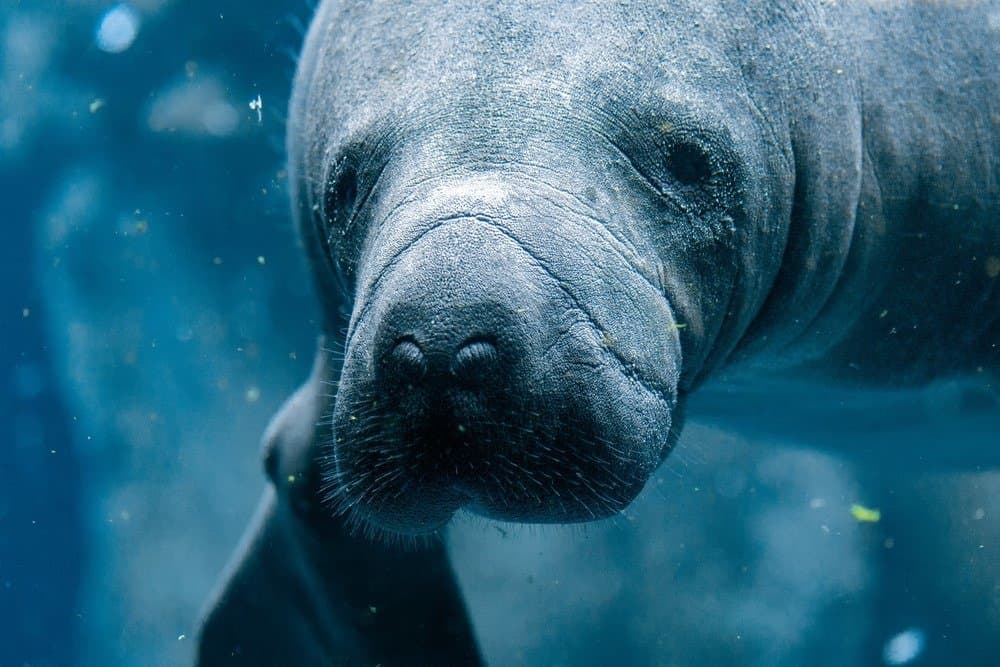
Manatees spend most of their day doing three things: eating, floating, and napping. Honestly, not a bad lifestyle.
©Andrea Izzotti/Shutterstock.com
How Do You Measure a Manatee That Big?
Sara’s length and weight are officially recorded, and her measurements are documented by the team at SeaWorld Orlando, which periodically monitors the health and growth of the manatees in its care.
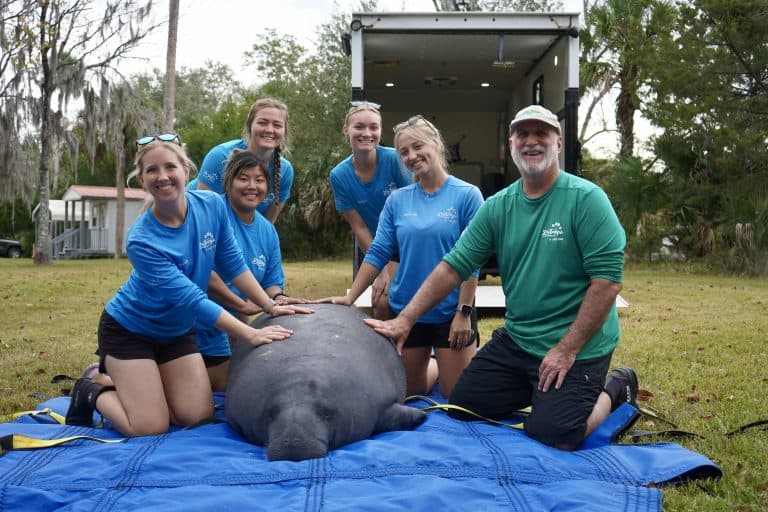
Relocating a manatee of that magnitude is no easy task. “Moving an animal of that size is a carefully coordinated effort that relies on teamwork, training, and precision,” Kelly says. “FWC staff work alongside partners and volunteers to ensure the safety of the manatee and the crew throughout the process.”
During rescue and transport, trained experts monitor the manatee’s health and vital signs, keep the animal comfortable, and minimize stress. Every step, from lifting and securing the manatee to moving it into a transport vehicle or rehabilitation pool, is done methodically and under close supervision.”
As Heavy as a Car (Seriously)
So, how heavy is 3,170 pounds, really? Kelly did the math in her own way. “Google said it is a little more than the weight of a Toyota Corolla,” she shares.
That visual lands perfectly. It’s a reminder that this slow-moving, sea-grass-snacking giant could outweigh your car by a few hundred pounds. And unlike with your Corolla, her maintenance plan is mostly lettuce and sunshine.
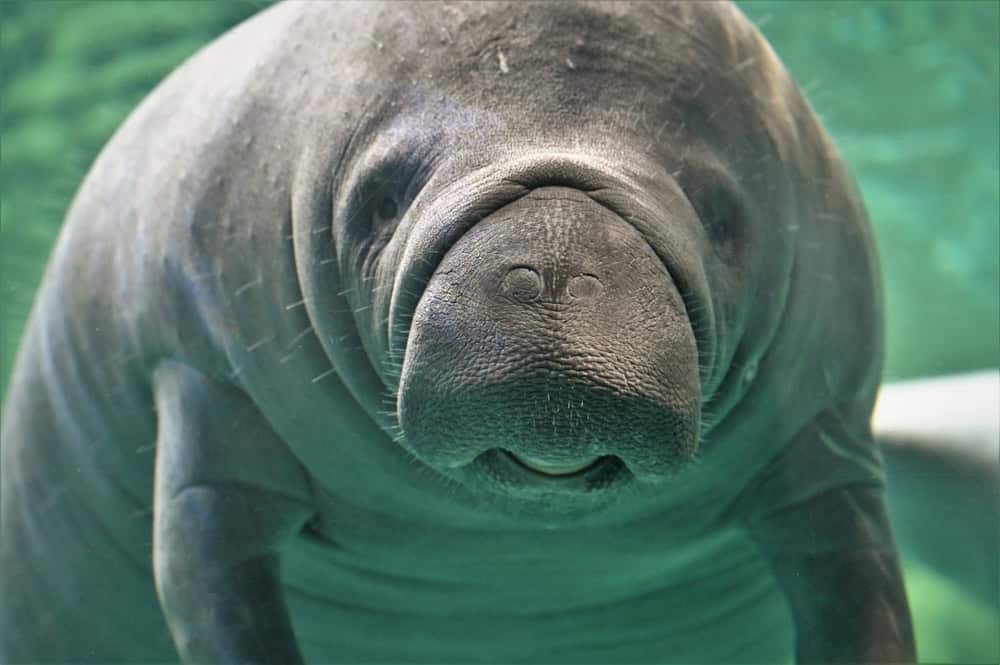
Manatees may be massive, but they’re also surprisingly graceful — think more “underwater ballet” than “sea tank.” Image: Andy Crocker, Shutterstock
©Andy Crocker/Shutterstock.com
Florida’s Manatee Recovery Story
While Sara may be Florida’s largest known manatee, Kelly says her story ties into a much bigger journey — the ongoing effort to protect and preserve the species. “The Florida manatee population is currently estimated to be between 9,350 and 11,730 individuals,” she says. “This recovery led to the species being reclassified from endangered to threatened in 2017.”
But the work is far from over. “Manatees continue to face serious challenges, including habitat and food loss, vessel strikes, cold stress events, and unusual mortality events,” Kelly explains. “The future resiliency of the species depends on population size, distribution, health, and habitat quality all central to ongoing conservation work. Habitat restoration, manatee rescue and rehabilitation, and improving access to warm-water refuges are among the many efforts underway to support the long-term recovery and survival of Florida’s manatees.”
A Giant Symbol of Survival
Sara’s story is a gentle reminder of what’s possible when conservation and care intersect. Rescued as a calf, she’s grown into a massive symbol of survival. She’s proof that with the right conditions, Florida’s manatees can thrive.
She’s also a crowd favorite, representing the best of Florida’s wildlife care partnerships between organizations like FWC and SeaWorld Orlando. And while Sara may never swim in open seas again, she serves an important role as an ambassador for her species. She’s helping people understand the challenges manatees continue to face in the wild.
At 3,170 pounds, she may weigh as much as a Toyota Corolla. But Sara’s real impact can’t be measured in pounds or inches. It’s measured in awareness, education, and the hope that Florida’s beloved sea cow will continue to glide through the water (and our collective imagination) for years to come.