
Quick Take
- Alpine was released once and then had to be rescued again. Alpine's full story →
- Returning a manatee to the wild requires far more than carrying it to the water. See the release process →
- Crystal River is the only place in the U.S. where swimming with wild manatees is completely legal. Why Crystal River was chosen →
- Florida manatees bounced back enough to lose one major classification, though they are still threatened. Check their current status →
Alpine, a rehabilitated Florida manatee, is swimming freely in Florida’s Crystal River today. Jacksonville Zoo and Botanical Gardens announced the release of the first manatee from the zoo’s new J. Wayne and Delores Barr Weaver Manatee River habitat. On June 23rd, a coordinated effort involving the zoo, the Manatee Rescue and Rehabilitation Program, and the Florida Fish and Wildlife Conservation Commission (FWC) returned Alpine to the wild.
“Alpine’s release is an incredibly meaningful milestone for our team and for the new Manatee River habitat,” David Hagan, Chief Life Sciences Officer at Jacksonville Zoo and Botanical Gardens, said in a press release. “We are grateful to the Manatee Rescue and Rehabilitation Program and the FWC for their coordination and partnership, and proud to play a role in Alpine’s journey back home to Crystal River.”
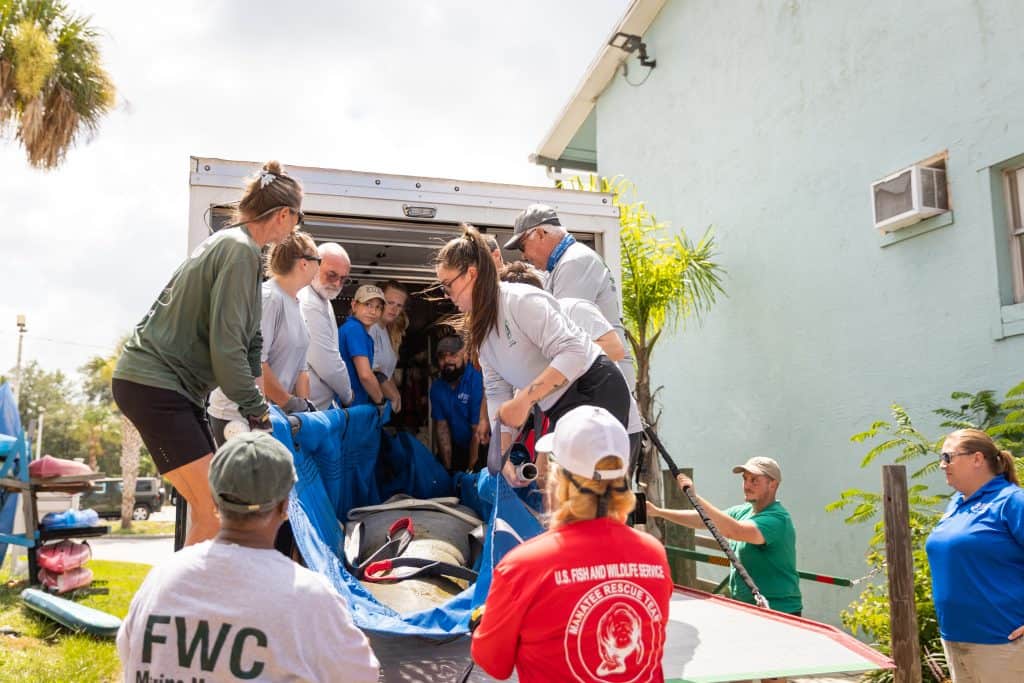
The team carefully lifts Alpine, a rehabilitated Florida manatee, as he rests on a stretcher.
©Courtesy of Jacksonville Zoo and Botanical Gardens
Alpine’s Journey Back to the Wild
Rescuers found Alpine as an orphan calf in the Crystal River in 2023 and brought him to ZooTampa for rehabilitation. A Facebook post by Manatee Rescue & Rehabilitation Partnership explained that Alpine had some abnormalities showing on his X-rays. To learn more, the team gave Alpine a CT scan with help from the radiology department at BluePearl Tampa.
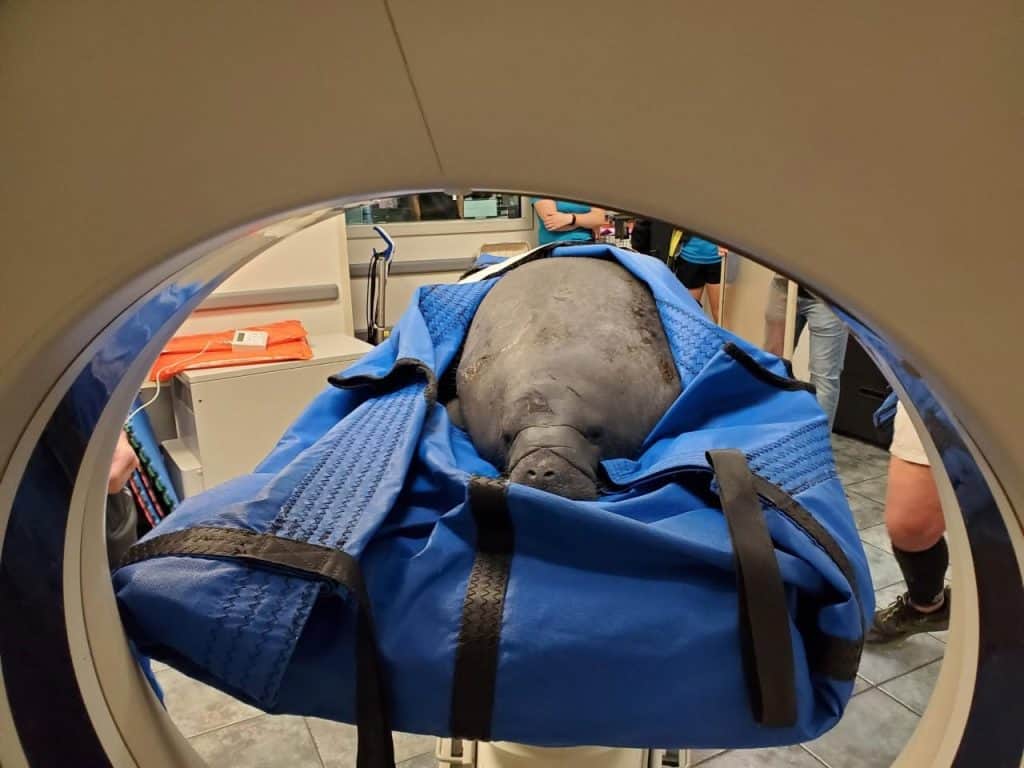
Alpine, the orphan calf, needed a CT scan when he arrived at ZooTampa.
©Facebook/ZooTampa at Lowry Park/Manatee photos and video taken by ZooTampa under USFWS Permit No. MA90101C – Original
After two years of rehabilitation, Alpine was released back into the Crystal River. However, he was found to be underweight and had to be rescued again for further treatment. He was initially cared for at SeaWorld before being transferred to the Jacksonville Zoo.
According to the press release, when Alpine arrived at the Jacksonville Zoo, he weighed 570 pounds. On the day of his release, he had grown to 752 pounds, “showing the strength and body condition needed to return to the wild.” According to the FWC, fully grown adult manatees usually weigh around 1,000 pounds.
What Happens During a Manatee Release?
It takes careful planning and coordination to return a manatee to the wild. When they reach a healthy weight and are strong enough to survive in their natural habitat, they get fitted with a tracking device. This allows experts to monitor the manatee’s health and observe how it adapts to life in the wild.
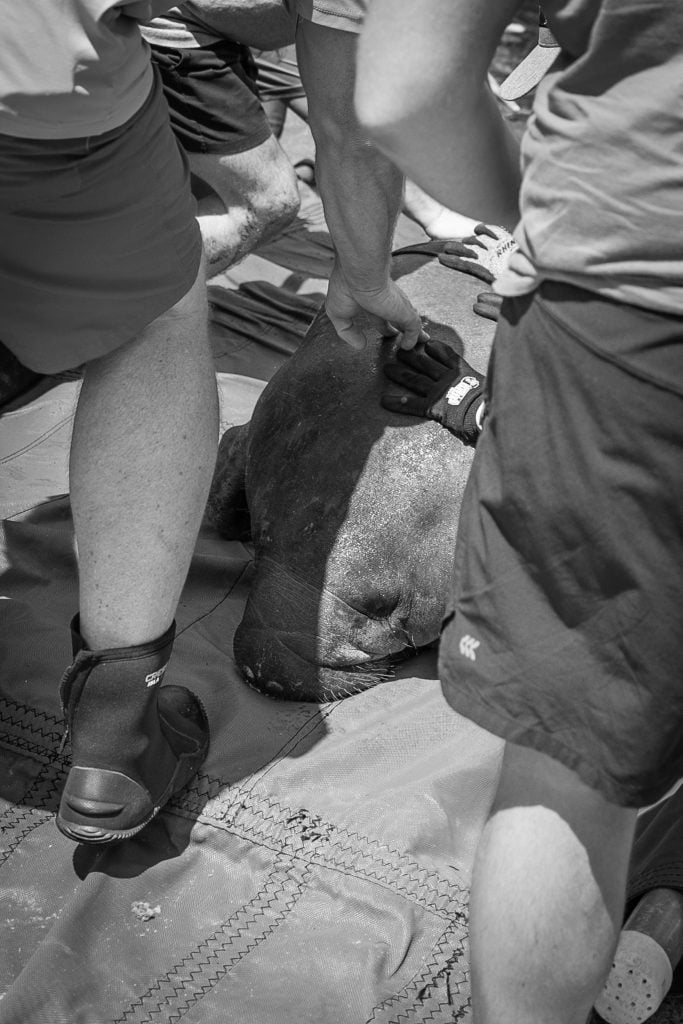
When Alpine weighed 752 pounds, he was deemed strong enough to head home.
©Courtesy of Jacksonville Zoo and Botanical Gardens
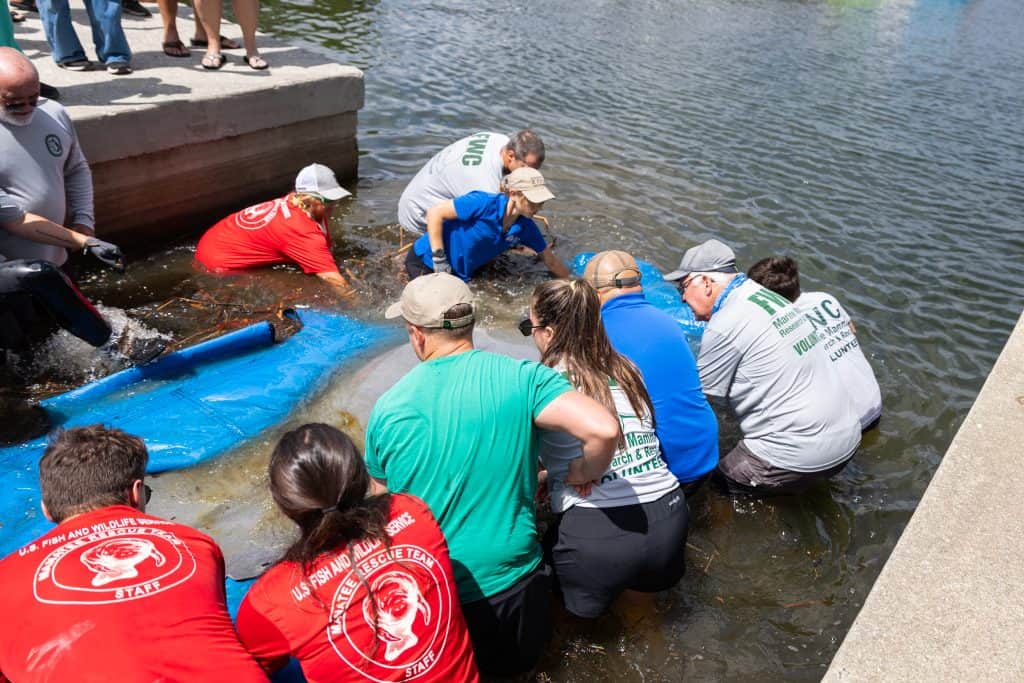
Officials release rescued manatees as close as possible to the spot where they were originally found. Teams of experts bring the gentle giants to the site in specialized trucks. From there, rescuers carefully lift the manatee onto a stretcher and then into the water.
As you can see from the video below, it took a team of around a dozen people to carry Alpine down to the river. Once the team was sure Alpine was calm and ready, they slid the stretcher out from beneath him, and he swam away.
Why Returning Manatees to the Wild Is So Important
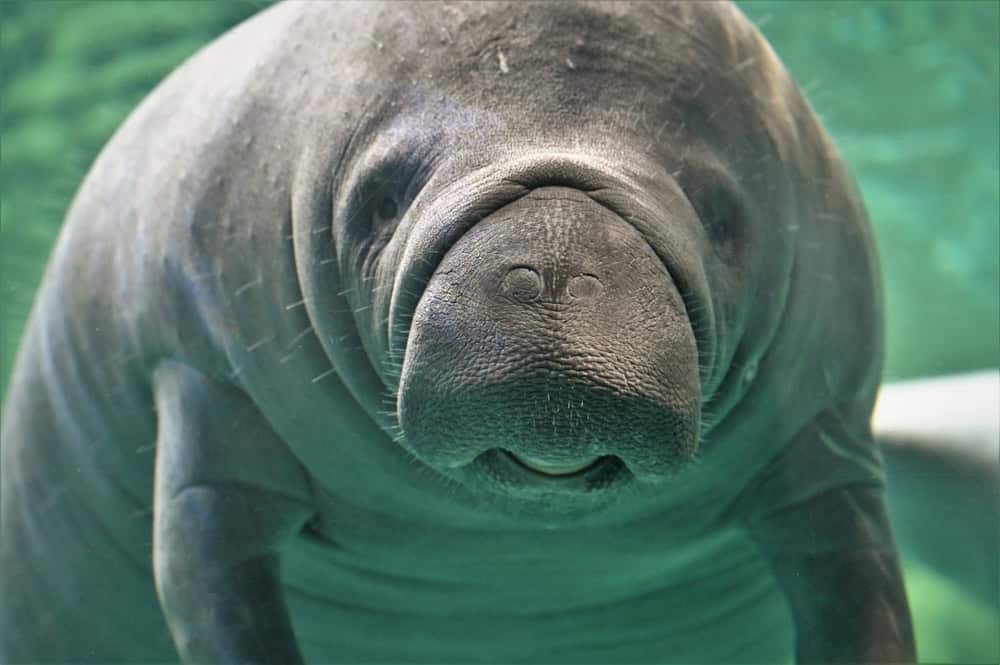
The Florida manatee is a subspecies of the West Indian manatee. Florida manatees live in coastal waters, rivers, and springs. Manatees help their ecosystem by eating lots of vegetation such as seagrass and algae. This helps distribute seeds and also controls overgrowth, keeping ecosystems in balance.
Alpine was fitted with a tracking device so that he can be carefully monitored as he adjusts to his original habitat.
©Courtesy of Jacksonville Zoo and Botanical Gardens
Unfortunately, these slow-moving and gentle creatures face many dangers, including boat strikes or entanglement in crab traps or fishing nets. Previously, manatee populations were suffering, and the species was classified as endangered.
Conservation efforts helped bring their numbers in Florida up to over 8,000. Although no longer considered endangered, manatees are now classified as a threatened species under the federal Endangered Species Act.
Crystal River Was the Perfect Place for Alpine’s Release
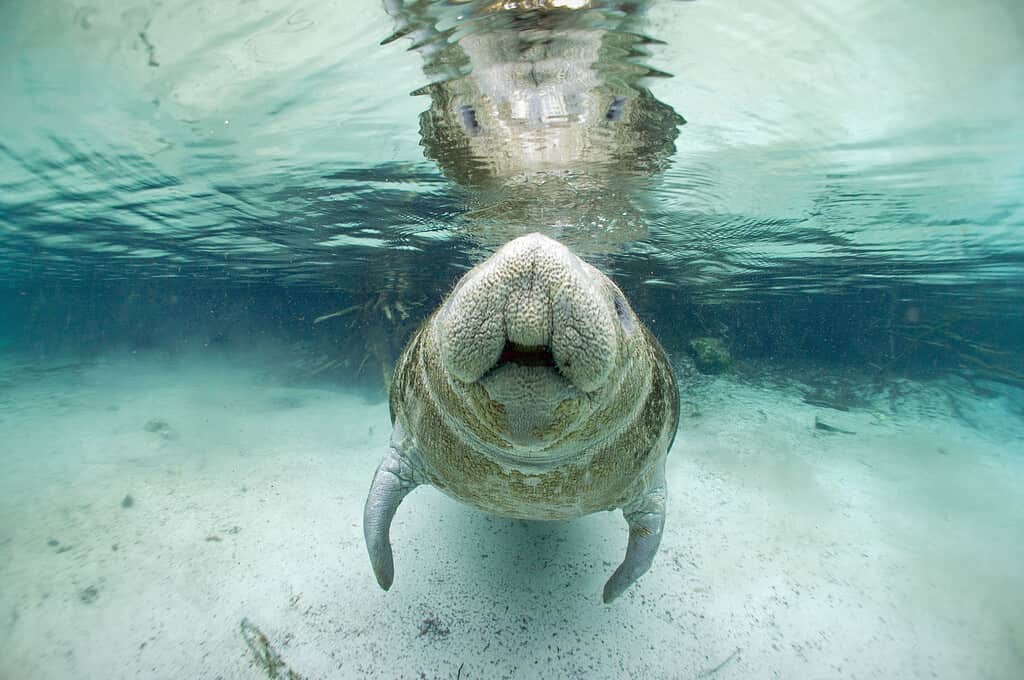
The best time to see manatees in Crystal River is when hundreds migrate there for the winter.
©tobiasfrei/ via Getty Images
Crystal River is a famous spot in Florida for viewing manatees in the wild. Known as the “Manatee Capital of the World,” it’s the only place in the U.S. where it’s legal to swim with wild manatees in their habitat. Hundreds of Florida manatees migrate to the river in the winter to escape the cold in its warm waters.
Inside Jacksonville Zoo’s New Manatee Critical Care Facility
Alpine’s release was a milestone for the zoo’s new Manatee River habitat. Although Alpine was the 37th manatee released by the zoo, he was the first to be released from the new facility. The habitat is a 330,000-gallon refuge where up to 20 rescued manatees can recover as they receive care and build their strength.
In addition to providing a space for rescued manatees to recover, the new attraction allows visitors to observe the animals up close and learn about the important conservation work being done to protect them.