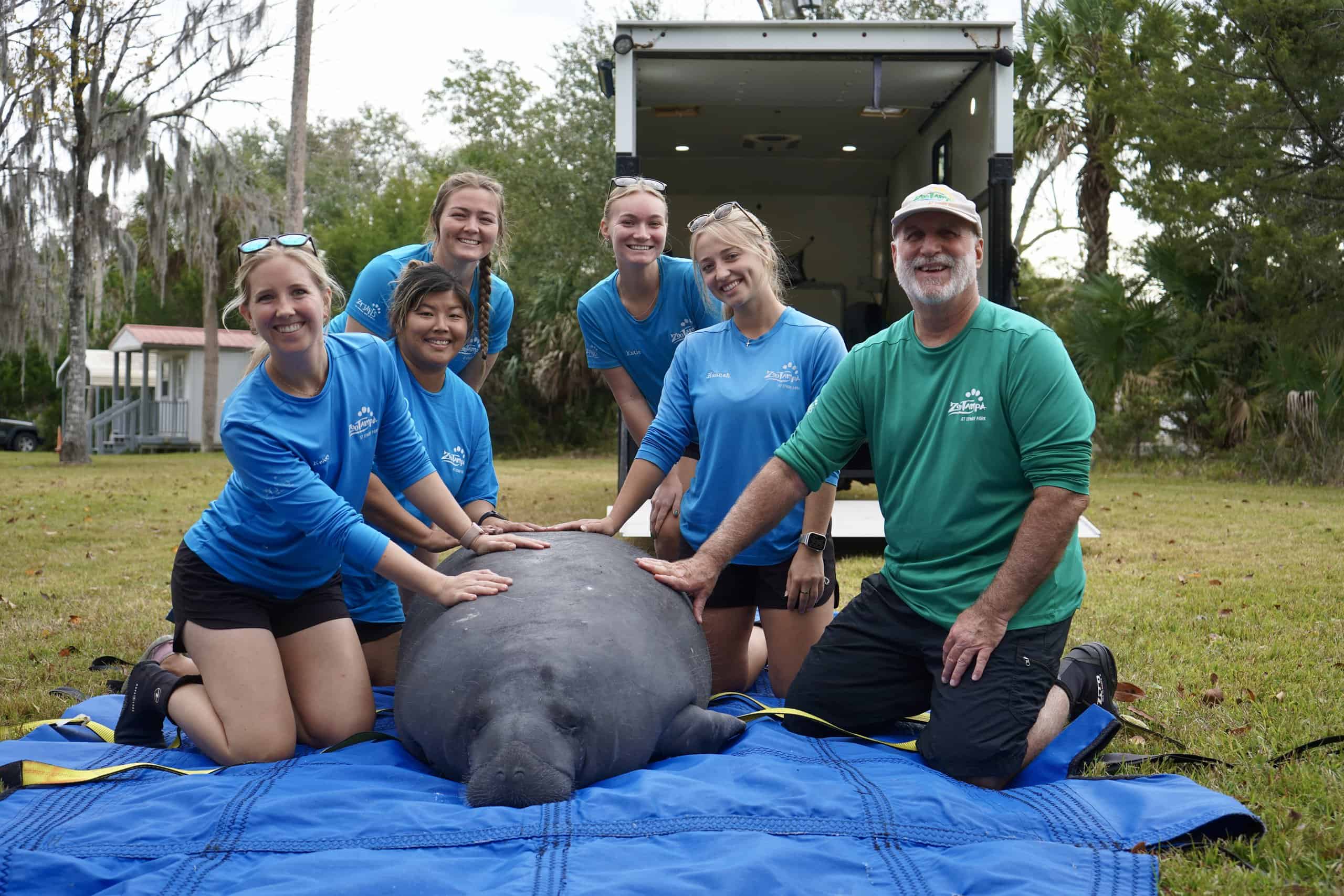
ZooTampa released a total of 26 rehabilitated manatees in 2025.
Boat strikes and loss of seagrass, a primary food source, are two significant factors that cause manatee sickness and injury.
The Zoo is opening an enhanced manatee rescue facility, including more visitor observation areas, in spring 2026.
Public education about manatees and their natural habitats is essential to boost manatee rescue efforts.
For Florida’s manatee population and manatee conservationists around the world, 2025 was a banner year. ZooTampa’s David A. Straw, Jr. Manatee Critical Care Center released 26 rehabilitated wild manatees back into Florida’s waters.
This marks the highest number of releases in a single year in the Center’s history. It also shines a spotlight on the Zoo’s key role in protecting Florida’s official state marine mammal.
What’s Behind the Record Manatee Release Number?
Florida’s manatee population is under continued threat from both loss of natural habitat and human conflict. These gentle giants have been listed as a threatened species by the federal government since 2017.
Manatees in the state rely on sea grass as a primary food source. Degradation of Florida’s sea grass beds is causing food shortages for large populations of manatees. Starting in 2020, water pollution caused extensive seagrass loss along Florida’s east coast, triggering an Unusual Mortality Event (UME) that killed more than 1,200 manatees.
Mother Nature also has a hand in seagrass loss impacting manatees. According to Molly Lippincott, Sr. Curator of Florida and Marine Life at ZooTampa, “Hurricanes that hit Florida’s coasts create saltwater surges that adversely impact seagrass. The excess saltwater plus the loss of seagrass requires impacted animals, including manatees, to quickly adapt in a short period of time.”
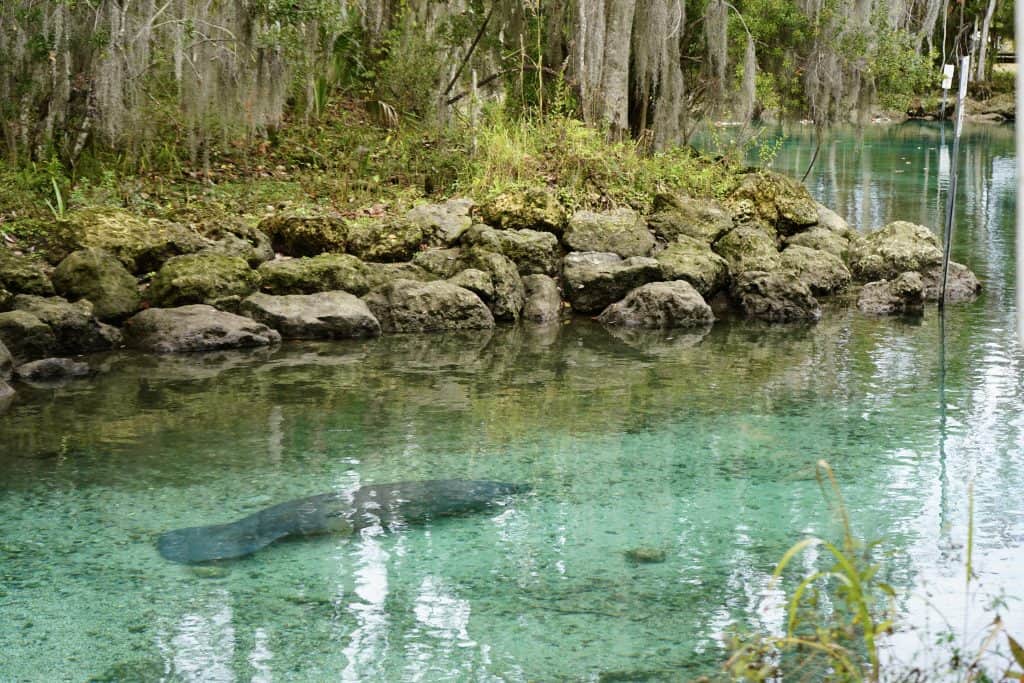
One of the recently released manatees, Mudonna, back in her home Florida’s Crystal River.
Another significant threat to manatees is boat strikes. Manatees are slow, lumbering creatures not well-equipped to move quickly out of the way of a fast-moving boat. Often these collisions are unintentional, but they happen with alarming frequency. According to Florida state wildlife officials, of the more than 620 manatee deaths in the state in 2025, nearly 100 were from boat strikes.
Lippincott agrees. “Florida’s population continues to grow, and as a result, there are more boats on the water,” she says. “More boaters mean more potential collisions with manatees.” The numbers bear that out.
Usually, rescue groups see fewer manatees brought in during the colder winter months, due to less boat activity. However, Lippincott notes that her facility has received four manatees with boat strike injuries already this winter, a number they haven’t seen in previous years.
Habitat destruction and human influence are two factors indirectly contributing to more rehabilitated manatees being released. More in, more out. But there’s another, more positive factor at play.
According to Lippincott, her team—and manatee rescue organizations elsewhere—have deepened their expertise and are leveraging advanced technology not previously available. Today, they can help more severely injured manatees. “We are getting better and better at treating complex cases, some that would have resulted in a far different outcome just a few years ago,” she notes.
The ability to save more manatees than ever before means ZooTampa can release more rehabilitated manatees back into their natural habitat.
The ZooTampa Manatee Rehabilitation Program
The Zoo’s Manatee Critical Care Center is the largest nonprofit facility of its kind in the United States. It works closely with the Manatee Rescue & Rehabilitation Partnership, a consortium of more than 20 conservation organizations and zoos that focuses on rescue, rehabilitation, and post-release monitoring of this threatened species.
The Zoo’s Critical Care Center team consists of veterinarians, including two USFWS-certified manatee critical care veterinarians, and other animal care professionals. Team members are on call 24 hours a day, seven days a week to respond to manatees in need.
Injured manatees arrive at the center and are assessed by the veterinary team. Some manatees are malnourished and recover with a relatively quick course of treatment. Others are more severely injured, and require intensive, long-term care.
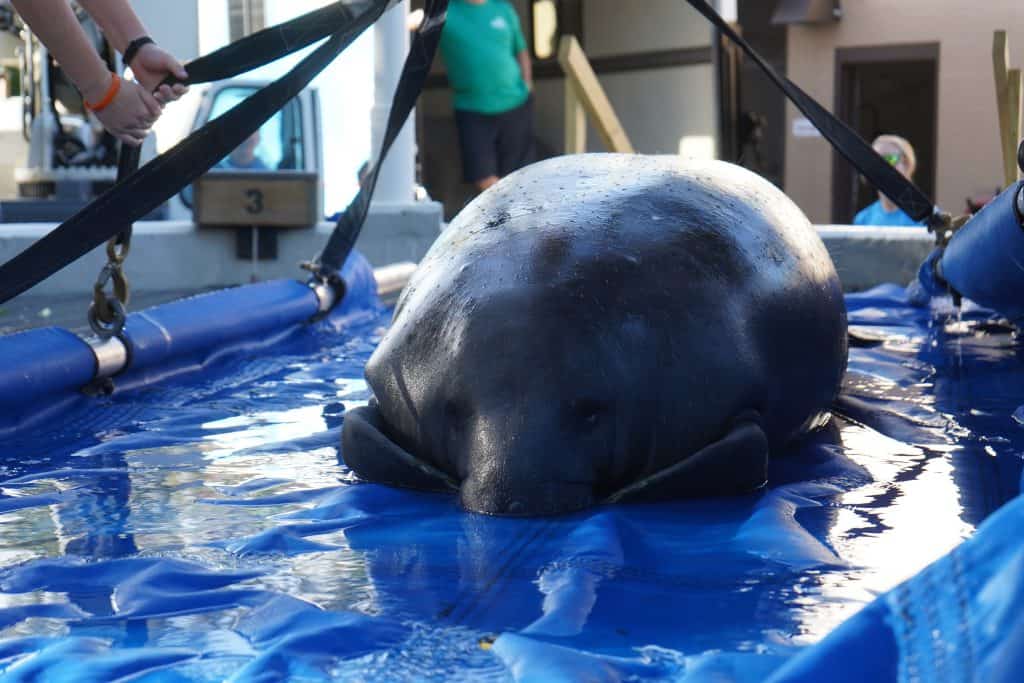
The most serious injury cases go into “critical care tanks” for treatment and monitoring. The tanks have a false floor that can be raised to provide immediate access to the manatee by medical personnel. Once the manatee has recovered enough, they are moved to habitat pools that more closely mimic natural outdoor conditions. There, they complete their recovery until it is time to release them back into the wild.
The Center’s team has cared for more than 615 manatees since the Center opened in 1991. The majority of these rehabilitated manatees have been successfully returned to their natural habitat.
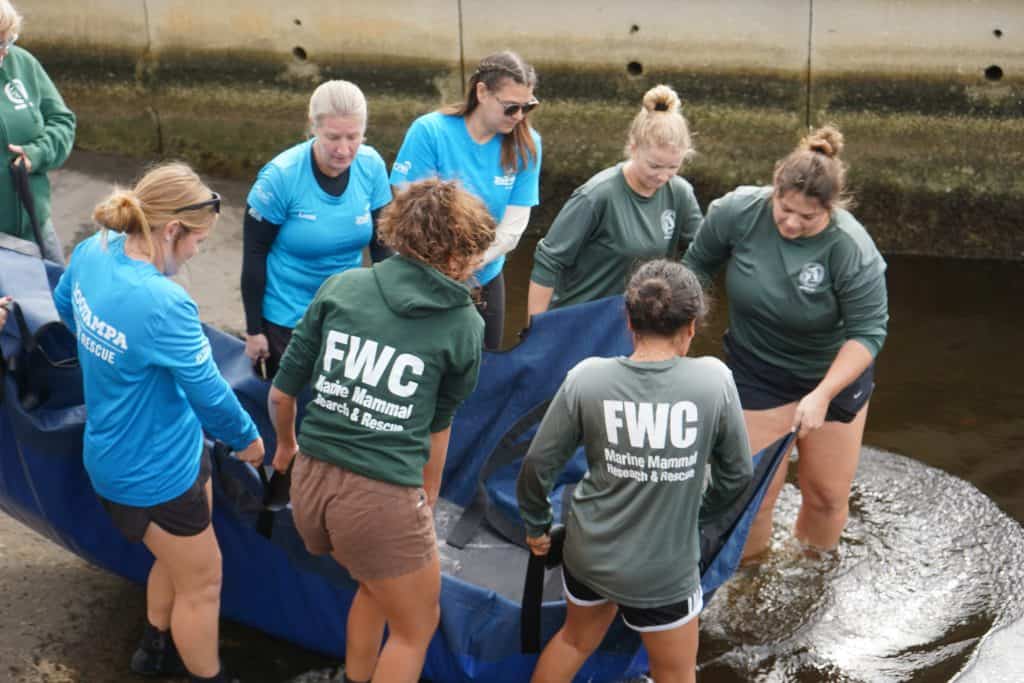
A manatee rescue team preparing to release a rehabilitated manatee.
While the goal is for all rescued manatees to be returned to the wild, this is not always possible, as is the case for one of the Center’s longest-term residents, a male manatee named Cato. He has been at the facility since 2015, when he was brought in with a diaphragmatic hernia injury. The nature of his injury means he cannot control his buoyancy, yet he is healthy in every other way.
Cato has become the Center’s official manatee “buddy” for new arrivals. According to Lippincott, Cato shows young calves the ropes and teaches them how to be manatees. He provides companionship and guidance during their critical growth phases.
“Cato is a unique manatee who plays an important role at our Center. Although he is unable to rejoin his species in Florida’s rivers and coastal waters, he shines in his role as big brother to all,” Lippincott says. She explains that Cato will live out the rest of his natural life helping other rescued manatees prepare for their own future in the wild.
The Center’s success has prompted future growth, too. In Spring 2026, ZooTampa will unveil the Straz Family Manatee Rescue facility, part of the new Florida Waters exhibit. The state-of-the-art facility gives visitors immersive, eye-level underwater views of the manatees as they are rehabilitated. It provides a unique opportunity for Zoo visitors to witness the lifesaving efforts first-hand.
The Zoo, a nonprofit 501(c)3 organization, has a budget of nearly $2 million annually to save manatees, and educates 1.2 million visitors and students each year about local and global conservation efforts.
Florida’s population continues to grow, and as a result, there are more boats on the water. More boaters mean more potential collisions with manatees.
Molly Lippincott, Sr. Curator of Florida and Marine Life at ZooTampa
What Does This Record Release Mean for Manatee Conservation?
The record number of manatees released in 2025 is a landmark achievement for ZooTampa. Lippincott sees this as the starting point for an even brighter future for conservation efforts across Florida. But the zoo can’t do it alone.
Lippincott notes, “It takes a village, and it begins with public education.” She explains that through ZooTampa education programs, more and more people know what to do and who to call when they find an injured manatee. The sooner an injured animal gets medical attention, the more likely they are to recover.
The Florida Fish and Wildlife Conservation Commission (FWC) also plays a critical role. Once they’re notified of the injured animal, their team collects it and brings it to a zoo rehabilitation facility. The zoo then treats the manatee with the goal of release back into the wild.
“It’s an interrelated relationship that won’t succeed without all three partners—the public, FWC, and rehabilitation facilities—working collaboratively toward a common goal,” Lippincott notes.
More About the West Indian Manatee
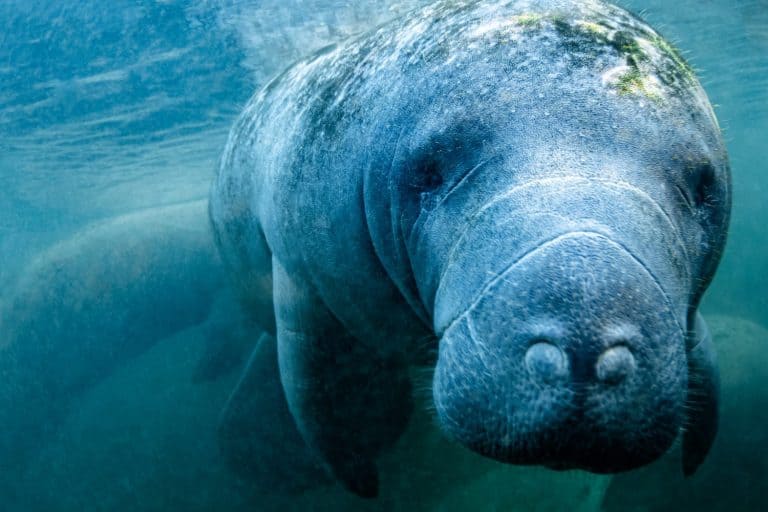
West Indian manatees are found in warm, shallow rivers and coastal waters in the southeastern United States, Caribbean, Central America, and the northern coast of South America. They live in both salt and freshwater environments.
The manatees found in Florida are a subspecies of the West Indian manatee, aptly named the Florida manatee, Trichechus manatus latirostris. Florida manatees change their location depending on water and air temperatures. In the warm summer months, you can find them as far north as Delaware and as far west as Texas. In the colder winter months, they are primarily located along the south coast of Florida. They continuously seek out warm water, so it isn’t surprising to find manatees in hot springs and power plant canals during the winter.
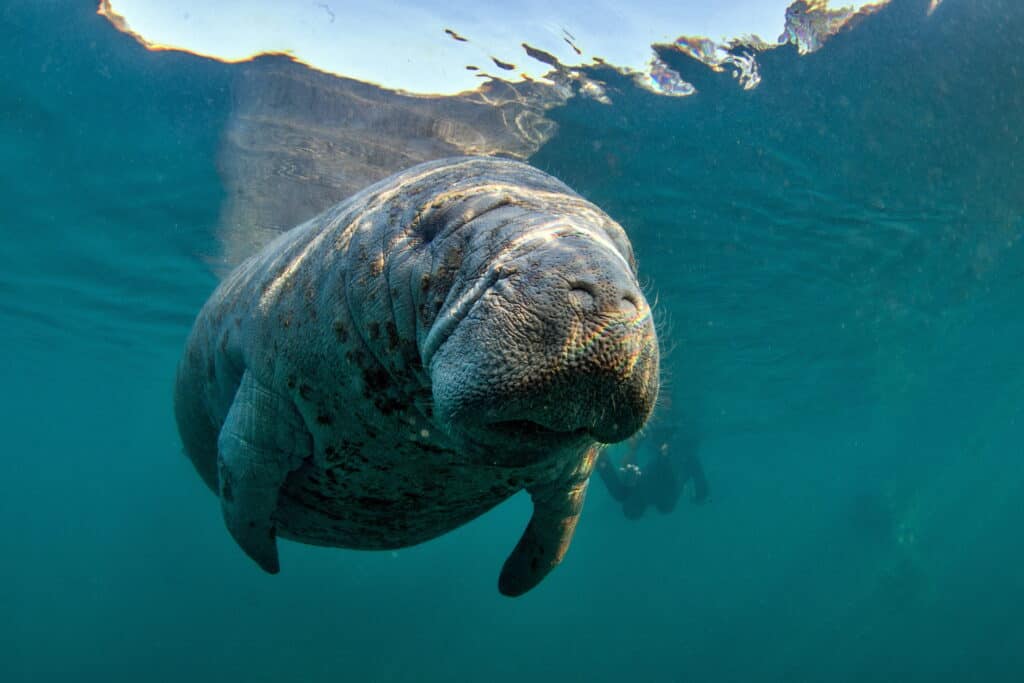
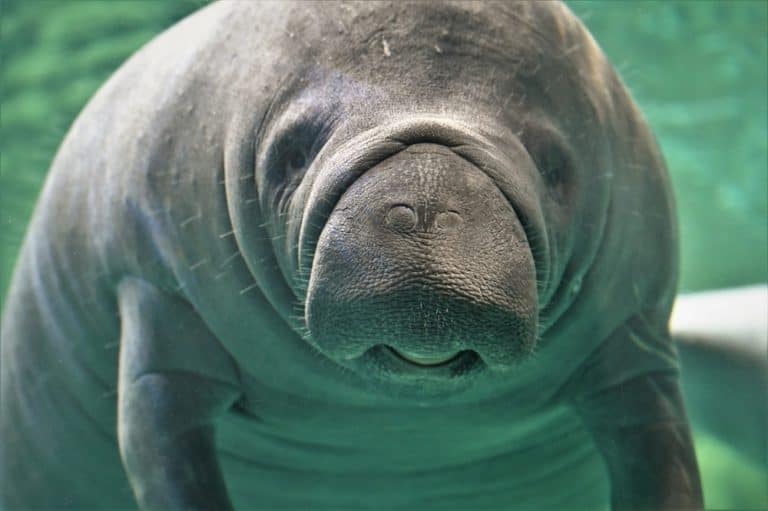
The West Indian manatee can weigh more than 3,500 pounds.
All manatees are herbivores who can eat up to 15 percent of their body weight daily. They use their whiskers to help them find food and can spend up to eight hours each day grazing on seagrass and other aquatic plants. Manatees earned the nickname “sea cow” due to their size, slow movements, and peaceful nature. When fully grown, manatees weigh, on average, around 1,00 pounds and are typically nine to ten feet long from snout to tail. However, some manatees can weigh more than 3,500 pounds.
Despite their large size, they are quite nimble in the water. You’ll often find sea cows performing somersaults, barrel rolling, and swimming upside down. They can hold their breath for up to 20 minutes, giving them plenty of time to execute their underwater tricks.
Female manatees give birth to one calf at a time and are pregnant for about 13 months. The calf’s size at birth is about four feet long, and it weighs between 60 to 70 pounds. The calf often stays with its mother for up to two years.
Beth is a writer at A-Z Animals where her main focus is on marine life. She's a certified Professional Association of Diving Instructors (PADI) open water scuba instructor and taught in the Caribbean for 5 years.
She enjoys scuba diving, snorkeling, kite surfing, and spending time with her 4 cats and 2 dogs.
Thank you for reading! Have some feedback for us?
Contact the AZ Animals editorial team
Thank you for your feedback!
We appreciate your help in improving our content.
Our editorial team will review your suggestions and make any necessary updates.
There was an error submitting your feedback. Please try again.