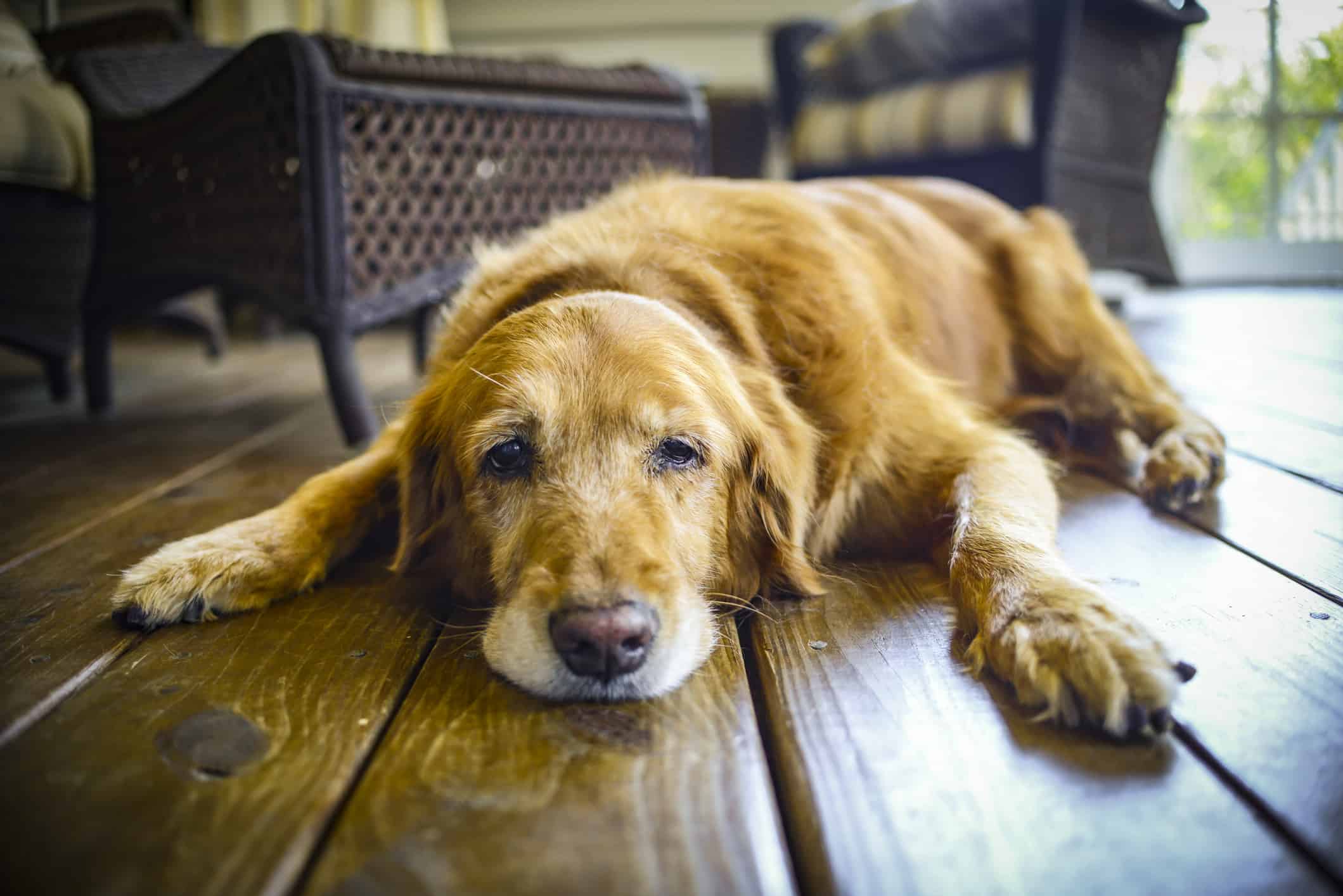

You’re settling down to relax on the couch and your pup lets out a deep sigh. This makes you wonder what your dog could be trying to say. Is she struggling with something you are unaware of?
A sigh in humans can point to an array of emotions, ranging from pure exhaustion to frustration to relief. But what do sighs in dogs mean? In the interest of better understanding your sighing dog, let’s discuss the possible reasons why your dog sighs.
What Is a Sigh?
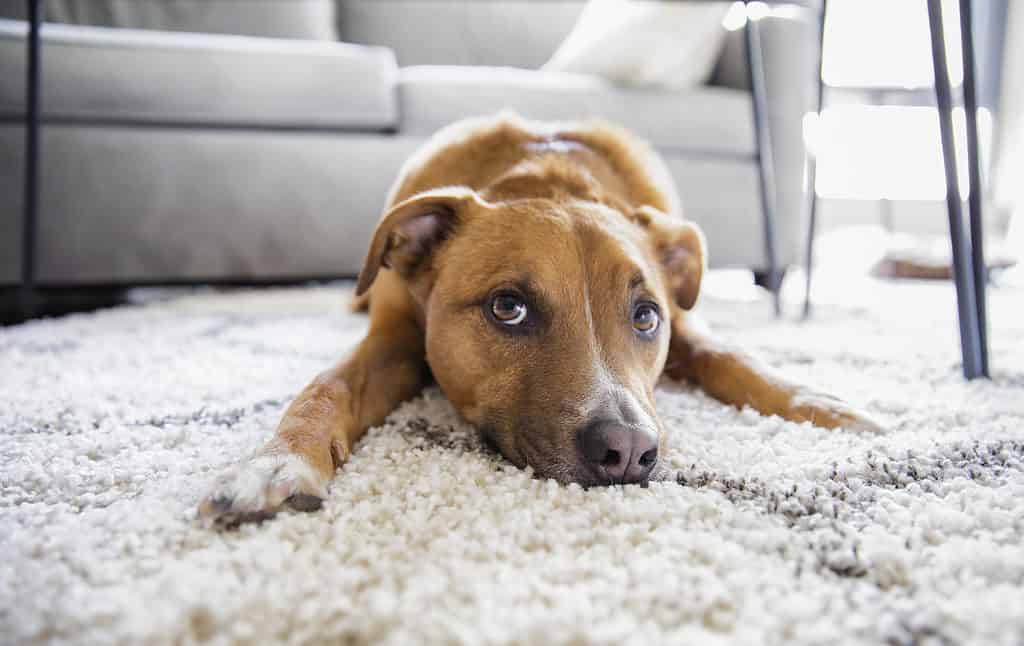
A sigh is a long and deep breath that emits some form of emotion.
©N K/Shutterstock.com
First things first: what is a sigh? Our canine friends can make a lot of strange noises, so let’s define exactly what we mean by “sigh.”
According to the dictionary, a sigh is a long and deep breath that emits some form of emotion. Scientific experts also add that a sigh is about twice the length or volume of a standard breath. It’s almost a way of stretching our lungs.
When it comes to understanding the cause of a dog sigh, you’ll have to examine the context. Knowing a sigh emits emotion, it’s now time to ask what emotion is being expressed. To answer this, we will need to explore the events that led up to the sigh. To help you solve this mystery, let’s discuss the most common reasons why our canine friends sigh.
They Are Happy & Comfortable
If your dog only sighs during comforting or sweet moments, then this could simply mean he is happy. Your dog may sigh as you pet him, when he cuddles up to you, or even when you hug him. Humans often sigh when they feel safe and content, and this is true for our canine friends as well.
They Are Tired & Ready to Relax
If your pup cuddles up at the end of the day and lets out a sigh, she might be tired. Humans do this too when they are tucked into their bed and ready to fall asleep. A deep sigh is a sure sign of falling into relaxation mode. The next time your little one releases a sigh before falling asleep, know she is cozy and ready to snooze.
They Are Overwhelmed
If you hear your pup sigh during moments of stress, he could be overwhelmed with his current situation. If your dog’s sighing is due to overwhelm, you may also see him trembling, huffing, growling, or changing posture. A nervous pup that is sighing or huffing may need to be removed from the situation. He may be struggling to cope with his current stress.
Should I Be Worried When My Dog Sighs?

Humans often sigh when they are feeling most content, and this stands true for many of our canine friends as well.
©Patryk Kosmider/Shutterstock.com
Many pet parents wonder if their sighing dogs are trying to tell them something, and if these sounds could be due to pain or distress. While most dogs sigh due to the reasons we listed above, dogs may also sigh due to discomfort.
If your dog is sighing due to underlying pain, she might be experiencing the following symptoms as well:
- Lethargy
- Whining
- Trembling
- Panting
- Disinterest in activities
- Changes in appetite
- Drooling
- Signs of agitation
- Limping
- Crying out when touched
If you notice any of the above symptoms, or any other changes in your dog’s normal behavior, call your veterinarian. After you explain your pup’s symptoms, your veterinary team can determine whether or not she needs to be assessed.
Final Thoughts
At the end of the day, a sighing dog is typically nothing to worry about. As long as he is not displaying signs of discomfort, then your pup is likely just releasing emotion.