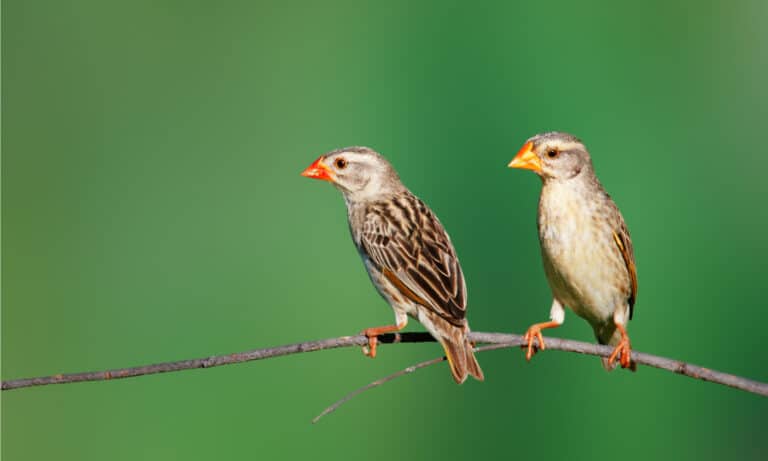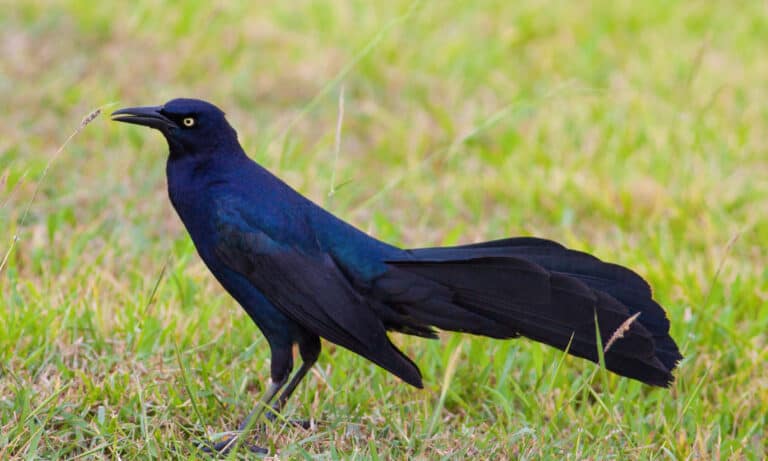

What is a cool bird? Cool types of birds can be beautiful birds, uncommon birds, or even the weirdest birds. Of course, what makes a bird ‘cool’ is subjective. For example, many people admire bald eagles for their size, beauty, and dramatic courtship rituals, while others dislike them because they steal food from other birds and scavenge. In this article, coolness is largely determined by looks and behavior. Keep reading to discover 10 cool types of birds.
#10. Loggerhead Shrike
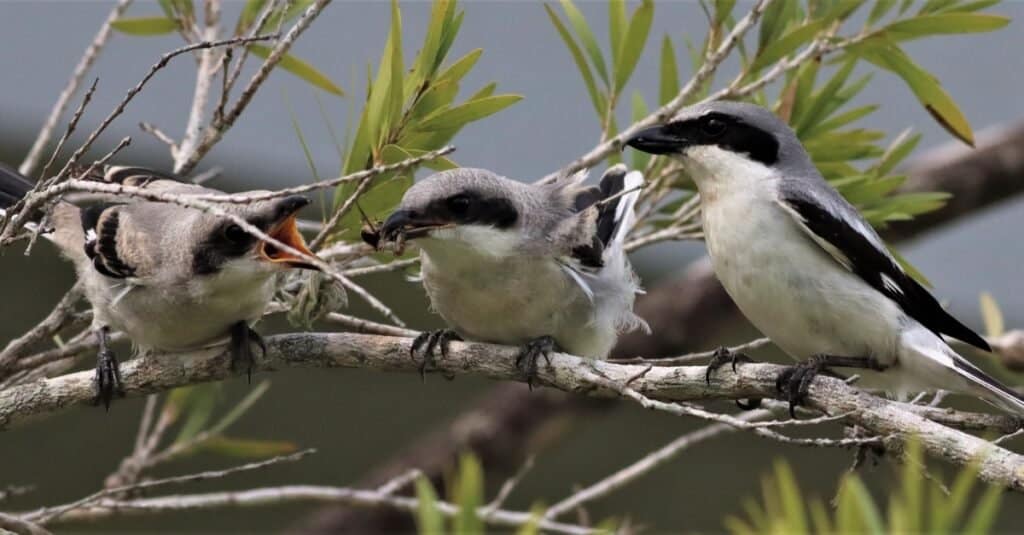
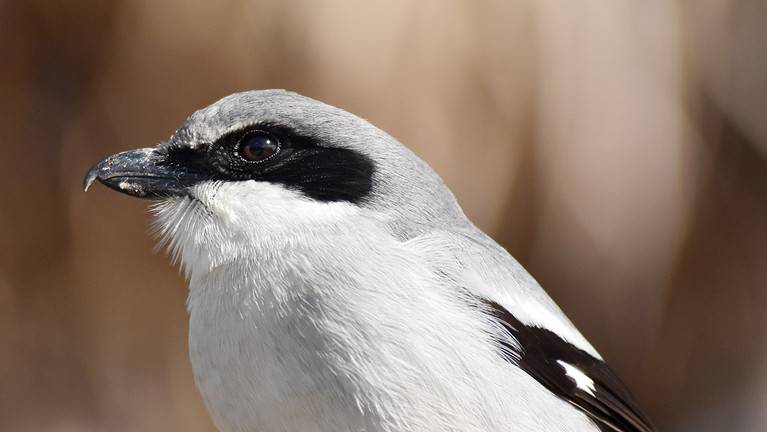
Although they are relatively small, loggerhead shrikes can kill and carry prey as large as they are.
©Philip Rathner/Shutterstock.com
Loggerhead shrikes (Lanius ludovicianus) may be songbirds, but they hunt like birds of prey. They are pretty birds, though not showy, with black, white, and gray plumage. The loggerhead shrike has a gray head with a black mask and a sturdy, hooked bill. They are relatively small birds, only reaching between 7.9 and 9.1 inches long. Loggerhead shrikes are common in open woodlands across the U.S. and Mexico.
So, how does the loggerhead shrike hunt? It impales its prey on thorns, twigs, and even barbed wire, then devours the prey at its leisure. Some of the insects that loggerhead shrikes prefer, such as monarch butterflies, are toxic. So, caching their prey gives the toxins time to break down. These birds are also able to kill and carry animals as large as themselves. Like falcons, they attack by striking the nape of their prey’s neck, then carry large prey back to their nests with their feet.
#9. Keel-Billed Toucan
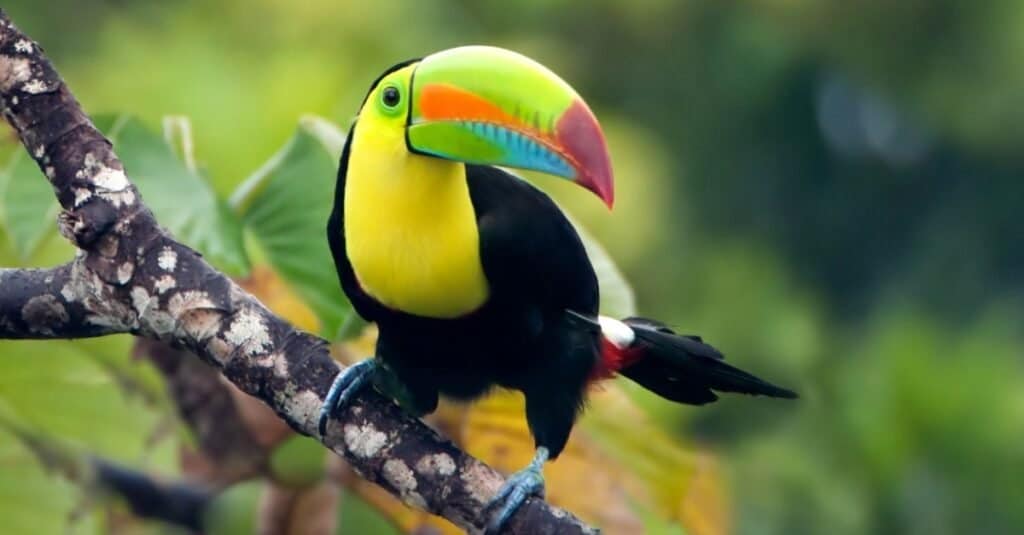
The large, rainbow-colored bill of the keel-billed toucan aids in thermoregulation.
©iStock.com/tzooka
The keel-billed toucan (Ramphastos sulfuratus) is a cool bird because of its ridiculously large, rainbow-colored bill. This bill makes the bird a hit with both bird watchers and zoo visitors. In contrast with the bill, the bird has a velvety black body with a yellow throat and chest. The bill makes up about one-third of the toucan’s 20-inch length.
The toucan’s huge bill aids in gathering food, attracting mates, and fighting off competitors. Scientists have also discovered that the toucan’s large bill helps with thermoregulation. The bill contains blood vessels, so by adjusting the flow of blood to its bill, the toucan can adjust its body temperature. Keel-billed toucans can be found in the forest canopies from southern Mexico to northern Colombia.
#8. Red-Capped Manakin
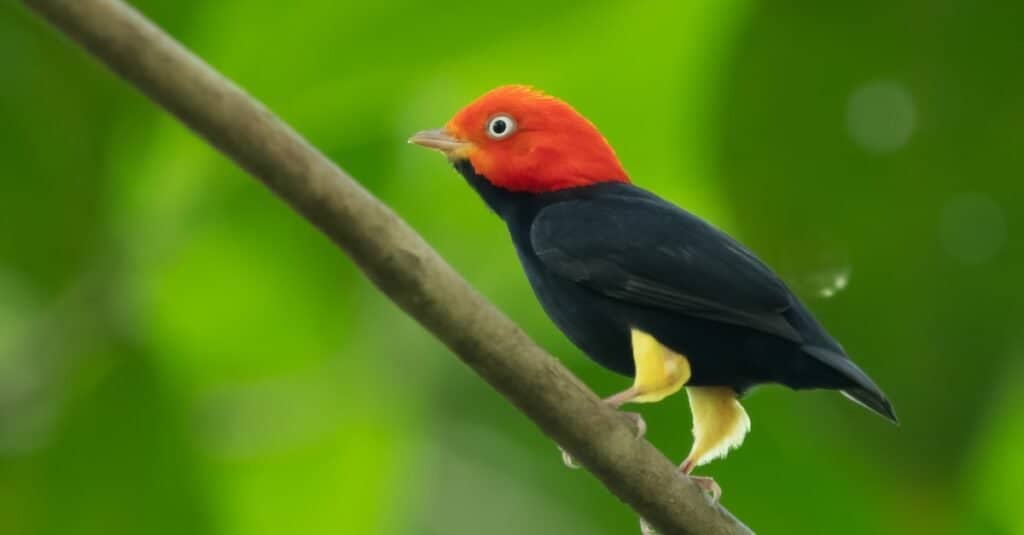
The red-capped manakin does the moonwalk to attract a mate.
©Vaclav Sebek/Shutterstock.com
Red-capped manakins (Ceratopipra mentalis) are found in the lowland tropical forests of Central America, south to Peru and Ecuador. Though the female is mostly olive green with a drab pinkish bill, the male’s head and nape are brilliant red. Its chin, thighs, and the lining of its wings are yellow, and it has a stubby tail. These are very small birds, reaching only about 4 inches in length.
These little birds have delightfully strange courtship rituals. The red-capped manakin does the moonwalk to attract a mate. When it courts a female, it hops on a branch, makes a clacking noise by flapping its wings, and quickly moonwalks along the length of the branch.
#7. Shoebill Stork
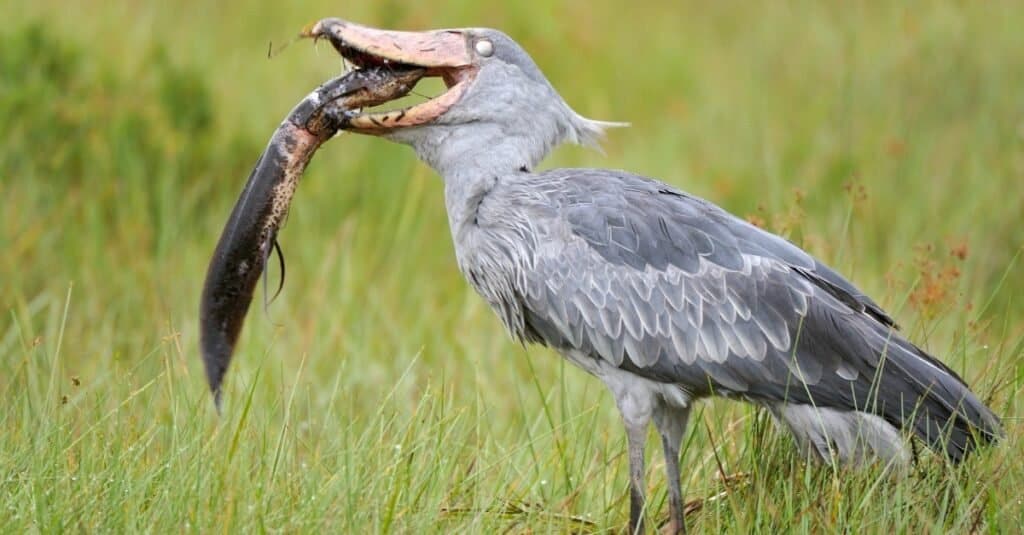
The shoebill stork hunts for prey in the swamps and marshes of Africa.
©iStock.com/Michel VIARD
Shoebill storks (Balaeniceps rex) are large, long-legged birds that live in the freshwater marshes and swamps of eastern and central Africa. They have blue-gray feathers with darker gray heads, large, pale eyes, and bills that look like wooden shoes. Their bills are over 7 inches long and they are almost as wide. These birds can grow to 55 inches tall with wingspans up to 8 feet.
Shoebill storks are not only cool because of their unusual appearance, but also because of their unique hunting methods. When they spot prey, they rapidly stretch their heads and necks forward into the water. This causes them to become unbalanced, so their bodies collapse forward and downward on top of the unfortunate target.
#6. Superb Lyrebird
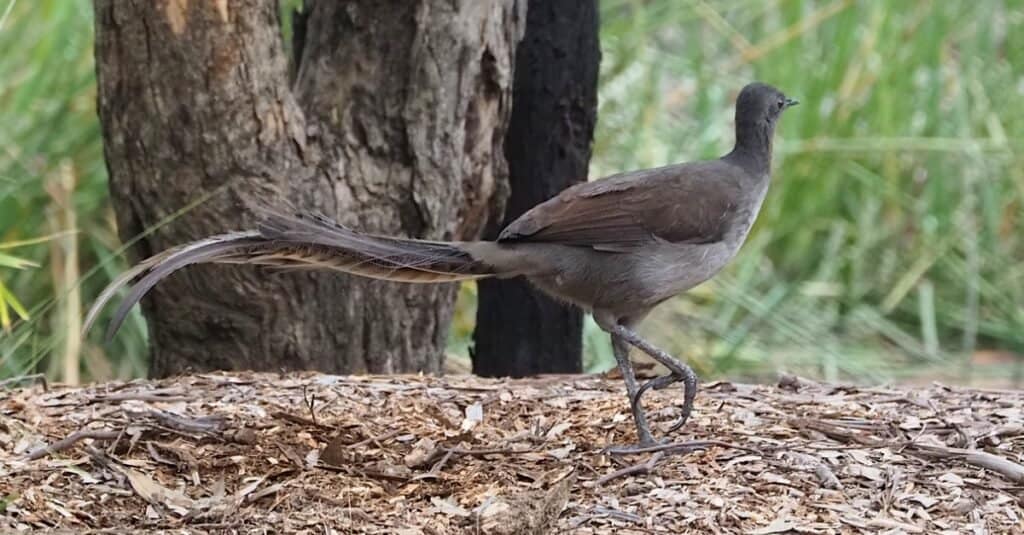
Superb lyrebirds are known for their ability to mimic the sounds of their environments.
©iStock.com/John Porter
The superb lyrebird (Menura novaehollandiae) is a ground-dwelling bird typically found in the rainforests of southeastern Australia. This bird may not be the flashiest, color-wise, as it is all shades of gray and brown. However, the males have long, elaborate tails made of different types of feathers. When on display, the tail is shaped like the ancient Greek instrument that gives the bird its name. Superb lyrebirds can grow to around 39 inches, including the tail.
One of the coolest things about the superb lyrebird is its remarkable ability to mimic sounds. These birds have been observed mimicking car engines, chainsaws, clocks, a dog’s bark, and at least 20 other bird species. Of course, the lyrebird’s talent for mimicry is one way to attract females. While female lyrebirds are also fair mimics, they’re nowhere near as good as the males.
#5. Anna’s Hummingbird
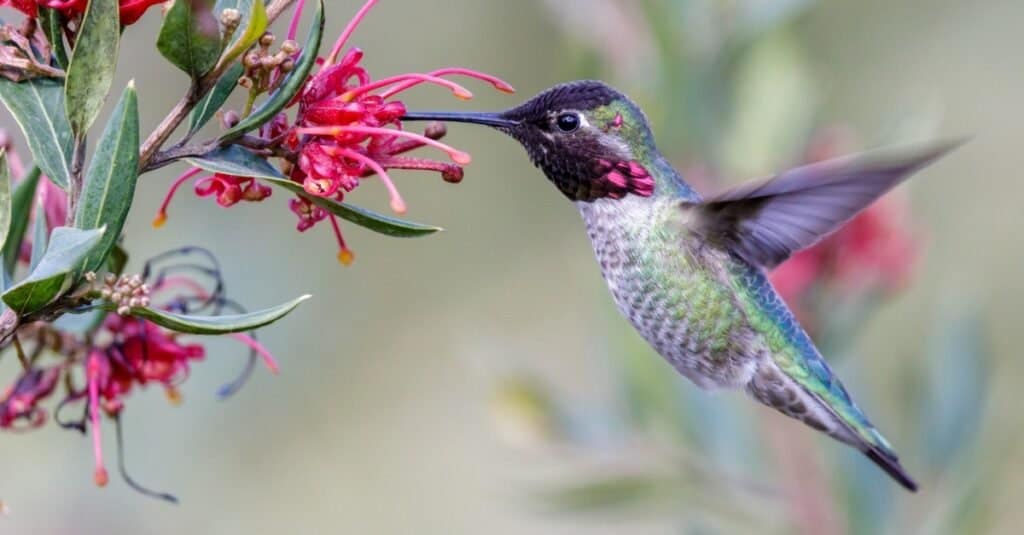
Anna’s hummingbirds can reach accelerations nearly 10 times the force of gravity during their courtship dives.
©iStock.com/yhelfman
How could hummingbirds not be counted among the coolest types of birds? Anna’s hummingbirds (Calypte anna) are medium-sized hummingbirds at around 4 inches long. Their plumage is primarily green and gray, with iridescent pinkish feathers on their heads and necks. These hummingbirds can be found in the open woodlands of the Pacific Coast in the U.S.
One of the coolest things about Anna’s hummingbirds is their skill in aerodynamics. They can hover, fly from side to side, and even fly backward. They can also somersault, fly straight up like a helicopter, and spiral through the air. The male Anna’s hummingbird does a courtship dive from as high as 130 feet. Their acceleration is so intense, it reaches nearly 10g, which is the highest for any vertebrate other than jet fighter pilots.
#4. Peregrine Falcon
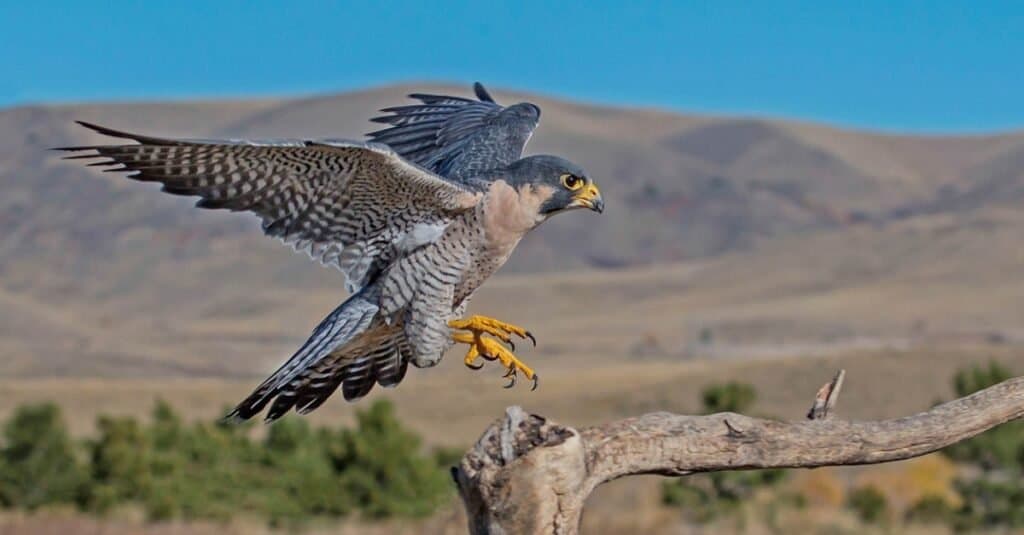
The peregrine falcon’s incredible diving speeds make it the fastest animal in the world.
©iStock.com/DawnKey
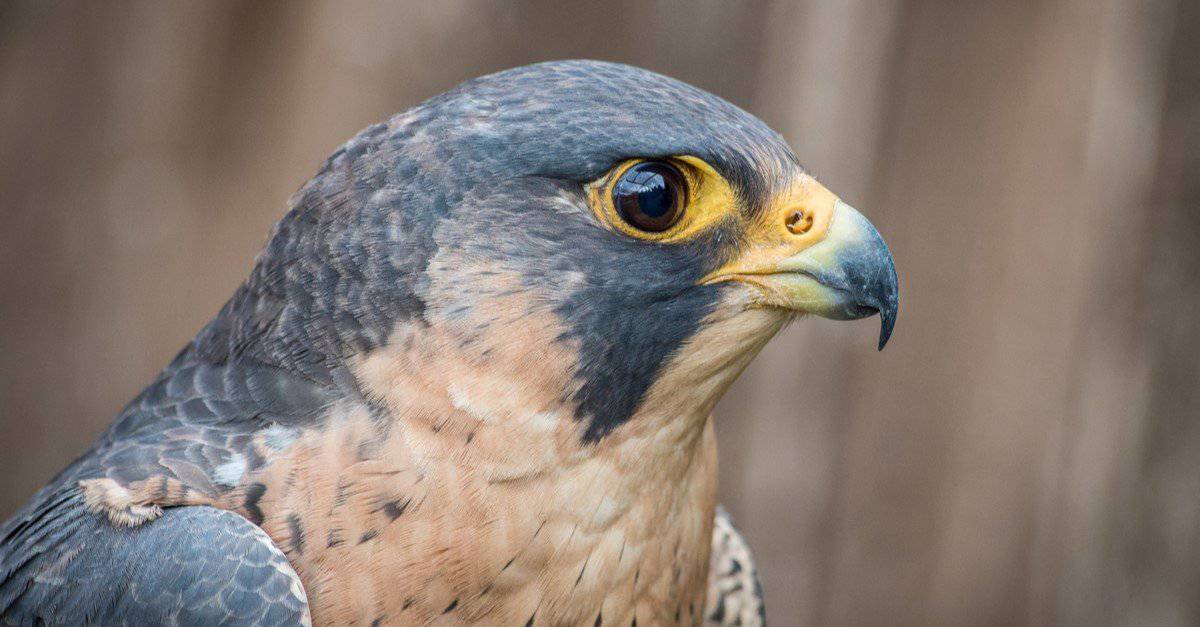
Peregrine falcons (Falco peregrinus) are medium-sized raptors reaching between 14.2 and 19.3 inches in length with wingspans up to 43 inches. As with most birds of prey, the females are larger than the males. They are blue-gray with dark heads and light-colored breasts with pale, barred underparts. Their legs are yellow, and their sharp, hooked beaks are yellow with gray tips. There are 19 subspecies of peregrine falcons found all over the world except for Antarctica.
One of the coolest birds of prey, this falcon can regularly fly at speeds up to 35 mph, and nearly 70 mph in pursuit of medium-sized birds. However, they can achieve speeds of over 200 miles per hour from heights over 0.62 miles as they dive toward their target. One falcon reportedly reached a dive speed of 242mph. This makes the peregrine falcon the fastest animal on Earth.
#3. Kākāpō
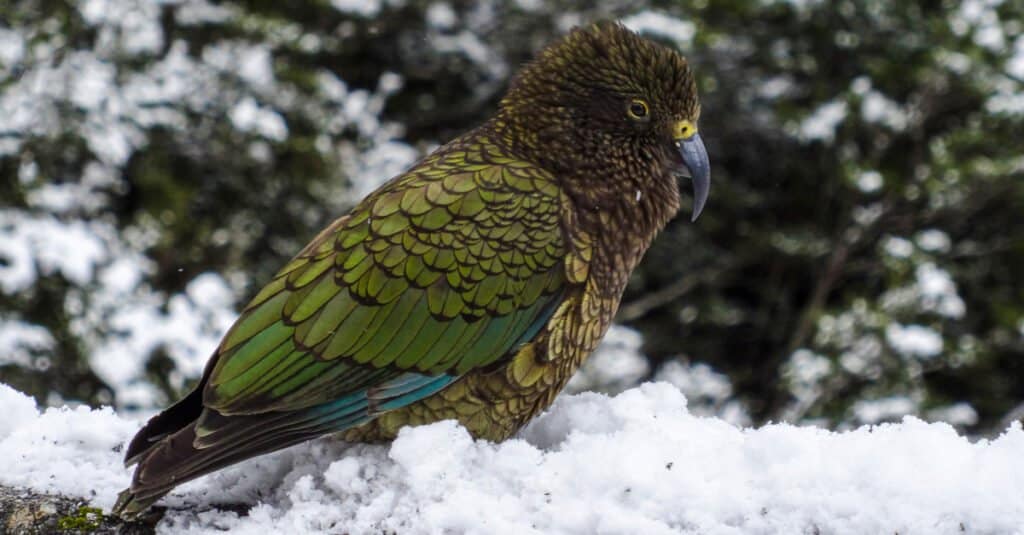
Also called an “owl parrot,” the kākāpō is estimated to live up to 90 years.
©heather_p/Shutterstock.com
The kākāpō (Strigops habroptila) is among the world’s rarest birds, as well as one of the coolest. It is a large, greenish-brown, ground-dwelling parrot found only in New Zealand. They currently inhabit offshore islands and a sanctuary on the mainland. There are believed to be only 242 birds left in the world.
Kākāpō reach 25 inches in length and weigh nearly 9 pounds. With their large bodies and short wings, they cannot fly, although conservationists have observed lighter females making short glides of around 10 to 13 feet. They have strong legs and strong claws that allow them to climb up to 65 feet into the trees. Kākāpōs are the only nocturnal parrot species.
#2. Lesser Flamingo
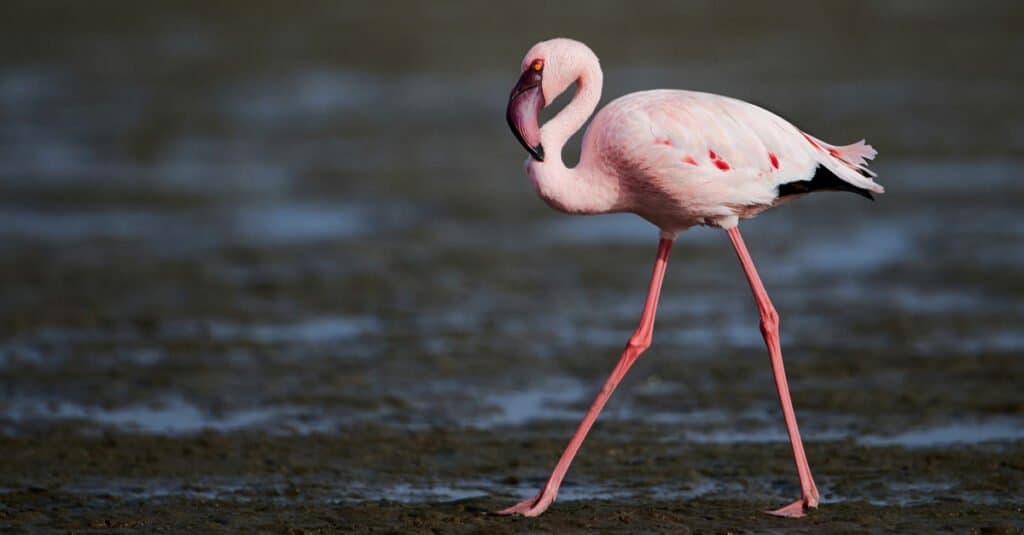
75% of the world’s lesser flamingos nest in Lake Natron in Tanzania.
©mikex4/Shutterstock.com
The lesser flamingo (Phoeniconaias minor) is primarily found in sub-Saharan Africa. These are the smallest flamingos of the six flamingo species, at a maximum of 49 inches tall and weighing around 4 pounds. They have dark bills with black tips and reddish-colored legs. Adults also have glowing red eyes. As with other flamingos, their pink coloring comes from pigment in the algae they eat.
These flamingos live in high-salt and alkaline lakes and lagoons that almost no other life forms can tolerate. Lake Natron in Tanzania is home to 75% of the world’s lesser flamingos, but the water is said to be so caustic it can strip off a human’s skin. However, flamingos have tough skin and scales on their legs that protect them from being burned. They can even drink water close to the boiling point. Such harsh conditions ensure they have little competition and few predators willing to risk the toxic water.
#1. Indian Peacock
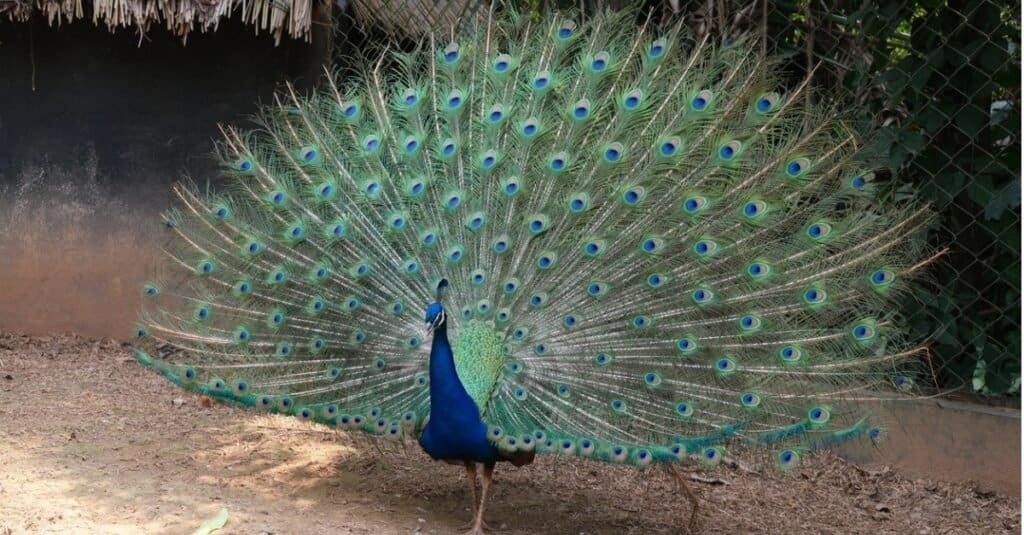
Peacocks are famous for their incredible tail feathers.
©iStock.com/Robert Way
Indian peacocks, more properly called peafowl (Pavo cristatus), are large, ground-dwelling birds that are endemic to India and Sri Lanka. The males have bright blue heads and necks and elaborate feathers used to attract a mate. Their trains can reach up to 63 inches long. The peahens are drab brown, gray, and cream to blend in with the environment while nesting. Although peacocks can weigh up to 13 pounds, they are still capable of short flights up into the trees to roost.
Peacocks grow their first train when they are around two years old, but the train does not reach its full size and maximum ornamentation until around 5-6 years old. Researchers believe that peahens prefer males with the longest trains and most spectacular displays. The train’s total length, pattern, and the number of iridescent spots are all believed to be directly related to the peacock’s success in mating.