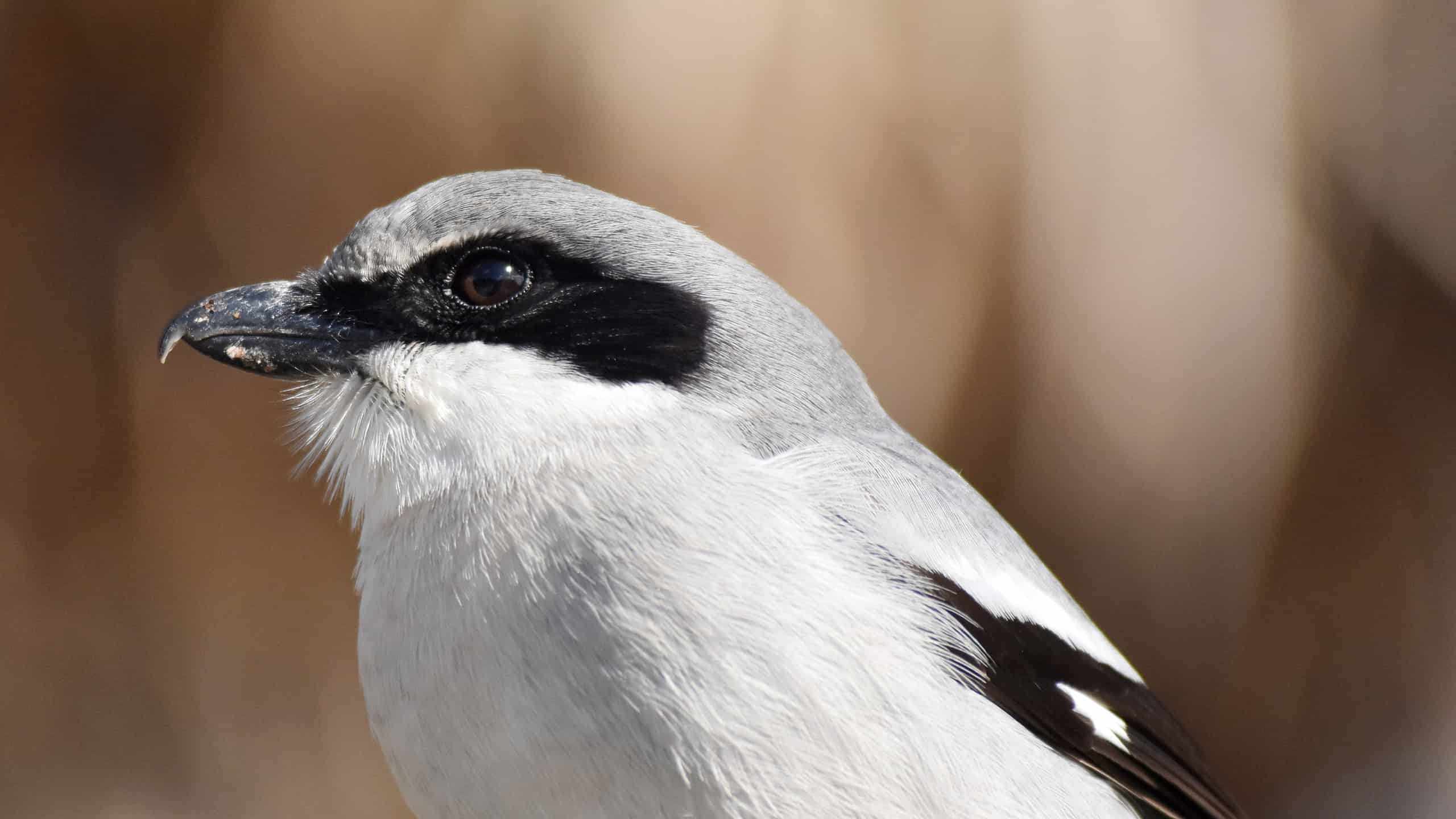

It’s hard to believe an adorable little bird might be known as Vlad the Impaler of the bird world. However, the shrike, also known as the “butcher bird,” has a similar habit to Vlad’s penchant for impaling his victims on pikes. Of course, we know that Vlad was exceptionally brutal to obtain obedience from his subjects, while the little shrike bird is simply trying to eat a meal. A fascinating video from Nat Geo Animals shows the shrike in action.
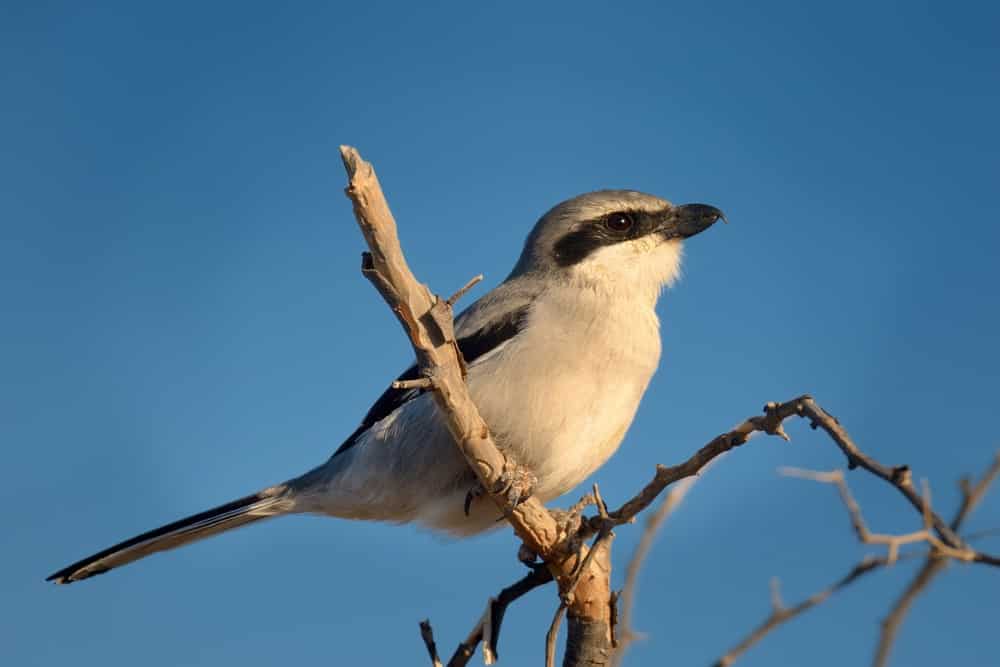
The Northern Shrike is a small songbird that hunts and impales its prey.
©Martin Pelanek/Shutterstock.com
How the Shrike Hunts and Kills Its Prey
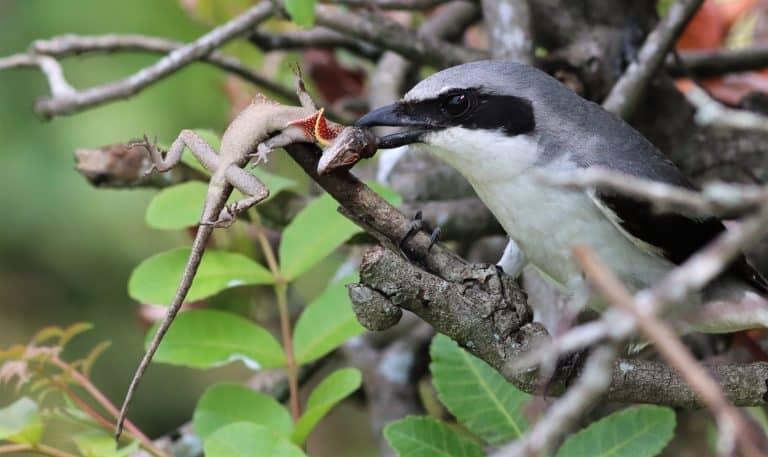
Like eagles and falcons, shrikes are birds of prey. However, they aren’t raptors, but are songbirds. Though shrikes have a sharp, hooked beak, they are small and have weak legs. The little shrike breaks the spine of its prey with its beak. However, unlike larger birds of prey, the shrike doesn’t have the strength to hold onto its food as it eats. Instead, it employs a unique method of eating by impaling its meal on a sharp thorn from a tree or a barbed wire fence.

Shrikes catch and kill small animals such as snakes, impaling them on sharp thorns or barbed wire fences.
©Nat Geo Animals / YouTube
The shrike eats a variety of small animals, including snakes, insects, lizards, rodents, and small birds. After killing the animal, the shrike impales its body, where it will either eat it immediately or store it. So, if you ever come across small animals impaled on thorns in the woods, you will know it’s the work of the shrike, and not some strange human ritual that you’ve stumbled upon.
According to the U.S. Fish and Wildlife Service, when shrikes leave their food behind to eat later, it’s called a larder. A blog from their website states, “These larders could be robbed by other birds, especially corvids like blue jays and crows, given how easy it is to spot them, so keeping a big supply in the larder may compensate for some losses that are bound to occur.”
How Shrikes Get Around the Toxin of the Eastern Lubber Grasshopper
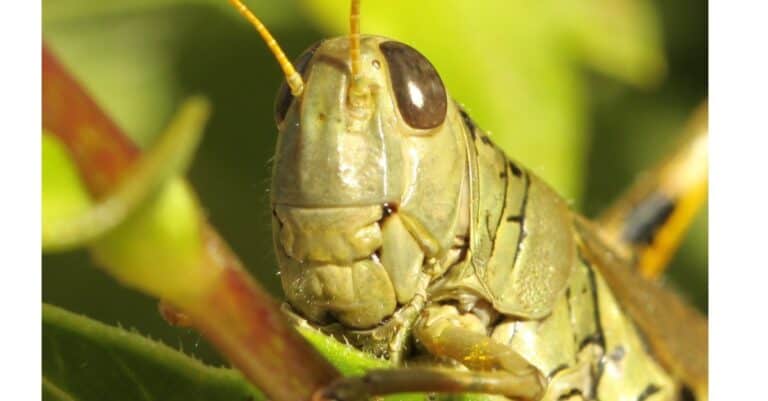
According to the video from Nat Geo, shrikes love to eat Eastern lubber grasshoppers. But there’s just one problem. Lubber grasshoppers are poisonous, containing enough toxins that could make a person sick. The resourceful shrike has a way around this problem. It spears lubber grasshoppers in its usual way, and then lets them sit for days. Once the poison is broken down, the shrike begins its meal.
Where Are Shrikes Found?
Shrikes are predatory birds in the family Laniidae. The word Laniidae comes from the Latin word lanius, meaning “butcher.” There are over 30 species of shrikes around the world, with only two species found in North America, the Loggerhead Shrike and the Northern Shrike.
Loggerhead Shrike

The Loggerhead Shrike’s population is in decline.
©Bouke Atema/Shutterstock.com
The Loggerhead Shrike (Lanius ludovicianus) can be found in much of North America from Mexico to Canada. However, its population has been in decline, and it may now be found only in scattered locations throughout its range. The Loggerhead Shrike’s population has declined nearly 80% since 1966.
Northern Shrike

The breeding grounds for Northern Shrikes are far to the north in Canada and Alaska.
©Wirestock Creators/Shutterstock.com
You are less likely to see a Northern Shrike (Lanius borealis) in the U.S. than the Loggerhead Shrike. The Northern Shrike’s breeding grounds are in central and northern Canada. During winter, the Northern Shrike migrates south to southern parts of Canada and is even sometimes spotted in the northern regions of the U.S.
Nesting and Reproduction
Both the male and female shrikes share the role of raising young. In some shrike species, females build the nests. In other species, such as the Loggerhead Shrike, both male and female build the nest. The female then lays anywhere from two to nine eggs.
Some shrike species living in other countries form groups, cooperating to share the duties of caring for the nestlings. However, the North American shrike species raise their young in pairs. In the North American species, the male shrikes defend the nest and also assist the female with feeding the babies.
Conservation Status
Unlike the Loggerhead Shrike, wildlife experts have found no evidence of a population decline. The Loggerhead Shrike is currently classified as “Near Threatened” by the IUCN Red List. However, the Audubon suggests keeping an eye on the species, since other species of shrikes around the world have experienced population declines.
The Loggerhead Shrike, on the other hand, is in decline and is classified as “Near Threatened”. The Audubon explains that the Loggerhead Shrike, which used to be common in the northeast U.S., is nearly gone from the area. Scientists haven’t determined the reason for the decline, but suspect it may be due to pesticides combined with the loss of habitat.