
Quick Take
- The moment the horse drops into the snow beside its handler looks like perfect imitation, yet the science says something more complicated is going on. See what science says →
- Horses may not copy your exact movements, but what they actually pick up from you is arguably more surprising. Discover what horses sense →
- A 2025 experiment tested how horses respond to human emotion, and the results changed how researchers think about the horse-handler bond. Explore the 2025 findings →
- There's a split-second in the video where the timing looks almost too choreographed to be coincidence. Watch for it.
The clip below looks almost like a horse taking a snow-angel lesson from its human. A fresh layer of snow covers the ground as the horse’s handler lies down and begins moving her arms and legs through it. Her curious horse soon wanders over to see what she is doing. What happens next makes the timing almost too perfect.

The horse paws at the snow, lowers itself onto its front legs, and then rolls onto its side. As the handler continues making her snow angel, the horse wriggles around beside her. It certainly looks like the animal has decided to join in. Whether the horse is actually imitating her or simply doing something horses already enjoy doing in soft ground is another question, but the synchronized performance is pretty hard not to smile at.
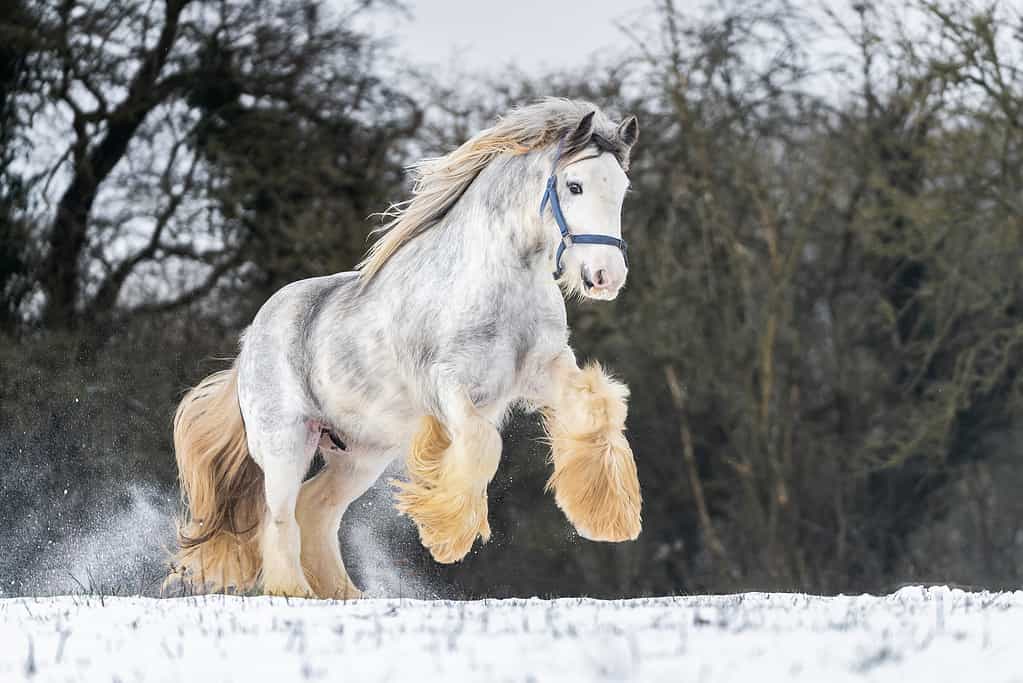
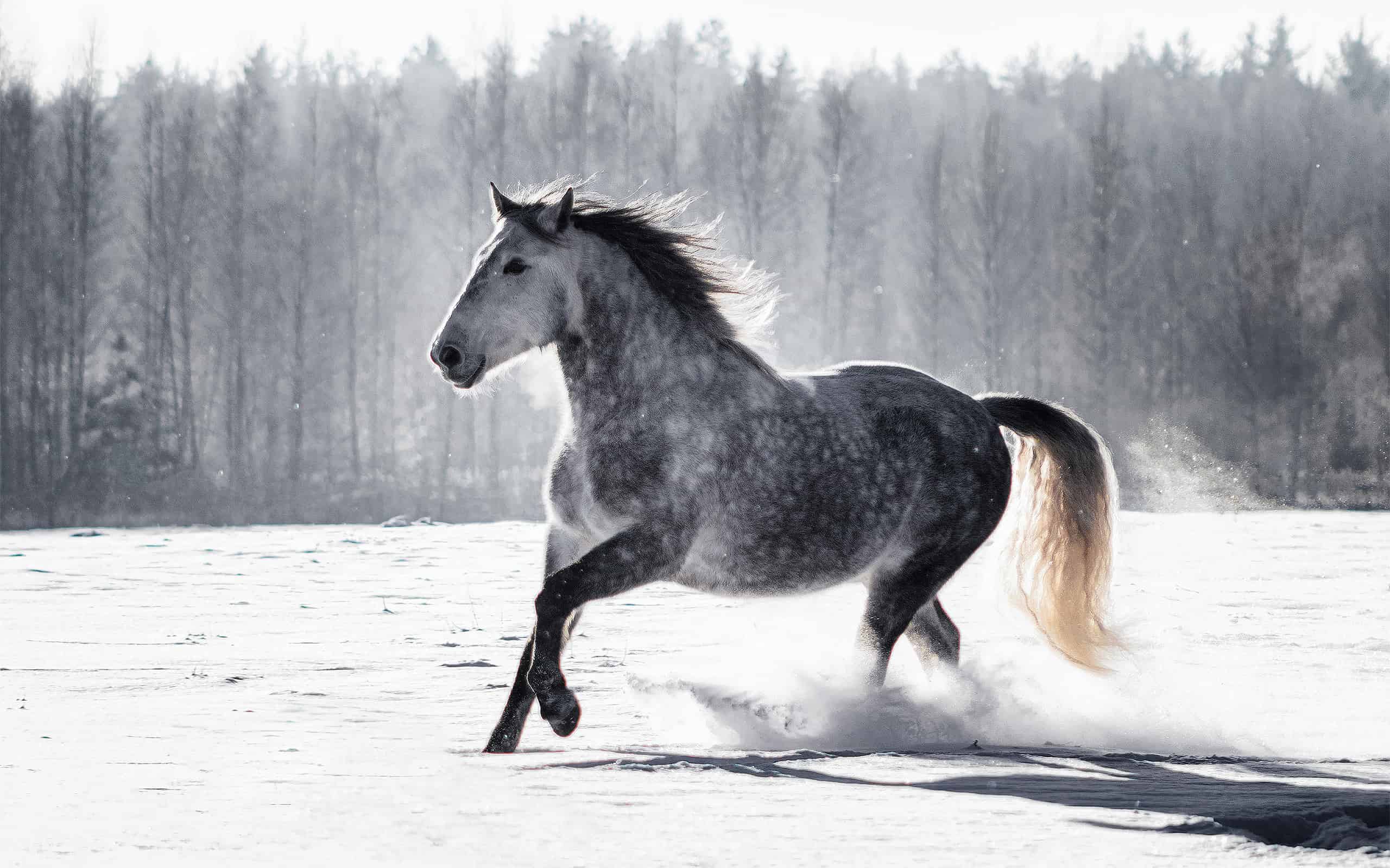
Beautiful big Irish cob horse foal running wild in snow on ground rearing up high!
©Matthew Troke/iStock via Getty Images
After rolling around for a bit, the horse turns back toward its handler and eventually gets to its feet as she begins standing up too. A lead is visible in her hand, but the video does not tell us where the pair is headed next. For a few seconds, though, they manage to turn an ordinary snowy day into what looks remarkably like a two-species snow-angel session.
Do Horses Really Copy Their Trainers?
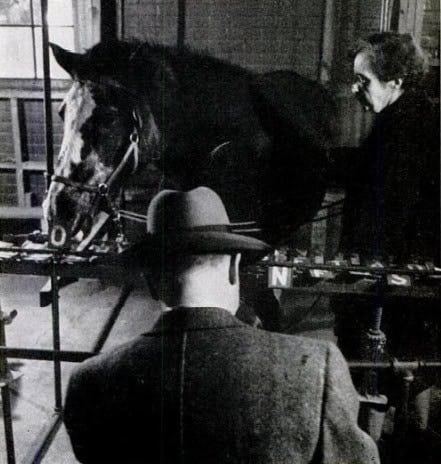
It is tempting to watch a video like this and conclude that the horse simply watched a human make a snow angel and copied her. The science is a little more complicated. Horses pay close attention to people and can learn information from humans, but research into true imitation and social learning has produced mixed results. Some experiments have found that horses benefit from watching a human demonstrate a task, while others suggest that most horses are not copying the exact action. Instead, they may use the person as a clue about where to focus and then figure out the task through their own trial and error.
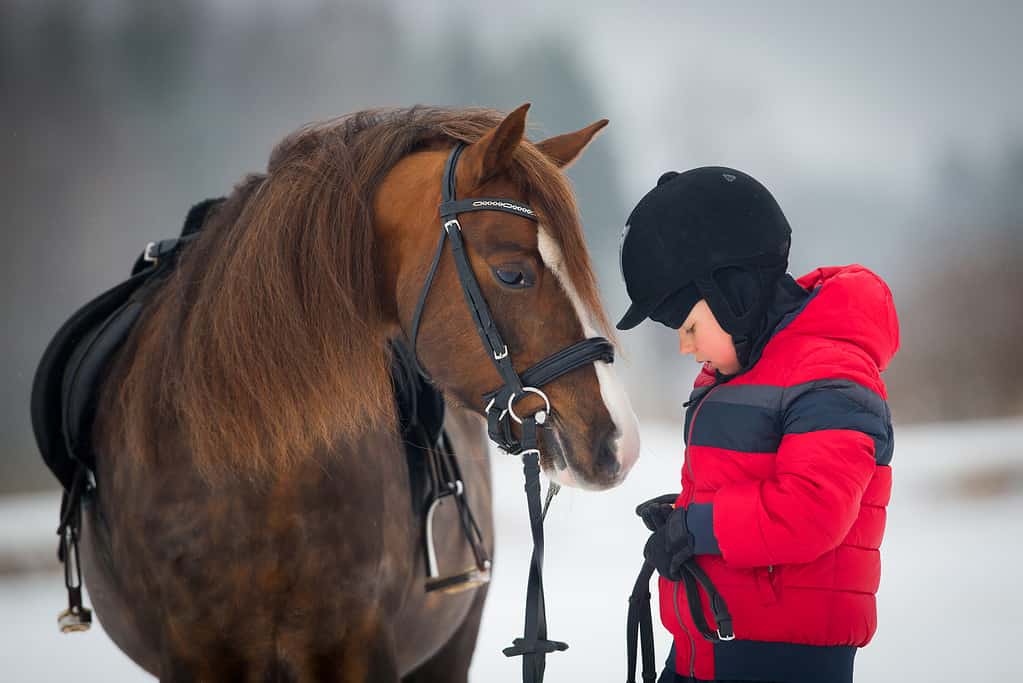
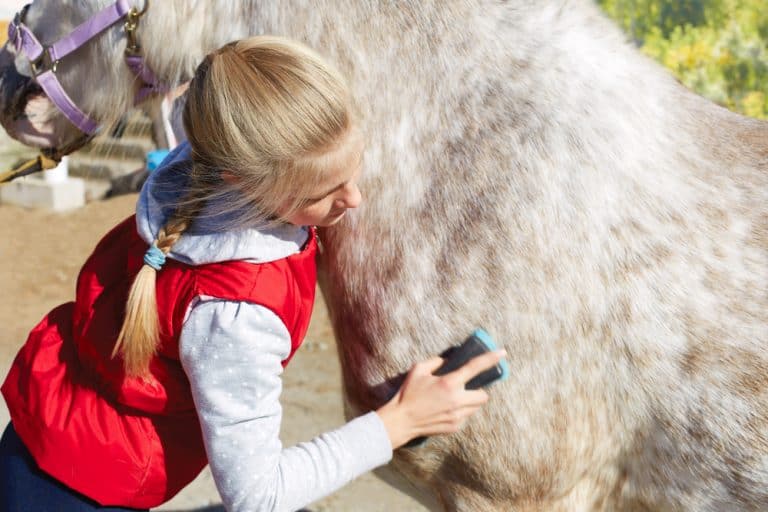
Horses will mimic their trainers in many ways, from head movements to walking style. The bond between a horse and rider is very close.
©Alexia_Khrushcheva/iStock via Getty Images
Another video on YouTube offers what appears to be a similar example. The horse lowers its head and turns after a person performs comparable movements. It is fun to watch, but a video by itself cannot establish that the horse understands the action and is deliberately copying it. Researchers studying equine social learning have found that horses can take useful information from humans, but copying a person’s precise movements appears to be much less common than simply responding to human cues.
A 2017 master’s thesis from the Norwegian University of Life Sciences examined behavioral mimicry between horses and familiar handlers, including changes in walking and head movements. Researchers have also found stronger evidence for a related ability: horses are remarkably sensitive to human emotional cues. Studies have shown that horses respond differently to human facial expressions, voices, and displays of fear or joy. A 2025 experiment involving 45 horses found measurable behavioral and physiological differences when the animals were shown people expressing fear and joy compared with neutral expressions. That does not mean a horse automatically becomes afraid whenever its rider is nervous, but it does show that human behavior and emotion can influence how a horse reacts. The horse in the snow may or may not be copying its handler. Either way, it is clearly paying attention.